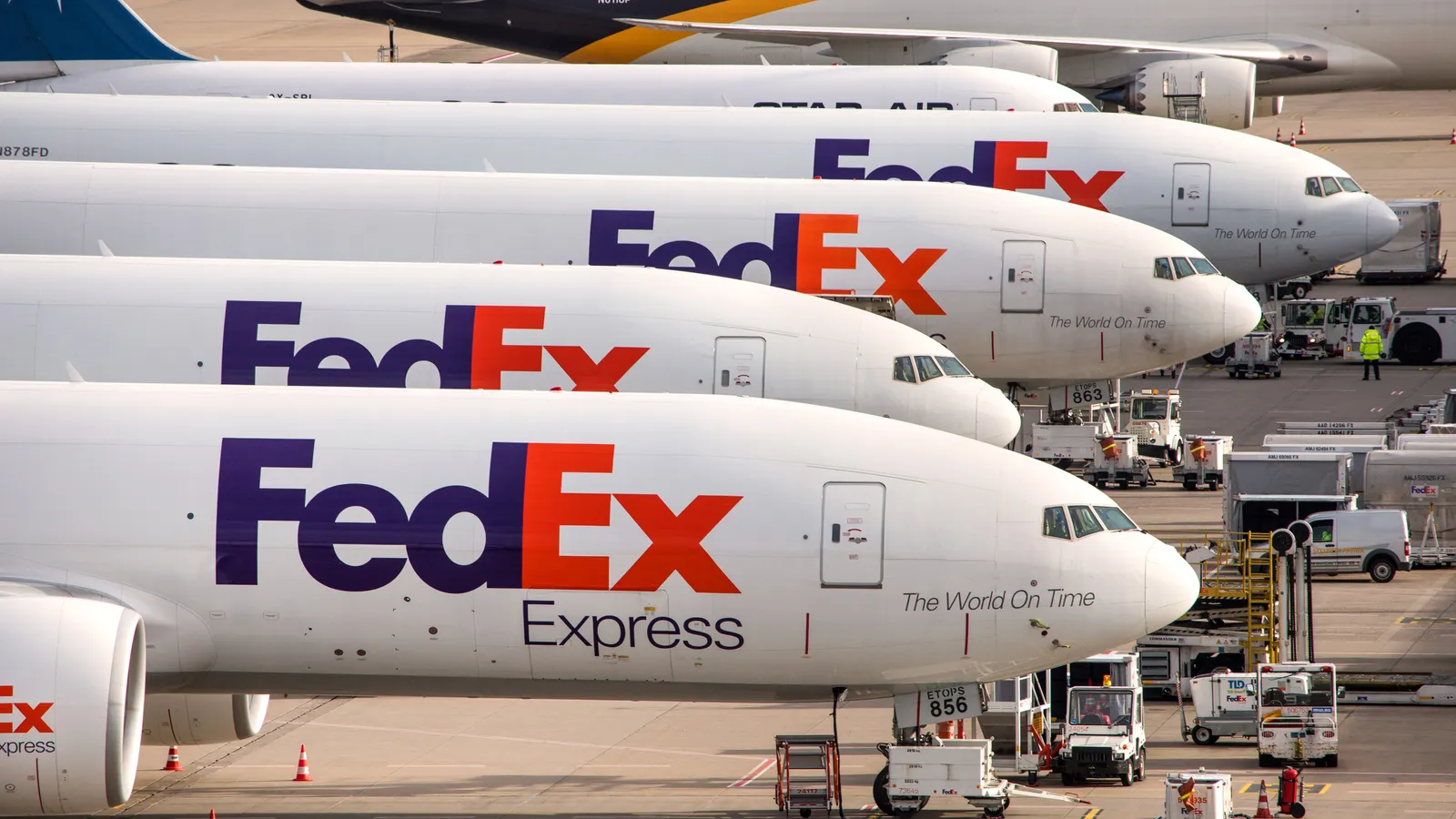
Memphis, TN – September 12, 202X – FedEx, a global leader in logistics and express transportation, has announced the implementation of new per-pound demand surcharges on a range of its international import and export services, effective September 21. This strategic move is poised to introduce another layer of cost pressure for businesses already navigating a complex landscape of rising tariffs, escalating operational expenses, and the impending peak holiday shipping season. The new fees reflect FedEx’s ongoing efforts to manage network capacity and offset the increasing costs associated with surging cross-border shipping volumes.
The decision comes at a time when global supply chains are experiencing unprecedented demand and volatility. For shippers, particularly those heavily reliant on international trade routes, these additional costs necessitate an immediate reevaluation of their logistics strategies, origin-and-service mappings, and overall exposure to international freight expenditures. Industry analysts are advising affected businesses to model their cost increases by chargeable weight and confirm country-level adjustments directly with FedEx to mitigate financial surprises.
The surcharges vary significantly by origin and destination, with some routes, particularly imports from Asia to the U.S., facing substantial increases. This development underscores a broader trend within the logistics industry where major carriers are increasingly employing dynamic pricing models, including demand-based surcharges, to manage network efficiency and profitability in a challenging economic environment.
The New Fee Structure: A Detailed Breakdown
FedEx’s new demand surcharges are structured as a per-pound fee, applied to a wide array of international services, differentiating rates based on the geographical origin and destination of the shipment, as well as the service level chosen for certain routes. This granular approach aims to target specific lanes experiencing high demand or increased operational costs.
Import Surcharges to the U.S.
The most significant impact of these new surcharges will be felt by businesses importing goods into the United States. The rates vary widely, reflecting the diverse cost structures and demand levels across different global trade lanes.
- Canada to U.S.: Shippers sending goods from Canada to the U.S. will incur a per-pound demand surcharge of $0.14. While relatively modest compared to other regions, this still represents an incremental cost for one of the busiest cross-border trade relationships.
- Latin America and the Caribbean to U.S.: Imports from this expansive region will see a $0.12 per-pound fee. This surcharge reflects the growing trade volumes and logistical complexities associated with routes connecting Central and South America, as well as the numerous island nations, to the U.S. market.
- Europe, Israel to U.S.: Shipments originating from European countries and Israel destined for the U.S. will be subject to a $0.25 per-pound surcharge. This reflects the significant volume of trade between these established economic blocs and the United States, often involving high-value goods.
- China, Hong Kong, and Macau to U.S.: This region stands out with some of the highest surcharges, reflecting the immense trade volume and the specific operational challenges associated with these lanes. Shippers will face a per-pound fee of either **$0.54 or $0.91***. The asterisk denotes a crucial distinction: the lower rate applies to various economy services, while the higher rate is reserved for several express services. This tiered pricing incentivizes shippers to consider less time-sensitive options if cost is a primary concern. The maximum rate of $0.91 per pound for express services from this critical manufacturing hub represents a substantial increase for businesses reliant on speedy delivery.
- Australia, Cambodia, Fiji, Guam, Indonesia, Japan, South Korea, Malaysia, New Zealand, the Philippines, Singapore, Taiwan, and Thailand to U.S.: This broad grouping of Asia-Pacific nations, including key manufacturing and technology centers, will also experience significant surcharges. The rates are set at **$0.54 or $0.73*** per pound, again with the lower rate for economy services and the higher for express. This reflects the high demand and logistical intensity of shipping from these diverse economies across the Pacific.
- India to U.S.: Imports from India will face a substantial $0.89 per-pound surcharge. This rate positions India as one of the most impacted origins, highlighting the growing, yet logistically intensive, trade relationship between the subcontinent and the U.S.
- Sub-Saharan Africa to U.S.: Shipments from this developing region will incur a $0.60 per-pound fee, indicating increased operational considerations for these lanes.
- Middle East, India subcontinent and Africa region (excluding India and Sub-Saharan Africa) to U.S.: This catch-all category will see a $0.70 per-pound surcharge, consolidating costs for a geographically diverse and often challenging set of shipping routes.
Export Surcharges from the U.S.
While the import surcharges exhibit considerable variation, FedEx has implemented a more uniform approach for exports originating from the United States to several key regions.
- U.S. to Canada, Latin America and the Caribbean, Europe, Australia, and New Zealand: Exports from the U.S. to these economically significant destinations will all be subject to a consistent $0.30 per-pound demand surcharge. This standardized rate simplifies cost calculation for U.S. exporters but still adds a notable expense to their international shipping operations.
The intricate nature of these new fees, especially the differentiation between economy and express services for critical Asian lanes, underscores the need for shippers to conduct thorough analyses of their current shipping profiles and future strategies.
Chronology of FedEx’s Pricing Strategies and Market Dynamics
FedEx’s decision to introduce these new international demand surcharges is not an isolated event but rather a continuation of a broader trend in carrier pricing strategies, particularly in response to market fluctuations and operational demands.
A History of Demand-Based Pricing
Major logistics providers like FedEx have historically employed demand-based surcharges as a critical tool for managing network capacity and optimizing revenue, especially during periods of elevated volume. These surcharges serve multiple purposes: they help offset the increased operational costs associated with higher demand, incentivize shippers to adjust their shipping patterns, and ensure the reliability of the network by discouraging excessive volume that could overwhelm existing infrastructure.
A notable precedent occurred last year when FedEx instituted a temporary fee for parcel shipments originating from China, Hong Kong, and the Philippines entering the U.S. This earlier surcharge was directly linked to importers’ rush to move inventory ahead of anticipated new tariffs and significant changes to the now-defunct de minimis exemption. The de minimis rule, which allowed low-value imports to enter the U.S. without duties or taxes, was a major factor in cross-border e-commerce, and changes to it caused a surge in shipments as businesses tried to beat the deadline. Such actions demonstrate FedEx’s agility in responding to macroeconomic and regulatory shifts that impact trade flows.
These historical instances highlight that demand surcharges are not a novel concept but a recurring and increasingly sophisticated element of carrier pricing. They reflect a strategic imperative for logistics companies to maintain profitability and service integrity in an inherently volatile industry.
The Broader Landscape of Carrier Fees
Beyond FedEx, the entire logistics industry has witnessed a proliferation of various fees and surcharges. Competitors such as UPS also regularly implement similar demand-based surcharges, particularly during peak seasons. The trend extends beyond just demand-driven fees to include a myriad of accessorial charges, fuel surcharges, residential delivery fees, oversized package surcharges, and remote area surcharges, among others.
This escalating fee structure is a direct consequence of several factors. The global e-commerce boom has dramatically increased parcel volumes, placing immense strain on existing logistics infrastructure. Concurrently, operational costs for carriers have soared due to rising fuel prices, increased labor expenses (driven by a competitive labor market and wage inflation), and substantial investments required for network expansion, automation, and technological upgrades.
The cumulative effect of these rising costs and the need for carriers to maintain robust, efficient networks translates into a higher total cost of shipping for businesses. Shippers are increasingly finding themselves in an environment where the advertised base rates are only a fraction of their final invoice, with surcharges often constituting a significant portion of their total freight spend. This complex pricing environment necessitates sophisticated cost management and forecasting tools for businesses to remain competitive.
Supporting Data: The Forces Behind FedEx’s Decision
The implementation of new international demand surcharges by FedEx is a direct response to a confluence of internal operational data and external economic pressures that are reshaping the global logistics landscape.
Surging Cross-Border Volume
A primary driver behind FedEx’s decision is the palpable increase in demand for its cross-border shipping services. The company’s financial reports reveal a significant trend: average daily volume for international export packages climbed a notable 5% year over year in the quarter that ended May 31. This growth, while positive for revenue, simultaneously places considerable strain on FedEx’s vast global network, its aircraft fleet, ground operations, and human resources.
Several factors contribute to this surge in international shipping volume. The relentless expansion of global e-commerce continues to fuel direct-to-consumer international shipments. Furthermore, geopolitical shifts and supply chain reconfigurations, such as companies diversifying manufacturing bases away from single regions (e.g., "China Plus One" strategies), are leading to new trade lanes and increased movement of goods between a broader array of countries. As production shifts or expands into new territories, the logistical demands for transporting components, finished goods, and raw materials across borders intensify.
Increased volume, while a sign of a healthy market, also brings operational challenges. It necessitates more flights, more ground vehicles, more sorting capacity, and more personnel. Without adequate pricing mechanisms, carriers risk network congestion, service delays, and diminished profitability. Demand surcharges serve as a critical tool to manage this delicate balance, ensuring that the network remains fluid and capable of handling peak loads without compromising service quality. They also help fund the necessary investments in infrastructure and technology required to sustain such growth.
External Economic Pressures
Beyond internal volume dynamics, FedEx, like all major carriers, operates within a complex web of external economic pressures that directly impact its cost structure and profitability.
One significant factor is the persistent issue of rising tariffs. Governments worldwide have increasingly utilized tariffs as a tool for trade policy, leading to increased costs for imported goods. For instance, the U.S. has imposed tariffs over concerns about forced labor, adding another layer of expense for importers. While tariffs are paid by the importer, they create an environment where businesses are already facing higher landed costs for their products. In turn, this can influence shipping patterns and the urgency with which goods are moved, potentially increasing demand for express services. Carriers, while not directly paying tariffs, operate in an ecosystem where trade policies directly affect their customers’ needs and the overall volume and nature of goods being shipped.
Furthermore, the broader macroeconomic climate contributes significantly to carriers’ operational expenses. Inflationary pressures have driven up the cost of nearly every input required for logistics operations, from aircraft parts and maintenance to ground vehicle fuel and warehousing. Labor costs have been a particularly acute challenge, with intense competition for skilled workers (pilots, truck drivers, package handlers) leading to upward pressure on wages and benefits. The ongoing volatility in global fuel prices, despite recent fluctuations, remains a perennial concern for an industry so heavily reliant on transportation. Lastly, the need for continuous infrastructure investments—in new aircraft, automated sorting facilities, and IT systems—is immense, requiring substantial capital expenditure that must ultimately be supported by revenue.
These external pressures mean that carriers cannot simply absorb all rising costs. To maintain financial health and continue investing in their networks, a portion of these increased expenses is inevitably passed on to shippers through various fees and surcharges, including the newly announced demand surcharges.
Peak Season Anticipation
The timing of these new surcharges, effective September 21, is strategically aligned with the ramp-up to the crucial peak holiday shipping season. This period, typically spanning from late October through December, is characterized by an exponential surge in parcel volumes driven by Black Friday, Cyber Monday, and Christmas shopping.
During peak season, network capacity becomes a premium commodity. Carriers utilize demand surcharges as a critical mechanism to manage this surge. They help to:
- Manage Capacity: By increasing costs during peak, carriers can better allocate their finite resources (aircraft, trucks, personnel, sorting capacity) to ensure the timely delivery of goods.
- Incentivize Off-Peak Shipping: Higher costs can encourage some shippers to move inventory earlier or utilize slower, less expensive services, thereby smoothing out demand curves.
- Maximize Revenue: Peak season is a period of exceptionally high demand, and surcharges allow carriers to capture additional revenue that helps offset the extraordinary operational expenses incurred during this intense period, including temporary labor, extended hours, and additional transport capacity.
The proactive implementation of these surcharges ahead of the peak season allows FedEx to prepare its network, communicate expected costs to its customers, and ensure a more stable and reliable service environment during the busiest time of the year. It’s a testament to the industry’s shift towards dynamic, real-time pricing models that reflect market conditions rather than static rate cards.
Official Responses and Industry Perspectives
While FedEx itself has not provided an explicit public statement beyond the announcement of the new surcharges, their rationale can be inferred from standard industry practices and the prevailing economic climate. The industry, however, has been quick to analyze the implications for shippers.
FedEx’s Rationale (Implied)
From a carrier’s perspective, the imposition of demand surcharges is often presented as a necessary measure for business sustainability and service integrity. FedEx’s implicit rationale likely centers on several key pillars:
- Network Capacity Management: With international export package volumes climbing significantly, the surcharges help manage the flow of goods through FedEx’s intricate global network, preventing congestion and ensuring that service levels remain high even under pressure.
- Offsetting Rising Operational Costs: As detailed previously, the costs associated with fuel, labor, maintenance, and capital investments are continually rising. These surcharges are a mechanism to recover some of these escalating operational expenses.
- Ensuring Service Reliability: By pricing capacity dynamically, FedEx can better allocate resources and fund necessary expansions or temporary measures to guarantee reliable service, especially during high-demand periods like the upcoming holiday season.
- Strategic Investment: The revenue generated from these surcharges also contributes to FedEx’s ability to invest in long-term infrastructure, technology (e.g., automation, AI in logistics), and fleet modernization, which ultimately benefits the entire supply chain ecosystem.
In essence, FedEx would likely frame these surcharges as a vital component of its strategy to maintain a robust, efficient, and financially healthy global logistics network capable of meeting evolving customer demands.
Shipper Reactions and Industry Analyst Insights
The logistics consulting firm ShipScience has provided a comprehensive analysis of the new FedEx surcharges, offering crucial guidance and highlighting the potential impact on shippers. Their insights underscore the immediate need for proactive adjustments from businesses.
According to ShipScience, affected shippers must undertake several critical steps:
- Update Origin-and-Service Mappings: Businesses need to meticulously review their current shipping profiles, understanding which services they use and from which origins, to accurately assess their exposure to the new fees.
- Model Exposure by Chargeable Weight: Since the surcharges are per-pound, accurately calculating the chargeable weight of shipments is paramount. This involves understanding the difference between actual weight and dimensional weight, and how FedEx applies its rules.
- Confirm Country-Level Changes with FedEx: Given the complexity and regional variations, ShipScience advises direct confirmation with FedEx to ensure all specific country-level changes are understood and correctly applied.
ShipScience’s analysis specifically identifies customers importing from China, Hong Kong, Macau, or the group featuring Japan, South Korea, and others (Australia, Cambodia, Fiji, Guam, Indonesia, Malaysia, New Zealand, the Philippines, Singapore, Taiwan, and Thailand) as those who will face the largest immediate cost increases. This highlights the concentrated impact on businesses sourcing heavily from Asian manufacturing hubs.
To illustrate the financial impact, ShipScience provided a concrete example: the demand fee on a 40-pound priority shipment from China would see an increase of $22.40 (40 lbs $0.56, assuming the difference between $0.91 and an older rate, or using the $0.56 from the higher tier of $0.91 and an older $0.35 rate if it was a new rate applied on top of an existing structure – the initial article indicates $0.91 for express from China, so a 40lb express shipment would be 40 $0.91 = $36.40 in surcharge). Correction based on provided data: the $0.91 is the new rate. If we assume a previous rate of $0.35, then the increase is $0.56 per pound. 40lbs $0.56 = $22.40.* This figure is before any additional fuel surcharges are applied, which can further inflate the total shipping cost. Such an increase, when multiplied across thousands of shipments, can significantly erode profit margins.
For exporters, ShipScience noted that "exporters to Canada, Latin America and the Caribbean, Europe, Australia and New Zealand will see a more uniform 50% increase." While the exact base rate for this calculation isn’t provided in the source, this indicates a substantial percentage increase even with the lower absolute per-pound surcharge of $0.30. This uniform increase simplifies forecasting for these exporters but still represents a significant jump in costs.
The sentiment among shippers is generally one of frustration, but also resignation. Many businesses view these surcharges as an unavoidable cost of doing business in a globalized, yet increasingly expensive, logistics environment. They are actively seeking alternative strategies, including diversifying their carrier base, exploring different shipping modes (e.g., ocean freight for less time-sensitive goods), and optimizing their supply chain networks to mitigate the impact. Logistics consultants are playing a crucial role in helping businesses navigate these complex changes, providing tools for cost analysis, negotiation support, and strategic planning.
Implications for Global Supply Chains and Businesses
The new FedEx international demand surcharges carry significant implications that will ripple through global supply chains, affecting businesses of all sizes and ultimately impacting consumers.
Increased Costs for Businesses and Consumers
The most immediate and tangible implication is the direct increase in operational costs for businesses engaged in international trade. Manufacturers importing raw materials or components, e-commerce retailers sourcing finished goods from overseas, and businesses exporting products to international markets will all see their shipping expenses rise.
These higher costs translate into higher "landed costs" for goods – the total cost of a product once it has arrived at the buyer’s doorstep, including purchase price, shipping, insurance, customs duties, and other fees. For businesses operating on tight margins, this can significantly erode profitability. Many will be forced to make difficult decisions: absorb the increased costs, which impacts their bottom line, or pass them on to the end consumer, leading to higher retail prices. This could contribute to inflationary pressures in consumer goods, making everything from electronics to apparel more expensive.
Furthermore, the competitiveness of businesses heavily reliant on international shipping, particularly smaller and medium-sized enterprises (SMEs) that may have less leverage to negotiate rates or absorb costs, could be negatively affected. They might find it harder to compete with larger players or domestic suppliers.
Strategic Adjustments for Shippers
In response to these escalating costs, shippers are compelled to undertake strategic adjustments to their supply chain management. Proactive measures are no longer optional but essential for survival and competitiveness.
- Diversifying Carriers: Businesses may explore using multiple carriers for different lanes or service levels to leverage competitive pricing and mitigate reliance on a single provider.
- Optimizing Shipping Routes and Modes: Re-evaluating existing shipping routes and considering alternative modes of transport, such as shifting from air freight to ocean freight for less time-sensitive shipments, can yield significant cost savings. This requires careful planning and longer lead times.
- Consolidating Shipments: Maximizing the volume within each shipment to achieve better per-pound rates or to reduce the frequency of shipments can help offset surcharges.
- Negotiating Better Rates: Larger shippers with significant volume may attempt to renegotiate contracts with FedEx or other carriers, though the current demand-driven market gives carriers considerable leverage.
- Nearshoring or Reshoring: The persistent rise in international shipping costs, coupled with geopolitical risks and supply chain disruptions, is accelerating the trend of nearshoring (moving production closer to consumption markets) or reshoring (bringing production back to the home country). While a significant undertaking, this long-term strategy can dramatically reduce international freight expenses and lead times.
- Inventory Strategies: Businesses might rethink their inventory strategies, potentially holding more safety stock to reduce the need for urgent, high-cost express international shipments. However, this also carries increased warehousing and capital costs.
- Data Analysis and Forecasting: The complexity of these surcharges necessitates advanced data analytics capabilities for businesses to accurately forecast shipping costs, optimize their logistics spend, and identify areas for efficiency improvements.
The Evolving Landscape of International Logistics
These new surcharges are indicative of a larger, ongoing transformation in the landscape of international logistics. The era of predictable, stable shipping rates is largely over. We are firmly in an age of dynamic pricing, where rates can change frequently in response to real-time market conditions, fuel costs, labor availability, and network capacity.
The increasing complexity and cost of global trade are pushing businesses to invest more heavily in their supply chain resilience and visibility. Technology, such as artificial intelligence in logistics, predictive analytics, and advanced supply chain software, will play an even more critical role in helping shippers adapt to these dynamic pricing models, optimize their networks, and make informed decisions.
For carriers like FedEx, the challenge lies in balancing profitability with maintaining high service quality and customer satisfaction amidst unprecedented demand and operational costs. For shippers, the imperative is to evolve from simply procuring transport services to strategically managing their entire logistics ecosystem, viewing it as a competitive differentiator rather than merely a cost center. The new FedEx surcharges are a stark reminder that in the interconnected world of global commerce, agility, foresight, and strategic adaptation are more crucial than ever.
About the Author