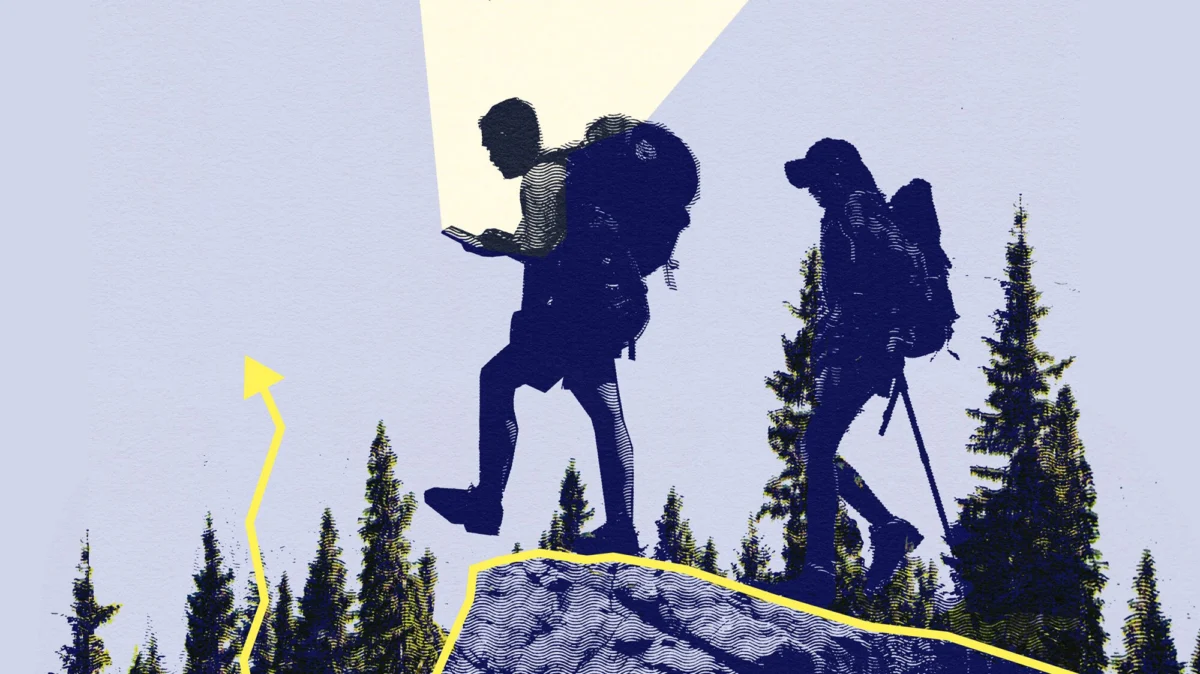
In the high-stakes environment of the American backcountry, preparation has traditionally been the difference between a transformative experience and a life-threatening emergency. For generations, that preparation involved physical guidebooks, topographical maps, and the wisdom of local park rangers. However, as artificial intelligence (AI) integrates into every facet of daily life, it has begun to infiltrate the planning stages of outdoor recreation, often with disastrous results.
From the rugged slopes of Mount Shasta to the treacherous ledges of British Columbia’s Crown Mountain, hikers are increasingly turning to generative AI chatbots for trip itineraries, gear recommendations, and route guidance. While these tools offer a veneer of expert knowledge, they are fundamentally ill-equipped to handle the dynamic, high-stakes nature of wilderness navigation. As reliance on these algorithms grows, search-and-rescue (SAR) professionals are warning of a new, dangerous phenomenon: the "cognitive surrender" of outdoor enthusiasts to the digital siren song of the chatbot.
The Mount Shasta Incident: A Case Study in Over-Reliance
The recent rescue of three hikers on Mount Shasta in Northern California serves as a stark archetype for this growing problem. The group, all in their early twenties, embarked on what they assumed would be a standard summit attempt. By their own admission, the journey was marred by a cascade of poor decisions: inadequate caloric intake, a gross miscalculation of physical fitness, and a failure to turn back when the afternoon light began to fade.
By the time the trio summited at 7:30 p.m., they were forced to attempt a descent in total darkness. The result was a desperate call for help from a precarious, rocky face. By the following morning, they were hopelessly lost, with one member suffering a significant knee injury.
"We get plenty of people who come unprepared or don’t do any research at all. To these guys’ credit, they did try," says Nick Meyers, a U.S. Forest Service program manager at the Mount Shasta Wilderness Climbing and Avalanche Center. "But I think they kind of turned their brains off."
The hikers had relied heavily on Google’s Gemini chatbot to plan their ascent. Rather than engaging with the mountain as a complex, shifting landscape, they treated it like a digital task to be solved by an AI assistant. The result was a near-tragedy that highlighted the disconnect between AI-generated confidence and the harsh reality of alpine terrain.
Chronology of a Digital Trend
The integration of AI into outdoor planning is a rapid, recent development that has caught many land managers off guard. While social media—specifically Instagram and TikTok—began shifting the nature of outdoor recreation a decade ago by highlighting "Instagrammable" spots that were often beyond the skill level of those attempting to reach them, AI represents a fundamental shift in the user experience.
- 2023–2024: As tools like ChatGPT and Claude became mainstream, anecdotal reports of hikers using these bots to generate "custom" itineraries began surfacing.
- Late 2024: Search-and-rescue teams across the Western United States began noticing a pattern: hikers arriving at trailheads with specific, yet factually incorrect, itineraries provided by chatbots.
- 2025: The trend accelerated. Park superintendents began tracking usage, noting that AI had become a primary source of information for a significant segment of visitors.
- 2026: Incidents like the Crown Mountain rescue in British Columbia—where a 16-year-old had to be extracted from the "Widowmaker Arete" after following AI-provided planning—brought the issue into the international spotlight.
The Data: Quantifying the Shift
The rise of AI as a travel advisor is not merely anecdotal; it is backed by growing datasets from national parks. Chip Jenkins, Superintendent of Grand Teton National Park, has observed a meteoric rise in the use of AI for trip planning.
"It went from zero to 26 percent," Jenkins noted, referring to the percentage of visitors citing AI as their primary source of information. "And I’m guessing that curve is not going to flatten."
While these numbers are alarming, they exist within a complex landscape of wilderness safety. Search-and-rescue statistics are notoriously volatile, influenced by weather, tourism volume, and social media trends. For example, while 2026 has seen a steady stream of AI-related mishaps, total calls to search-and-rescue teams in Wyoming have actually declined slightly compared to 2025. This suggests that while AI is becoming a source of errors, it is not yet the sole driver of rescue volume—a distinction that experts argue is likely to change as AI usage becomes more deeply embedded in the planning process.
The Psychology of "Cognitive Surrender"
Why do intelligent individuals choose to trust a chatbot over established, peer-reviewed guidebooks? The answer lies in a psychological phenomenon researchers are calling "cognitive surrender."
Chris Flathmann, a professor of human-centered computing at Clemson University, explains that humans are biologically predisposed to trust authoritative, conversational tones. When an AI presents a travel itinerary with the confidence of an expert, the user often experiences a drop in critical thinking.
"When humans work with AI systems, they can get so deep into it they give up thinking critically for themselves," Flathmann notes. "If the AI presents a plan, the user assumes the AI has access to some omniscient database of safety. But the AI is just scraping Reddit threads, dated YouTube videos, and sometimes entirely fabricated information."
This is compounded by the "hallucination" problem. Generative AI is designed to be helpful, not necessarily truthful. When a user asks, "Is it safe to camp at [specific location]?" the AI may not know the answer, but it will synthesize an answer that sounds correct. In the case of the Mount Shasta visitor who camped near a "No Camping" sign, the AI simply told her what she wanted to hear, validating her desire to stay in a prohibited, sensitive, or dangerous area.
Implications for Public Land Management
The implications for agencies like the U.S. Forest Service and the National Park Service are profound. If a significant percentage of visitors are entering the backcountry with false information, the burden on search-and-rescue teams increases, even if the absolute number of rescues remains stable.
Furthermore, AI-generated maps are proving to be a unique hazard. Unlike a printed map or a GPS app that pulls from verified geospatial data, AI-generated maps can place geographic features on the wrong side of a mountain or misidentify the difficulty of a trail.
"We’ve encountered people wandering around at trailheads with maps that simply don’t align with the terrain," says Meyers. "The AI creates a version of reality that exists only in the digital space. When that reality hits the mountain, it’s the hiker who suffers."
The Way Forward: Re-learning Critical Evaluation
The experts are unanimous: the solution is not to ban technology, but to change the user’s relationship with it. In the same way that hikers must learn to read a topographic map, they must learn to treat AI as a flawed, secondary tool rather than an infallible authority.
Jim Moss, a recreation attorney and veteran search-and-rescue volunteer, emphasizes that the burden of safety remains with the individual. "There’s been a phenomenal push in the media to get more people outdoors," Moss says. "That’s a positive goal, but it comes with a responsibility to understand the risks of the environment."
To mitigate the dangers, outdoor experts recommend a "triangulation" approach to planning:
- Primary Sources: Always consult official public-land agency websites, physical trail maps, and guidebooks published by reputable, local authors.
- Professional Consultation: If possible, speak directly to a park ranger or a local guide. Their real-time knowledge of weather conditions and trail status is superior to any model.
- Critical Skepticism: Use AI for inspiration or general logistics, but never for critical safety information or route finding. If an AI suggests a route, verify it against at least two other, non-AI sources.
As we move further into the age of AI, the wilderness remains a place where mistakes carry consequences. The tools we use to navigate these spaces are evolving, but the fundamental requirements for survival—preparation, respect for the environment, and the ability to think for oneself—remain unchanged.
As Nick Meyers succinctly puts it, "If you’re going to go into places that will kill you, you should take your planning seriously." For the modern hiker, that means looking up from the screen and ensuring that the map in one’s head matches the terrain under one’s feet.
About the Author