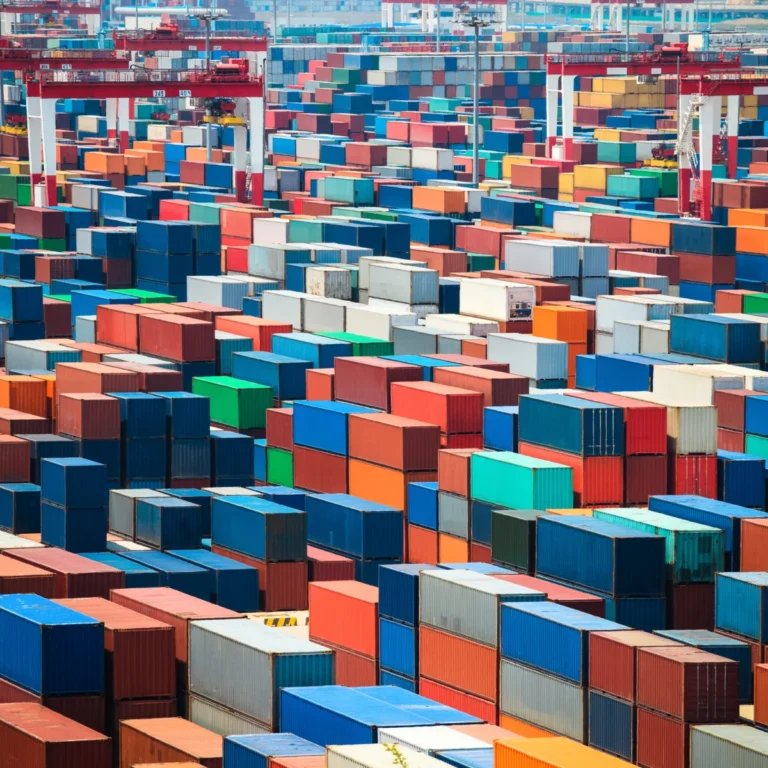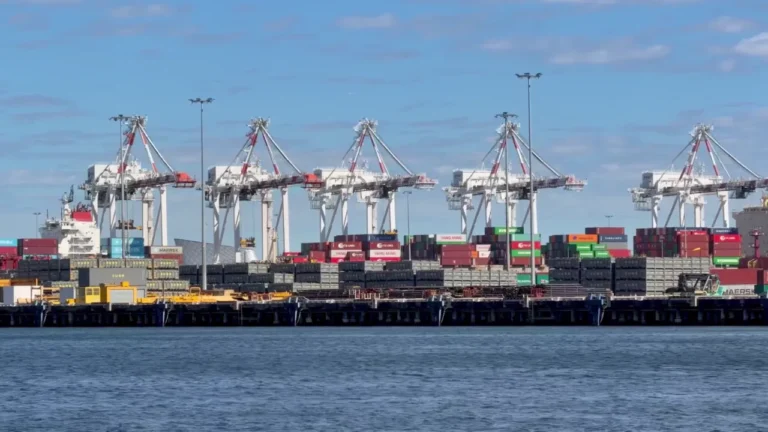
In a high-level summit held at the iconic Shanghai Tower, leadership from Valenciaport and the Shanghai International Port Group (SIPG) met to chart a new course for one of the world’s most vital maritime trade routes. The meeting, which brought together top-tier maritime executives, focused on cementing the strategic partnership between the Port of Valencia—the Western Mediterranean’s leading gateway—and the Port of Shanghai, the world’s busiest container hub. As global supply chains shift toward digitalization and decarbonization, this meeting marks a pivotal moment in the bilateral relationship between Spain and China.
The Summit: Bridging the Mediterranean and the Pacific
The event was co-chaired by Mar Chao, President of the Port Authority of Valencia (APV), and Sam Liu, Vice President of SIPG. Joining the high-level delegation was Guoqiang Shi, CEO of CSP Spain, reflecting the critical role that Cosco Shipping Ports (CSP) plays in the operational nexus between these two maritime titans.
The primary objective of the presentation was to showcase the inherent synergies between the two ports. For Valenciaport, the goal is clear: to reinforce its status as the premier European entry point for Asian goods. For SIPG, the partnership offers a reliable, high-efficiency connection to the European market, characterized by extensive intermodal connectivity and a robust hinterland.
Chronology of Cooperation
The strategic dialogue between Valenciaport and SIPG is not a recent development, but rather the culmination of years of sustained engagement.
- Foundation: Over the last decade, Valenciaport has consistently positioned itself as China’s most reliable partner in the Mediterranean, investing heavily in infrastructure to accommodate the ultra-large container vessels that frequent the Shanghai-Valencia route.
- The Growth Surge (2025–2026): Throughout the first three quarters of 2026, the collaboration saw a dramatic acceleration in volume. Trade data from January to September 2026 revealed a staggering 15.07% growth in container traffic (TEUs) and a 15.75% surge in tonnage compared to the previous year.
- The Shanghai Tower Summit: The recent meeting in Shanghai served as a platform to formalize the focus on "Green Corridors." This initiative, which aligns with international environmental standards, seeks to decarbonize the shipping lane connecting the two ports.
- Engagement at the CIIE: Following the business development session, Mar Chao participated in the China International Import Expo (CIIE). This participation was designed to elevate Valenciaport’s profile among Chinese logistics firms, ensuring that the port remains top-of-mind for exporters looking to penetrate the Spanish and European markets.
Supporting Data: A Partnership Built on Volume
The economic data underlying this partnership is compelling. China currently stands as Valenciaport’s largest international trading partner by container traffic. Between January and September 2026, the volume of trade reached 714,691 TEUs. In physical weight, this translates to 7.66 million tonnes of cargo.
A particularly striking figure is the concentration of trade: the Port of Shanghai alone accounts for 36% of the total trade volume between Valenciaport and China, moving approximately 2.3 million tonnes annually.
Valenciaport’s overall operational dominance provides the backbone for this traffic. As a hub, the port manages more than 40% of Spain’s total import and export container traffic. This is supported by an unparalleled network of over 100 regular shipping services that link the port to all five continents, creating a web of connectivity that is virtually unmatched in the Western Mediterranean.
Official Responses and Strategic Vision
During the summit, Mar Chao emphasized that the relationship is moving beyond simple cargo throughput. "China is, and will remain, one of our most important trading partners," Chao stated. "Our visit to Shanghai is not merely to acknowledge past success, but to lay the groundwork for future collaboration in areas that define the next generation of maritime trade: innovation, digitalization, and sustainability."
Chao highlighted that the competitive landscape for ports is changing. "We are no longer competing solely on capacity. The new frontier is efficiency, smart logistics, and the ability to integrate into a sustainable supply chain. By aligning our digital protocols and investing in green corridors, we are positioning Valenciaport as the most reliable, sustainable, and efficient entry point for Chinese companies seeking to access the European hinterland."
The leadership at SIPG echoed these sentiments, noting that for Chinese exporters, the stability and rail-linked connectivity offered by Valencia—which provides direct access to major Spanish industrial hubs—are significant competitive advantages that cannot be overlooked.
The Infrastructure Advantage: Connectivity and Hinterland
Valenciaport’s value proposition to its Chinese partners is rooted in its geographic and structural advantages. Its location provides an ideal "gateway" function. Once goods arrive in Valencia, they do not merely sit at the port; they are integrated into a sophisticated intermodal network.
The port’s rail connectivity is a core component of this strategy. By linking directly to Spain’s major logistics and industrial centers, Valenciaport reduces the "last mile" friction that often plagues international trade. Furthermore, the port serves a hinterland that accounts for a substantial share of Spain’s economic activity, meaning that goods arriving from Shanghai are closer to their final consumers than at almost any other Mediterranean port.
Sustainability: The Path to Net Zero
A significant portion of the dialogue in Shanghai focused on the "Green Corridor" initiative. Recognizing the global pressure to reduce the carbon footprint of maritime logistics, Valenciaport has committed to a comprehensive Net Zero Emissions Plan.
The port is targeting net-zero status by the mid-2030s. This ambitious goal is supported by:
- Shore Power Supply: Providing electricity to vessels while they are docked, thereby eliminating the need for ships to run auxiliary engines and reducing port-side emissions.
- Renewable Energy Integration: Significant investment in wind and solar infrastructure within the port area to power daily operations.
- Electrification of Operations: Transitioning port equipment and machinery to electric alternatives, reducing the reliance on fossil fuels.
By sharing these initiatives with SIPG, Valenciaport is fostering a collaborative environment where best practices in sustainable port management are exchanged. This is crucial for Chinese companies that are also under mandate to reduce the carbon intensity of their supply chains.
Implications for the Future of Global Trade
The deepening ties between Valenciaport and SIPG have broader implications for the global maritime industry.
1. The Resilience of the "Slow-Steaming" Era
As the industry moves toward greener practices, the partnership suggests a shift toward more predictable, efficient logistics chains. By focusing on green corridors, the two ports are essentially "future-proofing" their trade route against upcoming environmental regulations, such as the EU’s Emissions Trading System (ETS).
2. Digitalization as a Strategic Asset
The emphasis on digitalization means that the flow of information between Shanghai and Valencia is becoming as important as the flow of containers. Real-time data sharing, digital documentation, and automated customs processes are set to become the standard. This reduces delays and increases the transparency of the supply chain, which is a major win for shippers and carriers alike.
3. A Strategic Gateway to Europe
For China, the Valenciaport connection is a hedge against over-reliance on Northern European ports. By strengthening the Southern route, China gains a more diversified entry strategy into Europe, utilizing the Mediterranean as a primary artery for trade.
4. The Competitive Landscape
This partnership sets a high bar for other Mediterranean ports. By combining massive cargo volume with a clear commitment to sustainable innovation, Valenciaport is signaling to the global market that it is the preferred partner for high-volume, high-efficiency trade.
Conclusion: A Collaborative Future
The meetings in Shanghai represent a mature, forward-looking phase in the relationship between Valenciaport and SIPG. With trade volumes on the rise and a shared commitment to the technological and environmental evolution of the maritime industry, the two ports are well-positioned to navigate the complexities of the global economy.
As Mar Chao noted throughout her visit, the goal is to foster a "reliable and competitive partnership" that benefits not just the port authorities and shipping lines, but the entire industrial ecosystem in Spain and China. Through continued collaboration, the Valencia-Shanghai corridor will remain a vital, resilient, and sustainable backbone of global commerce for decades to come.
About the Author