The Fuel Surcharge Imperative
In a global economy increasingly defined by geopolitical volatility and persistent inflationary pressures, major parcel delivery providers are successfully deploying a potent financial mechanism: the fuel surcharge. Through these heightened fees levied on shippers, industry titans like UPS and FedEx are effectively insulating their bottom lines from the surging costs of fuel, a critical operational expense. While this strategy safeguards carrier profitability and operational stability, it simultaneously places an escalating financial burden on businesses that rely on these networks to move goods, forcing them to either absorb the increased costs or pass them along to consumers.
The current escalation in fuel surcharges is directly linked to an unpredictable global energy market, significantly influenced by ongoing geopolitical tensions, most notably the protracted Iran war and its implications for vital shipping lanes such as the Strait of Hormuz. These flashpoints create a ripple effect, driving up crude oil prices and, consequently, the cost of diesel and jet fuel essential for logistics operations worldwide.
A Mechanism Born of Volatility: The Evolution of Fuel Surcharges
The concept of the fuel surcharge is not new; it emerged as a widespread practice in the logistics sector during periods of significant oil price volatility, gaining prominence in the early 2000s. Prior to this, carriers largely absorbed fuel price fluctuations into their base rates. However, as energy markets became more unpredictable and the scale of potential cost swings grew, carriers recognized the need for a dynamic pricing mechanism that could automatically adjust to changes in fuel costs without constant renegotiation of base contracts.
Typically, fuel surcharges are calculated as a percentage of the base shipping rate and are indexed to a publicly available national or international average fuel price (e.g., the U.S. Department of Energy’s weekly average diesel price or a global jet fuel index). These percentages are adjusted weekly or monthly, ensuring that carriers can swiftly recover rising fuel expenses. This direct pass-through mechanism acts as a critical buffer, protecting carriers from margin erosion when fuel prices spike. Conversely, when fuel prices drop, the surcharge percentage also decreases, theoretically offering some relief to shippers, though the overall trend in recent years has been upward.
Geopolitical Tensions Drive Up Costs: The Current Landscape
The current surge in fuel surcharges is a direct consequence of a complex interplay of global events, primarily centered around the Iran war.
The Iran War and Strait of Hormuz: A Critical Chokepoint
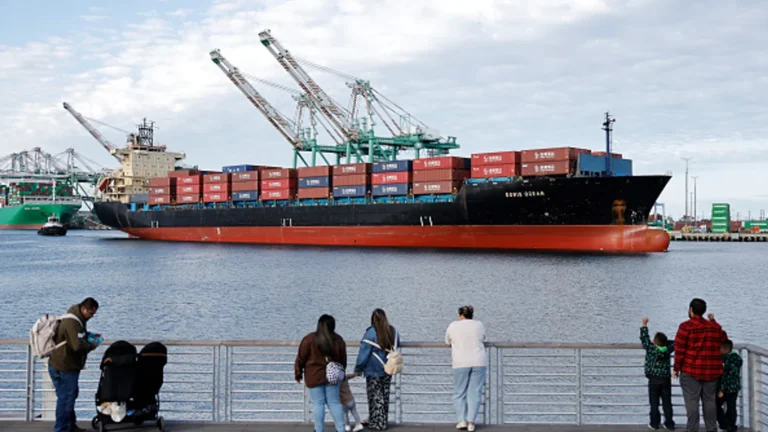
The ongoing conflict involving Iran has profound implications for global energy markets. Iran, a significant oil producer, sits strategically adjacent to the Strait of Hormuz, a narrow waterway that serves as the world’s most important oil transit chokepoint. Approximately one-fifth of the world’s total petroleum consumption, including a substantial portion of global liquefied natural gas (LNG), passes through this strait. Any perceived threat to shipping in this critical passage, whether from military action, blockades, or heightened security risks, immediately sends jitters through international oil markets.
Even the threat of disruption, rather than actual interdiction, is sufficient to trigger speculative buying and drive up crude oil prices. This geopolitical risk premium is a significant factor contributing to the elevated cost of crude. As crude prices climb, so do the costs of refined petroleum products like diesel fuel, which powers the vast majority of ground transportation, and jet fuel, critical for air freight. Carriers, operating on thin margins, are quick to reflect these increases in their fuel surcharges to maintain financial viability.
Surcharges as a Shield: Carriers Fortify Their Bottom Lines
For top delivery providers, these surcharges are proving highly effective in achieving their intended purpose: minimizing the impact of fuel expenses on their financial performance. The latest data underscores this efficacy. According to the TD Cowen/AFS Freight Index, the net fuel surcharge per package among ground parcel shipments witnessed a substantial 40% year-over-year increase in Q2. This significant jump is directly attributed to the escalating conflict and the resulting disruptions and anxieties surrounding the Strait of Hormuz.

This mechanism allows carriers to recover a substantial portion of their increased operational costs without having to absorb them directly. While it doesn’t necessarily translate into increased profit margins on fuel itself, it prevents a significant drain on overall profitability that volatile fuel prices would otherwise inflict. It’s a critical tool for maintaining predictable financial performance in an unpredictable world.
Carrier Performance and Strategy: FedEx and UPS Navigate the Headwinds
Both FedEx and UPS, along with other major logistics players, have strategically leveraged fuel surcharges to mitigate the financial sting of higher operating expenses. Their recent financial reports and projections offer a clear illustration of this strategy in action.
FedEx’s Fiscal Resilience: Q4 2026 Results and Projections
FedEx, one of the world’s largest express transportation companies, recently highlighted the tangible benefits of its fuel surcharge strategy. For the quarter that concluded on May 31, its core Federal Express segment reported an impressive 14% year-over-year revenue jump. A significant portion of this growth—specifically, a 5-percentage-point benefit—was directly tied to fuel price-driven surcharge revenue. This demonstrates how effectively the surcharge mechanism can bolster top-line performance during periods of elevated fuel costs.
However, it’s crucial to note that while surcharges boosted revenue, they did not materially increase operating income. This nuance is critical: fuel costs for the Federal Express segment simultaneously surged by an alarming 70% year-over-year. This indicates that the fuel surcharge revenue largely served as a cost-recovery mechanism, effectively offsetting the dramatic increase in fuel expenses rather than significantly boosting profitability beyond that recovery. It underscores the defensive nature of these surcharges—a shield against rising costs rather than an independent profit driver.
Looking ahead, FedEx maintains a confident outlook. For the 2026 calendar year, the company anticipates a year-over-year revenue growth of approximately 11%. Of this, about 3 percentage points are projected to be attributable to an "assumed fuel price-driven surcharge benefit," as stated by EVP and Chief Customer Officer Brie Carere during a June earnings call.
Significantly, Carere also addressed concerns regarding potential "demand destruction"—a scenario where higher shipping costs might compel shippers to reduce their shipping volumes. "From a demand perspective, I was concerned a quarter ago that we maybe would see some demand destruction," Carere admitted. "That has not at all been the case." This observation suggests a certain inelasticity in the demand for parcel shipping services, at least for now. Despite the higher costs, businesses continue to rely on robust logistics networks to deliver goods, indicating that the necessity of timely and reliable delivery often outweighs the immediate cost concerns, or that the underlying economic conditions remain strong enough to absorb the increases.
UPS and the Broader Picture: Consistent Strategy Across Industry Leaders
While specific Q2 2026 financial details for UPS regarding fuel surcharge impact were not provided in the original brief, the article implies a consistent strategy across major carriers. UPS, a global leader in logistics, operates with similar economic realities and competitive pressures as FedEx. It too employs sophisticated fuel surcharge mechanisms, adjusting them regularly to reflect market prices. This uniformity in approach across industry giants ensures a level playing field in terms of cost recovery, preventing any single carrier from being disproportionately disadvantaged by fuel price spikes.
The implicit mention of Amazon in the original context is also noteworthy. Amazon operates not only as a massive shipper but increasingly as its own logistics provider, competing directly with traditional carriers in certain segments. This dual role adds another layer of complexity to the competitive landscape, potentially influencing how all carriers manage and communicate their surcharges, balancing cost recovery with competitive pricing strategies. The collective reliance on fuel surcharges highlights a shared industry challenge and a common solution to mitigate its financial impact.
The Shipper’s Dilemma: Absorbing the Costs or Seeking Relief
While fuel surcharges serve as a critical defense for carriers, they represent a growing financial burden for shippers across all sectors. This dynamic creates a significant dilemma for businesses that depend on these logistics networks.

Rising Operational Burdens: The Ripple Effect on Businesses
The increased cost of shipping due to fuel surcharges is not an isolated expense; it contributes to a broader rise in operational burdens for businesses. These elevated transportation costs can erode profit margins, especially for small and medium-sized enterprises (SMBs) that may have less leverage to negotiate or absorb such increases. For businesses operating on tight budgets, every percentage point increase in shipping costs can significantly impact their bottom line.
Moreover, these costs often translate into inflationary pressures. When businesses cannot fully absorb the higher shipping expenses, they are compelled to pass them on to consumers through higher product prices. This ripple effect can contribute to broader economic inflation, impacting purchasing power and overall economic stability.
The complexity is further compounded by the existence of numerous other surcharges that carriers levy. Beyond fuel, shippers often face fees for residential delivery, peak season surcharges, dimensional weight charges, extended area surcharges, and various accessorial fees. Each of these, when added to the base rate and the fuel surcharge, can dramatically inflate the final shipping cost per package, making logistics budgeting an increasingly intricate and challenging task. Understanding and managing this intricate web of fees requires sophisticated analytics and a deep understanding of shipping contracts.
Negotiation as a Lifeline: Opportunities for Contractual Relief
Despite the seemingly non-negotiable nature of standard fuel surcharge tables, shippers are not entirely without recourse. Industry experts suggest that opportunities exist for businesses to negotiate for price relief within their parcel shipping contracts, particularly concerning fuel surcharges. Mingshu Bates, AFS Logistics chief analytics officer and president of parcel, emphasized this point in a July interview with Supply Chain Dive: "You have to push, but it’s definitely easier to get some relief from the carriers on fuel."
This willingness of carriers to negotiate on fuel surcharges, more so than in historical periods, stems from fuel now constituting a larger portion of shippers’ overall transportation spending. As fuel costs become a more dominant component of the total logistics bill, carriers recognize that offering some flexibility here can be a crucial differentiator in retaining high-volume clients and maintaining competitive relationships.
To effectively negotiate, shippers need to:
- Leverage Volume: Larger shipping volumes inherently provide greater negotiating power.
- Understand Their Profile: A detailed analysis of shipping lanes, package sizes, and service levels can reveal specific areas where discounts might be secured.
- Benchmark: Comparing their current rates and surcharges against industry averages and competitors can provide valuable ammunition for negotiations.
- Target Specific Discounts: Shippers can aim to negotiate a lower fuel surcharge percentage than the published rate, a cap on the maximum fuel surcharge applied, or a delayed implementation of increases.
- Utilize Data Analytics: Employing logistics analytics software or consultants to dissect shipping invoices and identify cost drivers is paramount. Data-driven insights can expose discrepancies and highlight areas for potential savings.
- Consider All-in Rates: Some shippers explore negotiating "all-in" rates that consolidate various surcharges, including fuel, into a single, more predictable per-package cost, though this often comes with its own set of trade-offs.
Successful negotiation requires proactive engagement, a clear understanding of contractual terms, and a willingness to explore alternative solutions or carriers if favorable terms are not met.
Broader Implications and Future Outlook: Navigating the New Normal
The current reliance on fuel surcharges as a primary cost-mitigation strategy for carriers carries significant broader implications for the economy, supply chain resilience, and the future of logistics.
Economic Impact: Inflationary Pressures and Supply Chain Resilience
The pass-through of increased fuel costs through surcharges contributes directly to inflationary pressures across the economy. Businesses facing higher shipping expenses must decide whether to absorb these costs, impacting their profitability, or pass them on to consumers, leading to higher retail prices. This can exacerbate cost-of-living challenges and potentially temper consumer demand in the long run.

For supply chains, the continuous volatility underscores the critical need for resilience. Businesses can no longer assume stable transportation costs. They must build flexibility into their logistics networks, diversify sourcing, and develop contingency plans to withstand sudden price shocks and geopolitical disruptions. The focus shifts from simply efficiency to a balanced approach that prioritizes both cost-effectiveness and robustness.
Shipper Adaptation Strategies: Beyond Negotiation
While negotiation offers immediate relief, shippers are also adopting more fundamental, long-term strategies to mitigate the impact of rising logistics costs:
- Technology Adoption: Implementing advanced Transportation Management Systems (TMS) and route optimization software can significantly improve efficiency, reduce mileage, and consolidate shipments, thereby lowering overall fuel consumption.
- Consolidation and Optimization: Shippers are increasingly consolidating orders, optimizing packaging to reduce dimensional weight, and exploring less-than-truckload (LTL) or multi-modal options where feasible, to maximize efficiency per shipment.
- Diversification of Carriers: Relying on a single carrier can limit negotiation power. Diversifying across national, regional, and specialized carriers can provide more options, competitive pricing, and redundancy.
- Warehouse Optimization: Strategically locating distribution centers closer to customer bases can reduce transit distances and associated fuel costs.
- Nearshoring/Reshoring: Bringing manufacturing or sourcing closer to end markets reduces international shipping distances and reliance on potentially volatile global routes.
- In-house Logistics: For larger enterprises, investing in their own fleet and logistics capabilities can offer greater control over costs and service levels, though this requires significant capital investment and expertise.
- Sustainability Initiatives: Adopting sustainable practices, such as using electric vehicles for last-mile delivery or optimizing delivery windows, not only aligns with environmental goals but can also lead to long-term fuel savings.
Carrier Innovation and Sustainability: Long-Term Solutions
Carriers, too, are looking beyond immediate surcharges toward more sustainable long-term solutions for managing fuel costs and environmental impact:
- Fleet Modernization: Investing in newer, more fuel-efficient vehicles, including aerodynamic designs and advanced engine technologies, is a continuous effort.
- Alternative Fuels: Significant research and development are being poured into alternative fuel sources. This includes expanding electric vehicle fleets for last-mile delivery, exploring hydrogen fuel cells for heavy-duty trucks, and developing sustainable aviation fuels (SAFs) for air cargo.
- Network Optimization: Advanced analytics and artificial intelligence are being used to optimize routes, maximize load factors, and streamline hub operations, reducing unnecessary mileage and fuel consumption across their vast networks.
- Operational Efficiencies: Implementing smarter scheduling, improving package sorting technologies, and enhancing overall operational workflows contribute to reduced fuel waste.
The Evolving Relationship: Partnership in Volatility
The current environment necessitates a more collaborative and transparent relationship between carriers and shippers. While surcharges remain a contentious point, they are also a testament to the shared challenges faced in a highly interconnected and often turbulent global economy. The ongoing dance between carriers’ need for cost recovery and shippers’ demand for affordable, reliable service will continue to evolve.
The future outlook for fuel prices and geopolitical stability remains uncertain. Experts generally anticipate continued volatility, suggesting that fuel surcharges will remain a permanent fixture in logistics pricing. This persistent challenge demands continuous vigilance, adaptation, and strategic planning from all parties within the supply chain.
Conclusion: A Persistent Challenge
The strategic deployment of fuel surcharges by leading parcel carriers like FedEx and UPS has proven effective in shielding their financial performance from the sharp spikes in fuel costs driven by geopolitical events such as the Iran war. While this mechanism is vital for carrier stability, it undeniably transfers a significant financial burden to shippers, who must navigate increased operational costs and potential inflationary pressures.
The ability for shippers to negotiate relief on these surcharges offers a critical, albeit partial, avenue for mitigation. However, the broader context demands more comprehensive strategies, including technological adoption, network optimization, and a renewed focus on supply chain resilience. As the global landscape remains prone to volatility, fuel surcharges will continue to be a defining feature of the logistics industry, underscoring the imperative for both carriers and shippers to innovate, adapt, and collaborate in the face of persistent economic and geopolitical uncertainties.
About the Author