In the modern supply chain landscape, Automated Storage and Retrieval Systems (AS/RS) have long been marketed as tactical solutions for warehouse optimization. For years, the value proposition focused on the "low-hanging fruit" of logistics: easing labor constraints, maximizing vertical storage capacity, and accelerating fulfillment speed. However, as global market dynamics shift, the role of automation is undergoing a fundamental transformation. Today, AS/RS is no longer merely a tool for efficiency; it has become a core strategic asset, enabling enterprises to pivot rapidly, scale into new international territories, and meet the increasingly complex demands of the modern consumer.
The Macro Shift: Convenience and the Prepared-Food Boom
The surge in demand for automation is inextricably linked to the rapid evolution of consumer behavior. Nowhere is this more apparent than in the prepared-food sector. Driven by a global workforce of busy professionals, a cultural shift toward on-the-go eating, and the ubiquitous reach of e-commerce platforms, the market for ready-to-eat meals, frozen snacks, and sophisticated meal kits is experiencing an unprecedented period of growth.
According to a July report by Core Market Research, the prepared-foods sector is projected to expand at an average annual rate of 10% between 2025 and 2035. This trajectory is not merely a quantitative increase in volume; it represents a qualitative shift in how food companies must operate. "As competition becomes more intense, manufacturers must continuously innovate and adapt to maintain their position in the prepared-food market," the report notes.
For producers, this means the traditional, manual-heavy warehouse model is reaching its breaking point. To maintain market share, firms are increasingly turning to high-tech, end-to-end automated systems that provide the agility required to navigate a volatile global supply chain.
Automating for Expansion: The Case of Herba Ricemills
A prime illustration of this strategic pivot can be found in the province of Seville, Spain, at the San José de la Rinconada facility of Herba Ricemills, a division of the global powerhouse Ebro Foods.
Herba Ricemills serves as a vital node in the global food supply chain, producing ready-to-serve cooked rice products under diverse brand names—ranging from Minute in North America to Lassie in the Netherlands and Brillante in the domestic Spanish market. Recognizing a burgeoning demand for their products in Africa and the Middle East, company leadership understood that their existing infrastructure could not sustain the necessary volume of growth.
Prior to their recent technological overhaul, the facility relied on an ERP-managed system that utilized manual labor for placement and retrieval. As production volumes climbed, the limitations of this "analog" approach became painfully clear. The reliance on human operators to navigate expansive warehouse floors led to inefficient space utilization, increased picking errors, and a fragmented flow of materials that could not keep pace with the speed of production.
Chronology of a Transformation
The decision to transition to a fully automated environment was not made lightly, nor was it executed overnight. The project, designed in collaboration with warehouse storage solutions leader Mecalux, followed a structured path of modernization:
- Assessment Phase: Management identified that "flow coordination" was the primary bottleneck. The need for absolute traceability—essential in food safety and regulatory compliance—was hampered by the reliance on manual data entry and physical inventory management.
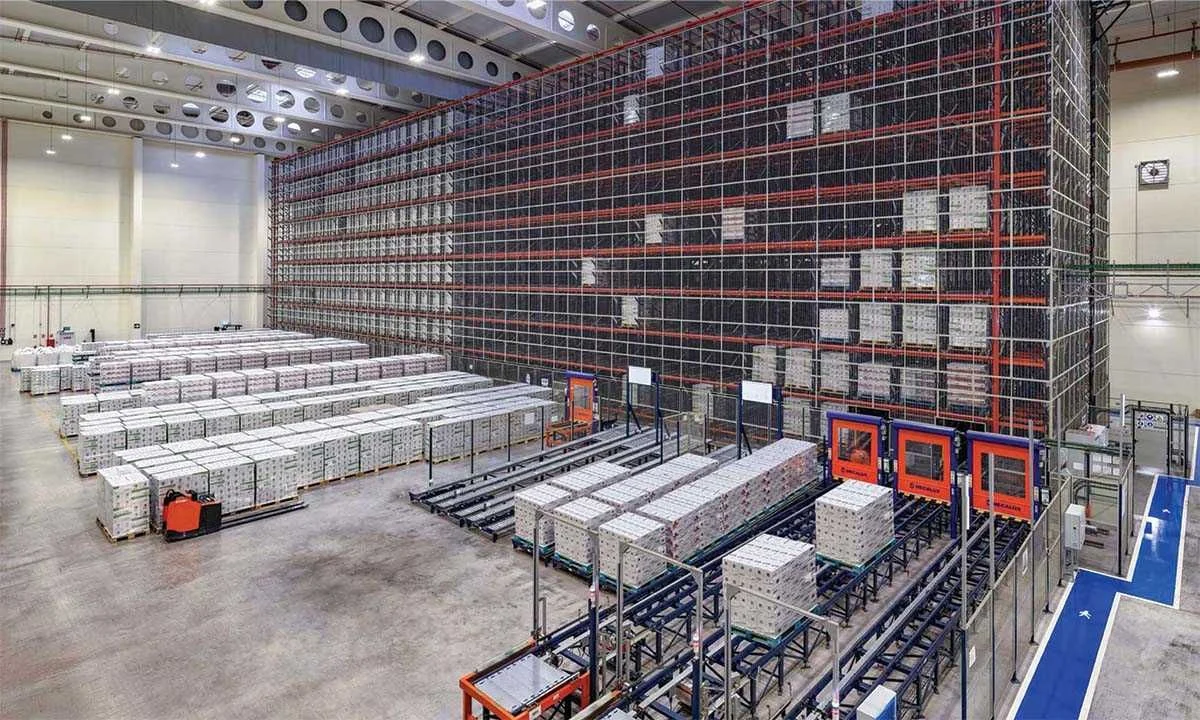
- Structural Implementation: The installation focused on a massive, 60-foot-high racking system capable of housing 5,400 pallets. The centerpiece of this design was an automated pallet shuttle system integrated with a high-speed stacker crane.
- Systems Integration: The physical infrastructure was tethered to a robust Warehouse Management System (WMS), which acts as the "brain" of the operation. This system was designed to coordinate not only the AS/RS but also the inbound inspection stations and the production flow.
- Operational Go-Live: The integration of Autonomous Guided Vehicles (AGVs) created a closed-loop system, removing the need for manual intervention from the moment raw ingredients arrive at the loading docks until the finished goods are staged for shipping.
Supporting Data: Quantifying the Impact
The results of the Herba Ricemills project provide a compelling case for the return on investment (ROI) associated with AS/RS technology. Since the implementation of the Mecalux-designed system, the company has reported two key performance indicators that underscore the viability of their investment: a 25% increase in overall facility productivity and a 95% reduction in picking errors.
Beyond these metrics, the qualitative benefits have proven equally significant. The system allows for "quarantine" zones within the pallet-flow racking, ensuring that quality control and inspection protocols are automated, consistent, and fully documented. This level of oversight is essential for companies operating in the highly regulated food and beverage industry, where the cost of a recall or a shipping error can be catastrophic to a brand’s reputation.
Official Perspectives on the New Normal
"That setup required greater flow coordination, used space less efficiently, and increased the likelihood of picking mistakes," explains Juan Pedro Álvarez, director of Ebro Foods’ ready-to-serve division in Andalusia. "We needed a system that would maximize capacity, shorten handling times, and ensure complete traceability."
The sentiment is echoed by Manuel Matías Martínez, the head of warehousing and logistics management at the San José de la Rinconada site. "The WMS provides us with end-to-end, real-time control over our facility," Martínez notes. "We now track locations, inventory status, and product flows accurately. Training was straightforward, and the team gained full autonomy quickly."
These testimonials highlight a crucial shift in the corporate mindset regarding automation. For leaders at Ebro Foods, the transition was not about replacing human labor; it was about elevating the facility’s capabilities to meet global market demands. By removing the manual burden of repetitive tasks, the company has empowered its workforce to focus on high-value roles, such as system management and quality oversight.
Implications: The Strategic Imperative
The Herba Ricemills case study serves as a bellwether for the manufacturing industry at large. As companies look to expand their geographic reach, they are finding that the warehouse is no longer a "back-of-house" concern—it is a competitive frontier.
1. Scalability as a Service:
The modular nature of modern AS/RS, such as the shuttle-based systems used in Spain, allows companies to scale their storage capacity in line with market growth. This is vital for the prepared-food sector, where seasonal fluctuations and changing consumer trends can cause sudden spikes in volume.
2. The Precision Requirement:
In an era of instant gratification, consumers demand accuracy. A 95% reduction in picking errors is not just an efficiency gain; it is a customer retention strategy. In the highly competitive prepared-food market, where brand loyalty is often dictated by the consistency of the product experience, the reliability provided by automation is a powerful differentiator.
3. Resilience in the Face of Disruption:
The integration of AGVs and intelligent WMS software creates a level of operational resilience that is difficult to replicate with manual systems. By minimizing travel distances and forklift maneuvering, the facility is insulated against labor shortages and operational inefficiencies that often plague traditional, labor-intensive warehouses.
4. The Cultural Shift:
Perhaps most importantly, the project highlights that innovation is a business imperative, not a luxury. "To remain competitive, implementing the latest technologies is essential," says Álvarez. "It’s no longer a luxury—it’s an imperative. The time for innovation is now."
Conclusion: Looking Ahead
The success of the Herba Ricemills project underscores a broader truth: the future of manufacturing belongs to those who can harmonize physical production with digital intelligence. As the prepared-food market continues to grow, the companies that thrive will be those that have successfully integrated their warehouse operations into their overall corporate strategy.
AS/RS technology, once viewed as a high-cost capital expenditure, is now recognized as a foundational layer for growth. By providing the speed, accuracy, and scalability necessary to navigate the global marketplace, these systems are empowering food producers to reach new customers, defend their market position, and ultimately define the future of the industry. As the decade progresses toward 2035, the lessons learned in Seville will likely be echoed in factories around the world, as the "strategic imperative" of automation continues to reshape the landscape of global logistics.
About the Author