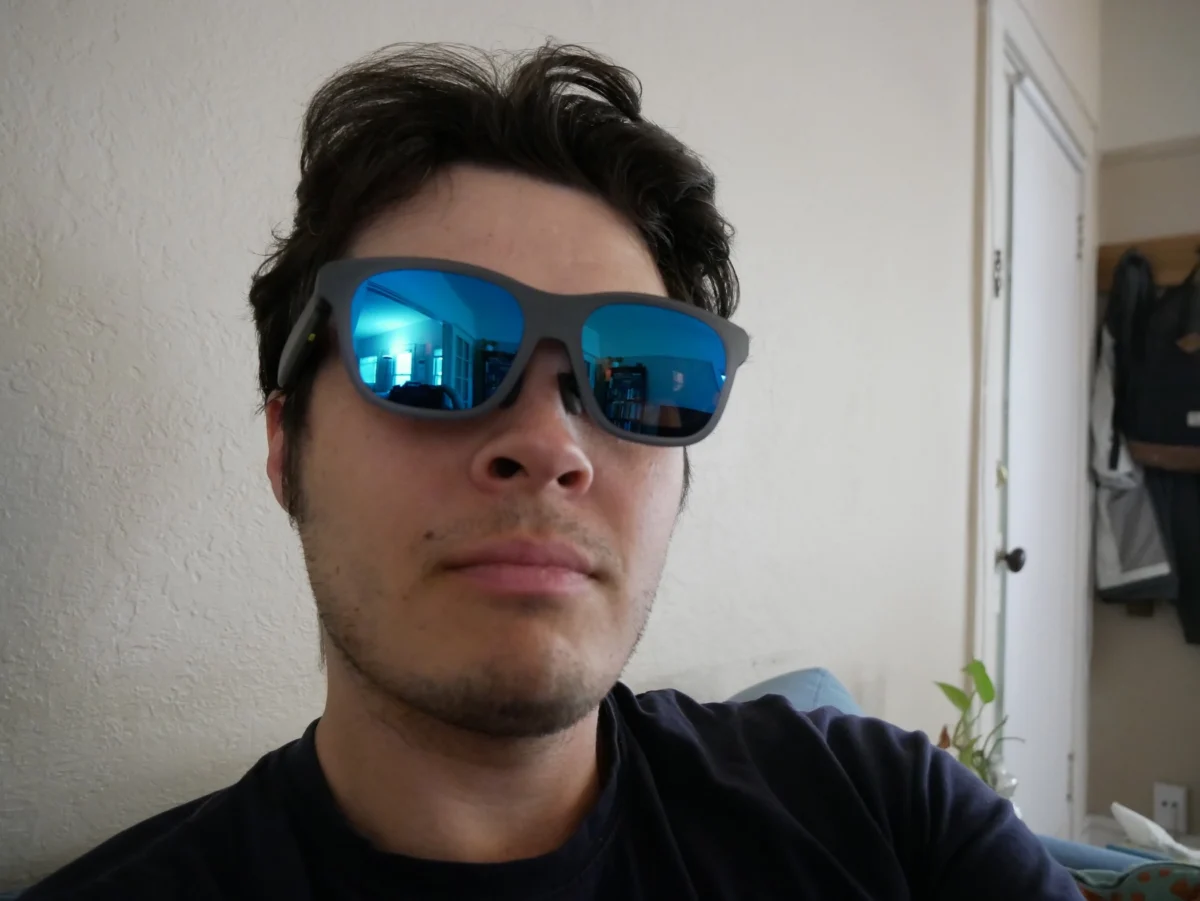
For the dedicated cinephile, the quest for the "perfect" viewing experience is a lifelong pursuit. It is a journey that moves from the sticky floors of local multiplexes to the controlled, high-contrast environments of dedicated home theater setups. As a tech-forward media enthusiast, I am always on the hunt for a new format to consume content—a pursuit that led me to the XREAL a01, a device released in May of this year that promises to turn any space into a private screening room. But as I spent weeks integrating these smart glasses into my daily media diet, I found myself confronting an existential question: Does strapping a screen to your face actually improve the movie-watching experience, or are we simply over-complicating the simple act of looking at a display?
The Hardware: A Study in Simplicity
The XREAL a01 is not an attempt to compete with the high-concept, software-heavy augmented reality (AR) headsets currently making waves in the tech industry. It does not aspire to be the Meta Orion or a pair of hyper-intelligent Snap Specs. Instead, it positions itself as a utilitarian tool: a tethered, external monitor designed for portability and high-definition visual output.
At a price point of approximately $300, the a01 is positioned as an accessible entry point into the world of wearable displays. The device is notably stripped back; there is no onboard battery, no internal processor to handle heavy computational loads, and no proprietary operating system to navigate. It relies entirely on a USB-C connection to a host device—be it a laptop, a Steam Deck, or a smartphone—to draw both power and data.
The hardware itself is surprisingly sleek. Outfitted with dual mini-OLED panels, the glasses deliver a 1080p resolution with a peak brightness of 1,600 nits. The result is a high-contrast, vibrant visual field that, in a darkened room, successfully mimics the feeling of sitting in a drive-in theater or staring at a high-end projector screen.
Chronology of the Experience
To test the efficacy of the a01, I decided to treat it as my primary viewing device for a series of films. I began by connecting the glasses to my personal laptop, booting up the Criterion Channel, and settling in for a screening of David Lynch’s Wild at Heart.
The initial impression was undeniably striking. The depth of color and the crispness of the OLED panels were impressive for a device that weighs significantly less than a standard pair of heavy-duty sunglasses. Watching Nicolas Cage navigate a bar fight in a snakeskin jacket felt vivid and immediate. However, the novelty began to wear off as the limitations of the tethered experience set in.

Throughout the following week, I experimented with different pairings. I attempted to connect the glasses to my phone, though my aging iPhone required an adapter—a reminder of the fragmented nature of current USB-C compatibility standards. When the connection was successful, the experience shifted from a stationary desk-bound activity to a mobile one. I could, in theory, watch a film on a plane or a train. Yet, even as the utility increased, the "redundancy problem" loomed large.
Supporting Data and Technical Limitations
The fundamental challenge with the a01 lies in its status as a pure screen-mirroring device. Because the glasses act as an extension of the host device, the host’s screen must remain active and powered throughout the viewing experience. This creates a strange dichotomy: you are watching a 147-inch virtual projection while a physical, illuminated screen sits less than a foot away from your peripheral vision.
Thermal Performance
One of the most concerning aspects of the a01 is its thermal output. After roughly 30 to 45 minutes of continuous use, the glasses begin to warm significantly. This creates an uncomfortable tingling sensation on the bridge of the nose and the brow. While this is a well-documented challenge for nearly all XR hardware—a result of cramming high-density computing components into compact, plastic frames—it remains a significant barrier to long-form media consumption. A movie is a two-hour commitment; an accessory that becomes physically intrusive after 45 minutes is, by definition, failing its primary purpose.
The Ecosystem Gap
To solve the issues of mobility and power, XREAL offers the "Beam Pro," a $200 companion device. The Beam Pro functions as a dedicated media hub, allowing users to download content and stream directly to the glasses without needing a phone or laptop. While this solves the tethering problem, it effectively raises the cost of entry to $500, moving the device out of the "impulse buy" category and into the territory of dedicated tablets or budget monitors.
Official Stance and Future Iterations
XREAL has been consistent in its messaging: the a01 is a "wearable display," a device designed to augment your workspace or entertainment setup by providing a private, immersive screen. The company is clearly using this model as a stepping stone, iterating rapidly toward more sophisticated hardware.
During a visit to Google I/O earlier this year, I caught a glimpse of "Project Aura," the next chapter in XREAL’s hardware strategy. Unlike the a01, the Aura is powered by Android XR, a collaborative operating system developed by Google and Samsung. Crucially, the Aura includes:

- Native Hand Tracking: Moving away from reliance on external controllers or touchscreens.
- Standalone Compute: A dedicated "puck" that handles processing and power, freeing the user from being tethered to a phone or PC.
- App Ecosystem: Full access to the Google Play Store, allowing for a more robust AR experience beyond mere screen mirroring.
Implications for the Media Industry
The existence of the a01 and its successor, Project Aura, signals a broader shift in how we perceive the "screen." For decades, the consumer electronics industry has been obsessed with physical screen size—the "bigger is better" mantra that has led to the proliferation of 65-inch and 85-inch 4K panels in the average living room.
However, the XREAL approach suggests a future where the physical size of the display is irrelevant. If a pair of glasses can simulate a 147-inch screen, the need for wall space or large, heavy hardware disappears. But as a cinephile, I have to question: is the sensation of a big screen the same as the experience of a big screen?
The home theater experience is communal and ambient. It allows for peripheral awareness and comfort. The a01 offers an intense, isolated immersion that is technically impressive but inherently solitary. While this is excellent for a long-haul flight, it lacks the comfort and satisfaction of a standard television display. Watching a film on tiny screens less than an inch from my eyes feels less like a transformation of cinema and more like an interesting, albeit minor, technological experiment.
Conclusion: A Glimpse, Not a Destination
The XREAL a01 is a fascinating piece of hardware that serves as a mirror to the current state of the AR industry: ambitious, technically capable, but still searching for a clear "killer app." It is lighter and more comfortable than the bulky headsets of the past, proving that the form factor is approaching a point of viability.
Yet, for now, the traditional display remains king. My 55-inch TCL television provides a more comfortable, reliable, and social viewing experience than any pair of glasses currently on the market. The a01 is a glimpse into a future where our screens are untethered from our walls, but until issues regarding heat, battery independence, and the redundant nature of screen-mirroring are solved, the "wearable cinema" will remain a niche luxury rather than a mass-market necessity. I look forward to the evolution promised by Project Aura, but until then, I will be keeping my movies on the big screen—the one that doesn’t need to be plugged into my nose to function.
Disclaimer: When you purchase through links in our articles, we may earn a small commission. This does not affect our editorial independence or the objectivity of our reviews.
About the Author