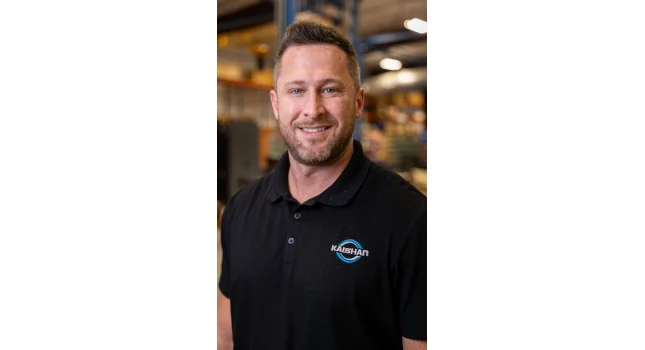
In the high-stakes world of industrial manufacturing, the title of "Plant Manager" often carries a weight of administrative burden and bottom-line pressure. However, for 36-year-old Andrew Reffner at Kaishan Compressor USA, the role is defined by something far more transformative: the strategic marriage of technical precision and human-centric mentorship. Based in Loxley, Alabama, Reffner has become a standout figure in modern engineering leadership, proving that the most effective way to optimize a production line is to first optimize the people operating it.
Main Facts: A Paradigm Shift in Loxley
In a remarkably brief tenure—spanning just seven to eight months—Reffner has systematically dismantled complacency within the Kaishan manufacturing facility. By setting aggressive, yet attainable, expectations, he has shifted the culture from one of status quo maintenance to one of aggressive continuous improvement.
The metrics of his success are quantifiable and striking. During the first quarter of 2026, under Reffner’s direct supervision, Kaishan Compressor USA achieved a 100% increase in output within its oil-free air assembly area. Perhaps more impressively, this surge in volume did not come at the expense of quality; in fact, the facility reached its highest first-pass yield (FPY) in its history during the same period. These figures are not merely anecdotal; they represent a fundamental realignment of manufacturing processes that balances high-velocity output with rigorous quality control.
Chronology: A Rapid Trajectory of Improvement
Reffner’s impact began almost immediately upon his arrival in Loxley.
- Months 1–2 (The Diagnostic Phase): Reffner spent his initial weeks conducting a "deep dive" audit of existing workflows, identifying bottlenecks in the assembly process, and, crucially, observing the interpersonal dynamics between supervisors and floor staff.
- Months 3–4 (Implementation of Lean Principles): Utilizing his Lean Six Sigma Black Belt expertise, Reffner introduced localized process refinements. He focused on reducing waste and streamlining material handling in the oil-free air assembly lines.
- Months 5–6 (Cultural Stabilization): Recognizing that mechanical efficiency is fragile without a committed workforce, Reffner shifted his focus toward leadership development. He initiated the mentorship programs that would eventually solidify the gains made in the previous quarter.
- Month 7 (The Q1 Breakthrough): The confluence of refined engineering protocols and an empowered, better-trained workforce resulted in the historic doubling of assembly output.
Supporting Data: The Mechanics of Success
The engineering sector often struggles with the "Quality vs. Quantity" dilemma. Traditional wisdom suggests that pushing for higher output inevitably leads to an increase in defect rates. Reffner’s approach at Kaishan serves as a case study in why that assumption is flawed.
By applying Lean Six Sigma methodologies, Reffner addressed the root causes of production friction. His strategy involved:
- Standardized Workflows: Ensuring every technician, regardless of tenure, follows the same optimized path to assembly.
- Accountability Metrics: Establishing clear, transparent performance indicators that allowed team members to track their own progress.
- Cross-Training: Reducing the "silo" effect by ensuring team members were proficient in multiple stations, thereby smoothing out the impact of absenteeism or bottlenecking.
The result—a record-breaking first-pass yield—confirms that Reffner’s leadership has successfully integrated quality assurance directly into the manufacturing process rather than treating it as an "after-the-fact" inspection.
Official Perspectives: The Philosophy of "People-First" Leadership
What sets Reffner apart from his peers in the industry is his radical decision to invest in human capital over turnover. In many manufacturing environments, a supervisor who struggles with accountability or difficult personnel conversations is often replaced. Reffner views this as a failure of management, not a failure of the employee.
"When I see a supervisor struggling, my first question isn’t ‘how do I replace them?’ but ‘how do I equip them?’" Reffner explains. By investing in one-on-one mentorship, he has successfully transformed struggling managers into high-performing leaders. This philosophy extends to the newest employees on the floor. Reffner is frequently seen on the manufacturing floor, coaching young professionals through the unique challenges of a high-pressure industrial environment.
This, he believes, is the only way to build a sustainable organization. "You can buy better machinery," Reffner notes, "but you cannot buy a better culture. A culture of ownership is built by proving to your people that you are invested in their personal and professional growth."
Implications for the Future of Manufacturing
Reffner’s contributions extend far beyond the walls of the Kaishan facility. His career is marked by a deep commitment to the engineering discipline at large. As a patent holder and a frequent contributor to industry conferences, he serves as an evangelist for best practices in manufacturing.
Bridging the STEM Gap
One of the most significant implications of Reffner’s work is his proactive engagement with the next generation. By supporting STEM outreach programs at both the high school and collegiate levels, he is actively working to dismantle the outdated perception of manufacturing as a "sunset" industry.
For students, Reffner serves as a bridge between abstract classroom theory and the tangible reality of modern engineering. His advocacy highlights that today’s manufacturing floor is a high-tech environment requiring advanced problem-solving, digital fluency, and collaborative leadership.
The Lean Six Sigma Legacy
Reffner’s reliance on Lean Six Sigma is not merely about trimming costs; it is about creating a mindset of perpetual refinement. His influence suggests a shift in the industry toward "Integrated Engineering," where the manager is simultaneously an engineer, a coach, and a business strategist. This hybrid role is becoming increasingly essential as supply chains grow more complex and labor markets more competitive.
Why This Matters: The Human Element of Engineering
When asked why he chose this path, Reffner’s answer is characteristically grounded. He finds satisfaction not just in the machinery, but in the "tangible results" of his efforts. Engineering provides the "how," but leadership provides the "who."
The success at Kaishan Compressor USA is a testament to the fact that manufacturing excellence is not merely a product of software, automation, or capital investment—it is a product of leadership. By fostering a culture where accountability and mentorship are held in equal regard, Reffner has provided a roadmap for other plant managers who seek to achieve sustained growth.
As he looks toward the future, Reffner continues to emphasize the "continuous learning" aspect of his profession. For him, the job is never truly finished. Each record-breaking quarter is simply a new baseline for the next phase of innovation.
In an era where industrial output is often dictated by macroeconomic trends outside of a manager’s control, Andrew Reffner’s tenure at Kaishan demonstrates that there is still significant ground to be gained through the fundamental, time-tested practices of smart engineering and compassionate leadership. His work serves as a reminder that the most sophisticated component in any manufacturing plant will always be the human beings who walk through its doors every morning. By elevating them, he has elevated the entire organization.
About the Author