This article is based on the final installment of a three-part series originally published by Printing Impressions. For more insights on the intersection of print and technology, subscribe to the "Today on PIWorld" newsletter.
In the high-stakes world of modern manufacturing, the most valuable asset on a company’s balance sheet is rarely the machinery on the shop floor or the inventory in the warehouse. Instead, it is the cumulative, often unspoken expertise held by veteran employees—the "program DNA" that dictates how to handle a complex client account, how to troubleshoot a press quirk that doesn’t appear in any manual, and how to navigate the nuances of high-stakes brand specifications.
As the industry faces a significant demographic shift, print businesses are confronting a silent crisis: the loss of institutional knowledge. When an experienced employee walks out the door for the last time, they take with them decades of problem-solving patterns, interpersonal shortcuts, and nuanced judgment.
In the concluding part of our series on preserving institutional knowledge, we examine how Amy Bonner, VP of PRINTING AI at the PRINTING United Alliance, is transforming this existential threat into a structured, technological opportunity. By leveraging Artificial Intelligence, print leaders are moving beyond static documentation toward "AI Employees"—dynamic, role-specific resources that ensure critical expertise remains embedded within the company long after a specialist retires.
The Anatomy of the Problem: Why Traditional Documentation Fails
For years, the standard response to employee turnover has been to ask departing staff to "document their processes." However, industry veterans and experts like Bonner argue that this approach is fundamentally flawed.
The Myth of the "Knowledge Dump"
Asking an employee to write down their knowledge on their way out the door is rarely effective. It assumes that knowledge is a series of static instructions. In reality, expert knowledge is fluid, contextual, and often intuitive. As Bonner notes, much of what makes an operation successful is never written down because, to the expert, it is second nature. It exists as a series of "judgment calls" built one job at a time over years.
The "Grief" of Knowledge Loss
The impact of losing a key player is more than just an operational hiccup; it is a cultural blow. Bonner recounts a pivotal moment from her time as an interim CIO at a Michigan-based print shop. When a lead graphic designer—who carried the weight of a massive automotive OEM account—retired, the transition was treated as a simple personnel replacement.
The reality was far more severe. The team wasn’t just struggling with the technical workload; they were experiencing what Bonner describes as a sense of "grief." The "program DNA"—the specific brand requirements, the unique needs of dealership relationships, and the history of past resolutions—vanished. The team was left mourning the loss of a mentor and struggling to reconstruct a workflow that had been operating on "autopilot" for years. This experience served as the catalyst for the development of the methodology now utilized by PRINTING AI.
Chronology of the Knowledge Capture Evolution
The journey from manual documentation to AI-assisted knowledge preservation has been defined by three distinct phases of maturity within the print industry.
Phase 1: The Era of Tribal Knowledge (Pre-2015)
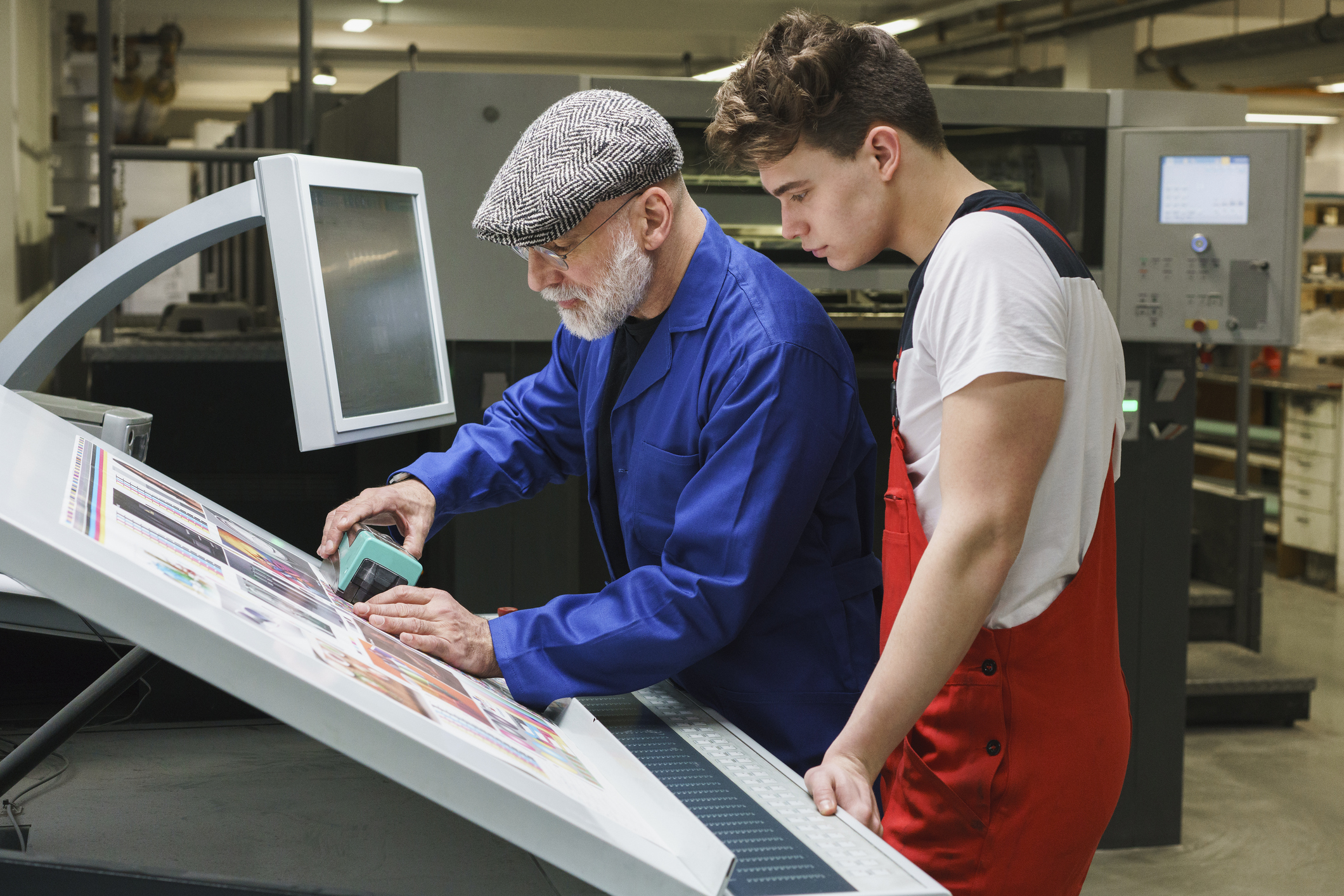
During this period, institutional knowledge was almost entirely "tribal." It lived in the heads of senior operators and managers. If a process wasn’t documented in a physical binder—which was rarely updated—it effectively didn’t exist to anyone else. Companies relied on mentorship and "shadowing," a process that is highly inefficient and vulnerable to sudden staff exits.
Phase 2: The Structured Documentation Attempt (2015–2020)
As the threat of the "silver tsunami" of retirements became clear, businesses began investing in standard operating procedures (SOPs). However, these efforts often stalled. The problem was not the lack of effort, but the lack of structure. Companies realized that "writing things down" wasn’t enough; they needed a system to organize, search, and update information.
Phase 3: The AI-Driven Ecosystem (2020–Present)
With the advent of advanced AI, the paradigm has shifted. Modern print leaders are no longer just capturing data; they are building "AI Employees." These are role-specific, LLM-driven tools trained on a company’s unique internal knowledge. They act as a 24/7 digital expert, capable of engaging in diagnostic conversations with junior staff, providing answers at 6:00 AM on the shop floor, and ensuring that the "why" behind a decision is as accessible as the "how."
Supporting Data: The Case for Governance
The transition to an AI-supported workforce requires a rigorous governance layer. Without it, companies risk deploying "hallucinating" or inaccurate AI tools that could lead to costly production errors.
The Role of Governance
Bonner emphasizes that the true value of an AI tool lies not in the technology itself, but in the design decisions governing it. A robust AI Employee is programmed to know the boundaries of its own competence. It must identify which decisions it is authorized to provide and when it must escalate a query to a human expert.
This governance layer is the differentiator between a dangerous, automated system and a reliable, "safe-to-use" asset. By defining these boundaries, print businesses can empower junior employees to solve problems independently while maintaining a safety net that protects the brand and the quality of the final output.
Moving Beyond Generic Training
One of the most critical aspects of the current strategy is the move away from generic AI models. Generic models are useful for general tasks, but they lack the specific, granular context of a particular print environment. PRINTING AI’s approach involves training models on the specific historical data, past project resolutions, and unique workflows of a single organization, effectively creating a "digital twin" of that company’s expertise.
Official Recommendations: How to Start the Process
For print business owners and managers concerned about the departure of key personnel, the advice from the experts at PRINTING AI is clear: Act now, not after the resignation letter hits the desk.
1. The "Stomach Drop" Test
Bonner suggests a simple litmus test for identifying priority targets for knowledge capture: Ask yourself, "If a specific person announced their retirement today, whose departure would cause my stomach to drop?" That is the person you need to focus on this quarter. Do not wait for a formal announcement.
2. Reframing the Goal
Stop viewing this as a documentation project. View it as a "decision governance" project. You are not trying to create a manual; you are trying to encode the logic, reasoning, and judgment of your top performers into a format that can be leveraged by the next generation.
3. Deliberate Methodology
You cannot rely on people to document their own expertise in their spare time. You need a structured, deliberate process to extract that knowledge. This involves interviewing experts, analyzing their past problem-solving methods, and feeding that data into a structured AI framework while they are still present to clarify, verify, and validate the output.
Implications for the Future of the Print Industry
The integration of AI into the fabric of print operations has profound implications for the industry’s future.
Bridging the Talent Gap
The print industry is often perceived as a "legacy" field, which can make attracting younger, tech-savvy talent difficult. However, by providing employees with cutting-edge AI tools, businesses can lower the barrier to entry for new staff. A junior employee with access to an "AI Employee" resource is far more capable and confident than one left to rely solely on trial and error.
Competitive Advantage
In a market where efficiency and turnaround times are constantly tightening, the ability to preserve knowledge is a significant competitive advantage. Companies that master this process will avoid the costly errors and operational downtime that plague their competitors during periods of staff turnover.
Cultural Resilience
Perhaps most importantly, this process builds cultural resilience. By formalizing knowledge, companies move away from a culture of "hero-worship," where the business depends on the heroic efforts of a few individuals, to a culture of shared intelligence. This creates a more stable, predictable, and scalable organization.
As Bonner concludes, the question for modern print leadership is no longer whether they can afford to invest in these technologies and methodologies. In an era where expertise is becoming increasingly scarce, the question is whether they can afford not to. The technology to capture and leverage decades of hard-won experience is finally here; the only remaining requirement is the discipline to use it.
About the Author