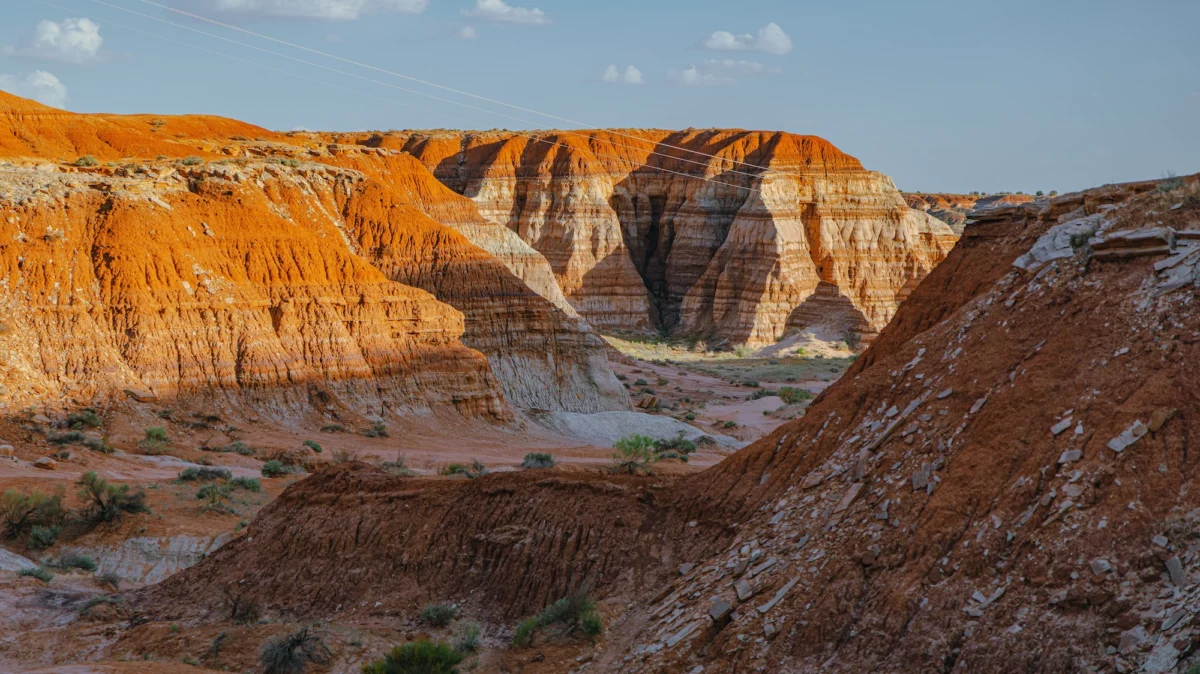
In a striking display of local opposition to federal policy, a new wave of data has revealed that a significant majority of Utah voters are demanding the restoration of the original boundaries for the Bears Ears and Grand Staircase-Escalante National Monuments. The findings, released in September 2026, underscore a deep-seated tension between the current administration’s push for resource extraction and the public’s desire to preserve the cultural and ecological integrity of the American West.
The poll, commissioned by the Grand Canyon Trust and conducted by the nonpartisan firm New Bridge Strategy, arrives at a volatile moment. As the Trump administration moves to finalize the reduction of these monuments to less than a quarter of their previous size, a broad coalition of conservationists, tribal leaders, and private sector entities—including outdoor retailer Patagonia—are reviving legal battles to halt the transition.
The Core Conflict: Land vs. Extraction
The controversy centers on two of the most significant public land holdings in the United States. Prior to the executive orders issued in July 2026, Bears Ears and Grand Staircase-Escalante encompassed over 3 million acres of rugged, archeologically dense, and biologically diverse terrain.
Under the new federal mandate, these monuments have been slashed to a combined 302,600 acres. The administration’s stated goal is to "align" federal land policy with the economic necessity of mining and resource development. However, the move has effectively stripped away federal protections for countless indigenous archeological sites and some of the last remaining intact landscapes in the lower 48 states.
Industry interests have not waited for the legal dust to settle; reports from environmental watchdogs indicate that mining claims have been staked across the region even as the administrative process continues. The dissolution of the Bears Ears Inter-Tribal Coalition—a group that represented a landmark achievement in co-stewardship between the federal government and sovereign tribal nations—has further escalated the outrage.
A Chronology of Contention
The battle for Utah’s public lands has been a decade-long tug-of-war, characterized by shifting executive priorities and persistent litigation.
- 2017: President Trump initially reduced the size of Bears Ears by 85 percent and Grand Staircase-Escalante by nearly half, prompting a flurry of lawsuits from environmental groups, tribes, and the outdoor industry.
- 2021–2024: Following the change in administration, the Biden presidency restored the full boundaries of both monuments, effectively pausing the litigation as the legal standing of the original cuts became moot.
- January 2025: Tribal leaders and conservationists express early warnings that a change in federal leadership could threaten recent gains in environmental protections.
- July 2026: Through new executive orders, the Trump administration again moves to downsize the monuments, citing the need for "common sense land use" and criticizing the Antiquities Act as an tool for federal overreach.
- September 2026: Polling reveals 67 percent of Utah voters oppose the downsizing. Lawsuits are officially reignited by Earthjustice, Patagonia, and the Access Fund.
Supporting Data: What the Voters Say
The poll conducted by New Bridge Strategy serves as a direct rebuttal to the narrative that Utahans are uniformly supportive of reducing federal land protections. The numbers are emphatic:
- Boundary Restoration: 67 percent of Utah voters support returning the monuments to their previous, larger sizes.
- Tribal Sovereignty: 82 percent of respondents agree that tribal voices are essential to the management of these sites.
- Public Land Sales: 81 percent of Utah voters strongly oppose the sale of public lands to private interests, a practice that has been actively championed by certain Republican factions within the state legislature.
- The Antiquities Act: 75 percent of voters support the president’s authority to designate national monuments under the 1906 Antiquities Act.
These figures align with broader trends observed in the Western United States. The 16th annual "Conservation in the West" poll, conducted by Colorado College, found that 91 percent of voters across the West support maintaining existing national monument designations. The consistency of this data suggests that the push for industrial development on protected land is significantly out of step with public sentiment.
Official Responses and Administrative Rationale
The White House has maintained a firm stance throughout the controversy. In a formal statement, spokesperson Taylor Rogers defended the administration’s actions, framing them as a necessary correction to decades of federal overreach.
"Previous administrations abused their power under the Antiquities Act to lock up millions of acres of Utah’s public lands," Rogers stated. "This approach has impoverished local communities and sharply restricted access for recreation, grazing, resource development, and fire prevention. Our actions allow for common sense land use in these areas."
Conversely, tribal representatives view the downsizing as a profound act of erasure. Autumn Gillard, cultural resource manager for the Paiute Indian Tribe of Utah, addressed the press during the release of the poll results: "Utahns are speaking up, and they are saying that the decision to shrink these monuments is wrong. Tribal nations should have been consulted, and our co-stewardship efforts should have been respected."
The Legal Battlefield: The Antiquities Act of 1906
The legal crux of the current dispute lies in the interpretation of the Antiquities Act of 1906. While the Act grants the President clear authority to create national monuments to protect objects of historic or scientific interest, it is silent on whether a President possesses the authority to abolish or shrink them.
The Department of Justice issued a memo in 2025 arguing that the President does hold the power to rescind monument status, a position that many legal scholars have contested. Tom Delehanty, a senior attorney with Earthjustice, notes that the coalition of environmental groups and industry partners is relying on the premise that only Congress holds the power to dispose of public lands.
"Having earth-moving equipment, flags staked, and a general industrial presence within these beautiful, undeveloped landscapes is a tragedy," Delehanty said. "It is something we are determined to avoid through these lawsuits."
Implications for the Future
The implications of this struggle extend far beyond the borders of Utah. If the current administration succeeds in establishing that a President can unilaterally downsize national monuments, it sets a precedent that could threaten every national monument in the country. The "revolving door" of monument boundaries creates a climate of uncertainty that hinders conservation efforts, scientific research, and sustainable economic planning for the outdoor recreation industry.
Furthermore, the dismissal of tribal co-stewardship efforts represents a significant setback for the relationship between the federal government and Indigenous nations. The collaborative management model at Bears Ears had been widely lauded as a template for future conservation—a way to integrate traditional ecological knowledge with federal oversight.
As the lawsuits move forward, the nation watches to see whether the judiciary will uphold the executive branch’s broad interpretation of its own powers or side with the coalition of voters, tribal leaders, and conservationists who argue that once a monument is established for the public good, it must remain protected for the generations to follow.
For now, the landscape of southern Utah remains a site of both immense geological wonder and intense political conflict—a battleground where the definition of "progress" remains fundamentally divided.
About the Author