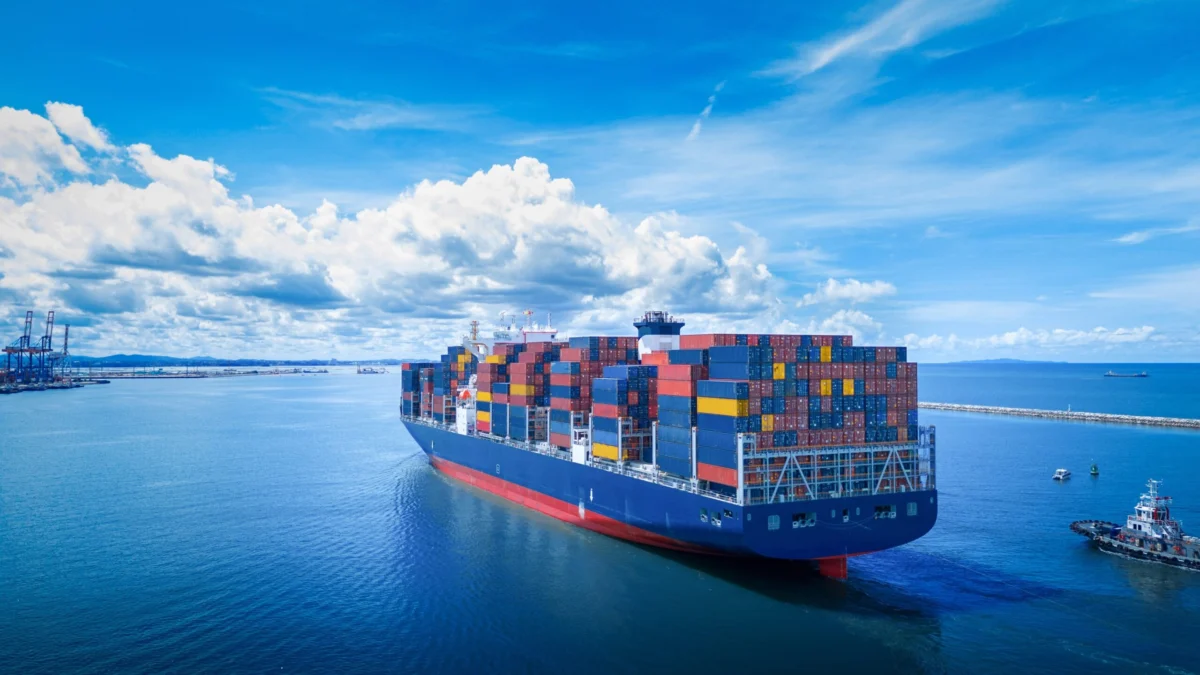
The era of "just-in-time" logistics and predictable, low-cost maritime freight is effectively over. Global shipping markets have entered a protracted period of structural upheaval, where the traditional levers of supply and demand are increasingly subservient to the chaotic influence of geopolitical conflict, energy market fluctuations, and environmental bottlenecks. As these factors converge, the cost of moving goods around the world is escalating, forcing businesses and consumers alike to grapple with a new, permanent state of instability.
From the shuttered transit routes in the Panama Canal to the tense maritime corridors of the Middle East, the shipping industry is no longer merely reacting to isolated events; it is being fundamentally reshaped by them.
The Chronology of Disruption: A Cascade of Crises
The current volatility did not emerge in a vacuum. It is the result of a compounding series of events that have systematically dismantled the efficiency of global trade lanes over the past several years.
- The Russia-Ukraine Conflict (2022–Present): The onset of the war in Ukraine served as the primary catalyst for the current energy and freight crisis. Beyond the immediate impact on grain exports, the sanctions and subsequent reshuffling of global energy trade forced tanker routes to stretch significantly. Crude that previously flowed through short-haul routes in Europe was suddenly diverted to Asian markets, necessitating longer voyages and creating a scramble for vessel capacity.
- Panama Canal Constraints (2023–2024): A prolonged drought caused by climate-driven weather patterns forced the Panama Canal Authority to restrict daily vessel transits and draft levels. This bottleneck effectively forced carriers to either wait in weeks-long queues or divert to longer, more expensive routes around South America, injecting massive inefficiencies into the trans-Pacific supply chain.
- The U.S.-Iran Tensions (2024): As regional instability in the Middle East intensified, the threat to critical maritime chokepoints became a primary concern for insurers and shipowners. The introduction of emergency security premiums and the risk of physical interception necessitated further rerouting, causing a spike in fuel consumption and operational costs.
- The Surcharge Cycle: Throughout 2024, the cumulative effect of these crises led to a "surcharge cascade." Carriers, burdened by rising bunker fuel prices and insurance premiums, began implementing successive rounds of peak-season, emergency, and intermodal surcharges, effectively passing the cost of geopolitical volatility directly onto the end-user.
Supporting Data: The Extraordinary Economics of Tankers
The starkest indicator of this new reality is found in the tanker sector. While container shipping had its moment of record-breaking profitability during the COVID-19 pandemic, the current tanker cycle is proving to be even more resilient and lucrative.
According to data cited by Lloyd’s List, the market for Very Large Crude Carriers (VLCCs) has reached heights once considered impossible. As of mid-September, VLCCs operating on the lucrative route from the Arabian Gulf to China were generating earnings in the neighborhood of $1.10 million per day. To put this into perspective, such figures were virtually unthinkable even three years ago.
This phenomenon is driven by a simple, brutal equation: restricted vessel availability combined with forced longer voyages has created a "perfect storm" for shipowners. As senior reporter Greg Miller noted during a recent Lloyd’s List webinar, the current tanker boom is not merely a transient spike; it is a structural shift that has surpassed the industry highs seen during the economic expansion of the 2000s. The market is currently rewarding those who own the tonnage required to bridge the widening gap between energy producers and consumers.
Official Responses and Industry Perspectives
Industry leaders are increasingly vocal about the transition from a market driven by economic cycles to one driven by political risk.
"Disruption is no longer the exception," says Richard Meade, Editor-in-Chief of Lloyd’s List. Meade emphasizes that traditional economic indicators—such as GDP growth or consumer spending—are now secondary to the "geopolitical developments, security concerns, and systemic uncertainty" that dictate daily operations.
This sentiment is echoed by analysts tracking the container shipping sector. Emily Stausboll, a senior analyst at Xeneta, has meticulously tracked the surcharge waves that have defined the 2024 fiscal year. Her analysis reveals a sobering trend: volatility is no longer an external factor to be absorbed; it is now a line item. "Three surcharge waves in six months: volatility is now being invoiced," Stausboll noted, highlighting how carriers are institutionalizing risk premiums into their standard billing practices.
These voices confirm a shared industry outlook: the days of relying on stable, predictable freight rates are behind us. Whether it is a fuel surcharge triggered by regional conflict or a peak-season fee necessitated by port congestion, the "freight bill" is now a reflection of global instability.
Implications for Supply Chains and the Consumer
The ripple effects of this maritime volatility are beginning to permeate every layer of the global economy. The implications are profound, affecting everything from inventory management to the final price of retail goods.
The Inventory Dilemma
For companies dealing in chemicals, petroleum-based materials, and manufactured goods, the current environment has forced a retreat from the "just-in-time" model. However, this shift is not toward stability, but toward high-risk maneuvering. Businesses are increasingly placing smaller, more frequent orders to minimize capital exposure to price swings. Yet, this creates a dangerous "knife-edge" supply chain where even a minor delay can result in stock-outs and lost sales. The risk of holding depreciating inventory is currently being weighed against the risk of being unable to meet customer demand.
The Inflationary Creep
The cost of transportation is a fundamental input for almost every product. Higher diesel prices, driven by refinery constraints and crude market volatility, are compounding the cost of road, rail, and ocean freight. When the cost of moving a container from Shanghai to Rotterdam increases, that cost is ultimately absorbed by the end-consumer.
This is particularly concerning for essential goods. From the plastic components in data-center cooling systems to the clothing on retail racks, petroleum-based chemicals are ubiquitous. As transportation costs remain elevated, inflationary pressure is likely to remain "sticky," preventing a return to the low-cost environment that characterized the pre-2020 era.
The Investor Perspective
For investors, the current landscape offers a bifurcated outlook. Tanker owners and container lines, currently reaping the benefits of high freight rates, are using this period of extraordinary earnings to aggressively deleverage balance sheets and modernize fleets. This provides a buffer against future downturns but also underscores the cyclical, and often violent, nature of the industry. Investors are being forced to re-evaluate their risk models, shifting away from long-term projections toward shorter-term, tactical asset allocation that can pivot as quickly as the geopolitical landscape itself.
Conclusion: Adapting to the Volatile Horizon
The shipping industry has entered a phase of permanent recalibration. The confluence of geopolitical strife, environmental constraints, and volatile energy prices has created an environment where uncertainty is the only constant.
For the global economy, the lesson is clear: the efficiency gains of the last three decades were predicated on a level of international cooperation and stability that no longer exists in the same capacity. As shipping lines pass the costs of this instability down the supply chain, businesses must prepare for a future defined by higher overhead, increased inventory management complexity, and a constant, watchful eye on the global geopolitical map.
The "extraordinary" earnings of today’s tanker operators and the "surcharge waves" of the container lines are not mere anomalies; they are the markers of a new, complex era in global trade—one where the cost of moving goods is permanently linked to the turbulence of the world they travel through.
About the Author