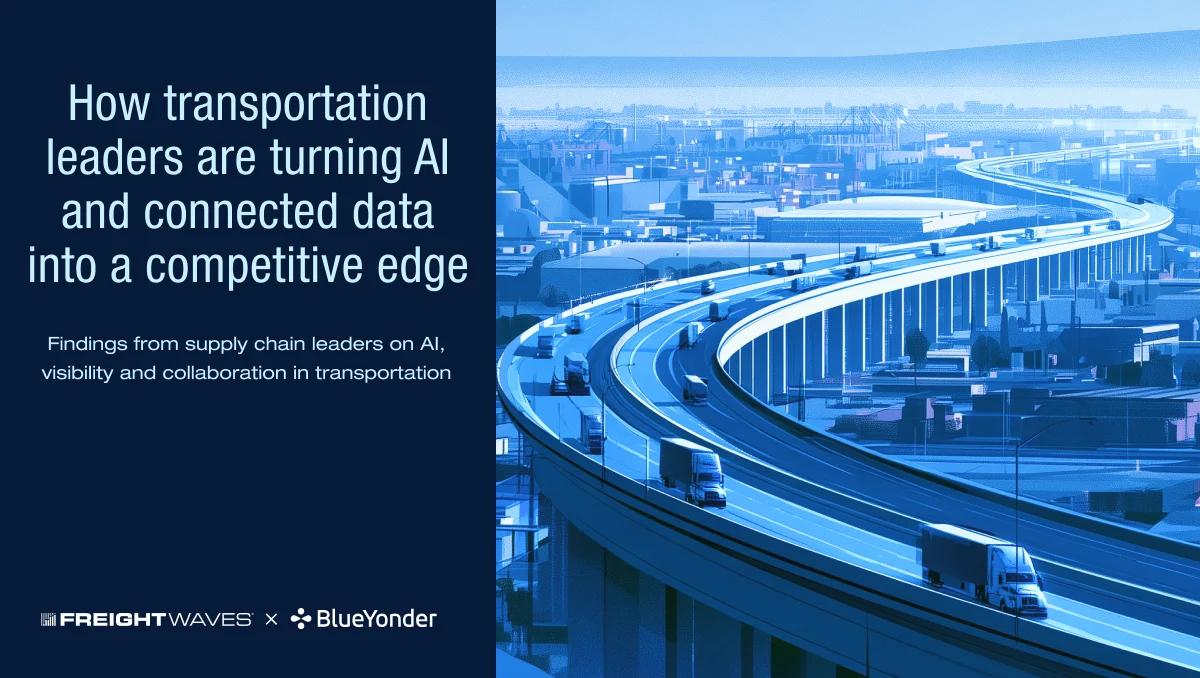
The global transportation and logistics sector stands at a precarious juncture. For the past decade, Artificial Intelligence (AI) has been touted as the "silver bullet" for supply chain volatility—a panacea for the unpredictability of global trade, labor shortages, and rising consumer expectations. Yet, as the industry moves beyond the hype cycle, a sobering realization has emerged: the distance between procuring AI software and achieving measurable, bottom-line results remains vast.
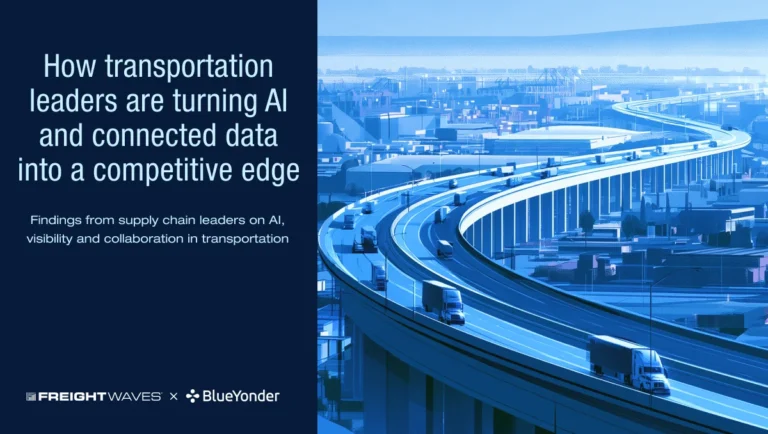
To unpack the complexities of this digital transition, Blue Yonder and FreightWaves have released a comprehensive collaborative report, surveying logistics decision-makers to determine why some organizations thrive with AI while others remain stalled in pilot purgatory.
Main Facts: The State of AI Adoption in 2024
The fundamental thesis of the current logistics landscape is that AI is no longer a luxury; it is a competitive necessity. However, the integration of these tools into legacy systems is proving to be the primary bottleneck for most mid-to-large-sized firms.
The Capability Gap
While most transportation companies report having invested in AI-driven tools, the majority admit that their utilization rates are sub-optimal. The primary challenges identified include:
- Data Silos: Information trapped in legacy enterprise resource planning (ERP) systems that refuse to "talk" to modern AI platforms.
- Talent Scarcity: A dearth of data scientists and logistics analysts who possess the dual expertise required to bridge the gap between algorithmic output and physical fleet management.
- Trust Deficits: Dispatchers and logistics managers often struggle to "trust" the black-box nature of machine learning, often overriding AI recommendations with manual intuition, which frequently leads to suboptimal routing and inventory errors.
The report highlights that the most successful organizations are those that treat AI not as a software upgrade, but as a fundamental shift in corporate culture—moving from reactive firefighting to proactive, algorithmic orchestration.
Chronology: The Evolution of Logistics Intelligence
To understand where the industry is going, one must examine the rapid acceleration of the last five years.
Phase 1: The Digitization Era (2018–2020)
Before the pandemic, the logistics sector focused on digitizing manual records. Electronic Logging Devices (ELDs) became mandatory, and companies moved from paper-based ledgers to Cloud-based transportation management systems (TMS). This phase was about visibility—simply knowing where a shipment was in real-time.
Phase 2: The Pandemic Disruption (2020–2022)
COVID-19 served as a stress test for the global supply chain. The fragility of just-in-time inventory systems was exposed. During this period, companies rushed to implement predictive analytics to anticipate port congestion and labor shortages. AI began to shift from a "nice-to-have" to an essential risk-mitigation tool.
Phase 3: The Generative AI & Orchestration Era (2023–Present)
We are currently in the phase of autonomous decision-making. The focus has shifted from merely tracking data to leveraging Generative AI and advanced machine learning to execute decisions—such as automated freight procurement, dynamic routing adjustments, and predictive maintenance—without human intervention.
Supporting Data: What the Industry Survey Reveals
The Blue Yonder and FreightWaves survey provides granular insights into the current friction points. By analyzing the data from industry decision-makers, several key performance indicators (KPIs) emerge that define the "AI Maturity" of a firm.
The "Pilot-to-Production" Barrier
According to the survey, 65% of transportation firms have launched at least three AI-related pilots in the last 24 months. However, only 15% of those firms report that those pilots have been fully scaled across their enterprise. This suggests a systemic failure to move beyond "Proof of Concept" (POC) phases.
ROI and Efficiency Gains
Among the 15% of organizations that have successfully scaled AI, the results are significant:
- Route Optimization: A 12–18% reduction in fuel consumption and deadhead miles.
- Inventory Accuracy: A 20% improvement in demand forecasting, reducing both stockouts and overstock scenarios.
- Labor Efficiency: A 25% reduction in time spent on manual scheduling and procurement tasks, allowing staff to focus on higher-level strategic planning.
The data suggests a "tipping point" model: the investment required to reach scale is significant, but once achieved, the compounding efficiency gains create a wide competitive moat between those who have mastered the technology and those who are still struggling with legacy constraints.
Official Responses: Insights from Industry Leaders
In discussions surrounding the report, executives from both Blue Yonder and FreightWaves emphasize that the problem is rarely the technology itself.
"The algorithms are already smarter than the humans using them," notes a lead analyst involved in the report. "The friction is institutional. Companies are attempting to force 21st-century intelligence into 20th-century organizational structures. If your procurement department still operates on siloed KPIs that conflict with your sustainability goals, no amount of AI will fix your supply chain."
Industry experts argue that the leadership response must be twofold:
- Change Management: Executives must incentivize adoption. If a dispatcher is penalized for an AI-suggested route that goes wrong, they will never trust the machine again. The culture must support experimentation and accept that AI, like humans, will occasionally make errors, but will improve over time.
- Data Hygiene: "Garbage in, garbage out" remains the golden rule of AI. Companies spending millions on AI software while ignoring the quality of their foundational data are effectively building mansions on quicksand.
Implications: The Future of Transportation Logistics
The implications of this study are profound for the next five years of global trade. We are approaching a divide in the logistics market.
The Rise of the "Autonomous Supply Chain"
Within the next decade, the industry will likely see a bifurcation. On one side, "AI-Native" firms will be able to pivot inventory and logistics in real-time, responding to geopolitical shifts, weather events, and demand surges before they become crises. On the other side, firms that fail to scale AI will remain trapped in a high-cost, high-error environment, eventually becoming uncompetitive.
Sustainability as an AI Outcome
Perhaps the most overlooked implication of the report is the link between AI and environmental, social, and governance (ESG) goals. By optimizing routes and reducing idle time, AI is the most effective tool in the transportation industry’s arsenal for reducing carbon emissions. Scaling AI is no longer just a financial imperative; it is a regulatory one as carbon reporting requirements become more stringent.
The Human Element
Finally, the report addresses the fear of job displacement. Rather than replacing the human worker, AI is acting as a "force multiplier." The most successful logistics managers of the future will be those who can "manage the machine"—interpreting AI outputs and making the final, ethical, or strategic decisions that a computer cannot.
Conclusion: How to Bridge the Gap
For decision-makers reading the findings, the path forward requires a shift in strategy. The report recommends three immediate steps:
- Prioritize Interoperability: Ensure that new AI tools are built on open architectures that can integrate with existing TMS and ERP systems.
- Focus on Value, Not Novelty: Avoid the trap of implementing "AI for AI’s sake." Every pilot should be tied to a specific, measurable business outcome, such as reducing detention times or lowering fuel spend.
- Invest in Change Management: Spend as much on training your workforce as you do on the software licenses. An AI tool is only as effective as the human team that adopts it.
As supply chains continue to face unprecedented disruption, the ability to turn potential into results will define the next generation of transportation leaders. The tools are available; the challenge now lies in the discipline, strategy, and courage to implement them at scale.
To gain a deeper understanding of the metrics, case studies, and strategic frameworks outlined by Blue Yonder and FreightWaves, stakeholders are encouraged to download the full white paper.
The future of the supply chain is algorithmic—the question remains: are you ready to deploy?
About the Author