By Tech Insights Editorial Team
October 31, 2026
In the landscape of Silicon Valley, where the pace of innovation is measured in weeks rather than years, Apple has long occupied a unique position: the patient observer. As the tech industry has been swept up in a generative AI gold rush, the Cupertino giant has maintained a deliberate, often criticized, distance from the hype cycle. However, following a landmark product event in Los Angeles and a candid sit-down interview with Wired’s Steven Levy, newly minted CEO John Ternus has finally pulled back the curtain on Apple’s strategic direction.
Ternus, who ascended to the CEO chair on September 1, 2026, is signaling a departure from the "AI-first" fervor seen at competitors like Google, Microsoft, and OpenAI. Instead, he is championing an "AI-integrated" ethos—one where the technology serves the user experience so seamlessly that it becomes invisible.
Main Facts: The New Guard Sets the Tone
The core takeaway from the recent high-level discourse is that Apple is not interested in participating in the race to build the most "intelligent" chatbot or the most powerful large language model (LLM) for the sake of market dominance.
Ternus, a veteran of Apple’s hardware and engineering divisions, has inherited a company that is currently navigating the most significant shift in computing since the introduction of the iPhone. During his conversation with Levy, Ternus addressed the elephant in the room: the perception that Apple was lagging behind. His response was characteristically Apple—measured, confident, and dismissive of short-term market pressures.
"Everyone has an opinion," Ternus noted regarding the critiques of Apple’s pace. "I really like where we’re at."
The crux of his strategy is the concept of "invisible AI." Apple’s leadership is betting that the winning product will not be the one that boasts the most impressive AI capabilities, but the one that solves human problems without requiring the user to navigate a complex, machine-generated interface.
A Chronology of Apple’s AI Evolution
To understand the current pivot, one must look at the timeline of Apple’s cautious approach to artificial intelligence over the past 24 months.
- 2024–2025: The Foundation Years. While the rest of the industry pivoted to "AI Everywhere," Apple focused heavily on foundational privacy-preserving machine learning. During this period, the company invested heavily in on-device processing capabilities, ensuring that future AI features would not rely solely on cloud servers—a move that would become a key differentiator.
- Summer 2026: The Siri Overhaul. After years of stagnation, Apple launched a significantly upgraded version of Siri in August 2026. While some critics initially labeled the launch "anticlimactic," it represented the first major integration of deep, agentic AI into the iOS ecosystem, moving Siri from a basic command-line tool to a contextual assistant.
- September 1, 2026: The Leadership Transition. John Ternus officially takes over as CEO. His appointment was widely viewed as a move to double down on engineering excellence and hardware-software integration.
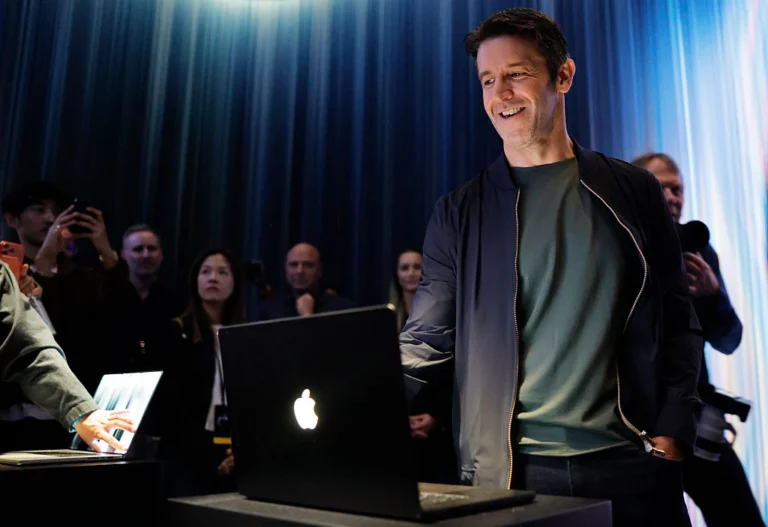
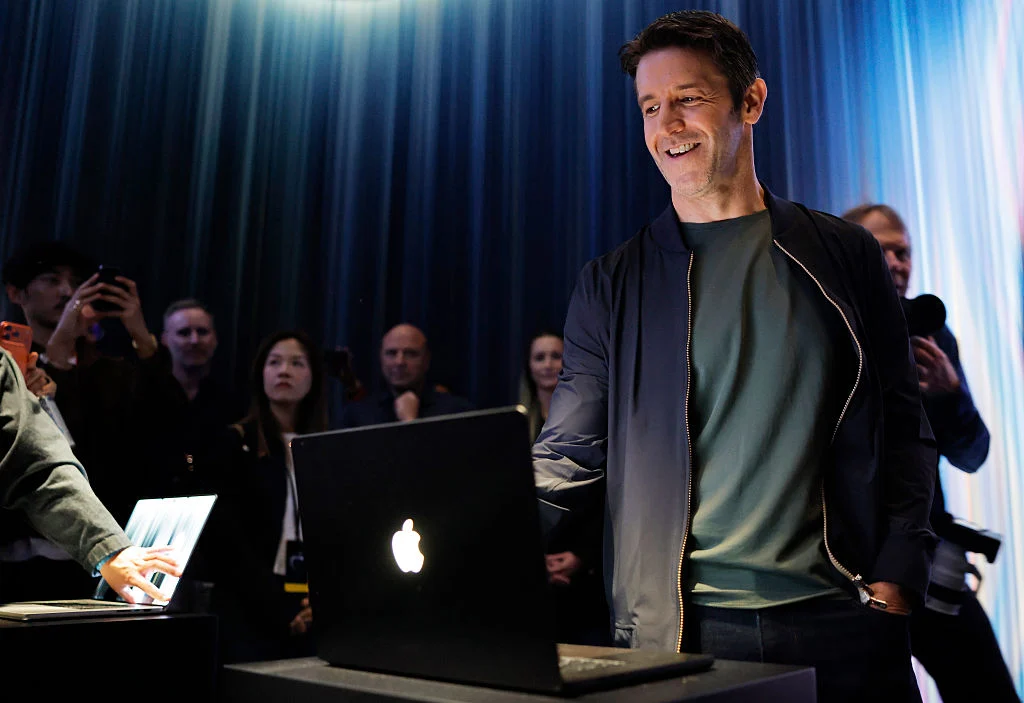
- October 31, 2026: The Los Angeles Debut. Apple holds a major event in Los Angeles, showcasing new hardware that leverages the refined AI architecture teased by Ternus. The event served as the physical manifestation of the strategy he outlined to Wired.
Supporting Data: Why "Invisible AI" Matters
The industry consensus, supported by recent market analysis, suggests that consumers are beginning to hit "AI fatigue." As LLMs become commoditized, the differentiator is moving away from the underlying model and toward the application layer.
Apple’s strategy rests on three pillars:

- Hardware-Software Synergy: By designing its own Silicon, Apple ensures that AI workloads run locally. This reduces latency and, more importantly, addresses the growing privacy concerns of the general public.
- The Ecosystem Moat: Unlike standalone AI companies that require a subscription, Apple embeds its intelligence into the existing OS, photos, mail, and calendar apps. Data from Q3 2026 shows that user engagement with these "AI-enhanced" native features is higher than engagement with standalone AI web wrappers.
- The "Utility-First" Principle: Apple is betting that consumers don’t want to talk to a chatbot; they want their phone to organize their day, suggest edits to a photo, or draft a coherent email response without needing to open a dedicated AI interface.
Official Responses: Ternus on the Future of Agency
Perhaps the most telling part of the recent dialogue was the discussion regarding "AI Agents." There is a prevailing fear in Silicon Valley that if AI becomes powerful enough to manage our digital lives—booking flights, managing finances, and responding to messages—the traditional app-based ecosystem could collapse.
When pressed on whether Apple fears that AI agents might render apps obsolete, Ternus offered a philosophical defense of the human element. "That could make life really easy, I suppose," he admitted, "but the creation of products is a deeply human and personal thing, something that we love to do."
This statement suggests that under Ternus, Apple will resist the urge to automate the entire user experience. Instead, the company plans to use AI as a tool to augment the human experience, not replace the human intent. He framed Apple’s role as the curator of digital experiences, implying that a world where the user is entirely removed from the creative process is not a world Apple wants to build.
Implications: The Road Ahead
The implications of this strategy are significant for both the industry and the consumer.
For the Industry:
Competitors like OpenAI and Google may continue to push for "General Artificial Intelligence" (AGI), a goal that seeks to replicate human intelligence. Apple, conversely, is aiming for "Applied Intelligence." By refusing to participate in the "AI for AI’s sake" arms race, Apple is forcing the industry to reconsider whether the value of a tech product lies in its raw computational power or its ability to fit into the complexities of human life.
For the Consumer:
The next few years under Ternus will likely see a move away from "chat-based" AI. Users should expect Apple devices to become increasingly predictive. The "AI" will be in the background, cleaning up a noisy photo, summarizing a transcript, or optimizing battery life without the user ever seeing a "Prompt" box.
For Shareholders:
The markets have responded with cautious optimism. Ternus is viewed as a safe pair of hands, an engineer’s CEO who understands the balance between radical innovation and the refined, premium experience that defines the Apple brand. By avoiding the "hype cycle," Apple is positioning itself to be the brand that the average consumer trusts when the novelty of chatbots wears off and the demand for reliable, daily utility takes over.
Conclusion: A Measured Renaissance
As John Ternus steps into his second month as CEO, the mission is clear: Apple will not be the loudest voice in the AI room, but it intends to be the most effective. By emphasizing the "human and personal" nature of product development, Ternus is attempting to steer the company back to its roots—where technology is not the master, but the tool.
The Los Angeles event served as a firm declaration: the AI era is here, but Apple will define it on its own terms. As we look toward 2027, the success of this strategy will be measured not by how many AI models Apple ships, but by how many people find their lives simpler, more private, and more productive, without ever needing to ask if they are interacting with a machine.
About the Author