The North American robotics sector has entered a new phase of robust expansion. According to the latest data released by the Association for Advancing Automation (A3), the industry experienced a significant surge in demand during the third quarter of 2026. As companies grapple with labor shortages, supply chain complexities, and the necessity for increased production speed, the adoption of automation has transitioned from a competitive advantage to a fundamental operational requirement.
Main Facts: A Quarter of Record-Breaking Momentum
The third quarter of 2026 proved to be a watershed moment for the robotics industry. North American companies placed orders for 10,989 robots, with a total valuation of $723.5 million. These figures represent a 24.8% increase in unit volume and a 26.1% increase in financial value compared to the same period in 2025.
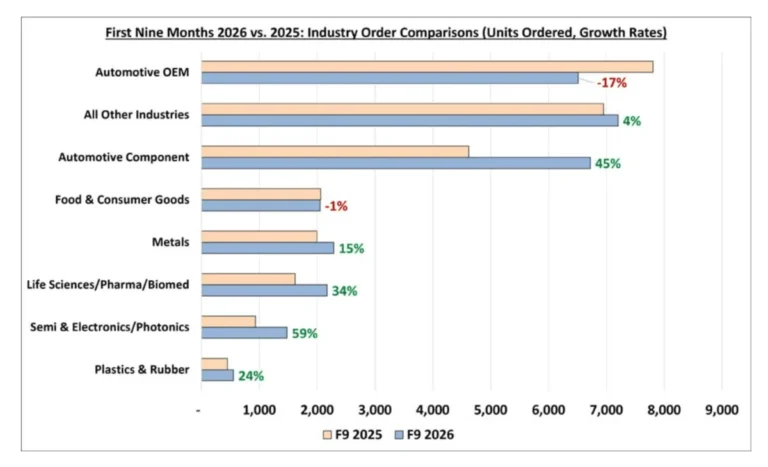
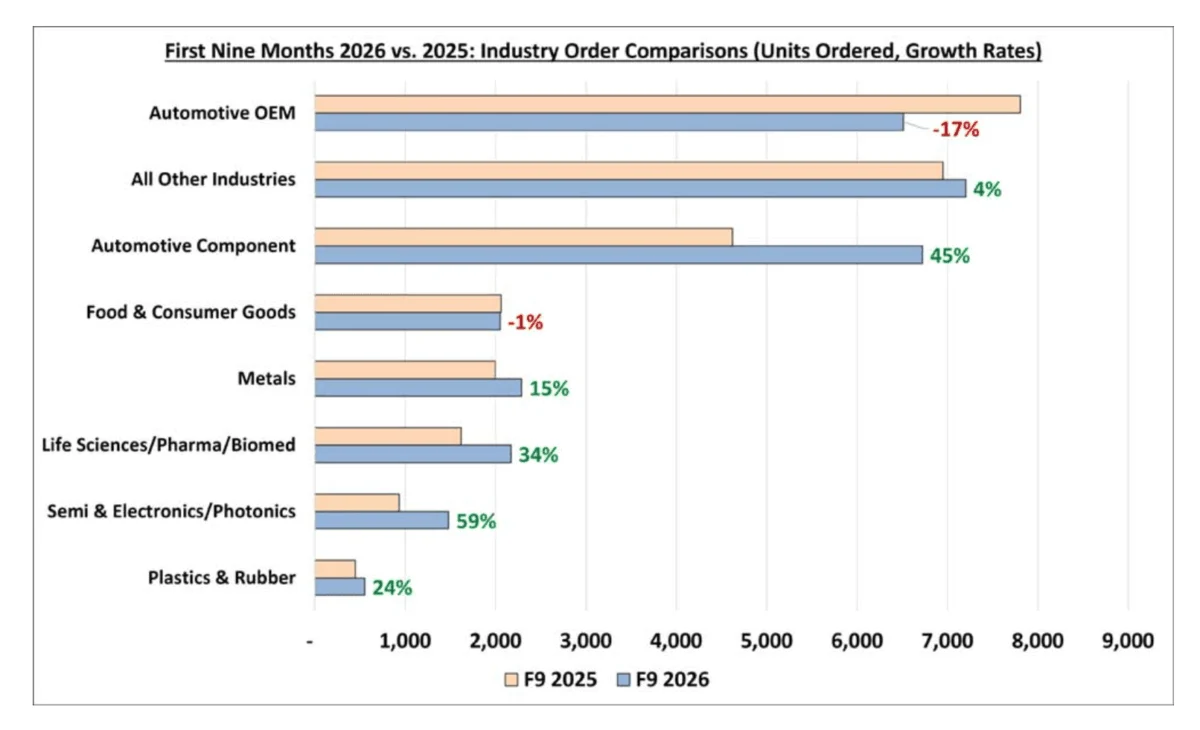
This performance marks the strongest quarter of the year, effectively reversing some of the stagnation seen in early 2026. When aggregate data for the first nine months of the year is reviewed, the total number of robots ordered reached 28,984 units, valued at approximately $1.89 billion. This year-to-date performance represents a 9.6% increase in unit volume and a 13.3% increase in dollar value compared to the first three quarters of 2025, signaling a sustained upward trajectory for the remainder of the fiscal year.
Chronology: The Road to Q3 Success
To understand the current surge, it is necessary to examine the cadence of the year. The first half of 2026 was characterized by cautious capital expenditure, particularly within the automotive original equipment manufacturer (OEM) space, which had faced significant headwinds during the first two quarters.
- Q1 2026: The industry began the year with tempered expectations. While sectors like life sciences and electronics showed promise, overall growth was muted by macroeconomic uncertainty and high interest rates, which caused many manufacturers to defer large-scale robotics integration projects.
- Q2 2026: Growth remained sluggish for automotive OEMs, though a persistent trend of increased demand from automotive component suppliers began to emerge. This period served as a transitional phase, where the foundation for the Q3 breakout was laid through pilot programs and smaller-scale automation deployments.
- Q3 2026: The market saw a decisive pivot. As supply chains stabilized and the technological capabilities of new, more flexible robotic systems became clearer, companies accelerated their procurement cycles. The return of the automotive OEM sector to positive growth, combined with continued strength in electronics and life sciences, created a “perfect storm” of demand that culminated in the record-breaking Q3 figures.
Supporting Data: Sector-by-Sector Analysis
The most compelling aspect of the Q3 data is not just the volume of orders, but the composition of the industries fueling that demand.
The Automotive Resurgence
For much of the year, the automotive sector—traditionally the largest consumer of industrial robotics—was viewed with skepticism. However, Q3 saw a dramatic reversal. Automotive OEM orders increased by 7.5% year-over-year. This rebound is widely attributed to the retooling of assembly lines for next-generation electric vehicles (EVs) and the ongoing transition to more sophisticated, software-defined vehicle architectures.
Perhaps more impressive is the performance of automotive component suppliers. This segment posted a staggering 90.4% increase in orders during the third quarter. This indicates that the supply chain is expanding its footprint to support the higher volume of vehicle production and the increasing complexity of components, from advanced sensor arrays to lightweight battery housing materials.
Beyond the Assembly Line: Diversification
While automotive growth is a headline, the diversification of robotics into new sectors is the underlying story of the year. Semiconductors and electronics manufacturing, spurred by domestic investments under initiatives like the CHIPS Act, have continued to integrate robotics at an accelerated pace. Life sciences and pharmaceutical sectors also reported significant gains, driven by the need for precision, sterile environments, and the ability to scale production rapidly in response to public health needs.
Official Responses: Insights from Industry Leadership
The data provided by A3 offers a window into the strategic thinking of North American manufacturers. Alex Shikany, Executive Vice President at A3, emphasized that the Q3 results reflect a structural shift in how businesses view automation.
"What stands out in the third quarter is not simply the magnitude of the growth, but how broadly it was distributed across the market," Shikany noted in the organization’s analysis. "Automotive OEM orders returned to positive growth, while automotive components and sectors such as semiconductors, electronics, and life sciences posted significant gains. That broader mix is important because it points to a robotics market that is becoming increasingly diversified across industries and applications."
Industry experts suggest that this diversification acts as a hedge against volatility. By moving beyond a reliance on the cyclical automotive market, the robotics industry is building a more resilient, multi-industry foundation that can withstand localized economic downturns.
Implications: The Future of North American Automation
The implications of this Q3 surge are far-reaching, touching on labor markets, competitive strategy, and global supply chain resilience.
1. Addressing the Labor Gap
One of the primary drivers of this order surge is the persistent labor shortage in the manufacturing sector. As the workforce ages and the pool of skilled technicians shrinks, companies are turning to robotics to perform repetitive, dangerous, or high-precision tasks. The Q3 data suggests that manufacturers have moved past the “wait and see” approach and are now actively investing in automation to ensure operational continuity.
2. Competitive Strategy and "Reshoring"
The increase in orders is closely linked to the broader trend of "reshoring" or "nearshoring" production. By automating facilities in North America, companies are reducing their dependence on distant, high-risk supply chains. The 26.1% increase in the value of orders suggests that companies are not just buying basic hardware; they are investing in sophisticated, high-value robotics systems capable of complex tasks, which is essential for competing on quality and speed in a global market.
3. The Role of AI and Software
While the A3 report focuses on hardware units and financial value, the underlying capability of these robots has evolved. The current wave of investment is heavily bolstered by advancements in artificial intelligence, machine vision, and collaborative robotics (cobots). These machines are now easier to program, more flexible in their deployment, and capable of working alongside human workers, lowering the barrier to entry for small-to-medium-sized enterprises (SMEs) that previously found industrial automation inaccessible.
4. Economic Outlook
The 13.3% year-to-date increase in the value of robotics orders serves as a bullish indicator for the broader North American manufacturing economy. Capital investment in robotics is a "leading indicator"—it suggests that companies are confident in future demand and are willing to commit significant capital to expand their production capacity. If the current trajectory holds through the fourth quarter, 2026 will be remembered as a pivotal year in the digital transformation of North American industry.
Conclusion
The third quarter of 2026 has provided a definitive answer to those questioning the resilience of the North American robotics market. With a 24.8% increase in unit orders, the industry has demonstrated that automation is no longer a luxury but a strategic necessity. The return of the automotive giants, combined with the robust health of the semiconductor and life science sectors, suggests a mature, diversified market poised for long-term growth.
As we look toward the end of 2026 and into 2027, the focus will likely shift from simply adopting robotics to optimizing them through advanced analytics and AI-driven workflows. The data from A3 proves that North American companies are not just keeping pace with global industrial trends—they are setting the standard for a more automated, efficient, and resilient manufacturing future. The surge in Q3 is a testament to the fact that when faced with global uncertainty, the most successful firms are those that choose to build, innovate, and automate.
About the Author