Introduction: The Great Disconnect
The U.S. logistics landscape is currently defined by a profound and troubling paradox: while the volume of goods moving across the country has effectively plateaued, the cost for shippers to move that cargo has reached its highest level in five years. According to the latest U.S. Bank Freight Payment Index, this divergence between stagnant demand and skyrocketing expenditure has created a pressurized environment for supply chain managers, leaving many corporations grappling with unexpected budgetary inflation.
As of the third quarter, U.S. shippers are paying 32.1% more to move freight than they were at this time last year. This figure represents the most significant annual surge in shipping expenditures since 2021, a year defined by pandemic-era supply chain chaos. However, unlike 2021, the current environment is not fueled by an overwhelming surge in consumer demand, but rather by a perfect storm of supply-side constraints, including diminished carrier capacity and the relentless escalation of fuel prices.
Chronology: The Road to Current Volatility
To understand how the freight market reached this inflection point, one must examine the trajectory of the past three years.
2021–2022: The Post-Pandemic Hangover
Following the initial volatility of the COVID-19 pandemic, the freight market experienced a period of extreme "demand-pull" inflation. During this window, retailers and manufacturers rushed to replenish inventories, leading to record-breaking volumes. Carriers held significant pricing power, and shippers were often willing to pay premiums to guarantee space on trucks.
2023–2024: The Stagnation Period
Throughout 2023 and into early 2024, the market entered a period of cooling demand. Inflationary pressures began to impact consumer spending, and the frenetic pace of inventory restocking slowed. For several quarters, shipment volumes consistently recorded negative year-over-year growth, leading many analysts to predict a "freight recession."
Mid-2024: The Current Inflection Point
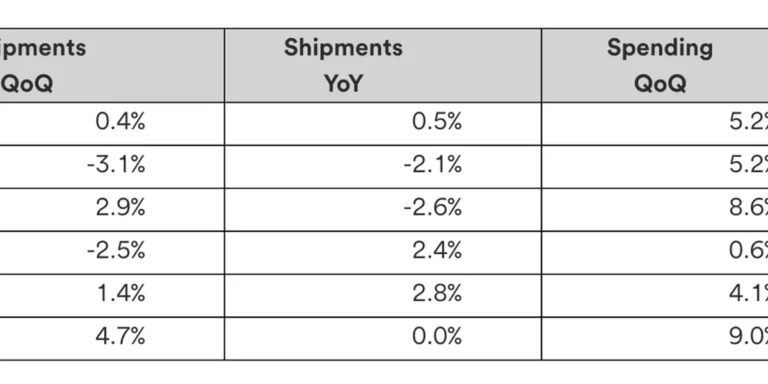
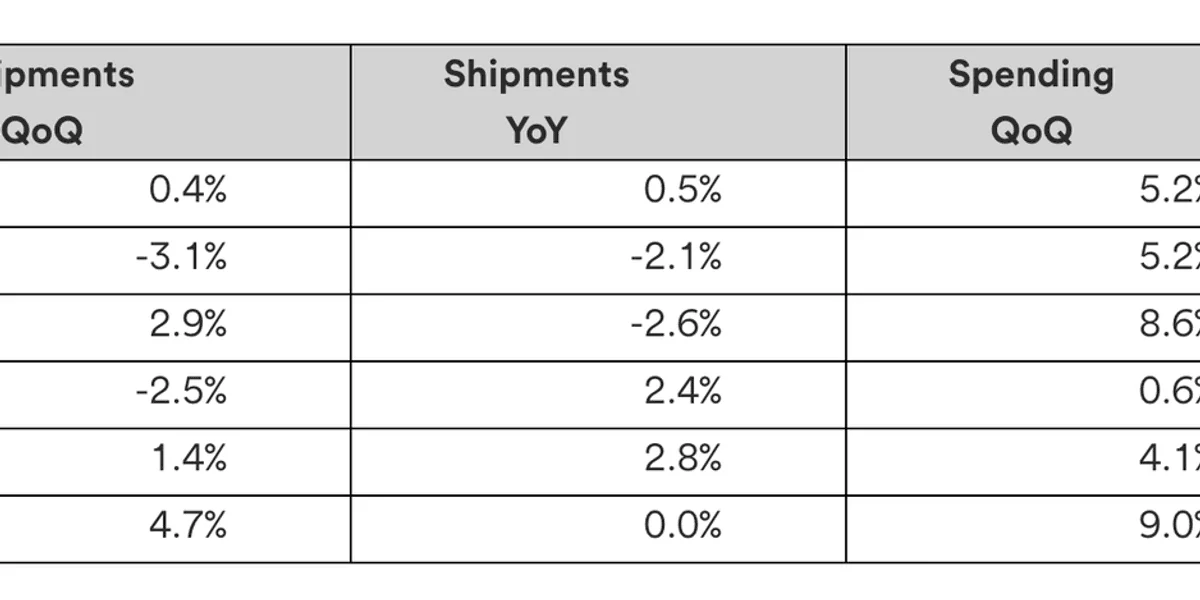
The third quarter of 2024 marks a deviation from that downward trend. While the U.S. Bank Freight Payment Index finally recorded the first quarter-over-quarter and year-over-year volume growth since 2021, the gains were razor-thin—clocking in at just 0.4% and 0.5%, respectively. While a return to positive growth is typically seen as a signal of economic health, in this context, the growth is too marginal to offset the severe operational cost increases being passed down to shippers.
Supporting Data: Regional Disparities and Sector Pressures
The national averages mask a complex, fragmented reality across the United States. The logistics market is currently operating as a collection of regional economies, each reacting differently to capacity constraints and localized economic shocks.
Regional Volume Performance
- The Southeast: This region has emerged as the growth leader, posting a 4.7% quarter-over-quarter increase in shipment volume. Increased manufacturing activity and a steady influx of logistics investment have helped the Southeast remain resilient.
- The Northeast: This region has shown steady, long-term strength, leading the nation with a 2.8% year-over-year growth rate.
- The West and Midwest: Conversely, these regions have struggled. The West, in particular, recorded a 3.1% decline in shipment volumes, reflecting a broader slowdown in trans-Pacific imports and reduced retail throughput.
The Cost Surge: A Uniform Burden
While shipment volumes vary, the financial pain is universal. Spending rose in every region of the country, regardless of whether volumes were trending up or down.
- The Southwest Spike: The Southwest region experienced a staggering 51.6% annual increase in shipping costs. This is largely attributed to specific enforcement actions that have reduced the number of available drivers capable of hauling domestic loads, effectively strangling capacity.
- The Fuel Factor: Nationally, diesel prices have surged past $6.50 per gallon. The situation is particularly dire in the West, where California prices reached an eye-watering $8.25 per gallon in late September. This serves as a "tax" on every mile driven, regardless of whether a truck is hauling luxury goods or essential raw materials.
Official Responses and Expert Analysis
Industry leaders are closely monitoring these indicators, noting that the relationship between volume and price has fundamentally changed.
Bob Costello, American Trucking Associations
Bob Costello, senior vice president and chief economist at the American Trucking Associations, characterizes the current environment as a "decoupling" of market drivers. "What makes this quarter notable is that outlays are rising much faster than freight volumes," Costello stated. "Freight demand remains uneven, but companies are encountering tighter truck capacity, higher fuel costs, and stronger carrier pricing power. As a result, shippers are spending substantially more to move essentially the same amount of freight."
Bobby Holland, U.S. Bank
Bobby Holland, director of freight business analytics at U.S. Bank, emphasizes that the burden on shippers is systemic rather than transient. "Freight conditions vary by region, but cost pressure is widespread," Holland noted. "Even where volumes are flat or declining, tighter capacity and higher operating costs are driving spending higher."
Implications: What This Means for the Future
The current state of the freight market carries significant implications for the broader economy and the future of supply chain management.
The Margin Compression Crisis
For shippers—particularly those in the retail and manufacturing sectors—the current environment is an exercise in margin protection. With consumer demand remaining sensitive to inflation, companies are finding it increasingly difficult to pass these higher logistics costs onto the end consumer. Consequently, many businesses are forced to absorb these expenses, which directly impacts their bottom line and shareholder value.
Capacity Management and Driver Shortages
The capacity crunch is not merely a product of high fuel costs; it is also a structural issue. Regulatory enforcement, the aging of the driver workforce, and the high cost of equipment maintenance are keeping many smaller carriers out of the market. Shippers are finding that even when they are willing to pay a premium, there simply aren’t enough qualified drivers and available, compliant trucks to move the goods.
The Shift Toward Strategic Logistics
In response, industry experts expect a shift toward more strategic logistics management. Companies are likely to:
- Re-evaluate Distribution Networks: By decentralizing inventory and moving goods closer to the end consumer, companies can reduce the "length of haul," thereby mitigating the impact of fuel costs and capacity shortages.
- Invest in Technology: Automated load-matching and AI-driven route optimization are becoming essential tools to squeeze inefficiencies out of the supply chain.
- Strengthen Carrier Partnerships: Rather than relying solely on the spot market—where prices are currently highly volatile—shippers are increasingly looking to secure long-term contracts with reliable carriers to provide budget stability.
Conclusion: A Long Road Ahead
The U.S. freight market is currently in a state of recalibration. The era of cheap, readily available capacity appears to be in the rearview mirror for the foreseeable future. As fuel prices remain elevated and the labor market for drivers remains tight, the cost of moving freight will likely remain a significant inflationary pressure.
For the remainder of the year and into 2025, the focus for logistics professionals will be on resilience and agility. As the U.S. Bank Freight Payment Index makes clear, simply moving goods from point A to point B is no longer a standard operational task—it is a complex financial challenge that requires constant vigilance and strategic adaptation. The market may eventually find a new equilibrium, but until then, shippers should prepare for a sustained period of high expenditure, regardless of whether shipment volumes rise, fall, or continue their current pattern of stagnation.
About the Author