In an era defined by rapid technological shifts and global security challenges, the Commonwealth of Virginia is emerging as a critical engine for the United States’ defense industrial base. By transforming workforce development into a strategic economic asset, Virginia has successfully bridged the gap between academic instruction and the high-stakes demands of aerospace and maritime manufacturing. Through a combination of visionary local planning, federal investment, and cross-sector partnerships, the state is creating a sustainable "talent pipeline" that is not only bolstering the U.S. Navy but also serving as a replicable model for the rest of the nation.
The Evolution of a Manufacturing Powerhouse
More than 200 miles from the nearest coastline, the city of Danville offers a counterintuitive look at the future of maritime defense. While the city lacks salt air and shipyards, it has spent the better part of two decades meticulously laying the groundwork for a specialized workforce. This long-term investment in regional infrastructure was not accidental; it was a proactive strategy designed to lure high-tech industries to a rural landscape by guaranteeing what matters most to modern manufacturers: a ready-to-work, highly skilled labor force.
This proactive approach has culminated in the development of the Accelerated Training in Defense Manufacturing (ATDM) program at Danville’s Institute for Advanced Learning and Research (IALR). Designed specifically to address the critical workforce shortages facing the U.S. Navy’s submarine and shipbuilding programs, the ATDM is a radical departure from traditional academic timelines.
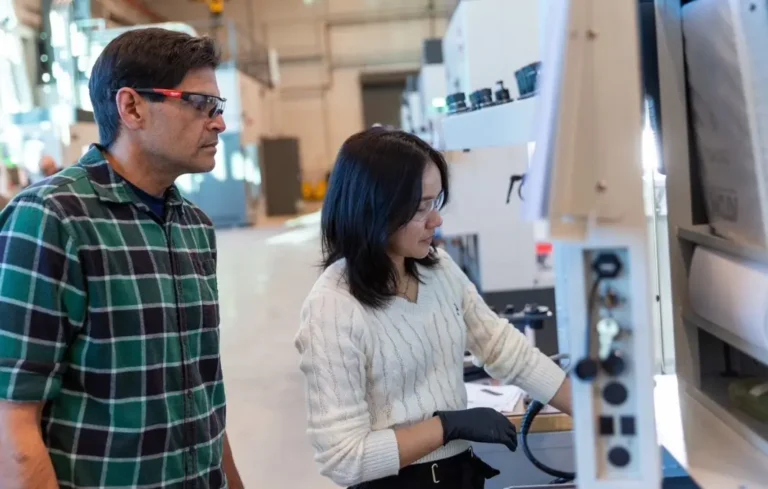
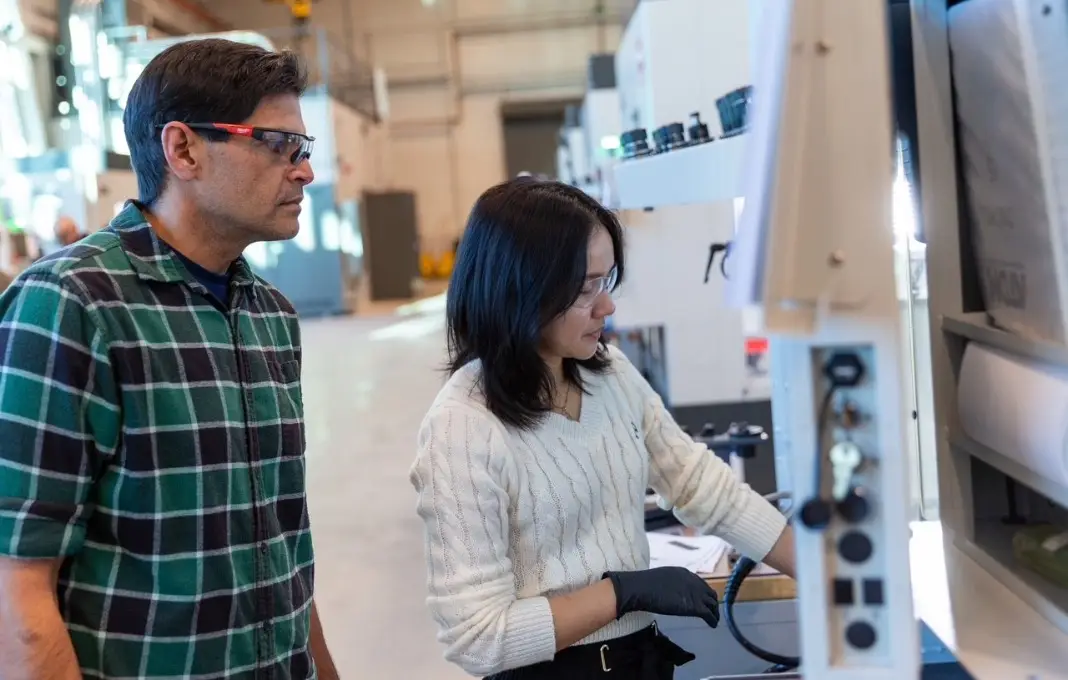
The program focuses on intensive, 16-week cohorts that provide students with over 600 hours of focused, hands-on training. By the time a student graduates, they are not merely "qualified" in theory; they are equipped with specific, industry-recognized certifications that allow them to step onto a factory floor and contribute to complex defense projects on their very first day.
Chronology of a Workforce Revolution: A Two-Decade Journey
The success currently seen in Virginia is the result of a deliberate, multi-phased strategy that began long before recent geopolitical tensions escalated.
- Early 2000s (Foundation Building): Local leaders in Southern Virginia identified a need to transition the regional economy away from traditional manufacturing and toward advanced technological sectors. The infrastructure for the IALR was established to bridge the gap between regional community colleges and high-tech industry partners.
- 2015–2018 (Scaling the Maritime Effort): The Hampton Roads Workforce Council (HRWC) began formalizing the Hampton Roads Maritime Training System (HRMTS). Recognizing that the "military metro" of Norfolk and Newport News required a cohesive training ecosystem, they began aligning curriculum across multiple regional institutions.
- 2020–2022 (The ATDM Pilot): With federal support, the IALR launched the ATDM pilot program. This initiative was specifically engineered to address the "time to talent" crisis, condensing years of traditional trade school learning into a rigorous four-month immersion.
- 2023–Present (Global Integration): Virginia’s workforce efforts gained international significance with the announcement of the AUKUS partnership. The state is now a focal point for global security, as its workforce development infrastructure scales to meet the demands of nuclear-powered submarine production for the U.S., UK, and Australian navies.
Supporting Data: By the Numbers
The scale of Virginia’s effort is perhaps best illustrated by the sheer volume of talent it is producing. The statistics provided by the Hampton Roads Workforce Council demonstrate the efficacy of their centralized training model:
- Annual Output: Currently, the regional training efforts in Hampton Roads produce between 5,000 and 6,000 skilled workers annually.
- Future Capacity: Due to aggressive investment and facility expansion, the council projects the capacity to increase that output to 10,000 workers per year within the next 24 to 36 months.
- Market Alignment: Five years ago, the region struggled to meet 50% of the demand for certified welders. Today, through targeted training initiatives, the council has successfully balanced the supply, achieving a ratio of one qualified welder for every open position in the region.
- Training Intensity: The ATDM program mandates 600+ hours of training in just 16 weeks, a density that significantly reduces the onboard training time required by private-sector employers.
Official Responses: The Vision for "Reduced Time to Talent"
Leadership in Virginia emphasizes that this is not merely an educational project, but an economic imperative. Telly Tucker, President of the IALR, characterizes the mission as a direct response to the private sector’s most pressing bottleneck.
"Our goal is to reduce the time to talent," Tucker explains. "We have received feedback from companies stating that our program has saved them as much as two years in training and onboarding time." By shifting the burden of fundamental skills training from the employer to the state-backed institute, the ATDM program allows defense contractors to focus their resources on specialized product innovation rather than basic workforce remediation.
Shawn Avery, President and CEO of the Hampton Roads Workforce Council, emphasizes the importance of the regional ecosystem. "We have the largest concentration of shipbuilding and ship repair in the nation here with Newport News Shipbuilding and all of our repair yards," Avery notes. By coordinating the efforts of three community colleges—Tidewater, Virginia Peninsula, and Paul D. Camp—the HRMTS ensures that there is no "skills silo." Instead, they have created a fluid, interoperable system where students move seamlessly from training to employment.
Implications: The AUKUS Factor and Global Security
The implications of Virginia’s training success extend far beyond the Commonwealth’s borders. The trilateral AUKUS partnership—a security pact between the U.S., the United Kingdom, and Australia—is currently the most significant driver of demand for the region’s maritime workforce.
As part of the agreement, Australia is slated to purchase five Virginia-class submarines. This requires an unprecedented surge in domestic production capability. Newport News Shipbuilding (NNS), as the largest industrial employer in the state, is at the heart of this effort. They have joined the AUKUS Workforce Alliance, a collaborative effort involving three Australian universities, to ensure that the workforce is not just large enough, but technically advanced enough to handle the complexities of nuclear propulsion and advanced stealth technology.
The College of William & Mary has been designated as the U.S. academic home for this partnership, signaling that this is not just a blue-collar manufacturing initiative, but a sophisticated integration of policy, engineering, and workforce development.
Conclusion: A Model for the Nation
Virginia’s approach offers a masterclass in how states can leverage their educational infrastructure to solve national security problems. By focusing on "Day One" readiness, the state has effectively removed the traditional barriers to entry for high-tech manufacturing careers.
What once seemed like a daunting task—finding individuals capable of designing, building, and maintaining the world’s most advanced defense systems—is now becoming a standard outcome of Virginia’s workforce pipelines. As the state moves toward a capacity of 10,000 skilled workers per year, it is proving that the most effective way to secure the nation’s future is to invest in the hands, minds, and skills of the next generation of workers. Virginia is not just building submarines; it is building the infrastructure of national resilience.
About the Author