The religious identity of Latin America, a region historically synonymous with the Roman Catholic faith, is undergoing a profound and measurable transformation. A comprehensive new analysis released by the Pew Research Center, based on extensive polling conducted in the spring of 2026, reveals that the dominance of Catholicism is continuing a steady decline that began over a decade ago. While the Church remains the largest single religious institution across the continent, its hold on the public consciousness—and its influence on daily practice—is being recalibrated by secularization and the rise of alternative religious affiliations.
This research, part of the broader Pew-Templeton Global Religious Futures project, examined the beliefs, practices, and affiliations of more than 6,100 adults across Brazil, Mexico, Colombia, Argentina, Peru, and Chile. The findings offer a granular look at a society in transition, where the intersection of traditional faith and modern life is increasingly complex.
Main Facts: A Region at a Crossroads
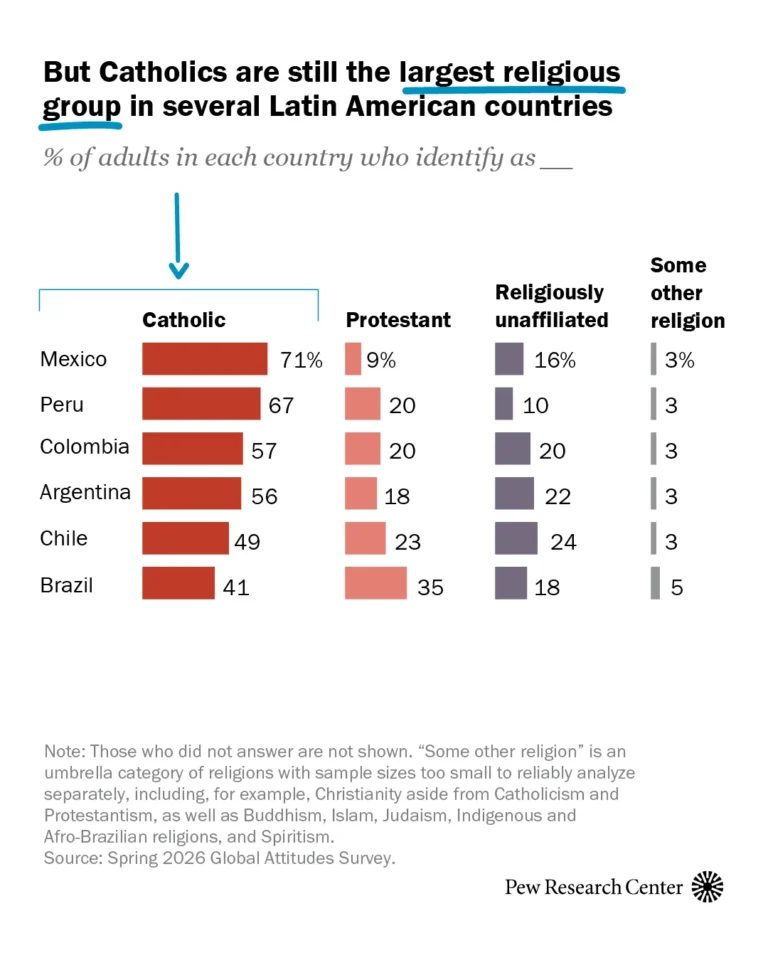
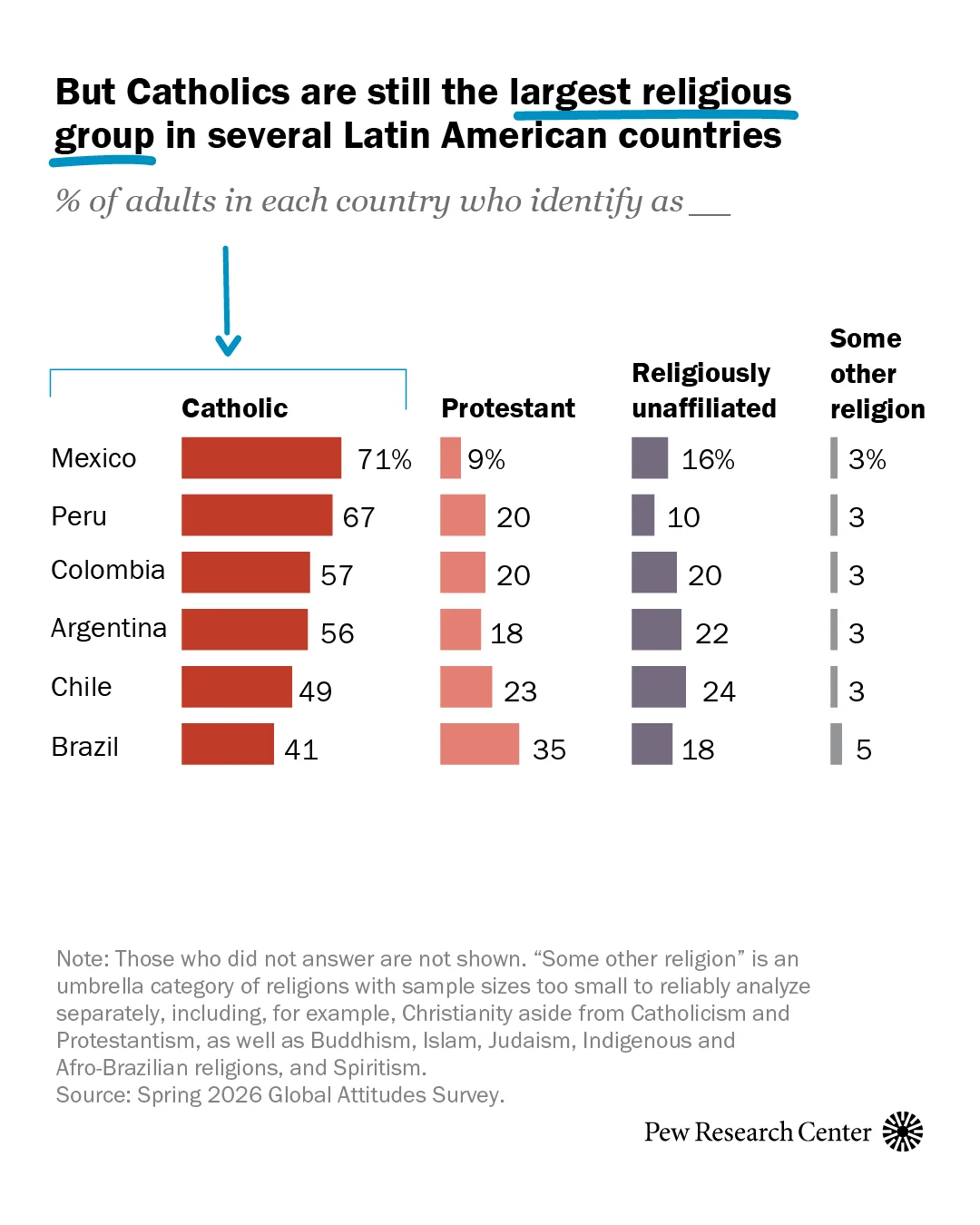
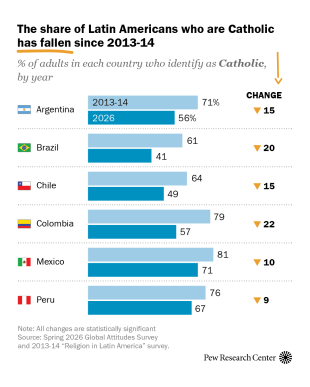
The data paints a picture of a region where the "Catholic monopoly" has effectively ended. While Catholics remain the majority in several of the studied nations, the trend lines are unambiguous: since the 2013-2014 period, the share of Latin Americans identifying as Catholic has consistently shrunk.
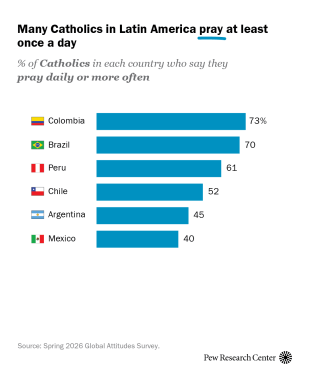
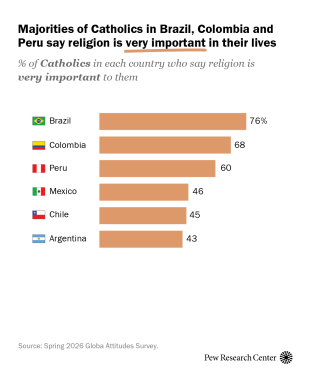
However, this decline in institutional affiliation does not necessarily equate to a total abandonment of faith. The study highlights a nuanced dichotomy: even as formal Catholic identification wanes, significant portions of the population continue to engage in traditional devotional practices. In countries like Brazil, Colombia, and Peru, a majority of Catholics still report that religion plays a "very important" role in their daily lives. Furthermore, daily prayer remains a cornerstone of the spiritual life for many, suggesting that while the institution faces challenges, the experience of faith remains resilient.
Chronology: A Decade of Decline
To understand the current state of religion in Latin America, one must look at the trajectory of the last decade.
- 2013–2014: This period serves as the primary baseline for the recent decline. During these years, the Catholic Church in Latin America enjoyed a level of institutional stability that, in hindsight, marked the end of an era.
- 2014–2020: The middle of the last decade saw the initial acceleration of religious disaffiliation. Sociologists point to a variety of factors during this window, including urbanization, improved access to education, and the diversification of religious offerings, particularly the growth of Evangelical and Pentecostal movements.
- 2021–2025: The global pandemic period acted as a catalyst for shifts in religious participation. While some found solace in faith, others became disconnected from their local parishes, contributing to the "nones"—those who report no religious affiliation—growing in number.
- 2026: The current research serves as a diagnostic, confirming that the downward trend has not leveled off. It captures a snapshot of a post-pandemic, increasingly secularized, and religiously pluralistic region.
Supporting Data: The Evidence of Change
The Pew Research Center’s latest survey, which involved over 6,100 respondents, provides empirical weight to these observations. The data is categorized by several key metrics:
1. The Membership Erosion
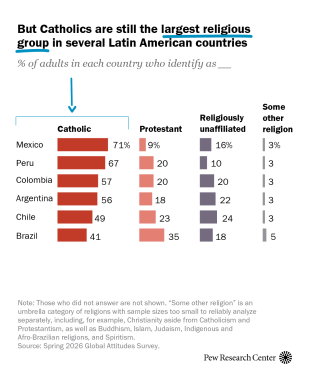
Charts generated from the 2026 survey clearly illustrate that while Catholicism is still the largest religious identity in Brazil, Mexico, Colombia, Argentina, and Peru, it is no longer the monolithic force it was in the mid-20th century. The gap between those born into the faith and those who continue to identify with it as adults is widening.
2. The Persistence of Practice
Despite the drop in identification, the intensity of practice remains high among those who remain. In Brazil, Colombia, and Peru, majorities of self-identified Catholics rank the importance of religion in their lives at the highest level. This suggests that the Church is retaining a "core" of highly committed believers, even if the "peripheral" membership is falling away.
3. The Pope Leo XIV Factor
A unique aspect of the 2026 research is the focus on public opinion regarding Pope Leo XIV. The data shows that the Pope’s reception is highly localized. In Peru, for example, approval ratings for the Pope remain notably high. Researchers attribute this, in part, to the fact that the Pope spent nearly two decades of his career in Peru and was named a bishop there in 2014. This deep personal history creates a localized bridge of support that is less visible in other parts of the region where the connection to the Vatican is more abstract.
Official Responses and Institutional Perspectives
While the Catholic Church in Latin America has not released a single, unified response to this specific 2026 report, the findings align with internal discussions within the Vatican regarding the "New Evangelization." Church leaders have long acknowledged the need to address the "leakage" of members, particularly in urban centers where competition from other religious movements is fierce.
The Pew-Templeton Global Religious Futures project, which funded this study, notes that its goal is not to predict the future of the Church, but to provide a clear view of the demographic shifts that will shape societal outcomes. The John Templeton Foundation and The Pew Charitable Trusts, as primary funders, emphasize that the project remains independent and that the findings—while sobering for some religious leaders—are meant to serve as a neutral foundation for academic and social discourse.
Implications: What This Means for the Future
The decline of traditional religious affiliation in Latin America has profound implications for the social and political fabric of these nations.
The Rise of the "Nones"
The increase in people claiming "no religion" mirrors a global trend, but in the Latin American context, it carries specific weight. As these individuals move away from traditional Catholic social structures, they are often moving into a vacuum where political and community identities are being reconstructed.
Social and Political Influence
For decades, the Catholic Church was the primary moral arbiter in many Latin American countries. As the influence of the Church diminishes, the political landscape is becoming more fragmented. We are seeing a shift where individual politicians and newer, smaller religious groups are competing for the "moral vote," leading to a more volatile and competitive political environment.
The Future of Devotional Life
The data suggests that the future of faith in Latin America will likely be more personalized and less institutional. We may see a rise in "syncretic" practices—where individuals combine elements of Catholic ritual with personal spirituality or, in some cases, elements of other faiths. The resilience of daily prayer indicates that the Latin American public remains deeply spiritual; the challenge for the Church is to find ways to engage that spirituality in a world that is increasingly skeptical of centralized religious authority.
Demographic and Regional Disparities
Finally, the findings highlight that the "decline" is not uniform. Geography matters. The difference in how the Pope is perceived in Peru versus other nations underscores that Latin America is not a monolith. Future research will need to continue to look at these regional variations to understand why certain areas remain more resistant to secularization than others.
In conclusion, the 2026 Pew Research Center survey provides a vital diagnostic tool for anyone looking to understand the future of Latin America. The region is not losing its soul, but it is certainly moving toward a new, more pluralistic, and perhaps more challenging, religious future. The transition from a region defined by a singular, dominant faith to one defined by individual choice and religious diversity is well underway, and the consequences of this shift will be felt for generations to come.
For those interested in the raw data or the specific methodology used by the Pew Research Center, full datasets and the detailed questionnaire are available through the Pew Research Center’s official website.
About the Author