The landscape of brand interaction has undergone a seismic shift. For decades, technology was a tool we operated; today, it is an immersive environment in which we exist. We have transitioned from a transactional digital era to a conversational one, where AI does not merely retrieve information but actively creates context and content. As communication between consumers and corporations increasingly passes through the filter of digital agents, the traditional pillars of brand building are being challenged.
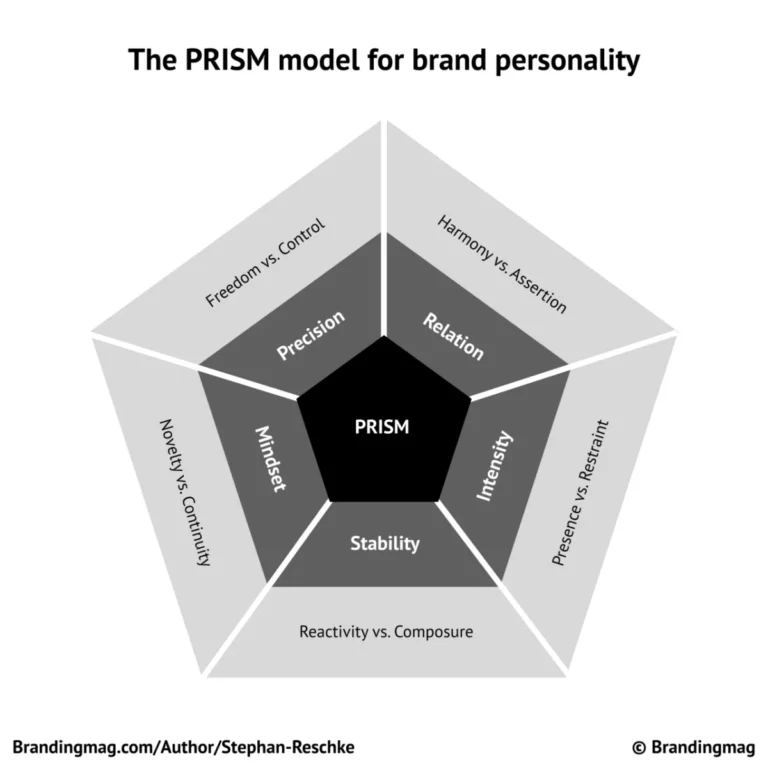
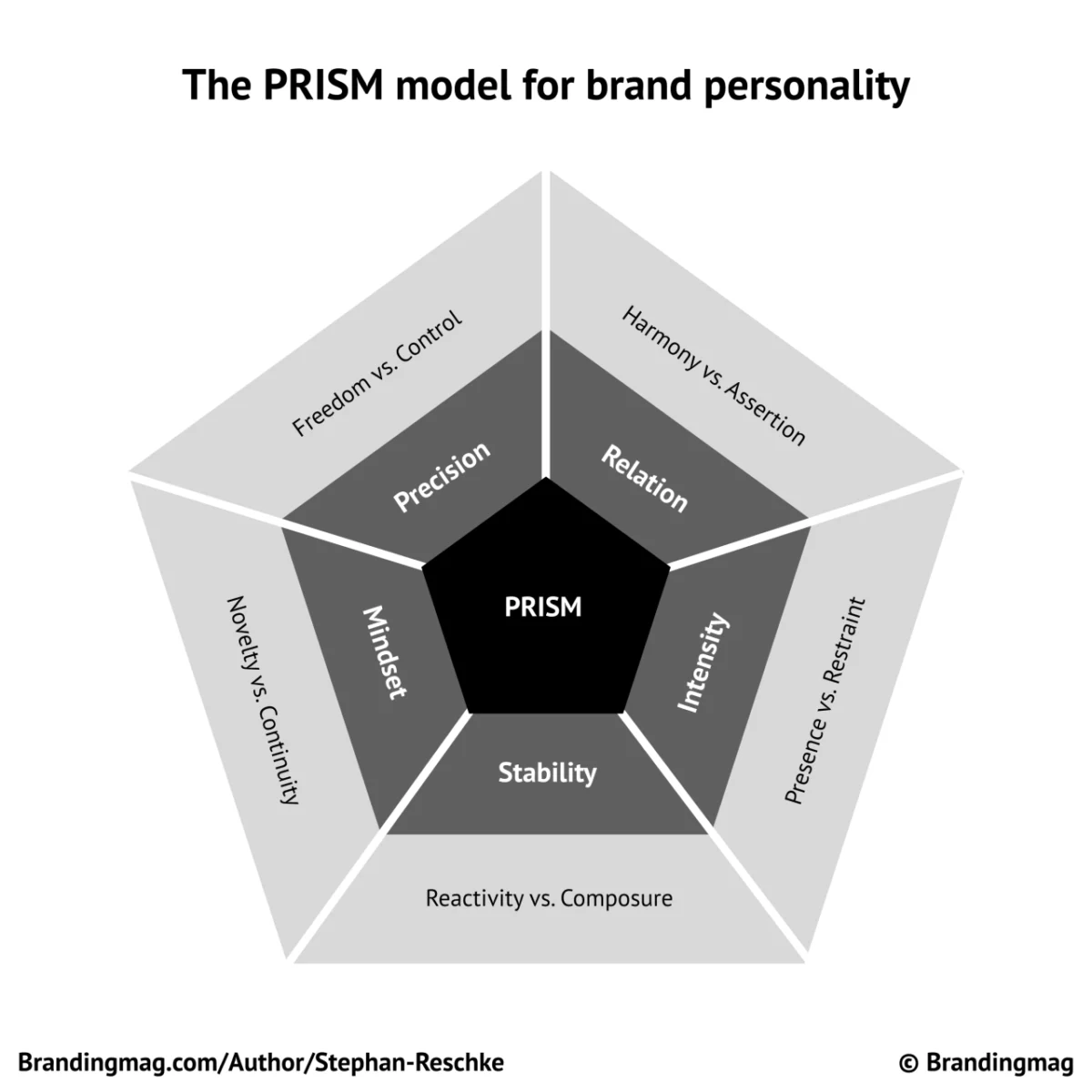
Enter the "Agentic Lovemark"—a concept pioneered by former Saatchi & Saatchi Netherlands CEO Arjan Kapteijns. By evolving Kevin Roberts’ foundational theory of the "Lovemark" for an AI-infused world, Kapteijns posits that emotional loyalty is no longer the sole domain of human-to-human interaction. In the age of AI, brands must earn the respect of both humans and the machines that act on their behalf. To achieve this, the industry is moving toward the PRISM model, a sophisticated framework designed to translate brand personality into a format that AI can not only understand but authentically replicate.
The Evolution of Emotional Connection: From Archetypes to Agents
The Archetype Era (1999–2024)
Twenty-five years ago, Margaret Mark and Carol Pearson published The Hero and the Outlaw, introducing the 12-brand archetype model. It was a revolutionary moment for marketing, providing a rational, human-inspired framework to guide brand behavior. By mapping brands to universal human archetypes—the Sage, the Rebel, the Caregiver, etc.—marketers gained a roadmap for creating consistent personalities that consumers could relate to and love.
The Shift to "Agentic" Dynamics
However, the rise of Large Language Models (LLMs) and autonomous agents has rendered traditional archetypes insufficient. While an archetype provides a broad "vibe," it lacks the granularity required for machine execution. If a brand relies solely on a vague archetype, an AI agent might interpret that personality differently in every interaction, leading to inconsistent, disjointed experiences. In an economy where AI acts as the gatekeeper to consumer attention, inconsistency is the enemy of equity.
To bridge this gap, industry leaders like Thomas Marzano, former brand lead at Philips and ASML, have introduced the "Legible-Lovable Law." Marzano argues that for a brand to thrive, it must be "legible" (technically readable by AI) and "lovable" (emotionally resonant to humans).
The PRISM Model: A New Taxonomy for Brand Identity
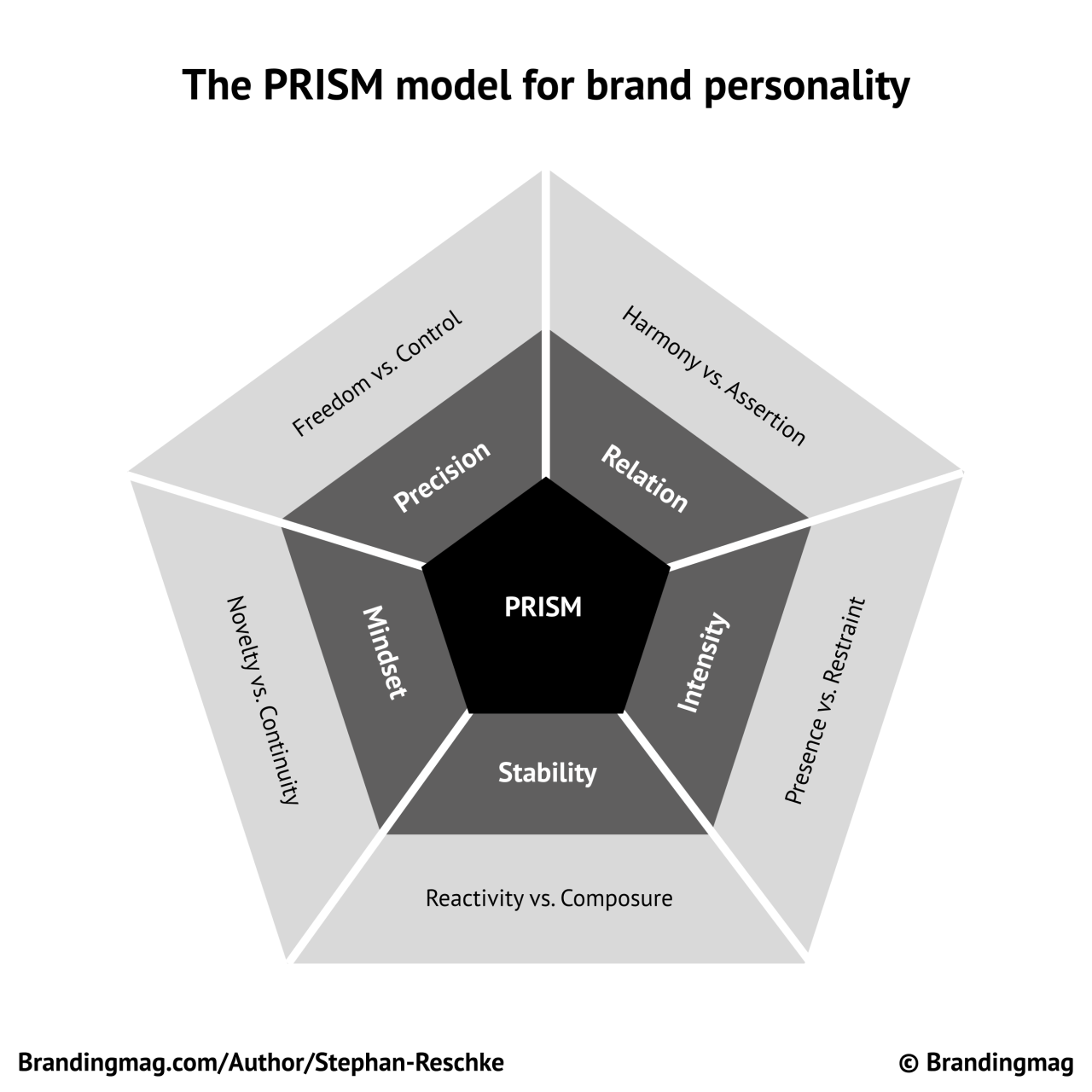
The PRISM model is the technical successor to the archetype. Built upon the psychological foundation of the OCEAN model (the "Big Five" personality traits), it provides a scientific, measurable structure for brand identity.

The Five Core Domains of PRISM
PRISM classifies brand personality through five primary domains, each subdivided into six specific characteristics:
- Openness to Experience: How the brand processes novelty, creativity, and complexity.
- Conscientiousness: The brand’s reliability, structure, and dedication to its core mission.
- Extraversion: The brand’s social energy, assertiveness, and desire for engagement.
- Agreeableness: The brand’s empathy, trust-building, and cooperative nature.
- Neuroticism (Emotional Stability): The brand’s reaction to pressure, crisis, and emotional volatility.
Unlike the static nature of archetypes, PRISM allows for a sliding scale. Each of the 30 underlying characteristics (six per domain) can be dialed up or down. This creates a "digital soul"—a high-fidelity personality profile that provides AI with precise instructions on tone, vocabulary, and response behavior.
Chronology: The Road to Agentic Marketing
- 1999: Publication of The Hero and the Outlaw; archetypes become the industry standard.
- 2004: Kevin Roberts defines the "Lovemark," shifting the focus from functional utility to emotional loyalty.
- 2023: The rapid proliferation of LLMs creates an immediate need for "Brand Constitutions."
- 2025-2026: Development of the PRISM model as a bridge between human psychological archetypes and machine-readable data.
- Present Day: Early adopters begin integrating PRISM into system prompts, moving from reactive marketing to "Experience Engines."
Implications: Building the "Experience Engine"
The adoption of the PRISM model has profound implications for how companies structure their marketing departments. The focus is shifting from "brand campaigns" to "brand language."
From Campaigns to System Prompts
In a voice-first, AI-driven future, visual campaigns take a backseat to the linguistic "soul" of the brand. LLMs do not "see" traditional advertising; they parse tokens and patterns. Consequently, the PRISM model serves as the architectural blueprint for an AI’s system prompts. By embedding these personality parameters into the infrastructure, brands ensure that their AI agents—whether in a chatbot, a smart speaker, or an autonomous purchasing agent—speak with a unified, unmistakable voice.
The Rise of Branded AI
A brand that successfully implements PRISM moves from being a static entity to an "Experience Engine." This engine can deliver:
- Contextual Fluidity: Adapting the brand voice to the specific user context while maintaining core personality constraints.
- Operational Consistency: Ensuring that every touchpoint—from customer support queries to transactional negotiations—is rendered with the same emotional intelligence.
- Strategic Defense: Protecting brand equity against "genericization" by ensuring that the AI agent does not default to a neutral, robotic tone.
Expert Perspectives and Supporting Data
Industry analysts note that the "Agentic Economy" will likely lead to a bifurcation in the market. Brands that fail to encode their personality into their AI infrastructure will find themselves marginalized by "agentic discovery"—the process by which AI makes purchasing decisions on behalf of the consumer. If a brand cannot be "read" by the AI, it will effectively cease to exist in the user’s choice set.
"The goal is not to abandon the emotional connection," says Kapteijns. "The goal is to orchestrate it through machines."
Data from early implementation pilots suggest that when AI agents are provided with high-fidelity personality constraints (via models like PRISM), user trust increases by upwards of 30% compared to generic, default AI responses. Consumers are significantly more likely to repeat interactions with an agent that displays distinct, consistent, and "human-like" personality traits.
Conclusion: The Imperative to Adapt
The future of branding is not merely about how a product looks on a shelf; it is about how a brand manifests within the digital ether of an AI’s decision-making process. The anxiety surrounding this transition is natural, but as history has shown, the most effective remedy for technological disruption is rigorous exploration and implementation.
The PRISM model represents a necessary maturation of the marketing discipline. It acknowledges that while the goal of branding—to create emotional connection—remains constant, the means have fundamentally changed. As we move forward, the brands that win will be those that view their personality not as a fixed archetype, but as a dynamic, data-driven "digital soul."
The conversations between machines have already begun. For the modern marketer, the question is no longer whether they will engage in this new, complex reality, but how quickly they can define their brand’s personality to ensure it remains part of the conversation. The PRISM model provides the lens; it is now up to brands to focus it.
About the Author