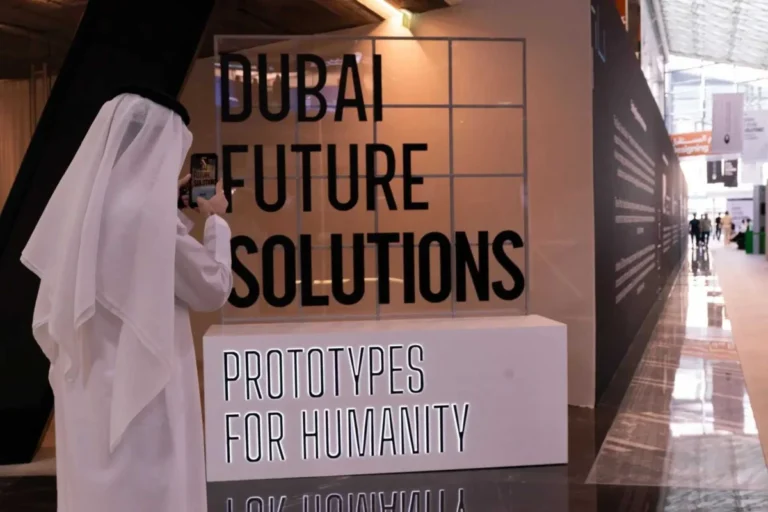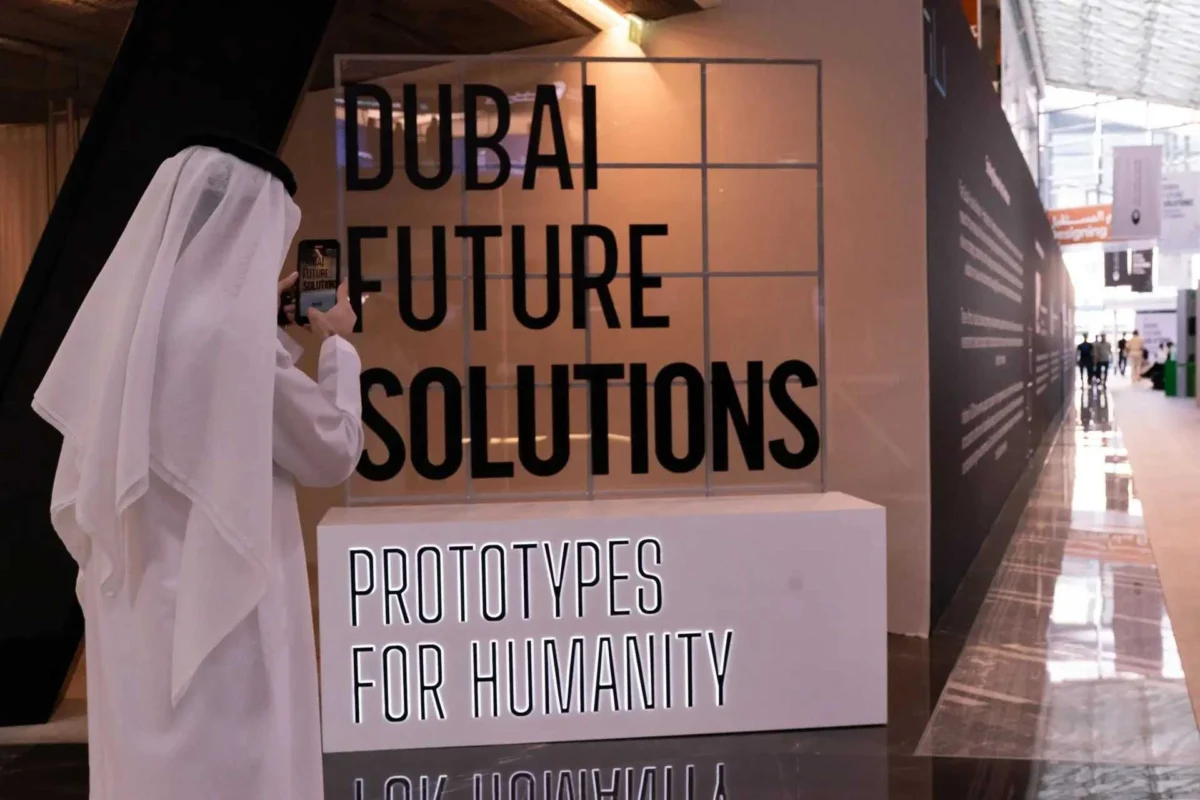
DUBAI — As global markets grapple with the increasing volatility of the climate and the rapid evolution of the industrial workforce, a massive collaborative effort is set to take center stage in Dubai. From November 17–20, 2026, Prototypes for Humanity—the innovation arm of the Art Dubai Group—will host its 2026 Short Papers Platform. Supported by the Investment Corporation of Dubai (ICD), the event brings together the brightest minds from 49 universities worldwide to present research that promises to bridge the gap between academic theory and real-world industrial application.
Among the high-stakes topics on the agenda are AI-driven supply chain forecasting, the use of satellite imagery for climate risk mitigation, and a revolutionary "physical AI" system designed to slash industrial training timelines.
Main Facts: A Convergence of Global Expertise
The 2026 Short Papers Platform serves as a structured conduit between academia and industry. The initiative is not merely an academic exercise; it is a strategic response to the systemic vulnerabilities exposed by the post-pandemic global economy.
The conference is structured around several critical tracks, including:
- Mobility and Logistics: Utilizing satellite telemetry to preempt climate-related disruptions.
- Autonomous Systems and Advanced Manufacturing: Introducing ORION, an AI system that automates industrial worker training.
- Infrastructure and Cities: Exploring urban heat management and sustainable design.
- Socio-Economic Empowerment: Investigating the future of digital economies and market resilience.
- Environment, Sustainability, and Energy: Focusing on industrial decarbonization.
The core mission of the event is to accelerate the "translation" of university research into applied solutions. To incentivize this, the Investment Corporation of Dubai (ICD) has pledged a $50,000 grant to the most promising paper, providing a runway for the winning team to move their research from the laboratory to the factory floor.
Chronology: The Road to the 2026 Platform
The development of this year’s platform represents a multi-year effort to harmonize international research goals.
- Q1 2026: Formation of the global research consortium, involving representatives from 49 universities spanning multiple continents.
- Q2–Q3 2026: Peer review and selection process for the Short Papers Platform, focusing on research that demonstrates high "practical application" potential.
- November 17, 2026: Official opening of the convention in Dubai, featuring keynote presentations on global supply chain vulnerabilities.
- November 18–19, 2026: Deep-dive sessions into specialized tracks, including the unveiling of the ORION AI training system.
- November 20, 2026: Closing ceremonies and the announcement of the $50,000 ICD award recipient.
Supporting Data: Innovations in Logistics and Human Capital
Satellite Imagery and Supply Chain Resilience
One of the most anticipated presentations under the Mobility and Logistics track involves the use of high-resolution satellite imagery to predict disruptions. Historically, supply chain managers have relied on retrospective data or localized reporting to understand blockages. This research shifts the paradigm toward predictive analytics. By monitoring environmental indicators—such as rising water levels, extreme temperature spikes, and atmospheric instability—via satellite, researchers have developed models that can alert logistics companies to potential port closures or route failures weeks before they materialize. This allows for the preemptive rerouting of cargo, significantly reducing the financial impact of climate-driven catastrophes.
The ORION System: Revolutionizing Industrial Training
Under the Autonomous Systems and Advanced Manufacturing track, researchers are introducing ORION, a physical AI system. The industrial sector currently faces a significant bottleneck in training; specialized equipment often requires up to six months of hands-on instruction before a worker is fully certified.
ORION addresses this by:
- Dynamic Lesson Generation: The AI writes its own training modules tailored to the specific machine being operated.
- Hardware Demonstration: The system guides the user through every physical step on the actual hardware.
- Neuro-Feedback Integration: Using EEG (electroencephalography) headsets, the system tracks the user’s cognitive load and concentration levels. If the user becomes overwhelmed, the AI slows the pace; if they demonstrate mastery, it accelerates the training.
The objective is to condense a six-month learning cycle into a matter of weeks, effectively increasing the adaptability of the global manufacturing workforce.
Official Responses: Bridging the Gap Between Academia and Industry
Tadeu Baldani Caravieri, Managing Director of Prototypes for Humanity, emphasized that the platform is designed to overcome the "academic silo" effect.
"Our mission is to accelerate the translation of university research into applied solutions," Caravieri stated in a release. "The Short Papers Platform creates a structured conduit for academics to share emerging research and connect their expertise with the R&D and innovation priorities of leading organisations. This year’s programme brings together an exceptional breadth of research across institutions, disciplines and geographies, creating new opportunities for collaboration and practical application."
Caravieri added that the partnership with the ICD is pivotal. "We are privileged to advance this work in partnership with ICD, with a shared commitment to translating academic knowledge into tangible outcomes. By providing a financial incentive for the most viable project, we ensure that the research does not sit on a shelf but rather enters the development phase."
Implications: The Future of Industrial and Environmental Strategy
The research being presented in Dubai carries profound implications for the global economy.
1. The Era of Proactive Logistics
If the predictive satellite models move into widespread adoption, the "just-in-time" supply chain model may undergo a resurgence. By turning climate volatility from an "unknown risk" into a "predictable variable," logistics firms can optimize fuel usage and inventory management, ultimately lowering costs for consumers and increasing the stability of global trade routes.
2. Human-Machine Collaboration
The ORION system signals a shift in how we view the "Future of Work." Rather than fearing that AI will replace workers, this research suggests that AI will act as a force multiplier for human skill acquisition. By reducing the time required to master complex machinery, companies can pivot their workforce more quickly to meet changing market demands, effectively democratizing access to high-skill industrial roles.
3. Sustainable Decarbonization
The inclusion of tracks focused on Environment, Sustainability and Energy suggests that the academic community is pivoting toward the "how" of decarbonization. It is no longer enough to set climate goals; the research at the 2026 conference focuses on the specific engineering and digital infrastructure required to achieve them. From generative AI’s own environmental footprint to the redesign of urban infrastructure to combat urban heat islands, the research aims to provide actionable roadmaps for policymakers.
4. The Role of Dubai as an Innovation Hub
By hosting this consortium, Dubai is further solidifying its position as a central node in the global knowledge economy. The strategic involvement of the Investment Corporation of Dubai signals that the region is looking beyond traditional sectors like oil and real estate, moving aggressively toward an innovation-led growth model that leverages intellectual property and cutting-edge technology.
Conclusion
The 2026 Short Papers Platform in Dubai represents a crucial turning point for international research. By forcing a collision between academic brilliance and industrial necessity, the organizers are creating a environment where the biggest challenges of our time—from the fragility of our logistics networks to the pace of industrial training—are met with rigorous, data-driven, and highly scalable solutions.
As the conference concludes on November 20, the $50,000 prize will serve as a catalyst for the winner, but the true value of the event lies in the collective intellect of the 49 universities represented. The world will be watching to see how these "prototypes" transition into the systems that will govern our factories, cities, and trade routes in the coming decade. Whether it is a satellite tracking a storm in the Pacific or an AI-monitored EEG headset helping a worker in a warehouse, the future of global industry is being written in Dubai this November.
About the Author