The logistics landscape in the United States is signaling a robust, albeit expensive, expansion as the nation enters the critical holiday shopping window. According to the October Logistics Managers’ Index (LMI), the industry is experiencing a level of activity not seen since the immediate post-pandemic era. With inventory levels climbing to meet anticipated consumer demand, the logistical infrastructure is being pushed to its limits, resulting in a significant spike in aggregate costs that analysts warn could exert renewed pressure on consumer pricing.
Main Facts: A Resurgent Logistics Sector
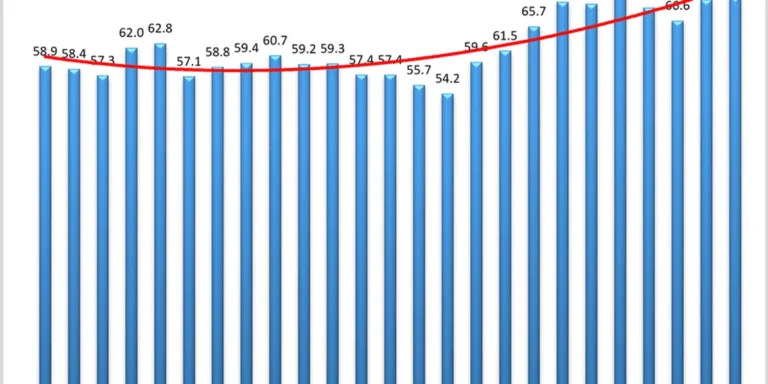
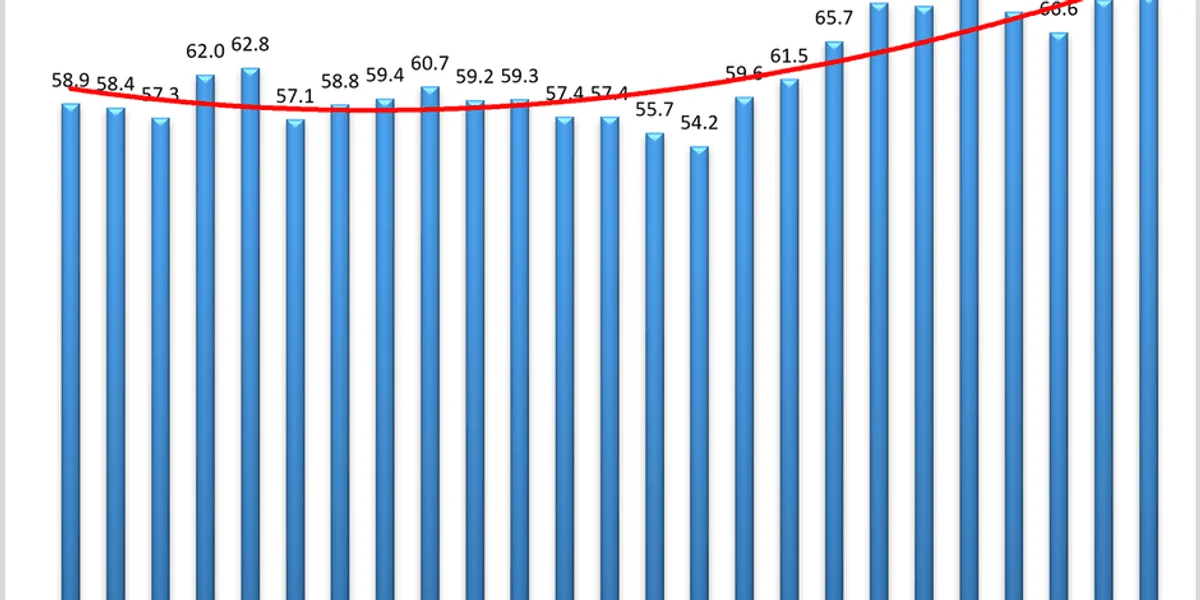
The October LMI, released on November 3, clocked in at a score of 70.7, a marginal increase from September’s 70.2. This represents the second-highest reading in four years, trailing only the 71.1 score recorded in June. In the context of the LMI, any reading above 50 indicates expansion; a reading exceeding 70 suggests aggressive, high-velocity growth.
The primary driver of this acceleration is the frantic preparation by retailers for the holiday season. As businesses shift from "just-in-time" supply chains to more robust inventory management strategies, warehouse floors are filling up. However, this accumulation of stock has triggered a cascading effect across the supply chain, tightening capacity and driving prices upward across all logistical modalities.
Chronology of Market Conditions
To understand the current state of the supply chain, it is necessary to examine the trajectory over the past year.
- Early 2026: The logistics sector began the year with a focus on normalizing post-pandemic inventories. Throughout the spring, demand remained steady but manageable, with capacity indices hovering near neutral levels.
- Summer 2026: June marked a pivotal moment for the industry, with the LMI reaching a four-year peak of 71.1. This period saw the first real hints of a tightening market as companies began stockpiling ahead of autumn.
- September 2026: The sector maintained its momentum with a score of 70.2. Analysts noted then that while transportation was starting to tighten, warehousing remained the primary bottleneck.
- October 2026: The current report confirms that the "holiday build" is in full swing. The continued contraction of capacity in both warehousing and transportation, coupled with a massive 8.0-point jump in inventory levels, has solidified the trend toward higher operational costs.
Supporting Data: The Anatomy of the Cost Surge
The October report provides a granular look at the metrics defining this expansion. The data paints a picture of a sector struggling to balance volume with limited physical and human capital.
The Inventory and Capacity Crunch
Inventory levels jumped by 8.0 points in October, a clear indicator that retailers are betting heavily on holiday consumer spending. However, the cost of holding this inventory is soaring. The Inventory Costs index climbed nearly 9.0 points to hit 88.8—the highest level recorded since March 2022.
Simultaneously, the physical space to store these goods is becoming increasingly scarce. The Warehousing Capacity index plummeted to 43.5, while the Transportation Capacity index fell to 38.0. When capacity indices dip below 50, it indicates a contraction in available space or equipment, effectively turning the logistics market into a "seller’s market" where carriers and warehouse operators can command higher premiums.
The Aggregate Cost Spike
The most alarming statistic from the report is the aggregate logistics cost metric. Reaching a score of 257.5 out of 300—an 11-point increase from September—the industry is witnessing its fastest expansion in costs in over four years. This aggregate score is a composite of inventory, warehousing, and transportation costs. The fact that all three are expanding simultaneously is a classic indicator of a supply-side crunch.
Official Perspectives and Expert Analysis
The LMI is a collaborative effort involving researchers from Arizona State University, Colorado State University, the Rochester Institute of Technology, Rutgers University, and the University of Nevada, Reno, in partnership with the Council of Supply Chain Management Professionals (CSCMP).
In their commentary, the researchers highlighted a haunting parallel to the inflationary environment of early 2022. "This is the highest reading for this aggregate metric since March of 2022, when supply-driven inflation was rampant in the wake of both the cessation of Covid-era demand and the invasion of Ukraine," the report noted.
The experts emphasized that the current situation is not merely a seasonal anomaly. "Given the pressure on logistics costs, it is likely that we will continue to see supply-driven inflation continue to increase in the near term." This suggests that the cost of moving and storing goods—which eventually trickles down to the retail price of consumer items—is unlikely to abate before the end of the calendar year.
Implications for the Broader Economy
The data provided by the October LMI holds significant implications for both businesses and consumers as the fourth quarter progresses.
1. The Threat of Supply-Driven Inflation
When the cost of warehousing and transportation increases at this rate, it rarely stays contained within the supply chain. Manufacturers and retailers, facing higher overheads, are often forced to pass these costs on to the consumer. While the holiday season is a time of high volume, the margin compression caused by these logistics costs may lead to higher shelf prices for goods ranging from electronics to seasonal apparel.
2. Operational Challenges for Logistics Managers
For logistics managers, the current environment is a test of resilience. With capacity shrinking, the ability to find reliable transportation or warehouse space at a reasonable price is becoming increasingly difficult. This is forcing many companies to secure long-term contracts at higher rates, locking in these increased costs for the coming fiscal year.
3. The "New Normal" of Supply Chain Volatility
The volatility observed since 2022 has prompted a fundamental shift in how corporations view their supply chains. The move toward "buffer stocks" is clearly visible in the data. While this approach protects against stockouts, it necessitates a larger footprint in the warehouse and higher capital allocation toward inventory. The October LMI suggests that the industry is still in the process of calibrating this new, more expensive approach to global trade.
Conclusion: A High-Stakes Peak Season
As the industry heads into the final stretch of the year, the logistics sector remains a critical barometer for the health of the broader economy. The October LMI data confirms that while the industry is expanding, it is doing so at a cost that is increasingly difficult to ignore.
For retailers, the focus remains on ensuring product availability for the holiday rush. For logistics providers, the focus is on managing the severe capacity constraints that have characterized the last quarter. Whether this surge in activity results in a successful holiday season or contributes to an inflationary cycle remains the central question for economists and industry leaders alike. As the year draws to a close, all eyes will be on the November and December LMI reports to see if these pressures begin to stabilize or if the logistical strain will persist into the new year.
About the Author