In the rapidly evolving digital landscape, the Managed Service Provider (MSP) has become the silent backbone of the modern economy. From small businesses to multinational corporations, organizations have outsourced their critical IT infrastructure, cybersecurity, and data management to these third-party experts. Yet, beneath this veneer of high-tech competence lies a systemic vulnerability: the industry lacks a universally accepted, rigorous set of professional standards.
As the barriers to entry remain virtually non-existent, the Global Technology Industry Association (GTIA) is sounding an alarm. CEO Dan Wensley argues that the "hang out a shingle" culture, which has persisted for decades, is no longer sustainable. With MSPs now holding the metaphorical keys to the kingdom—managing sensitive intellectual property, private data, and critical cybersecurity perimeters—the industry is at a crossroads.
The Problem: A Low Barrier to Entry in a High-Stakes World
Historically, the MSP sector has been defined by its agility and ease of entry. However, that accessibility has become a double-edged sword. Currently, almost anyone with a basic technical background and a client base can market themselves as a Managed Service Provider.
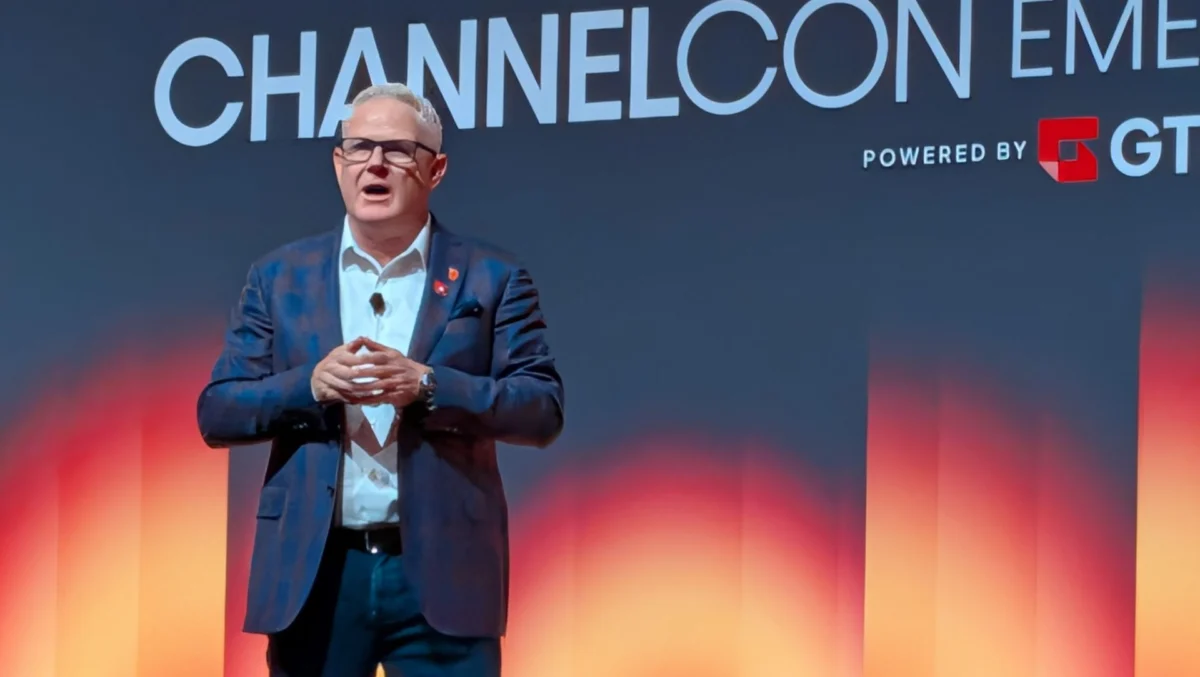
Speaking at the GTIA ChannelCon EMEA event in London, Wensley highlighted the inherent danger in this lack of standardization. "Anybody could hang out a shingle and call themselves an MSP, and that holds true today," he noted. While this low barrier to entry fueled early industry growth, it has left the market fragmented and, more importantly, unregulated.
The stakes have changed drastically. In the past, an MSP might have been responsible for basic network maintenance or printer troubleshooting. Today, they are the primary line of defense against state-sponsored cyberattacks, ransomware, and data breaches. When an MSP fails, the fallout isn’t just a technical glitch; it is a catastrophic business event for the client. Despite this, there is no standardized way for a customer to verify the technical or operational effectiveness of their provider.
Chronology of a Crisis: The Move Toward Self-Regulation
The push for standardization is not a new concept, but it has gained significant momentum in the last 24 months.
- Pre-2022: The industry largely relied on vendor-specific certifications (e.g., Microsoft, Cisco, AWS) to prove competence. While these demonstrate knowledge of specific products, they do not verify operational maturity or business ethics.
- 2023: As cyber threats grew more sophisticated and AI-driven, the conversation shifted from "technical capability" to "overall responsibility." Industry leaders began publicly questioning how the channel could hold itself accountable.
- Early 2024: GTIA identified the need for a formal, industry-led body to govern standards. Preliminary discussions were held with academic partners to bridge the gap between business requirements and technical realities.
- Late 2024 (Present): The formal launch of the Consortium for Responsible IT Services, a partnership between GTIA and the Texas A&M University’s Global Cyber Research Institute, marks the beginning of a multi-year effort to build a self-regulatory framework.
The Consortium for Responsible IT Services: A New Framework
To address these systemic gaps, GTIA and the Global Cyber Research Institute have launched the Consortium for Responsible IT Services. This initiative is designed to function as a self-regulatory organization (SRO), a model commonly found in fields like law, medicine, and accounting.
What the Standards Might Include
While the specific criteria are still being drafted by the consortium’s members, the framework is expected to focus on three core pillars:
- Operational Proficiency: Defining what constitutes "best practice" in day-to-day service delivery, incident response, and business continuity.
- Technical Standardization: Moving beyond simple vendor certifications to verify that an MSP’s entire technology stack meets baseline security and performance requirements.
- Ethical Oversight: Establishing a code of conduct for how customer data and intellectual property must be handled, ensuring that client trust is treated as a professional, not just a contractual, obligation.
Wensley emphasizes that this will not be a "top-down" mandate. "Our members will decide on that," he stated. "The experts in our membership will be the ones at the forefront of it, and then it will be taken out to our global community and looked at and peer-reviewed and then put into practice."
Implications: The Shift from "Vendor" to "Partner"
The establishment of professional standards will have profound implications for the channel, potentially separating mature, responsible providers from those who prioritize growth over security.
1. Competitive Differentiation
For high-performing MSPs, formal standards represent a massive opportunity. Currently, a top-tier firm struggles to distinguish itself from a budget-friendly competitor that may be cutting corners on security. With an industry-standard seal of approval, professional MSPs will be able to demonstrate their commitment to quality to potential clients, justifying higher price points and fostering deeper, more secure relationships.
2. The Threat of Government Regulation
Wensley’s urgency is driven by a looming reality: governments are watching. As the UK and other nations grapple with the systemic risks posed by the IT supply chain, the threat of heavy-handed, government-imposed regulation is growing.
"We’re one of the few industries on the planet that haven’t already been regulated by the government," Wensley warned. The logic is clear: if the industry does not establish its own rigorous standards—and prove that they are being enforced—legislators will eventually do it for them. Industry-led regulation is almost always more efficient and nuanced than bureaucratic intervention.
3. The AI Factor
The integration of Artificial Intelligence into the IT stack is accelerating the need for standards. As MSPs adopt AI tools to monitor networks and automate responses, the potential for error increases. If an AI system managed by an MSP makes a critical mistake, who is responsible? A professional standard would define the governance, auditing, and human-in-the-loop requirements for AI deployment, providing a safety net for both the provider and the client.
Data and Industry Reality: Can the Channel Adapt?
The development of the full framework is expected to take between two and three years. This timeline acknowledges the complexity of the MSP ecosystem, which ranges from small "mom-and-pop" shops to global conglomerates.
For the average MSP, the transition will likely be challenging. Many will have to audit their existing processes, invest in new compliance tooling, and perhaps undergo rigorous peer reviews. The "evidence of competence" required by the new standards will move away from self-attestation to documented, repeatable proof of performance.
Conclusion: A Turning Point for the Industry
The initiative led by GTIA and the Consortium for Responsible IT Services is not merely about creating a "gold star" for marketing purposes. It is a fundamental effort to professionalize an industry that has matured beyond its origins.
By taking the lead in setting operational, technical, and ethical standards, the MSP industry is signaling that it is ready to be treated with the same seriousness as other critical service sectors. For those who choose to adopt these standards, the path forward offers a chance to secure the trust of clients in an increasingly dangerous digital world. For those who refuse, the future may bring not only competitive irrelevance but the looming shadow of external, forced regulation.
The era of the "unregulated tech shop" is coming to an end. In its place, a more professional, more secure, and more accountable Managed Service Provider industry is beginning to emerge. The question remains: how quickly can the channel move before the clock runs out?
About the Author