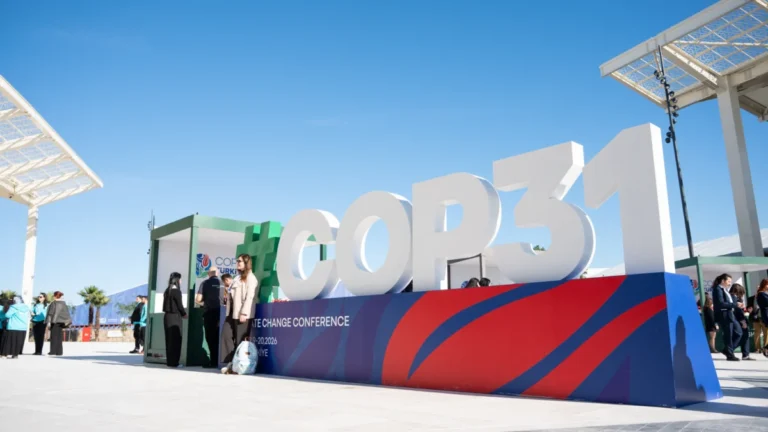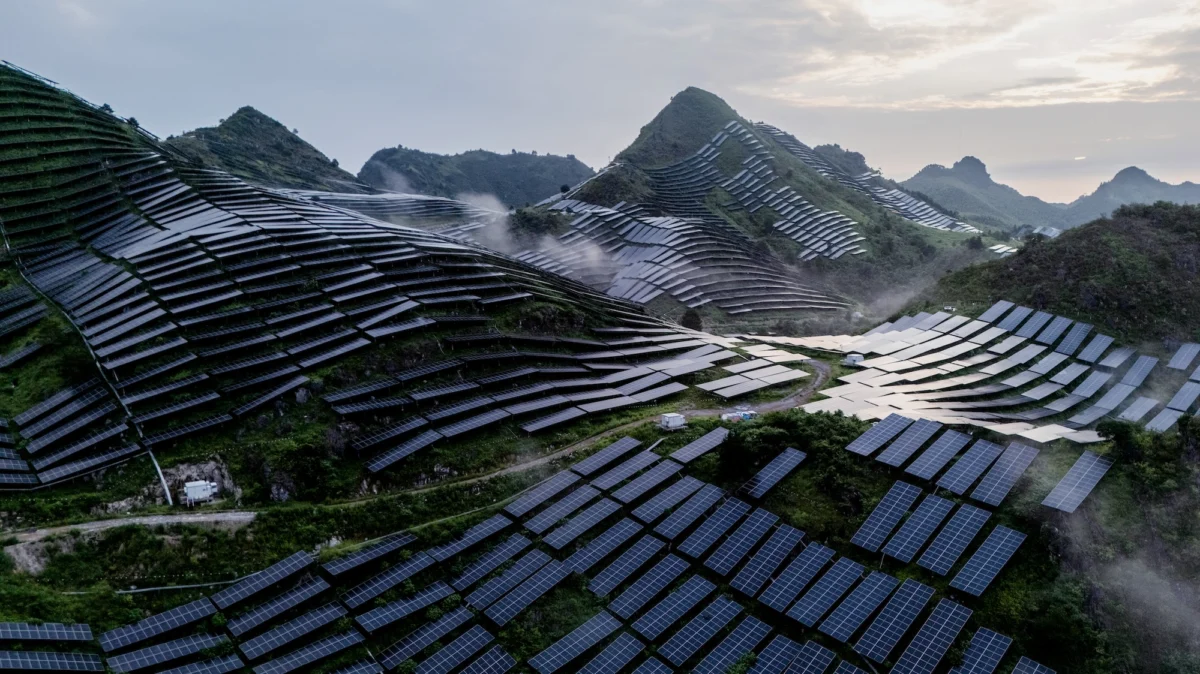
As the global community gathers in Turkey for the COP31 climate summit, the focus of international diplomacy has shifted from mere rhetoric to a hard-nosed assessment of industrial power. While climate summits have historically been defined by pledges and non-binding targets, this year’s conference is underscored by a geopolitical reality that cannot be ignored: the world is witnessing the birth of the "electrostate." At the center of this transformation is China, which has transitioned from an reluctant participant in climate governance to the undisputed architect of the global green energy supply chain.
Former US Secretary of State John Kerry, reflecting on the current state of the global transition, noted that the marketplace has already cast its vote. "The marketplace has made its decision and globally is moving to electrons," Kerry told The Guardian. "It is unstoppable."
The Main Facts: A Paradigm Shift in Global Power
The fundamental shift in the 21st-century economy is the transition from fossil fuel dependency to electrification. For decades, the global order was anchored by the "exorbitant privilege" of the US dollar, largely underpinned by its role as the trading currency for oil. However, as the world pivots toward renewable energy—solar, wind, and battery storage—the geopolitical map is being redrawn.
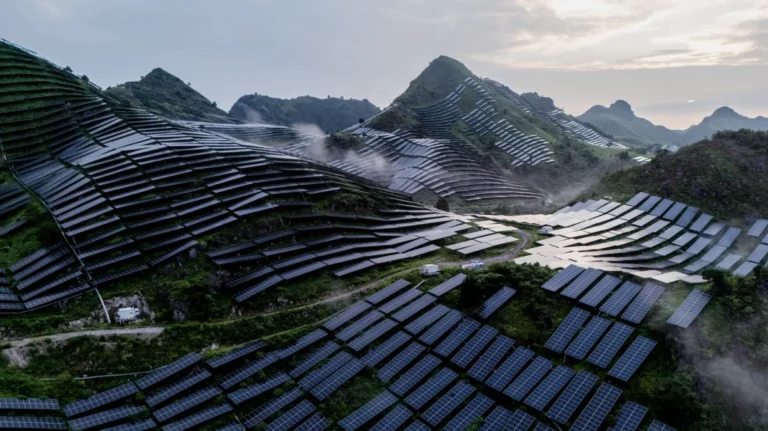
China currently occupies the throne of this new era. According to recent data from the International Energy Agency (IEA), China accounts for roughly 85% of global solar supply chain capacity and 80% of lithium-ion battery production. Furthermore, in 2025, nearly three-quarters of all electric vehicles (EVs) sold globally were manufactured within Chinese borders. This dominance is not merely an environmental achievement; it is a calculated economic strategy designed to secure energy independence and insulate the nation from the volatility of global oil and gas markets—a vulnerability highlighted by recent conflicts in the Middle East and the disruption of vital shipping lanes.
Chronology: From Observer to Architect
To understand China’s current position, one must look at the recent trajectory of its climate and industrial policies:
- March 2024: Analysis for Carbon Brief identifies a pivotal moment as China’s carbon emissions enter a "flat or falling" trend, marking a significant break from decades of unchecked industrial growth.
- 2025: China solidifies its lead in clean-tech, with exports in the sector surpassing $220 billion. The sheer scale of this output forces a shift in how Western nations perceive Chinese economic growth.
- March 2026: China adopts its latest "five-year plan," which for the first time explicitly pledges that Beijing will "actively participate in and lead global climate governance."
- November 2026 (COP31): The climate summit in Turkey serves as the proving ground. The international community watches closely to see if China’s stated intent to "lead" will translate into tangible diplomatic maneuvers or if it will remain a defensive posture against Western trade protectionism.
Supporting Data: The Economic Engine of Green Tech
The success of China’s green energy sector is the primary engine keeping its post-pandemic economy afloat. While the country has struggled to stimulate domestic consumption, its export-oriented green strategy has provided a vital buffer.
The scale of this dominance is illustrated by the following metrics:
- Clean-Tech Exports: Surpassed $220 billion in 2025, with continued growth projected through the end of 2026.
- Supply Chain Monopolies: 85% solar manufacturing capacity, 80% lithium-ion battery capacity.
- Belt and Road Initiative (BRI): Investment in green energy projects under the BRI in the first half of 2026 has already eclipsed the total figures for the entire year of 2025. This underscores Beijing’s effort to export its "electrostate" model to developing nations in Africa, Asia, and Latin America.
Official Responses and Diplomatic Friction
The reaction to China’s rise has been characterized by a blend of admiration for its technical progress and deep-seated apprehension regarding its influence.
The Western Perspective
John Kerry’s assessment is stark: Western nations, particularly those that have lagged in rapid electrification, risk significant economic decline. "The only country that has hugely accelerated is China," Kerry remarked. "The rest of the world is stumbling along while Mother Nature is sending us more powerful signals every week." Kerry credits the chaotic state of global fossil fuel markets—specifically disruptions in the Strait of Hormuz—for forcing nations to realize that renewable independence is a strategic necessity rather than an environmental luxury.
The View from Beijing
Beijing’s leadership, led by President Xi Jinping, frames China as a "doer and go-getter." However, this posture is frequently at odds with the geopolitical tensions surrounding trade. China is currently pushing for the "free flow" of green technology, a direct challenge to the tariffs imposed by the United States and the European Union on Chinese EVs and solar panels. Analysts suggest that Beijing intends to use COP31 as a forum to build a coalition with the Global South—countries like Brazil, India, and South Africa—to push back against these "climate-related trade measures," which they view as protectionist barriers designed to stifle their competitive advantage.
Implications: The "Electrostate" World Order
The implications of this shift are profound and touch upon every facet of international relations.
The Erosion of "Exorbitant Privilege"
As Isabel Hilton of China Dialogue points out, the transition to green energy threatens the foundational power of the US dollar. If the primary commodities of the future are solar panels, batteries, and wind turbines rather than crude oil, the mechanisms of global financial hegemony will inevitably evolve. If China controls the supply chains of these essential technologies, the "US position in the world looks weaker, and… more vulnerable still."
The Dilemma of Leadership
Despite its industrial dominance, China remains hesitant to adopt traditional "leadership" roles at summits like COP. Part of this is a philosophical aversion to the prescriptive, top-down targets often favored by Western institutions. Part of it is tactical—China is wary of being boxed in by international mandates that could limit its flexibility as it navigates the needs of its developing-world partners.
Yixian Sun, a professor of sustainability governance at the University of Bath, highlights a critical mismatch: "There is a mismatch between Chinese policymakers’ views on the role that China can play in global climate governance and international expectations on the influence that China should exert."
Ultimately, the world is waiting to see if China will step up. For this to happen, experts argue, the global environment must change. The Global North must be willing to accept a reality where leadership in the climate crisis is not a Western prerogative. As Kate Logan of the Asia Society Policy Institute suggests, Beijing’s current goal for COP31 is likely "a cooperative outcome… no major drama."
However, as the climate crisis intensifies, the luxury of "no drama" is rapidly fading. Whether or not Beijing officially assumes the mantle of climate leadership, its industrial engine has already decided the direction of the global economy. The transition to an "electrostate" model is no longer a matter of policy debate; it is an industrial reality. The only question remaining is whether the international community can integrate this new reality into a stable, cooperative, and sustainable global order, or if the race to lead the energy transition will fuel the next generation of geopolitical conflict.
About the Author