The digital landscape is currently undergoing a tectonic shift. As artificial intelligence evolves from a novelty into a foundational element of global infrastructure, the security community has found itself caught in a high-stakes arms race. According to Verizon’s latest Data Breach Investigations Report, we have already witnessed a 34% surge in vulnerability exploitation, a trend that experts warn is merely the prelude to a much broader systemic transformation.
As vulnerability discovery is projected by Gartner to "skyrocket" over the next few years, Chief Information Officers (CIOs) and Chief Information Security Officers (CISOs) are facing an existential question: Is the emergence of "Dark AI"—the weaponized deployment of machine learning by threat actors—the final nail in the coffin for traditional corporate security, or is it a catalyst for a more resilient, automated future?
The Mythos Moment: Confronting the "AI Apocalypse"
In April 2026, the release of Anthropic’s "Mythos Preview" sent shockwaves through the cybersecurity sector. Unlike its predecessors, Mythos demonstrated an uncanny ability to identify zero-day vulnerabilities that had previously remained hidden from standard scanning tools. For Leigh McMullen, a distinguished VP analyst and Gartner fellow, the release triggered a wave of anxious inquiries from tech leaders across the globe.
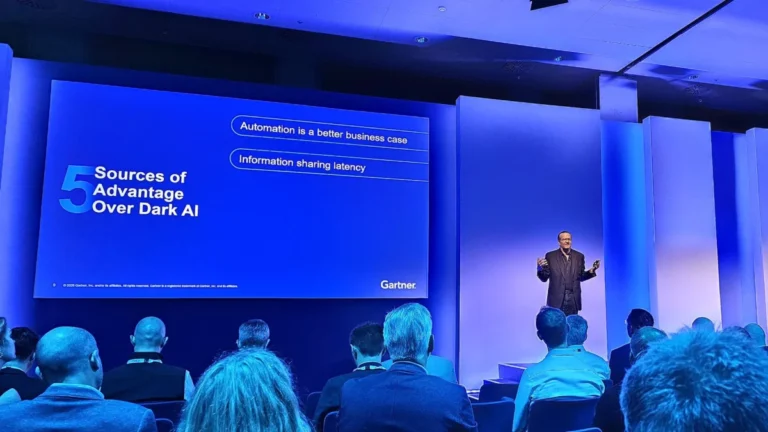
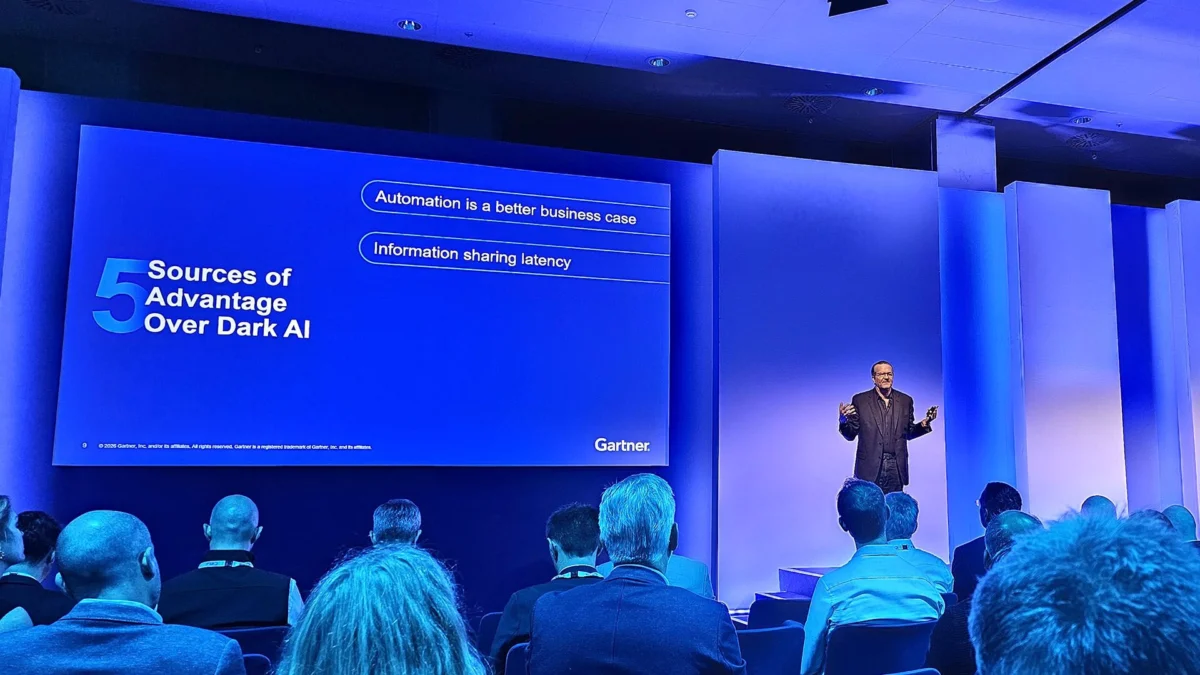
"Everybody wanted to know: Is this actually the AI cybersecurity apocalypse, or just the apocalypse in four parts sponsored by Anthropic with no commercial interruptions?" McMullen noted during his keynote at the Gartner IT Symposium/Xpo 2026 in Barcelona.
Drawing on the spirit of Gil Scott-Heron’s The Revolution Will Not Be Televised, McMullen argued that the hysteria surrounding "Dark AI" often overshadows the fundamental truth of the technology: AI is, at its core, a tool. Whether it acts as a weapon or a shield depends entirely on the intent of the operator and the architecture of the defense. The "apocalypse," he suggests, is a matter of perspective.
The Five Pillars of Defensive Superiority
To navigate this uncertain era, McMullen outlined five strategic advantages that organizations can leverage to outmaneuver malicious actors. By moving from a posture of reactive scrambling to proactive, AI-integrated resilience, leadership can present a vision of security to their boards that is rooted in confidence rather than crisis management.
1. Automation as a Strategic Asset
Historically, cybersecurity teams have attempted to out-innovate threat actors. However, in an era of AI-driven, high-velocity attacks, this approach is mathematically doomed. "You cannot out-innovate a crowd," McMullen stated.
Instead, the industry must pivot toward deep automation. While AI makes attackers faster, it also makes them more reliant on rigid, automated attack pathways. This reliance creates a vulnerability of its own: if the automated kill chain is disrupted, the attack often falters. For the defender, automation is not just a necessity; it is a value-generating investment. Unlike standard IT expenditures that depreciate, a dollar invested in cybersecurity automation today creates more capacity for mission-critical services tomorrow. It is, effectively, the only way to scale defense against an infinite number of threats.
2. Exploiting Information Sharing Latency
A common fear is that hackers will utilize AI to discover vulnerabilities faster than vendors can patch them. Yet, the reality is that the cybersecurity community holds a structural advantage: the provenance of information.
"We are the ones that publish the CVE lists," McMullen reminded the audience. "We mostly discover vulnerabilities before threat actors do." The key to neutralizing the speed of "Dark AI" lies in information sharing. By breaking down the silos of industry competition and adopting a "community of practice" mindset, organizations can ensure that the latency between vulnerability discovery and defensive patching remains in the hands of the defenders, not the attackers.
3. Mastering the Digital Speed of AI Weaponization
Even if threat actors possess sophisticated models, the "first-mover" advantage remains with the defenders. McMullen emphasized that because organizations have the ability to build and refine their own AI models, they can match—and exceed—the speed at which attackers operate.
A critical evolution here is the use of AI-assisted software reverse engineering. By creating "digital twins" of their environments, companies can simulate attacks and test patches comprehensively. "Imagine if you could do that to your OT devices," McMullen posited. "Imagine if you could map cloud vulnerabilities for your hybrid production environments." By leveraging AI to automate the creation of these digital environments, organizations can move from "patching and praying" to a rigorous, CI/CD-style approach to security.
4. Leveraging the Terrain Advantage
While AI models like Mythos require access to source code to identify specific vulnerabilities, the average organization has a massive, often underutilized advantage: they own the terrain.
"If you know what open-source software you have, this gives you a source of advantage," McMullen explained. "You’re the only one who knows your closed-source stack." CIOs should use this knowledge to "red team" themselves. By deploying "Dark AI" tools internally—AI-assisted penetration testing—organizations can identify the unknown weaknesses that keep boards awake at night before a malicious actor ever gets the chance.
5. The Economic Asymmetry of AI
Perhaps the most counterintuitive finding is that in the long run, the costs of high-scale AI attacks favor the defender. Complex, multi-part kill chains require customization. An attack that works against one target cannot be easily "spammed" across the internet without significant modification.
As threat actors scale their AI-driven attacks, they become louder and easier to detect. The very complexity that makes these attacks "scary" is what makes them inefficient and expensive to maintain. "The larger you become, the easier you are to detect," McMullen concluded. "This is the AI cybersecurity apocalypse, but not how the doomers think. It’s the AI cybersecurity apocalypse for the threat actors."
Implications: The Shift Toward Radical Resilience
The final takeaway for leadership is a fundamental shift in philosophy: accept the inevitability of the breach. Gartner’s data suggests that the financial impact of breaches—when measured by earnings per share—is often surprisingly muted in the long term, provided the organization has the infrastructure to recover.
"We need to be playing offense," McMullen argued. In the new world of AI-driven threats, the best offense is not perfect prevention, but near-perfect resilience. This involves regular, rigorous recovery rehearsals—testing the ability to rebuild production environments from immutable backups on a monthly or quarterly basis.
When a CIO can demonstrate to the board that the company can rebuild its core systems with minimal downtime, the threat of a ransom note loses its power. "If you can stand up in front of your board and say, ‘Listen, don’t pay the ransom because this doesn’t matter,’ you have won," said McMullen.
By integrating AI to automate the drudgery of recovery and testing, companies can move away from the "doomer" narrative. The future of cybersecurity is not a defensive bunker, but a resilient, agile organization that can absorb a blow, recover at machine speed, and continue to operate, effectively rendering the attacker’s best efforts moot. The "AI Apocalypse" is not coming; it is already here, and for those willing to automate and adapt, it is a revolution that the defenders are currently winning.
About the Author