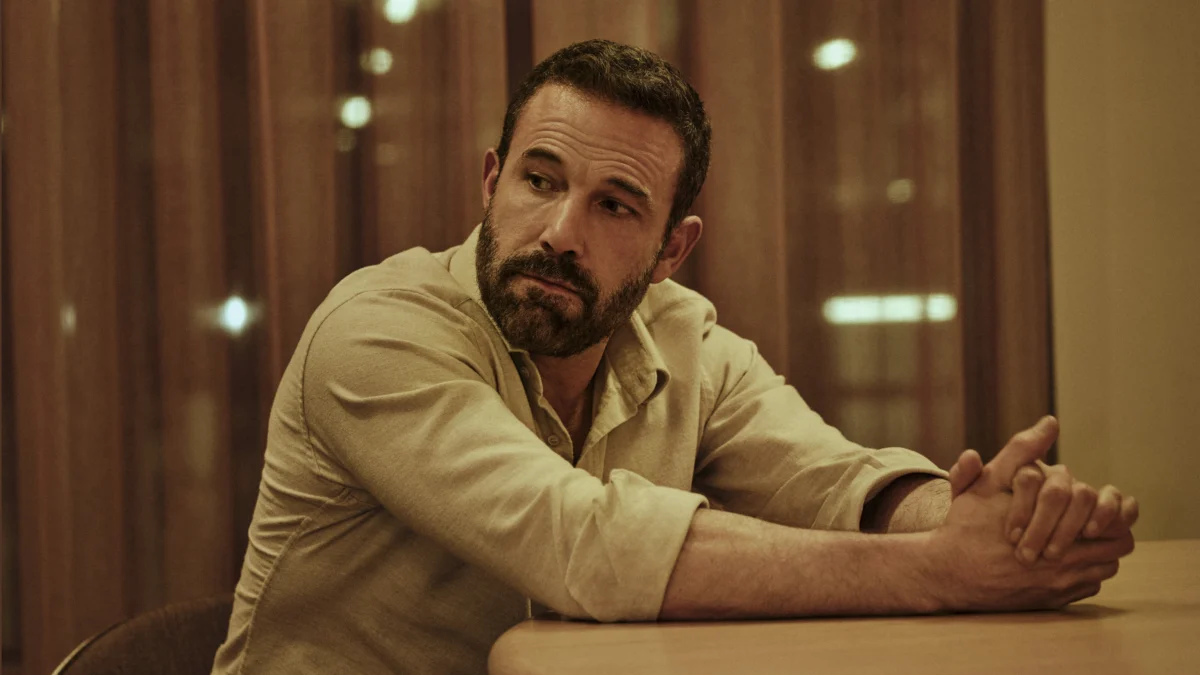
In a move that underscores the streaming giant’s aggressive pivot toward technological integration, Netflix has officially confirmed the financial terms of its acquisition of InterPositive, an artificial intelligence startup co-founded by Academy Award-winning filmmaker Ben Affleck. According to a formal regulatory filing with the U.S. Securities and Exchange Commission (SEC), Netflix paid $587 million in cash to bring the startup into its fold.
The acquisition, which first made headlines in early 2026, represents one of the most significant investments in generative AI tools within the entertainment industry to date. By absorbing InterPositive’s proprietary technology and personnel, Netflix is signaling a long-term commitment to automating labor-intensive post-production processes, aiming to streamline filmmaking while maintaining the "human touch" that remains central to its brand identity.
The Chronology of an Industry-Shifting Deal
The path to the $587 million valuation was marked by a blend of quiet development, industry speculation, and strategic public relations.
Initial Development and Secretive Origins
While InterPositive’s emergence was relatively sudden to the public, the startup had been operating in the high-stakes world of Silicon Valley and Hollywood tech for months prior to the acquisition. Founded with the goal of leveraging machine learning to solve the most persistent headaches in film production, the company focused on generative tools designed to assist editors and directors in the final stages of production.
The March 2026 Announcement
On March 5, 2026, the industry was caught off guard when Netflix announced it had successfully acquired InterPositive. At the time, the financial details were kept under wraps, leaving analysts to speculate on the deal’s magnitude. The announcement highlighted that the entire InterPositive team would transition to Netflix, with Ben Affleck stepping into a strategic role as a senior advisor.
The Speculation Phase
Following the March announcement, the industry remained abuzz. A report by Bloomberg just days later suggested the deal’s valuation could be as high as $600 million, citing anonymous sources familiar with the matter. This speculation fueled a broader conversation about the premium Netflix was willing to pay for AI talent, positioning it against competitors like Disney and Amazon, who have also been scouting AI-driven creative tools.
Formal Disclosure
The mystery finally concluded with the latest SEC filing, which solidified the price tag at $587 million. This disclosure confirms that the speculation surrounding the deal was remarkably accurate, placing the acquisition among the top-tier technology investments in recent media history.
Supporting Data: Netflix’s AI Footprint
The acquisition of InterPositive is not an isolated experiment; it is part of a broader, well-documented push by Netflix to integrate artificial intelligence across its entire content library.
The Scale of Adoption
In its most recent quarterly earnings report, Netflix revealed that approximately 300 of its original titles have already utilized generative AI in some capacity. While the company has been careful to define these uses—largely focusing on post-production, visual effects (VFX), and localization—the sheer volume of projects suggests that AI has already become a standard part of the Netflix "production playbook."
The Economic Justification
Industry analysts point to the "real-world production challenges" that Affleck himself cited as the primary driver for this spending. Filmmaking is historically inefficient; reshoots, lighting errors, and missing background elements can cost millions of dollars in budget overruns. By utilizing InterPositive’s AI to address these issues in post-production, Netflix is effectively hedging against the rising costs of physical production. If the company can save even a fraction of the cost of reshoots across its hundreds of annual titles, the $587 million investment could theoretically pay for itself within a few fiscal cycles.
Official Responses and the "Human Creativity" Narrative
The optics of a high-profile director like Ben Affleck selling an AI company to a major studio are complex. To mitigate potential backlash from the creative community, both Netflix and Affleck have been deliberate in their messaging.
Ben Affleck’s Position
In his public statements, Affleck has leaned into the concept of "augmenting" rather than "replacing" human effort. He stated during the initial announcement: "My goal is to protect the power of human creativity. We aren’t looking to make movies without filmmakers; we are looking to ensure that filmmakers don’t have their vision compromised by technical limitations."
Affleck’s role as a senior advisor is significant. It implies that he will serve as a bridge between the engineering teams at Netflix and the creative directors who are often skeptical of machine learning. He has argued that InterPositive’s tools specifically target "production friction"—such as incorrect lighting or inconsistent background continuity—that frustrates artists and distracts audiences from the storytelling.
Netflix’s Strategic Rationale
Netflix management has echoed these sentiments, framing the acquisition as a service to the creator. By removing the technical drudgery of post-production, the company argues that it is freeing up directors to focus on performance, narrative, and pacing. This narrative is designed to quell fears that AI will lead to the "homogenization" of content, a frequent criticism directed at the platform.
Implications for the Future of Filmmaking
The acquisition of InterPositive has far-reaching consequences for the future of the entertainment industry, moving beyond just a simple corporate transaction.
1. The Normalization of AI in Post-Production
With Netflix leading the charge, the industry is entering a new era where AI-assisted post-production is considered "best practice." We can expect other studios to follow suit, likely leading to a new wave of acquisitions and partnerships between major media conglomerates and specialized AI startups.
2. A New Standard for Talent
The fact that Netflix retained the entire InterPositive team indicates that the true value of the deal was not just the software, but the human capital. The "acqui-hire" model is becoming increasingly prevalent in Hollywood. Writers, directors, and producers who can demonstrate technical literacy—specifically in how to blend human vision with machine output—will likely find themselves in a new, high-demand category of "creative engineers."
3. The Ethical and Labor Debate
Despite the positive messaging, the deal has reignited debates within labor unions, including the DGA (Directors Guild of America) and WGA (Writers Guild of America). The primary concern remains the potential for "mission creep"—if an AI can fix a background today, will it be writing a scene tomorrow? While Affleck and Netflix have maintained that the tools are strictly for technical polish, the rapid evolution of generative models makes this a moving target.
4. Competitive Disadvantage
For studios that lack proprietary AI tools, the gap is widening. Netflix’s ability to "fix it in post" at a fraction of the time and cost gives them a distinct competitive advantage in terms of production turnaround. Smaller studios may find it difficult to compete on the same quality levels without access to similar high-end software suites.
Conclusion
The $587 million purchase of InterPositive is a watershed moment for the streaming era. It marks the transition of Netflix from a mere distributor of content into a laboratory for the future of digital filmmaking.
While the financial figures are significant, the true impact of this deal will be measured in the coming years by the quality of the content produced and the shifting workflows on set. Whether this technology will truly "protect the power of human creativity" or fundamentally alter the nature of what we consider a "film" remains to be seen. However, one thing is certain: with Ben Affleck’s involvement and a massive infusion of capital, the marriage of AI and cinema is no longer a speculative future—it is a central pillar of the modern studio model.
About the Author