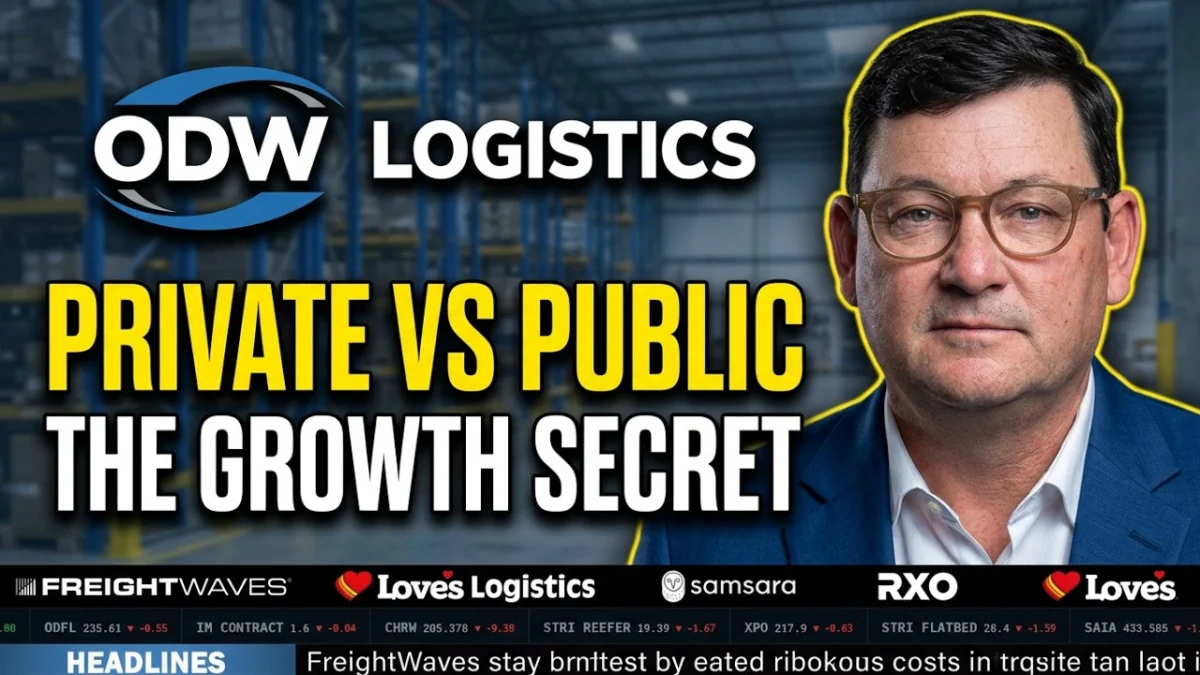
In an era defined by volatility and rapid digital transformation, the logistics industry finds itself at a critical juncture. As global supply chains continue to grapple with the aftershocks of the pandemic, the strategies employed by key players are shifting from reactive survival to proactive, long-term resilience. Recently, Paul Boothe, Chief Commercial Officer at ODW Logistics, joined FreightWaves Today to offer a masterclass on navigating this complex landscape.
From the high-stakes world of M&A—specifically the ArcBest-MoLo acquisition—to the necessity of managed transportation in an unpredictable market, Boothe’s insights provide a roadmap for shippers and carriers attempting to decode the current "supercycle" of freight.
The Strategic Lens: Understanding the ArcBest-MoLo Acquisition
The acquisition of MoLo Solutions by ArcBest serves as a microcosm for the broader consolidation trend currently reshaping the brokerage and asset-light logistics sectors. For observers, this merger was not merely a transaction; it was a strategic maneuver aimed at bridging the gap between asset-heavy reliability and the agility of digital-forward brokerages.
Boothe emphasizes that the success of such integrations rarely hinges on balance sheets alone. Instead, it is the "cultural integration" that often determines whether the sum is truly greater than its parts. "When you bring together two distinct operational philosophies—an established asset-based carrier and a nimble, tech-centric brokerage—you are essentially conducting a corporate chemistry experiment," Boothe noted.
The challenge, as Boothe points out, lies in preserving the entrepreneurial spirit of the acquired entity while leveraging the institutional scale of the parent company. In the case of ArcBest, the goal was clearly to augment its capacity-sourcing capabilities, a necessity in a market where shippers are increasingly demanding a "single-pane-of-glass" experience.
Chronology of a Market in Flux: From Pandemic Pivot to Today
To understand the current state of freight, one must look back at the radical shifts that occurred during and immediately after the COVID-19 pandemic.
Phase 1: The Disruption (2020–2021)
The pandemic triggered a "supercycle" in freight. Consumer demand for durable goods spiked, while global manufacturing and logistics systems were simultaneously throttled by lockdowns and labor shortages. This period saw freight rates soar to historic highs, creating a "gold rush" mentality among carriers and brokers alike.
Phase 2: The Correction (2022–2023)
As the global economy began to normalize, the surplus of inventory and the stabilization of labor markets led to a cooling of demand. This created a "freight recession" for many, characterized by plummeting spot market rates and a surplus of carrier capacity.
Phase 3: The Strategic Evolution (2024–Present)
We have now entered a phase of strategic recalibration. Companies are moving away from the "growth at all costs" model of the pandemic era. Instead, the focus has shifted toward efficiency, technology adoption, and the strengthening of managed transportation partnerships. Boothe notes that the automotive sector, in particular, has undergone a profound pivot, shifting from just-in-time inventory to a more resilient, multi-layered supply chain strategy that prioritizes visibility over mere speed.
Supporting Data and Market Dynamics
While the headlines often focus on the volatility of spot rates, the underlying data suggests a more nuanced reality. The logistics sector is currently experiencing a "technological bifurcation." On one side, companies that invested early in robust, data-driven platforms are capturing market share by offering superior transparency. On the other, legacy providers are struggling to compete with the automated efficiency of modern brokers.
Boothe highlights that ODW Logistics, as a privately-owned entity, maintains a distinct advantage in this environment. Without the quarterly pressure of public shareholders, the firm has the luxury of investing in long-term infrastructure. This allows for a focus on:
- Data Integrity: Moving beyond basic track-and-trace to predictive analytics.
- Process Automation: Reducing the manual overhead of brokerage operations.
- Strategic Capacity Management: Ensuring that the network remains resilient even when market capacity tightens.
The Role of Managed Transportation
One of the core themes of Boothe’s analysis is the rising importance of managed transportation partners. For many shippers, the complexity of managing a diverse carrier base, handling compliance, and navigating sudden disruptions has become too cumbersome to manage in-house.
"Managed transportation is no longer just a cost-saving play," Boothe explains. "It’s a risk-mitigation strategy." In a market defined by frequent carrier failures and fluctuating insurance requirements, having a partner that manages the entire lifecycle of a shipment—from compliance vetting to final delivery—is essential. This is particularly true for shippers operating in the automotive and retail sectors, where a single missing component can halt an entire production line or leave a shelf empty.
Official Responses and Industry Implications
The industry is responding to these pressures with a flurry of activity, as evidenced by the upcoming industry gatherings in Chattanooga. The Brokerage Compliance Symposium and the Future of Freight Festival (F3) represent the industry’s collective attempt to codify best practices in an environment fraught with regulatory scrutiny and fraud.
The Compliance Imperative
As the industry matures, the "Wild West" days of brokerage are coming to an end. Increased regulatory pressure, coupled with a rise in sophisticated cargo theft and insurance fraud, has made compliance a boardroom priority. Attorneys and operators are now tasked with defining new standards for carrier liability and insurance gaps, ensuring that the supply chain remains secure even as it becomes more digitized.
The Shift Toward "Shipper of Choice"
The concept of the "Shipper of Choice" has evolved from a marketing buzzword into a critical operational metric. Carriers today are more selective about the freight they accept. Shippers who offer predictable, driver-friendly, and efficient environments are winning the battle for capacity. This dynamic is fundamentally changing how logistics providers negotiate with their clients, shifting the conversation from price-per-mile to "total cost of ownership" and ease-of-doing-business.
Looking Ahead: The Future of the Freight Cycle
As we look toward the remainder of the year and into 2026, Boothe remains cautiously optimistic. While the market may not return to the extreme highs of the pandemic, the current environment offers a unique opportunity for companies that are disciplined, tech-forward, and committed to long-term partnerships.
Key Takeaways for Stakeholders:
- Prioritize Long-Term Strategy: In a private ownership model, ODW Logistics demonstrates that avoiding the "quarterly earnings trap" allows for deeper investment in technology and human capital.
- Embrace Managed Transportation: The complexity of modern supply chains demands professional oversight. Shippers should view managed transportation as an investment in resilience, not an expense.
- Culture is a Competitive Advantage: As M&A activity continues to consolidate the market, firms that successfully integrate disparate cultures and technologies will emerge as the new industry leaders.
- Stay Informed: Events like the FreightWaves F3 Festival serve as vital forums for benchmarking against peers and understanding the shifting regulatory and technological landscape.
Conclusion
The logistics industry is currently navigating a period of profound transition. As Paul Boothe’s analysis underscores, the winners in this cycle will be those who can successfully balance the art of relationship management with the science of data-driven logistics. Whether through strategic acquisitions like that of MoLo, or through the meticulous refinement of managed transportation processes, the path forward is clear: success requires a commitment to transparency, technological integration, and a long-term view that prioritizes stability over the ephemeral gains of market volatility.
As the industry prepares for the upcoming gatherings in Chattanooga, the dialogue initiated by leaders like Boothe will be essential in shaping the next chapter of the global freight economy. The "supercycle" may have subsided, but the evolution it triggered is only just beginning.
About the Author