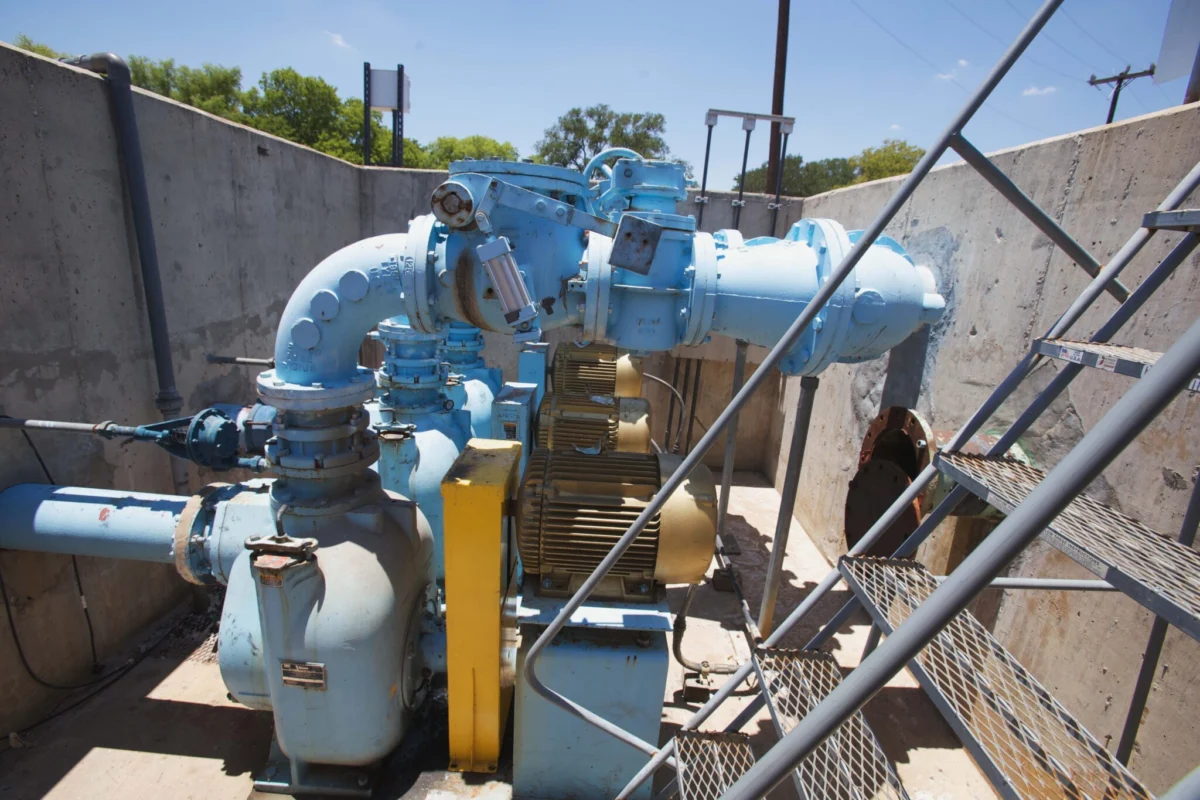
In the modern industrial facility, operational success is often measured by uptime and output. However, beneath the surface of steady production rates lies a pervasive and often overlooked challenge: the quiet, incremental rise in electricity consumption. While a system may successfully meet its flow and pressure requirements, it may simultaneously be hemorrhaging capital through inefficient energy conversion.
As the U.S. Department of Energy (DOE) prepares to enforce more stringent motor efficiency standards by mid-2027, the focus for plant engineers has shifted from simple component replacement to holistic system optimization. Understanding the symbiotic relationship between motor performance and pump dynamics is no longer just a best practice; it is a critical requirement for maintaining fiscal health and regulatory compliance in an era of tightening energy mandates.
The Mechanics of Hidden Inefficiency
Energy costs in industrial facilities rarely spike due to a singular catastrophic failure. Instead, they climb steadily as a result of "efficiency drift"—a phenomenon where the system continues to meet demand, but does so with decreasing efficacy.
Motor-driven systems represent the lion’s share of industrial electricity consumption in the United States. Even marginal shifts in motor efficiency, when compounded across thousands of operating hours and vast fleets of equipment, result in significant financial leakage. The core issue is rarely the pump itself, but rather the subtle, cumulative mismatch between the motor, the load conditions, and the control strategy.
The Slip and Speed Paradox
A common, yet frequently misunderstood, contributor to inefficiency is the installation of modern, high-efficiency motors into legacy systems. Modern high-efficiency motors are designed to operate with lower "slip"—the difference between the motor’s synchronous speed and its actual rotor speed.

While this reduction in slip increases electrical efficiency, it also results in the motor running at a slightly higher speed under load. In centrifugal pump applications, where power consumption is governed by affinity laws (horsepower demand increases with the cube of the speed), even a minor increase in rotational speed can lead to a disproportionate rise in energy demand. This can push a pump away from its Best Efficiency Point (BEP), resulting in higher flow and pressure than the process requires, effectively wasting energy while potentially straining mechanical seals and bearings.
Chronology of Regulatory Evolution
The industrial landscape is currently navigating a pivotal transition period. The U.S. Department of Energy’s updated standards, which take effect June 1, 2027, represent the most significant federal mandate on motor efficiency in over a decade.
- Pre-2027: Current standards focus on NEMA Premium efficiency for most three-phase induction motors. Many legacy systems are operating on motors installed before these efficiency tiers were widely adopted.
- June 2027: The threshold for mid-range motors (1 to 750 horsepower) increases to IE4 (NEMA Super Premium) efficiency. This mandate forces a re-evaluation of current inventory and procurement strategies.
- 2029: The scope of federal regulation expands significantly to include smaller fractional horsepower motors, ensuring that almost every corner of the industrial motor population is covered by efficiency mandates.
For the facility manager, this timeline is not merely a compliance deadline—it is a roadmap for capital expenditure. Projects specified today that are slated for installation after 2027 must already account for these higher standards to avoid the risk of premature obsolescence or costly redesigns.
Supporting Data: The Cost of Inaction
The financial implications of motor-pump misalignment are profound. When analyzing the total cost of ownership (TCO) for an industrial motor, the initial purchase price is often dwarfed by electricity consumption, which can account for 90% to 95% of the total life-cycle cost over a 20-year span.
Comparative Efficiency Metrics
- IE3 vs. IE4: Transitioning from NEMA Premium (IE3) to Super Premium (IE4) motors can yield efficiency gains of 1% to 3%. While this seems marginal, when applied to a motor running 8,000 hours annually, the reduction in cumulative kilowatt-hour (kWh) consumption provides a return on investment that often justifies the higher upfront cost within two to three years.
- Part-Load Performance: Many pumps operate at partial load for the majority of their duty cycle. An oversized motor operating at 50% load is significantly less efficient than a properly sized motor operating at 80% to 90% of its rated capacity. Under-loading not only wastes electricity but also results in poor power factors and unnecessary reactive power consumption.
Official Perspectives: The Shift Toward System-Level Thinking
Industry leaders and regulatory bodies are increasingly advocating for a "system-level" approach to efficiency. ABB and other major manufacturers have emphasized that nameplate efficiency is only a starting point. The true measure of performance is how the motor interacts with the load and the control system.

"An efficient motor is only as good as the system it serves," notes experts within the motor technology sector. The consensus is that the industry must move away from "component-level" thinking—where engineers simply swap out a broken motor for a new one—toward "system-level" integration. This involves analyzing the pump curve, the piping system’s resistance, and the control strategy to ensure that every component is working in concert to meet process demands with the least possible energy expenditure.
Implications for Plant Engineering
The transition to high-efficiency standards and the push for smarter systems have three primary implications for the modern plant engineer:
1. The Death of the Throttling Valve
In legacy systems, flow is often controlled by mechanical throttling valves. This is inherently inefficient: the motor runs at full power, and the valve dissipates the excess energy as pressure loss and heat. Replacing these with Variable Speed Drives (VSDs) is the single most effective way to align energy consumption with actual process requirements. VSDs allow the motor to slow down when demand drops, dramatically reducing power draw in centrifugal applications.
2. The Rise of Predictive Visibility
Efficiency is not a static state; it is a moving target. As equipment ages, bearings wear and impellers erode, the system’s performance drifts. Modern industrial Internet of Things (IIoT) sensors now allow for continuous monitoring of vibration, temperature, and current draw. By utilizing predictive maintenance, engineers can detect when a motor is straying from its optimal performance curve before the issue manifests as a dramatic spike in energy bills or a total system failure.
3. Strategic Capital Planning
With the 2027 mandate approaching, procurement strategies must shift. Engineers should:

- Audit existing fleets: Identify motors that are consistently under-loaded or over-loaded.
- Leverage incentives: Many utility providers offer aggressive rebates for upgrading to IE4 or IE5-rated equipment. These incentives can often offset the cost difference between standard and high-efficiency motors.
- Standardize on Inverter Duty: Ensure that all new motor purchases are "inverter-duty" rated, even if they are currently being used in fixed-speed applications. This future-proofs the asset, allowing for the addition of VSDs later without requiring a motor swap.
Conclusion: Efficiency as a Competitive Edge
The upcoming DOE standards are not just an administrative hurdle; they are a catalyst for modernization. By moving beyond the "if it isn’t broken, don’t fix it" mentality, plant managers can unlock significant hidden value.
True system efficiency is achieved when the motor, the pump, and the control strategy function as a single, cohesive unit. When engineers prioritize system visibility through predictive monitoring and align equipment selection with real-world operating loads, they do more than just meet regulatory requirements. They create a leaner, more reliable, and more sustainable operation.
In the competitive global market, energy efficiency is a form of operational excellence. Facilities that embrace this shift will find themselves not only compliant with federal law but also significantly more resilient, with lower operating costs and a longer, more productive equipment lifecycle. The path to efficiency is clear: look beyond the nameplate, focus on the system, and use data to sustain the gains.
About the Author