Introduction: The Shift from Tools to Ecosystems
For decades, technology was a tool—an instrument we operated to achieve a specific task. Today, the paradigm has shifted. Thanks to the rapid evolution of Artificial Intelligence, technology is no longer something we use; it is an environment we inhabit. It is immersive, dynamic, and, in many ways, "alive."
As interactions transition from transactional—simple inputs yielding simple outputs—to deeply conversational, the fundamental nature of brand building is undergoing a metamorphosis. Responses from AI are no longer merely retrieving data; they are synthesizing context and creating content in real-time. In this brave new world, the relationship between humans and brands is mediated by silicon, necessitating a radical rethink of how we define "personality" in the marketplace.
The Evolution of Brand Connection: From Lovemarks to Agentic Lovemarks
To understand where we are going, we must acknowledge where we have been. In the early 20th century, marketing underwent a psychological revolution. Advertisers realized that to capture market share, they needed to move beyond product features and tap into human emotion. This evolution birthed the "Lovemark"—a concept pioneered by Kevin Roberts, which posited that true brand loyalty is forged through emotional resonance rather than rational utility.
However, the rapid ascent of Generative AI has forced a re-evaluation of this concept. Arjan Kapteijns, former CEO of Saatchi & Saatchi Netherlands, has recently introduced the term "Agentic Lovemarks." In an era where AI agents act as intermediaries between consumers and companies, earning love and respect is no longer solely a human-to-human endeavor. It is now a human-to-machine-to-brand equation. The goal remains the same—emotional connection—but the delivery mechanism has shifted from human-led storytelling to machine-orchestrated experiences.
The Limitation of Classical Archetypes
For 25 years, the gold standard for brand identity has been the 12-brand archetype model, popularized by Margaret Mark and Carol Pearson in The Hero and the Outlaw. These archetypes provided a rational, tangible framework for shaping brand behavior. By assigning a personality—The Sage, The Rebel, The Caregiver—marketers could ensure consistency across every touchpoint.
But as we enter the "agentic economy," these traditional frameworks are becoming insufficient. Why? Because archetypes are interpretive and broad. In a human-to-human context, an archetype acts as a North Star for human employees. In an AI context, an archetype is too vague. If you ask an LLM to "act like a Hero," the machine will generate a generic, cliché-ridden response. Without more granular instruction, the brand experience becomes inconsistent, fragmented, and ultimately, invisible to the sophisticated algorithms that now dictate consumer discovery.
The Legible-Lovable Law: Bridging the Gap
The challenge is two-fold: a brand must be legible to AI to be discovered, and lovable to humans to be chosen. Thomas Marzano, a veteran brand strategist for Philips and ASML, codified this in his "Brand Constitution" manifesto.

Marzano argues that we need a "technical reinforcement" of emotional connection. If a brand cannot be parsed, understood, and rendered by an AI agent, it essentially does not exist in the agentic economy. This is the Legible-Lovable Law. It dictates that our branding efforts must move away from static manuals and toward dynamic, machine-readable instructions.
Introducing the PRISM Model: A Psychological Framework for the Machine Age
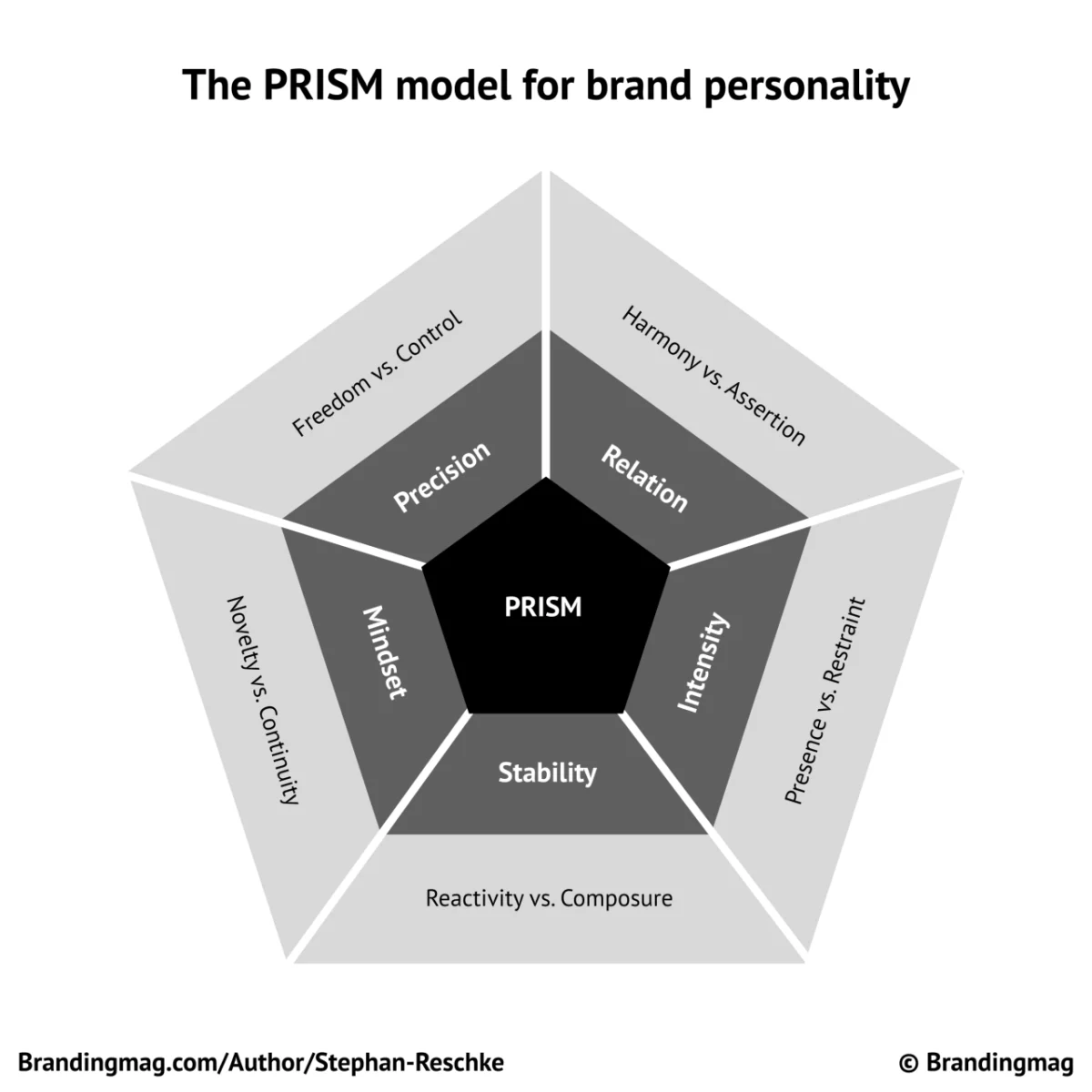
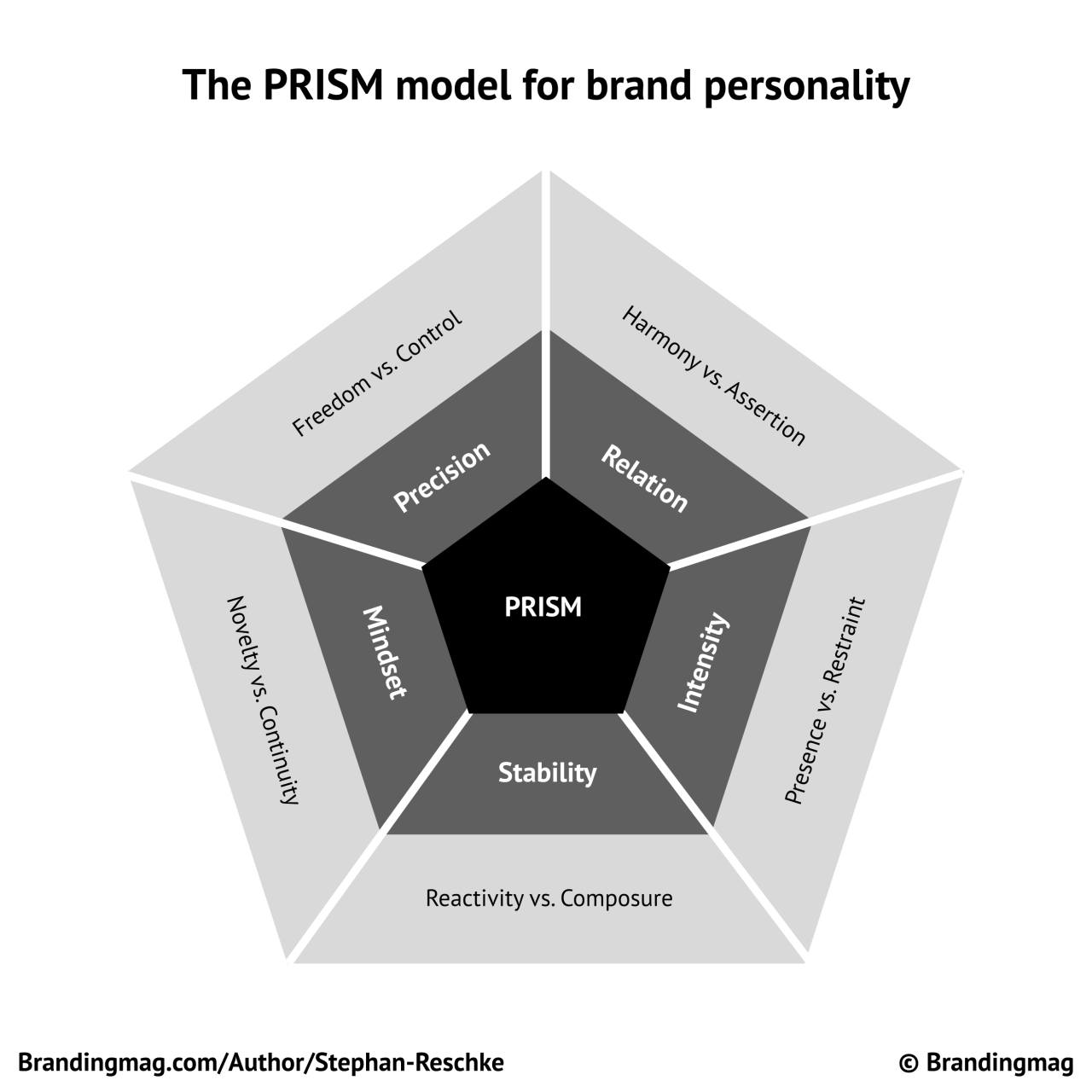
To meet the demands of this new era, the PRISM model has emerged as a successor to the archetype system. Unlike archetypes, which rely on storytelling tropes, PRISM is based on the "Big Five" (OCEAN) model of personality psychology, refined specifically for the digital-brand interface.
The Five Domains of PRISM
The PRISM model categorizes brand personality into five core domains:
- Perspective (Openness): Reflects the brand’s intellectual curiosity and approach to innovation.
- Responsibility (Conscientiousness): Measures the brand’s reliability, structure, and goal-orientation.
- Interaction (Extraversion): Defines how the brand engages with the world—is it assertive and talkative, or reserved and observational?
- Support (Agreeableness): Gauges the brand’s level of empathy, cooperation, and altruism.
- Modulation (Neuroticism/Stability): Determines the brand’s emotional resilience and calmness under pressure.
By plotting a brand across these five dimensions, each with six sub-characteristics, companies can create a high-fidelity "personality map." This map serves as the system prompt for AI, ensuring that every interaction—whether via voice assistant, chatbot, or predictive recommendation—is consistent, authentic, and emotionally intelligent.
The Shift to Brand Language
As voice-driven technology dominates the consumer landscape, "language" has become the primary battleground for brand equity. We are moving away from the era of the "Brand Campaign" and into the era of "Brand Language."
LLMs do not consume visual imagery or catchy slogans in the traditional sense; they process semantic data. Therefore, the PRISM model acts as a "lens" through which a brand manifests its digital self. When implemented into a brand’s infrastructure, it allows the brand to:
- Normalize Tone: Maintain a consistent emotional temperature across thousands of simultaneous conversations.
- Adaptive Vocabulary: Adjust phrasing and lexicon based on the context of the user, without sacrificing brand character.
- Operationalize Values: Turn abstract brand values into behavioral constraints that the AI cannot override.
Implications for the Future of Commerce
The shift toward Agentic Lovemarks and the adoption of the PRISM model have profound implications for the marketing industry.
1. From "Creative" to "Architectural" Marketing
Creative directors must now become systems architects. They are no longer just designing the "look and feel"; they are designing the "think and speak" of the brand. This requires a new collaboration between creative teams, data scientists, and prompt engineers.
2. The Death of the Generic Response
The era of the "standardized chatbot response" is coming to an end. Brands that fail to implement a rigorous, machine-readable personality framework will find themselves relegated to the status of commodities. AI will favor brands that can provide a coherent, reliable, and deeply human-like persona.
3. Real-Time Brand Equity
Under the "Experience Engine" concept—where AI creates an on-demand, individualized journey for the consumer—brand equity is no longer a static measurement. It is a real-time, fluid metric that depends on the AI’s ability to render the brand correctly in every unique interaction.
Conclusion: Embracing the Uncertainty
The future of brand building is simultaneously exhilarating and daunting. The anxiety felt by many in the industry is a natural byproduct of a fundamental transition. However, the best way to mitigate this uncertainty is through systematic exploration and the adoption of robust frameworks like PRISM.
We are entering a future where humans, agentic AI, and brands will engage on a level of complexity never before seen. The brands that thrive will be those that realize their "digital soul" is not an abstract concept but a technical requirement. By moving beyond the limitations of legacy archetypes and embracing the precision of the PRISM model, brands can ensure that they remain not just visible, but truly lovable in an age of machines.
The conversation has already begun. For those willing to adapt, the agentic economy offers an unprecedented opportunity to build deeper, more enduring connections than ever before. It is time to dive in.
About the Author