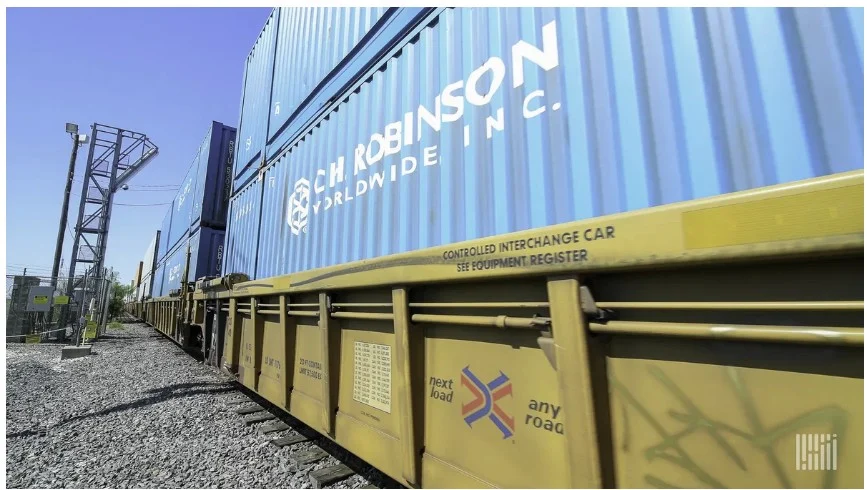
The freight brokerage sector, a cornerstone of North American logistics, finds itself in the crosshairs of a judicial paradigm shift. Following a staggering $604 million compensatory damages verdict against industry giant C.H. Robinson, investors have sent shockwaves through the market, triggering a broad selloff of third-party logistics (3PL) stocks. This ruling, emerging from a Dallas County courtroom, is widely viewed by legal experts and financial analysts as the first major “nuclear verdict” of the post-Montgomery era—a new, volatile reality for brokers who once believed they were shielded from such catastrophic liability.
Main Facts: The Dallas Verdict and the 3PL Selloff
On Friday, market sentiment shifted sharply against the 3PL sector. C.H. Robinson (NASDAQ: CHRW) saw its shares plummet by $19, or 9.25%, to close at $186.50. This decline was particularly jarring given that the stock had reached a 52-week high of $210.33 just two days prior.
The contagion spread quickly to other industry leaders. RXO (NYSE: RXO) fell 7.71%, or $2.14, to $25.63, retreating from its own 52-week high of $29.90 recorded earlier in the week. Landstar (NYSE: LSTR) also suffered, declining 3.68% to $200.32. These losses occurred even as the broader S&P 500 remained marginally higher, signaling that investors were reacting specifically to the systemic risks introduced by the court’s decision in Lipe vs. Lupus Superior.
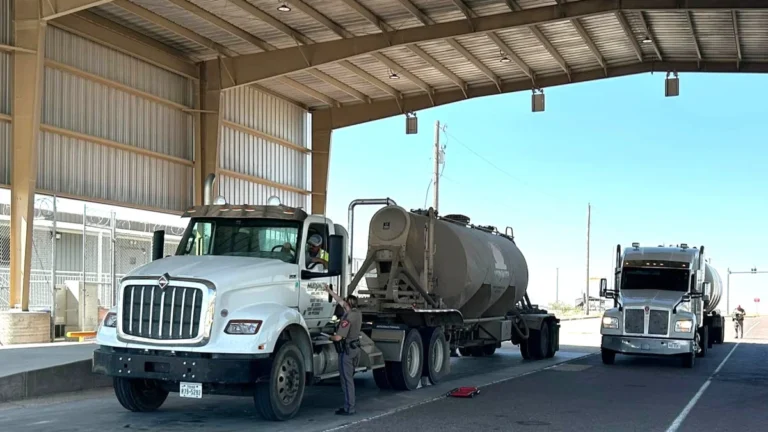
The case centers on a tragic 2021 multi-vehicle crash that claimed the lives of three people and the driver employed by Lupus Superior, a carrier contracted by C.H. Robinson to transport a shipment for Arizona Beverages. The jury’s decision to award $604 million in compensatory damages—with the burden of payment largely expected to fall on C.H. Robinson—has shattered the industry’s reliance on historical legal protections.
Chronology of a Legal Turning Point
To understand the severity of this verdict, one must examine the legal landscape that preceded it. For years, 3PLs relied on the "safety exception" of the Federal Aviation Administration Authorization Act (F4A) to insulate themselves from negligence claims. The argument was simple: because brokers do not own the trucks or employ the drivers, they should not be held liable for the conduct of the motor carriers they hire.
- Pre-2024: The F4A defense was the industry’s primary shield, successfully dismissing numerous lawsuits against brokers.
- May 2024: The U.S. Supreme Court delivered a unanimous ruling in Montgomery vs. Caribe Transport II. By rejecting the broad interpretation of F4A that protected brokers from liability, the Court effectively opened the door for litigation that had previously been barred.
- Post-Montgomery: C.H. Robinson, an original defendant in the Montgomery case, had previously been dismissed from that litigation by lower courts invoking F4A. The Lipe vs. Lupus verdict is the first major post-Montgomery fallout, proving that the high court’s decision was not merely theoretical—it was a green light for plaintiffs’ attorneys nationwide.
Supporting Data: Why the Industry is Reeling
The apprehension among investors is fueled by the specific findings of the Lipe jury. Most notably, the jury found that the Lupus Superior driver was effectively an employee of C.H. Robinson, despite the fact that C.H. Robinson does not employ drivers.
"This treatment is what makes the deceased driver’s liability become Robinson’s," noted Stephens analyst Bascome Majors. This finding effectively pierces the corporate veil of the 3PL model, suggesting that brokers can be held responsible for the actions of their carriers if a jury decides the broker exercised enough control over the "hiring" or "dispatching" process.
Furthermore, the TD Cowen research team, in a report titled "The First Domino to Fall?", highlighted the precarious nature of carrier vetting. Lupus Superior held a "Satisfactory" safety rating from the Federal Motor Carrier Safety Administration (FMCSA) both before and after the accident.
Analysts are now posing a fundamental, existential question for the industry: "If a carrier with a satisfactory FMCSA rating is insufficient, what standard should brokers use when determining which carriers are permitted on their platforms?"
The math of the potential hit is equally concerning. While C.H. Robinson has a $10 million deductible and a $135 million insurance limit, the $604 million award far exceeds their current coverage tower. While the company intends to appeal, the market is bracing for a scenario where C.H. Robinson is forced into a multi-hundred-million-dollar settlement.
Official Responses and Strategic Positioning
C.H. Robinson has maintained a measured stance, emphasizing that the verdict is merely one step in a prolonged legal saga. "The verdict is one step in a process, does not determine what CHRW will pay, with any final outcome subject to post-trial motions, appeals, and other proceedings," the company stated in recent disclosures.
Wall Street analysts are attempting to quantify the damage. Bank of America’s Ken Hoexter noted that the "process will be long," advising investors not to expect immediate balance sheet write-downs. However, the comparisons to other industrial firms are ominous. Wabash National, a trailer manufacturer, took a $342 million charge in 2025 regarding a nuclear verdict. While that charge was eventually reduced through settlement, it serves as a stark reminder of the liquidity risks associated with massive litigation.
The Transportation Intermediaries Association (TIA), through legal counsel Marc Blubaugh, has previously warned that the current legal environment is unsustainable. In an amicus brief, Blubaugh argued that "no valid way exists for a broker to compare and contrast motor carrier safety records in any consistent and meaningful way." He warned that without a uniform federal standard, brokers are at the mercy of "contrary and conflicting conclusions" from juries across thousands of different jurisdictions.
Implications: The New Reality of 3PL Operations
The implications of the Lipe verdict extend far beyond the balance sheet of a single company. The industry is facing a future where "nuclear" litigation is a routine operational risk.
1. The Death of the "Safe Harbor"
The F4A defense is effectively dead as a comprehensive shield. Brokers must now operate under the assumption that they will be named as co-defendants in any major accident involving a carrier they have contracted, regardless of the carrier’s federal safety rating.
2. Escalating Insurance Costs
As the frequency and size of nuclear verdicts increase, the insurance market for 3PLs is likely to harden significantly. Premiums are expected to rise, and coverage limits may become more difficult to obtain, which will compress margins across the entire brokerage sector.
3. A Shift in Vetting Standards
If an FMCSA "Satisfactory" rating is no longer a legal defense, brokers will be forced to develop more sophisticated, proprietary carrier-vetting algorithms. This will require massive investment in data science and compliance, further favoring large, well-capitalized brokers over smaller firms that lack the resources to build robust, internal safety-monitoring platforms.
4. The Threat of "Employment" Reclassification
The jury’s decision to classify the Lupus driver as a C.H. Robinson employee is perhaps the most dangerous precedent. If this logic holds, the independent contractor model—the backbone of the American trucking industry—could be undermined by vicarious liability theories, leading to a wave of litigation regarding "de facto" employment status.
Conclusion: A Long Road Ahead
The Lipe vs. Lupus case is a harbinger of the "new reality" that brokers must navigate. Analysts at TD Cowen warned that "verdicts are coming faster than most expected," noting that many pending cases were waiting for the Supreme Court to provide the very clarity that has now turned into a nightmare for the industry.
As C.H. Robinson prepares its appeals, the broader 3PL industry remains in a state of high alert. The legal strategy that governed logistics for decades has been dismantled in a single courtroom, and the path forward will require a fundamental reassessment of how brokers manage risk, vet carriers, and protect their bottom lines in an increasingly litigious environment. For now, the "first domino" has fallen, and the rest of the industry is bracing for the impact.
About the Author