
As the global appetite for artificial intelligence and high-performance computing reaches unprecedented levels, the environmental toll of the infrastructure supporting these technologies has come under intense scrutiny. In a significant move toward corporate transparency, Amazon Web Services (AWS), the world’s largest cloud service provider, has announced a major update to its environmental reporting capabilities. Customers can now access detailed, annual data regarding the water withdrawals attributed to their specific cloud computing activities through the AWS Sustainability Console.
This development marks a pivotal shift in how hyperscale data center providers communicate environmental impact to their enterprise clients. By integrating water metrics alongside existing carbon emission data, AWS is attempting to provide a more "holistic" view of the digital footprint, addressing a growing demand from corporate sustainability officers who are under increasing pressure from regulators and investors to report on Every Scope of their environmental impact.
Main Facts: A New Standard for Resource Transparency
The cornerstone of this update is the inclusion of "water withdrawal" metrics within the AWS Sustainability Console. Unlike "water consumption," which refers to water that is evaporated or integrated into a product and not returned to the source, "water withdrawal" encompasses the total amount of water diverted from any source—such as municipal supplies or groundwater—for use in data center operations.
Key Features of the Update:
- Customer-Specific Data: For the first time, AWS users can see data tailored to their own account usage rather than generalized regional averages.
- Historical Context: The dashboard provides retrospective data dating back to January 2022, allowing companies to establish a baseline and track their progress over a multi-year period.
- Comprehensive Scope: The metrics include water used for primary data center cooling as well as secondary uses, such as on-site fire protection systems.
- Accessibility: Data is available for download in formats compatible with standard environmental, social, and governance (ESG) reporting frameworks, facilitating easier integration into annual corporate sustainability reports.
Alexis Bateman, Head of Global Sustainability for AWS, emphasized that this move was a direct response to the "key data points that customers were asking for." As companies move beyond simple carbon offsets and toward "Net Positive" water goals, having granular data from their primary infrastructure providers becomes an essential requirement rather than a luxury.
Chronology: The Evolution of AWS Environmental Reporting
The journey toward this level of transparency has been several years in the making, driven by both technological advancements and shifting market expectations.
2022: The Baseline Year
AWS began internally refining the telemetry required to track water usage at a granular level. This year serves as the starting point for the historical data now available to customers, coinciding with a period where the "water-energy nexus" began to gain mainstream attention in the tech industry.
March 2024: The Launch of the Sustainability Console
Amazon officially launched the AWS Sustainability Console earlier this year. The initial rollout focused primarily on greenhouse gas (GHG) emissions. This was a response to the "Scope 3" reporting requirements, where businesses must account for emissions generated by their supply chain and service providers (including cloud hosts).
Late 2024: The Water Integration
Recognizing that carbon is only one half of the environmental equation, AWS integrated the water withdrawal metrics. This followed a period of intense collaboration with local utilities and the deployment of advanced telemetry across its global network of data centers.
Future Outlook
The company has signaled that this is an iterative process. While the data is currently provided on an annual basis, AWS has confirmed plans to increase the frequency of reporting. Future updates are expected to provide monthly withdrawal figures, allowing for more responsive management of environmental impacts.
Supporting Data and Methodology: Engineering Transparency
Providing accurate water data for millions of individual customers across a shared infrastructure is a monumental technical challenge. Unlike electricity, which can be metered at the server rack level with high precision, water usage is often managed at the facility level.
The Proprietary Calculation Method
To solve this, AWS developed a proprietary methodology to estimate customer-specific water use. This approach is modeled after the system AWS uses to calculate carbon emissions. It involves:
- Total Facility Withdrawal: Measuring the total water entering a data center via utility meters and telemetry.
- Resource Attribution: Using the customer’s actual compute and storage utilization as a percentage of the total facility capacity.
- Third-Party Assurance: To ensure credibility, AWS sought third-party verification for its methodology. This is a critical step for enterprise customers who must have their own sustainability reports audited by external firms.
The Water-Energy Trade-off
Data center cooling is a complex balancing act. There are two primary metrics used to measure efficiency:
- PUE (Power Usage Effectiveness): The ratio of total energy used by a data center to the energy delivered to computing equipment.
- WUE (Water Usage Effectiveness): The ratio of annual water use to the energy consumed by the IT equipment.
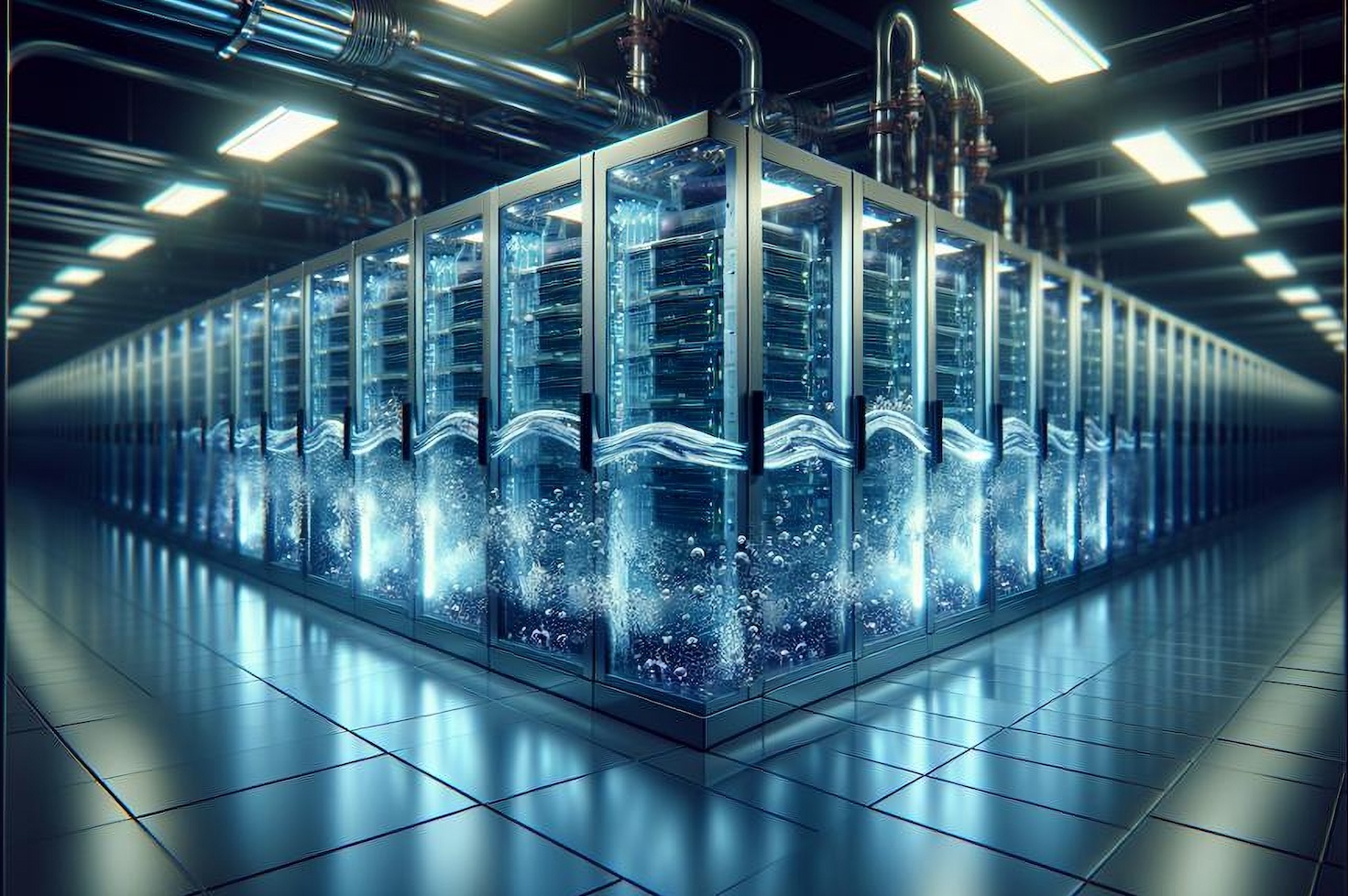
Often, these two metrics are in tension. Evaporative cooling systems, which use water to cool the air, are incredibly energy-efficient but consume significant amounts of water. Conversely, "dry" cooling systems (similar to a car radiator) save water but require significantly more electricity to run fans and compressors, thereby increasing the carbon footprint if the grid is not 100% renewable. AWS’s new data allows customers to see how these trade-offs manifest in their specific portfolios.
Official Responses: Stakeholder Perspectives
The reaction from the corporate sector has been largely positive, as the move simplifies a previously opaque part of the supply chain.
Celine Lescop, Global Digital Sustainability Executive Lead at AXA, noted the strategic importance of this data: "It completes our existing measurements of GHG emissions and energy consumption, giving us a full picture of our environmental impact and allows us to identify and prevent negative trade-offs, ensuring we create holistic solutions rather than shifting problems from one resource to another."
Within Amazon, the sentiment is one of continuous improvement. Alexis Bateman highlighted that the company is not just reporting data but using it to drive internal engineering changes. By identifying which regions or facility types have higher water intensity, AWS can prioritize investments in water-recycling technologies or more efficient cooling designs.
Competitive Context
The "Big Three" cloud providers—Amazon, Microsoft, and Google—are currently engaged in an "arms race" of transparency:
- Microsoft: Has been vocal about its "Water Positive" by 2030 goal. It recently began publishing water consumption data for specific AI queries (such as those made to Copilot) and provides location-specific data to help customers understand the local impact in water-stressed regions.
- Google: While Google has been a leader in water replenishment—pledging to replenish 120% of the freshwater it consumes by 2030—it currently does not provide the same level of customer-specific water reporting that AWS has just debuted.
Implications: The AI Era and the Future of Resource Management
The release of this tool comes at a critical juncture for the tech industry. The explosion of Generative AI is placing a massive new burden on data centers. AI chips, such as NVIDIA’s H100s, run significantly hotter than traditional CPUs, requiring more robust cooling solutions.
1. Regulatory Pressure
The European Union’s Corporate Sustainability Reporting Directive (CSRD) and potential SEC rules in the United States are moving toward mandatory disclosure of environmental risks. AWS’s new tool effectively "pre-packages" the data that thousands of companies will soon be legally required to report.
2. The Rise of "Water Stress" Awareness
As data centers expand into regions like Arizona, Spain, and Chile, local communities are becoming increasingly protective of their water rights. By providing this data, AWS is allowing its customers to make "location-aware" decisions. A company might choose to run non-urgent "batch" processing jobs in a region with high water availability rather than in a water-stressed desert environment.
3. Engineering Innovation
The transparency provided by the AWS Sustainability Console will likely accelerate the adoption of "water-less" cooling technologies. If a customer sees their water withdrawal numbers spiking, they may put pressure on the provider to switch to closed-loop systems or liquid cooling, which, while more expensive to install, drastically reduces the ongoing water footprint.
4. Holistic ESG Accounting
For years, "Sustainability" in tech was synonymous with "Renewable Energy." This update signals the end of that era. We are entering a period of multi-resource accounting where carbon, water, waste, and biodiversity will all be tracked with the same rigor as financial profit and loss.
Conclusion
AWS’s decision to open its water withdrawal data is more than just a technical update; it is a recognition that in the modern economy, data is as much an environmental commodity as it is a digital one. As the cloud continues to swallow more of the global economy, the ability to measure—and therefore manage—its physical requirements will be the defining challenge of the next decade. For AWS customers, the "black box" of the data center just became a little more transparent, revealing the blue lines of water usage hidden behind the green goals of carbon neutrality.
About the Author