The landscape of American highway safety and federal oversight is currently the site of a high-stakes legal collision. A coalition of 23 states, all governed by Republican administrations, has officially thrown its weight behind the Federal Motor Carrier Safety Administration (FMCSA) in the case of Lujan vs. FMCSA. This legal skirmish centers on a controversial federal rule finalized earlier this year that significantly restricts the ability of states to issue Commercial Driver’s Licenses (CDLs) to non-domiciled foreign residents.
As the September 15 oral arguments before the U.S. Court of Appeals for the District of Columbia approach, the filing of an amici curiae brief by this coalition signals that the stakes extend far beyond administrative policy. For these states, the regulation is not merely a bureaucratic hurdle; it is a critical instrument of public safety, designed to close a perceived loophole that they argue has allowed unqualified or unvetted individuals to operate heavy commercial vehicles on American highways.
A Legal Line in the Sand: The Core Conflict
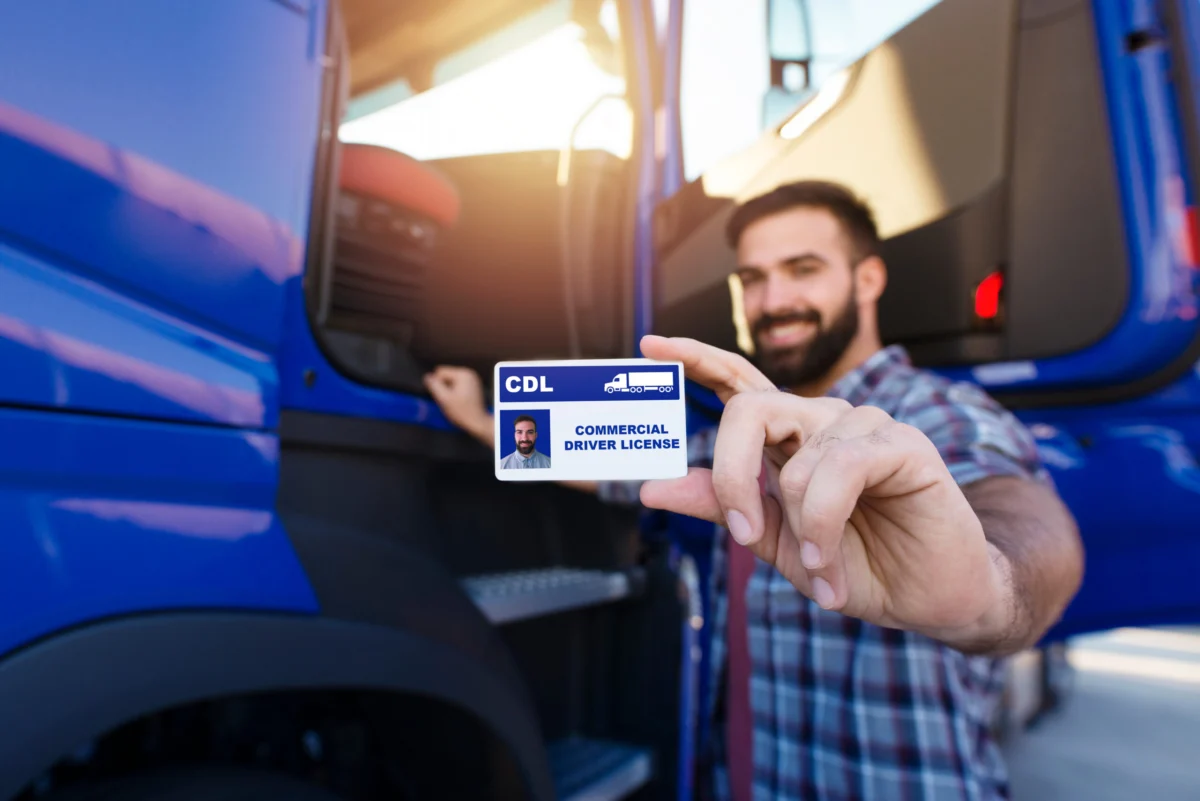
The core of the dispute lies in the FMCSA’s February rule, which tightened the criteria under which foreign-born residents can obtain a CDL. Under the new guidelines, the FMCSA restricts eligibility primarily to those holding specific, federally screened statuses, such as H-2A (temporary agricultural workers), H-2B (temporary non-agricultural workers), or E-2 (treaty investors).
The 23-state coalition—comprising Alabama, Alaska, Arkansas, Florida, Georgia, Idaho, Indiana, Iowa, Kansas, Kentucky, Louisiana, Mississippi, Missouri, Montana, Nebraska, North Dakota, Ohio, Oklahoma, South Carolina, South Dakota, Tennessee, Texas, and West Virginia—argues that these restrictions are essential. In their brief, the states contend that because applicants for these specific visas undergo rigorous federal background checks, their driving records and personal histories are more transparent.
"The States have an interest in ensuring that federal safety regulations adequately protect drivers on their roads from threats posed by large commercial vehicles driven by unqualified commercial drivers," the brief asserts. "Without proper federal protections, States will be forced to spend more of their own time, budgets, and personnel to keep their travelers safe."
The Chronology of the Dispute
To understand the intensity of this legal battle, one must look at the timeline that led to the D.C. Court of Appeals.
- Initial Proposal (2023): The FMCSA introduces proposed rulemaking aimed at closing gaps in the issuance of non-domiciled CDLs, prompted by mounting concerns regarding highway safety and inconsistent state-level enforcement.
- The Catalyst (The Singh Incident): The movement for tighter restrictions gained national momentum following a series of tragic, high-profile accidents. Among the most cited is the collision involving Harjinder Singh, who was in the U.S. illegally and operating a commercial vehicle under a license issued by the state of California. The resulting crash on a Florida highway, which claimed the lives of three individuals in a passenger car, became the "poster crash" for proponents of the new rule.
- Finalization (February 2024): The FMCSA officially makes the rule final, restricting the categories of non-domiciled residents eligible for CDLs.
- The Legal Challenge (Mid-2024): A lawsuit is filed by Jorge Rivera Lujan, supported by groups including the AFL-CIO and the American Federation of Teachers, challenging the FMCSA’s authority to enact these sweeping restrictions.
- The Counter-Briefing (Late 2024): In anticipation of the September 15 oral arguments, the 23-state coalition files its amici curiae brief to bolster the federal government’s position.
It is worth noting that the D.C. Court of Appeals has already denied a request for a stay in the implementation of the rule, allowing the FMCSA to proceed with enforcement while the litigation remains pending.
The "Poster Crashes": Data and Safety Implications
The states’ brief relies heavily on anecdotal and statistical evidence to justify the federal intervention. By citing the Harjinder Singh incident, the states are attempting to bridge the gap between abstract policy and tangible human tragedy.
"As these tragedies show, the final rule didn’t arise from a vacuum," the brief notes. "It was the federal government’s response to a string of tragic yet entirely preventable accidents caused by insufficient protection and regulation over illegal immigrants and CDLs."
Beyond the Singh incident, the brief provides a sobering inventory of similar fatal accidents occurring in California, Tennessee, Indiana, and Oregon. The argument is that these are not isolated events but symptoms of a systemic failure. The states argue that because commercial vehicles—often weighing 80,000 pounds—pose a disproportionate threat in a collision, the threshold for who can operate them must be absolute and uniform.
The coalition argues that the FMCSA was not just within its rights to act, but obligated to step into a "gap" in state enforcement. They point to recent Supreme Court jurisprudence, suggesting that while states have police powers, they are increasingly limited in their ability to address complex, border-adjacent issues that require federal uniformity.
A House Divided: The Opposition
The legal landscape is complex, as the lawsuit against the FMCSA has also drawn its own set of supporters. A group of states led by Democratic governors—ranging from Arizona to Washington—has filed their own amici curiae briefs in support of the plaintiff, Jorge Rivera Lujan.
This divide reflects broader political tensions regarding immigration, federalism, and the reach of administrative agencies. While the red-state coalition views the rule as a necessary safety mandate, the opposing states argue that the rule may be overreaching, potentially infringing on state-level licensing authorities and discriminating against populations that, despite their status, contribute significantly to the economy, particularly in the agricultural and logistics sectors.
Broader Implications for the Logistics Industry
The outcome of Lujan vs. FMCSA carries profound implications for the trucking industry. For carriers, the rule simplifies the regulatory landscape by creating a uniform national standard for foreign-domiciled drivers. However, it also limits the pool of available labor, which has been a perennial concern for the trucking sector as it struggles to meet the demands of an increasingly complex supply chain.
If the rule is upheld, it will solidify the FMCSA’s role as the primary gatekeeper of professional driving qualifications, effectively ending the patchwork of state-level policies that previously allowed for more lenient interpretations of residency requirements.
Furthermore, the case highlights the growing intersection of transportation policy and immigration policy. As the FMCSA becomes increasingly involved in vetting the background of foreign-domiciled applicants—relying on inter-agency data sharing—the agency is shifting from a purely safety-focused regulator to a key player in the nation’s interior enforcement apparatus.
Industry Outlook: What Lies Ahead
As the industry prepares for the oral arguments on September 15, stakeholders are closely monitoring the potential for a precedent-setting decision. A ruling in favor of the FMCSA would be a victory for those advocating for stricter oversight of commercial vehicle operators. Conversely, a ruling against the agency could force a return to the drawing board, leading to a period of regulatory uncertainty that many industry experts fear would be detrimental to highway safety.
For the carriers, brokers, and logistics providers attending upcoming industry events like the Future of Freight Festival in Chattanooga, this case remains a top-tier topic of discussion. The questions are simple but carry massive weight: Who is qualified to handle an 18-wheeler? What role should the federal government play in determining that? And can the industry balance the desperate need for labor with the non-negotiable imperative of highway safety?
The answer to these questions will be shaped in the halls of the D.C. Court of Appeals. Until then, the 23-state coalition continues to argue that the rule is the only way to ensure that the individuals behind the wheel of America’s commercial fleet are held to the highest standards, regardless of their origin. As the brief concludes: "The final rule should stand."
The coming weeks will reveal whether the judiciary agrees that the FMCSA has the mandate to close the door on the current licensing model, or if the court will demand a more nuanced approach that balances safety concerns with the realities of the modern labor force. For now, the legal battle continues, with the nation’s highways serving as the backdrop for an intense debate over safety, sovereignty, and the future of American logistics.
About the Author