The rapid ascent of generative artificial intelligence has brought the global technology industry to a precarious crossroads. While companies like Microsoft, Google, and Amazon have spent over a decade positioning themselves as leaders in the transition to clean energy, the sheer power requirements of the "AI revolution" are beginning to unravel years of sustainability progress.
A new report and interactive tool from the climate communications firm Climate Power, titled the "Data Center Air Pollution Tracker," reveals a stark reality: the push for frontier AI is stoking a massive boom in natural gas generation. This infrastructure shift is not just a theoretical concern for the future; it is already manifesting in double-digit emissions increases across the tech sector. Most notably, the tracker highlights a massive disparity in how various AI giants are sourcing their power, with Elon Musk’s xAI emerging as a primary contributor to localized pollution through its controversial "Colossus" data center in Memphis.
Main Facts: The AI Power Crisis by the Numbers
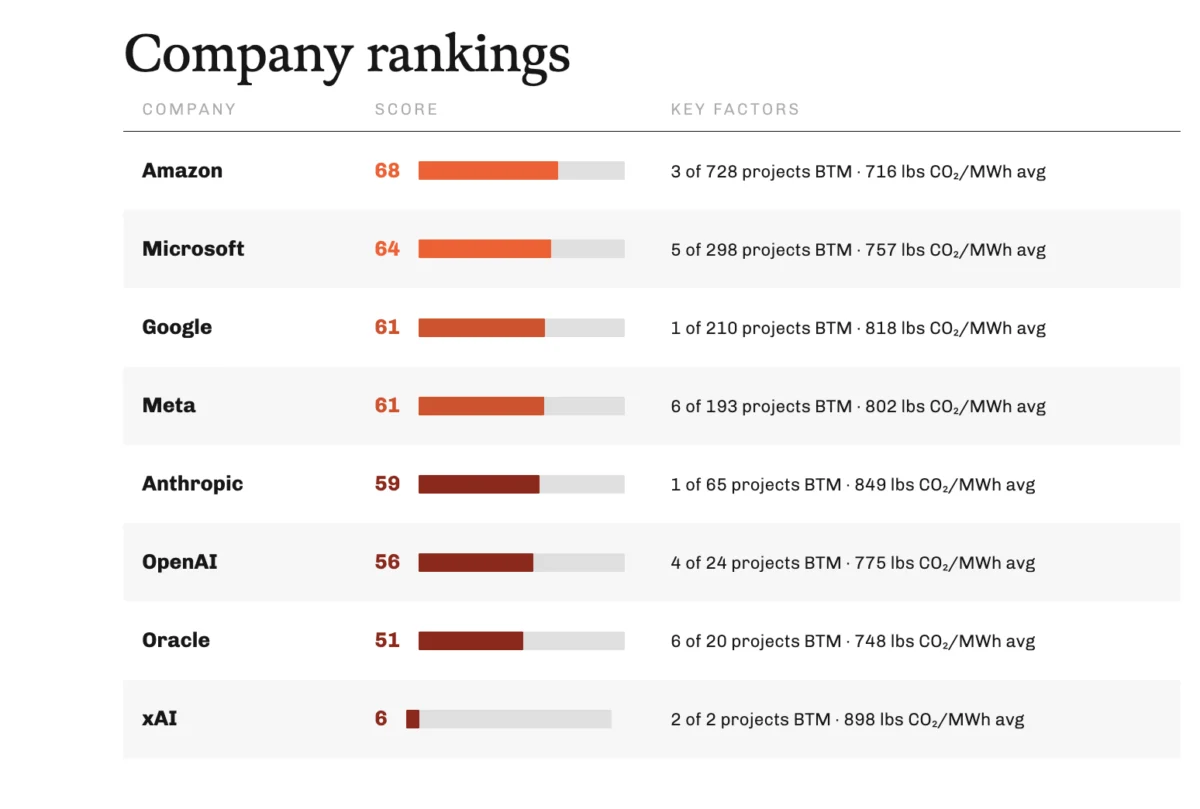
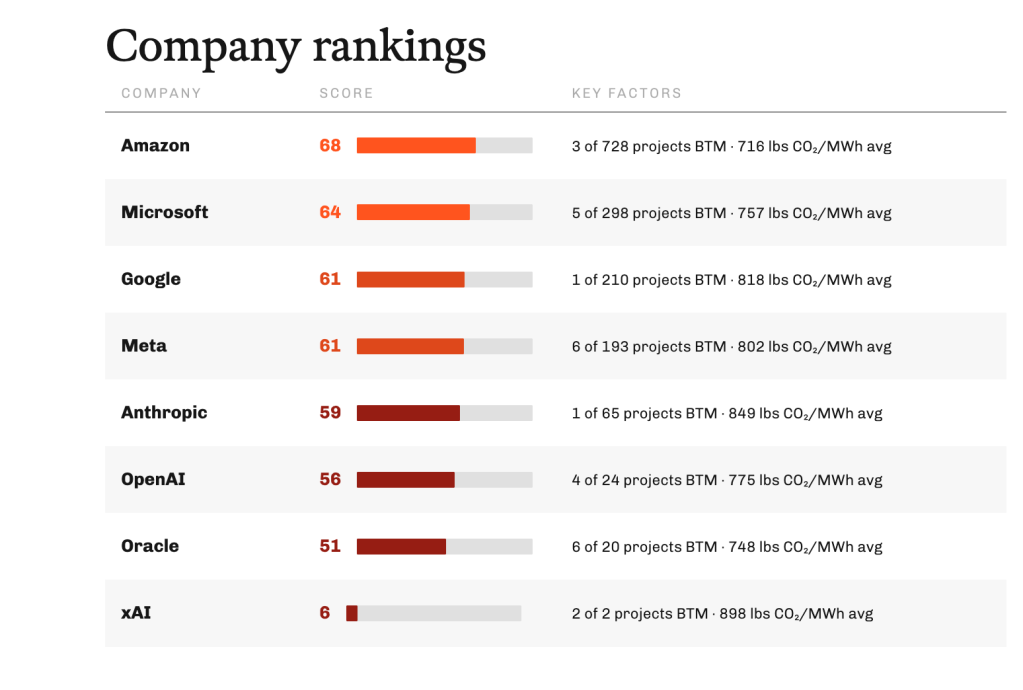
The Data Center Air Pollution Tracker serves as a comprehensive audit of the carbon intensity of the world’s leading AI and cloud service providers. By synthesizing data from research firm Cleanview and grid pollution metrics from the Environmental Protection Agency (EPA), the United Nations, The Financial Times, and The Guardian, the tracker provides a 1-to-100 score for eight major tech entities.
The scoring system is predicated on two primary variables:
- Behind-the-Meter (BTM) Generation: The extent to which a company uses its own on-site natural gas generators rather than relying on the public grid.
- Local Grid Intensity: The carbon footprint of the regional electricity mix where the data centers are located. Grids producing 200 lbs of CO2 per megawatt-hour (CO2/MWh) are categorized as "clean," while those producing 1,000 lbs CO2/MWh are considered the least efficient.
The Leaderboard: From "Cleanest" to "Most Polluting"
- Amazon (Score: 68): Despite its massive scale, Amazon currently holds the highest score among the group. It maintains the lowest ratio of behind-the-meter natural gas projects and an average grid intensity of 716 lbs CO2/MWh.
- Microsoft (Score: 64): Microsoft follows closely, though its average intensity is slightly higher at 757 lbs CO2/MWh.
- Google & Meta (Score: 61): Both companies are tied in their overall ranking, though Google’s average emissions (857 lbs CO2/MWh) are higher than Meta’s (802 lbs CO2/MWh), likely due to the specific geographic locations of Google’s high-consumption AI clusters.
- Anthropic (Score: 59) & OpenAI (Score: 56): The two most prominent "pure-play" AI labs are seeing their scores dragged down as they scale their compute needs through partnerships with larger cloud providers.
- Oracle (Score: 51): Oracle occupies a middle ground, struggling with grid locations despite having a lower average carbon intensity than Google or Meta.
- xAI (Score: 6): Elon Musk’s AI venture is the clear outlier. With a score of nearly zero, the company’s reliance on unregulated gas turbines has made it the "poster child" for the environmental risks of the AI race.
Chronology: From Net Zero Goals to the Gas Turbine Boom
To understand how the tech industry reached this point, one must look at the timeline of the last three years, during which the goals of "Net Zero" and "Frontier AI" came into direct conflict.
2020–2022: The Era of Climate Pledges
Before the public release of ChatGPT, Big Tech firms were competing to see who could set the most ambitious climate goals. Microsoft pledged to be carbon negative by 2030; Google aimed to operate on 24/7 carbon-free energy by the same year. During this period, these companies were the world’s largest corporate buyers of renewable energy (PPA).
Late 2022 – 2023: The Generative AI Explosion
The launch of GPT-4 and subsequent models shifted the industry’s focus toward "compute density." AI training requires specialized chips (GPUs) that consume significantly more power than standard CPUs. As companies raced to build larger clusters, the demand for electricity began to outpace the speed at which wind and solar farms could be connected to the grid.
2024: The Infrastructure Pivot
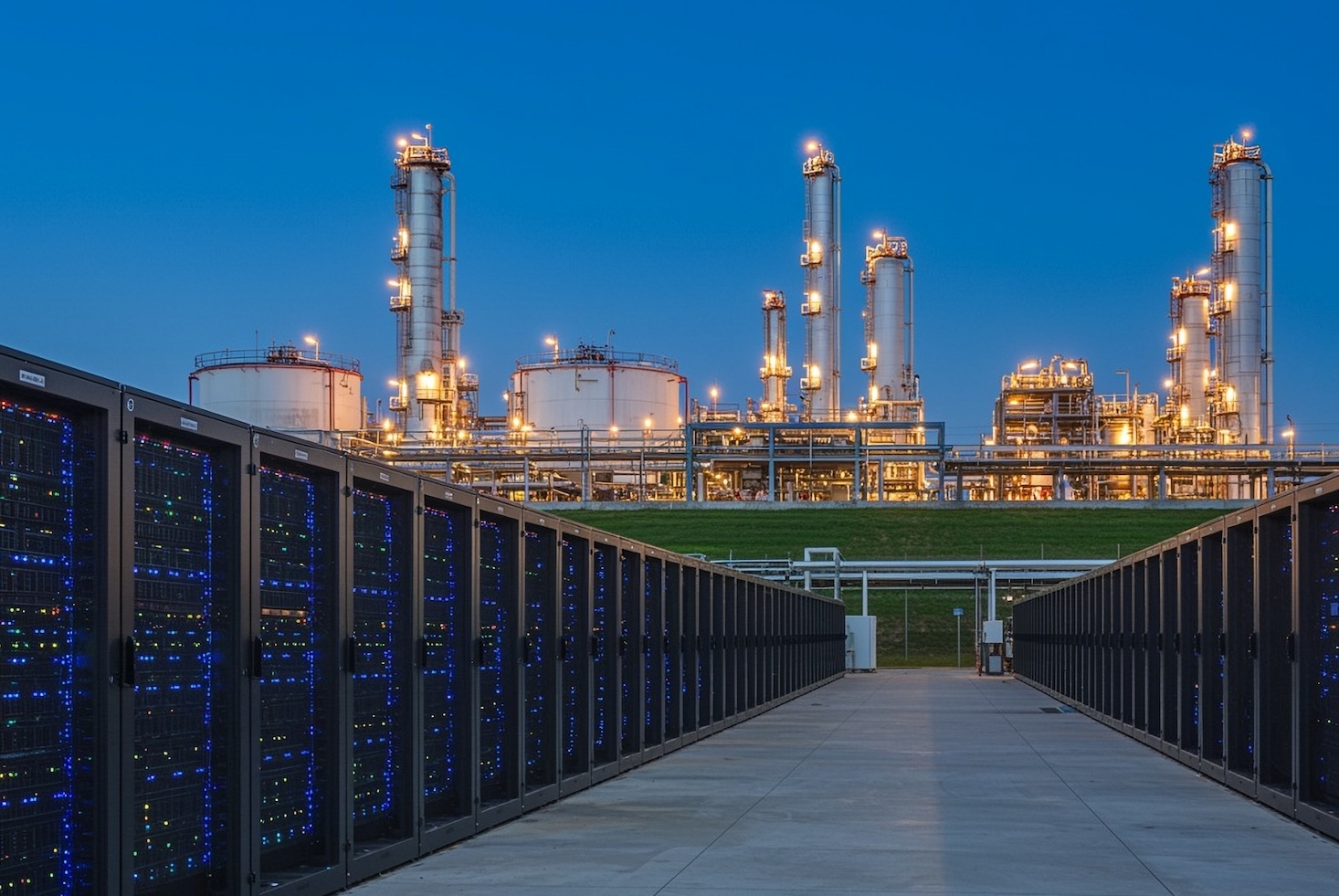
By mid-2024, the "interconnection queue"—the wait time to connect new renewable energy to the US power grid—stretched to several years. Desperate for immediate power to train the next generation of models, tech companies began looking at "behind-the-meter" solutions. This meant installing natural gas turbines directly at data center sites to bypass the grid entirely.
July 2024: The Launch of the Tracker
On July 24, 2024, Climate Power released its tracker data, confirming that the trend toward on-site gas generation was no longer anecdotal but a systemic shift. The data showed that for the first time in a decade, the carbon intensity of the tech sector was trending upward rather than downward.
Supporting Data: The Magnitude of the Energy Surge
The environmental impact of data centers is often obscured by the "cloud" metaphor, but the physical requirements are immense. According to data cited by Climate Power and Bloomberg, the "great AI buildout" is on track to consume 194 gigawatts of power by 2035.
To put that in perspective, this represents roughly 20 percent of total U.S. power production. This surge is creating a "secondary market" for fossil fuels:
- Natural Gas Resurgence: In regions like Northern Virginia (the world’s data center capital), utilities are delaying the retirement of coal plants and building new natural gas infrastructure specifically to meet data center demand.
- Emissions Spikes: Microsoft recently reported a 29% increase in its total emissions since 2020, primarily due to data center construction and the energy used to power them. Google reported a similar 48% increase over five years.
- The xAI "Colossus" Impact: The xAI facility in Memphis is perhaps the most egregious example of this trend. It reportedly utilizes dozens of gas turbines that operate with minimal environmental oversight. These turbines release nitrogen oxides (NOx), a key component of smog, into a community that already suffers from high levels of industrial pollution.
Official Responses and Community Backlash
The response to this data has been split between corporate justification, political opportunism, and community outrage.
Corporate Stance
Amazon, Microsoft, and Google have all maintained that their long-term commitment to renewables remains unchanged. They argue that AI will eventually be a tool to solve climate change by optimizing energy grids and discovering new materials for batteries. However, they have been less vocal about the immediate emissions from gas turbines used to meet current demand.
The Political Divide
The issue has become a political lightning rod. The Trump administration has actively encouraged the use of coal and natural gas to power the AI race, framing it as a matter of national security and economic competition with China. This "drill-and-build" approach stands in direct opposition to the Biden-Harris administration’s focus on the Inflation Reduction Act (IRA), which incentivizes clean energy.
Community Opposition
In Memphis, the xAI project has faced fierce opposition from local health advocates and environmental groups. Residents argue that they were not properly consulted before the installation of smog-producing turbines. This sentiment is echoed across the country; Climate Power polling from June 2024 suggests that voters are significantly more likely to support data centers that utilize solar and wind rather than those tethered to fossil fuels.
Implications: A Risk to the Global Climate Agenda
The findings of the Data Center Air Pollution Tracker have profound implications for the global effort to limit warming to 1.5 degrees Celsius.
1. The "Greenwashing" Trap
If tech companies continue to claim "Net Zero" status while simultaneously installing behind-the-meter gas turbines, they risk a total loss of credibility. The tracker provides transparency that makes it harder for corporations to hide their Scope 2 and Scope 3 emissions behind complicated carbon credit schemes.
2. Grid Instability and Energy Prices
As data centers "suck up" 20% of the nation’s power, ordinary consumers may face higher electricity bills and a higher risk of blackouts. If the grid is forced to keep aging fossil fuel plants online to satisfy the hunger of AI, the transition to a modern, decentralized, and green grid will be stalled for decades.
3. Regulatory Gaps
The xAI situation in Memphis highlights a dangerous regulatory loophole. Many on-site generators are classified as "emergency" or "temporary," allowing them to bypass the strict emissions standards applied to permanent power plants. As "behind-the-meter" becomes the new standard for AI, regulators will need to close these gaps to prevent a localized public health crisis.
4. The Path Forward
The tracker is not merely a tool for criticism but a roadmap for improvement. By identifying which grids are the "cleanest" (those at 200 lbs CO2/MWh), it signals to tech companies where they should be investing. The data suggests that the only way to reconcile AI with the climate is through a "clean-first" mandate—ensuring that no new data center capacity is added without a corresponding and immediate addition of new carbon-free energy to the local grid.
As the AI race intensifies, the Data Center Air Pollution Tracker will serve as a daily reminder that the "intelligence" being created in these facilities comes at a very physical, and increasingly carbon-heavy, cost. For the "Big Eight" tech companies, the score is clear: they are currently failing to meet the moment, with the exception of those few who are managing to keep the gas turbines at bay.
About the Author