In the late 1990s, the American logistics landscape operated under a singular, rigid paradigm: if a heavy-duty truck required repair, it went to a brick-and-mortar shop. The concept of "mobile maintenance" was not just niche; it was virtually non-existent. It was within this environment that Bob Dickinson founded what would evolve into the industry giant Dickinson Fleet Services, operating out of a modest shop in Indianapolis.
Today, that industry has matured into a multi-billion-dollar sector, yet it faces an identity crisis regarding quality, speed, and the human element. Kyle and Kevin Coltrain, grandsons of the industry pioneer, have spent their lives navigating this evolution. Having witnessed the transition of their family business from a local startup to a massive, private-equity-backed entity, and ultimately to a subsidiary of Cox Automotive, the brothers have now launched their own venture—Coltrain Onsite Fleet Care—with a mission to reset the standards of the mobile service industry.
A Chronology of Growth and Corporate Consolidation
The story of the Coltrain family is inextricably linked to the professionalization of mobile fleet maintenance. In the early 2000s, the primary hurdle for the Dickinson operation was education; they had to convince fleet managers that oil changes, preventive maintenance (PM), and minor repairs could be performed effectively in a parking lot rather than a service bay.
As the company scaled, Kyle and Kevin Coltrain moved from childhood curiosity—spending weekends in the shop—to professional leadership. Kyle, a former wide receiver for the University of Central Florida, transitioned from coaching aspirations to field sales in Tampa, where he cut his teeth in an era where every customer contract required a foundational sales pitch. Kevin focused on the operational side, managing regional growth across diverse markets.
The trajectory shifted significantly when Dickinson Fleet Services brought on Ridgemont Equity Partners as a majority shareholder. This set the stage for the landmark January 2021 acquisition by Cox Automotive. At the time of the sale, Dickinson operated over 700 mobile units with a workforce of 800 technicians. Under the umbrella of Cox’s "Pivet" platform, the company ballooned to 1,500 technicians serving 14,000 clients annually. By early 2025, Cox had acquired the remaining minority stake from the original founders, marking the end of the family-run era and the beginning of the corporate-integrated model.
The Friction of Scale: Why Quality Risks Rising
Kyle and Kevin Coltrain speak about their exit and subsequent re-entry into the market with a measured, analytical tone. They do not paint the corporate buyers as villains, but they are critical of the structural pressures that large-scale capital mandates.
"When large capital arrives, it comes with goals, agendas, and timelines," Kyle explains. "Those timelines translate into quotas." The most dangerous of these, according to the brothers, is the technician headcount target. When a manager is mandated to onboard ten technicians in a month, the hiring process inevitably suffers. A technician hired via a brief phone screen, rather than a rigorous vetting process, creates a liability in a field-service environment.
Unlike a shop, where a novice mechanic is surrounded by veterans who can provide immediate oversight, a mobile technician is a lone wolf. They work in isolation—often at night, on weekends, or in inclement weather. When the pressure to hit arbitrary time-based quotas is applied to these isolated workers, the inevitable result is "missed" work. As Kevin notes, if a technician is pushed to finish a four-hour repair in two, critical steps are skipped—not due to malice, but due to a misalignment of the clock.
In August 2025, the brothers launched Coltrain Onsite Fleet Care. Today, the firm supports 70 mobile technicians across 15 states, utilizing a more conservative, quality-focused growth model that attempts to address the "pressure-cooker" environment they observed in the corporate world.
The Modern Mobile Unit: A Shop on Wheels
A common misconception among smaller carriers is that mobile units are limited to basic fluid changes. In 2026, the capabilities of a high-end mobile unit are transformative.
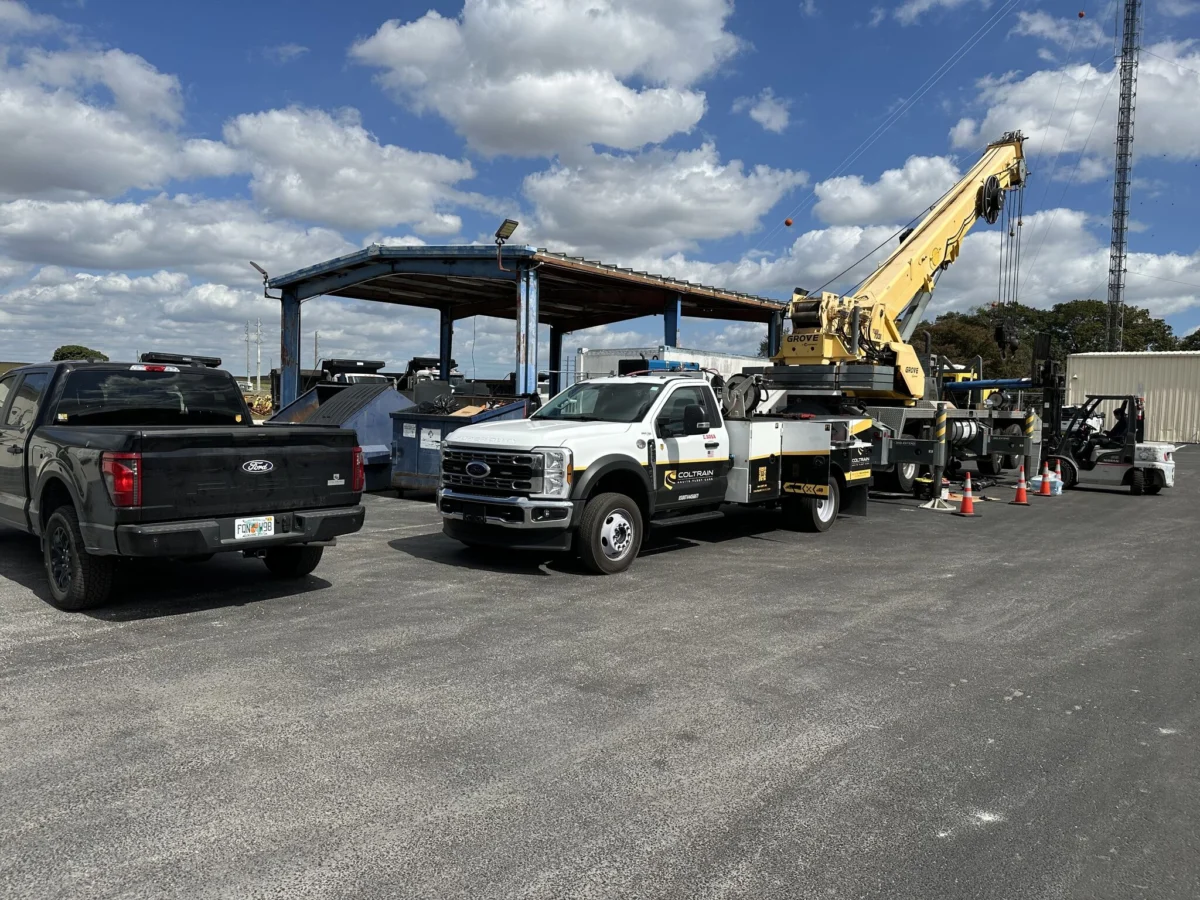
Coltrain’s units are equipped with advanced hardware, such as the Miller Trailblazer 330 Air Pak—a versatile powerhouse that combines a welder, generator, and compressor. This equipment allows for complex trailer body work and structural welding directly in the client’s yard, a capability that historically required expensive and time-consuming transit to a specialized facility.
The company estimates that 95% of routine repairs can now be handled on-site. This includes:
- Advanced Diagnostics: Direct-to-ECM engine connectivity for precise fault code analysis.
- After-treatment Systems: Replacement of Diesel Particulate Filters (DPF) and sensors.
- Brake Systems: Complete overhauls including shoes, drums, and chambers.
- Componentry: Radiators, alternators, starters, and climate control systems.
The remaining 5% of work—typically internal engine work or major collision repairs—is outsourced only because of safety and environmental standards. An open engine in a parking lot risks contamination, and the lack of permanent overhead cranes poses a safety risk for heavy lifting. By understanding this boundary, fleet managers can stop treating every fault code as an automatic tow-and-shop event, significantly reducing downtime.
Economic Implications: The Cost of "Planned" vs. "Unplanned"
The most significant takeaway from the Coltrain philosophy is that the true cost of maintenance is found in scheduling, not in the hourly rate.
"What hours is your fleet not running?" is the question Kyle asks every prospect. By scheduling maintenance when assets are naturally idle—nights and weekends—carriers avoid the hidden costs of taking a truck off the road during peak revenue hours.
When a carrier performs a cost-benefit analysis, they often look only at the invoice price, comparing mobile rates to shop rates. They neglect to account for the "lost opportunity cost":
- Driver Downtime: The cost of paying a driver to sit in a waiting room or navigate to a shop.
- Transit Time: The fuel and labor cost of moving the truck to the facility.
- Unplanned Failures: The astronomical cost of a truck breaking down on the side of the road, resulting in missed delivery windows and potential cargo spoilage.
The brothers argue that tightening a maintenance program is essentially a form of insurance. Many fleets attempt to mitigate maintenance gaps by purchasing "spare" trucks—an incredibly expensive capital expenditure compared to the cost of a robust, proactive maintenance contract.
Transparency and Technology: Solving the "Ghost Inspection"
A significant point of friction in the mobile industry is the suspicion—often well-founded—that inspections are being billed but not performed. In the absence of a supervisor, a technician under pressure may perform a "walk-around" and slap a pass sticker on a unit without truly inspecting the brake lines or suspension components.
Coltrain addresses this via a proprietary field service application. This software forces a granular, time-stamped workflow. Every inspection point requires a photo-prompt, and the system audits the time spent on each task. If a comprehensive inspection is completed in two minutes, the system flags it for a manager review.
For carriers, the lesson is clear: if a provider cannot produce point-level documentation for an inspection, they are likely not performing one. The technology exists to verify the work; therefore, a lack of transparency is a deliberate choice.
Strategic Vetting: How to Evaluate a Provider
For small-to-mid-sized carriers, the process of vetting a provider is often overlooked until a crisis occurs. Kyle Coltrain suggests that carriers ask three critical questions to separate high-quality providers from "volume-at-all-costs" operations:
- Can I see your technician certifications? A reputable provider will have these ready. If they balk, or if they cannot provide current DOT inspector certifications, the carrier should look elsewhere.
- What is your technician-to-manager ratio? Coltrain advocates for a 10:1 or 15:1 ratio. Ratios as high as 40:1 are red flags, indicating that the manager cannot possibly oversee the quality of the work being performed in the field.
- How do I reach my manager? If the only contact is a generic call center, the carrier is buying a commodity service. If they can reach a local supervisor directly, they are buying a partnership.
Compliance and the "Defend the Road" Mantra
Finally, the regulatory landscape represents a significant, often ignored risk. The Department of Transportation (DOT) can audit a carrier’s maintenance records, and if the technician who performed a DOT inspection is not properly certified, the carrier is liable.
Furthermore, carriers often ignore "write-ups" on passing inspections—brake pads that are nearing their limit, or minor sensor issues. "Don’t wait for that part to fail," says Kyle. By failing to act on these notes, carriers turn a manageable expense into a catastrophic failure.
Ultimately, the Coltrains view their work through a lens of safety that transcends the bottom line. "A loaded tractor-trailer moving at 70 miles per hour is not just a cost center to be optimized," says Kyle. "It is a heavy object sharing the road with our families." By prioritizing the health of the asset over the speed of the repair, they argue that carriers can defend the road, ensure compliance, and ultimately improve the longevity of their entire fleet.
The maintenance industry is moving toward a future defined by data, transparency, and high-touch management. For the small carrier, the choice is no longer about finding the cheapest repair—it is about finding a partner who understands that in the world of mobile fleet care, the clock is not the master; the safety of the driver and the reliability of the cargo are.
About the Author