Introduction: From Transactional Tools to Conversational Partners
For decades, technology was a tool—an instrument we operated to achieve a specific outcome. We used computers to calculate, smartphones to communicate, and software to organize. However, the rise of Generative AI has fundamentally altered this paradigm. Technology is no longer merely something we operate; it is something we operate within.
In this immersive, AI-driven environment, interactions have shifted from transactional to conversational. AI responses are no longer static retrievals of existing data; they are generative, creating new contexts and bespoke content in real-time. As communication between humans and corporations becomes increasingly mediated by artificial intelligence, the traditional rules of branding are being rewritten. In this new landscape, brands must evolve from static logos and taglines into "Agentic Lovemarks"—entities capable of sustaining human-like emotional connections through autonomous digital agents.
The Evolution of Brand Psychology: A Chronology of Connection
To understand where we are going, we must look at how we arrived here.
- Early 20th Century (The Dawn of Emotional Persuasion): Marketing began to pivot away from pure utility toward emotional resonance. Pioneers realized that consumers didn’t just buy products; they bought into identities.
- The 2000s (The Era of Archetypes): In 2000, Margaret Mark and Carol Pearson published The Hero and the Outlaw, codifying 12 brand archetypes. This framework became the gold standard, providing a rational structure for humanizing brands. It allowed companies to define a consistent "personality" that consumers could recognize and trust.
- 2024–2025 (The Agentic Shift): With the proliferation of LLMs and autonomous agents, the "human-in-the-loop" model began to break down. Brands lost the ability to manually curate every customer touchpoint.
- 2026 (The PRISM Revolution): As market leaders like Arjan Kapteijns and Thomas Marzano began to articulate the limitations of static archetypes in an automated world, the PRISM model emerged as a technical-psychological hybrid designed to bridge the gap between human emotional needs and AI operational logic.
The Limitations of Archetypes in an Agentic Economy
The 12-brand archetype model, while revolutionary for its time, is currently facing a "legibility crisis." When a brand interacts with a consumer through an AI agent, it is no longer the brand’s marketing team controlling the tone or vocabulary—it is an algorithm.
If an AI is given only a broad archetype—for example, "The Hero"—the interpretation is left entirely to the machine’s probabilistic nature. In one conversation, the AI might sound triumphant; in another, it might sound aggressive or arrogant. This lack of precision results in an inconsistent "digital soul," causing the brand to lose its emotional grip. The archetype is a compass, but in an agentic economy, brands need a GPS.
Supporting Data: The Legible-Lovable Law
Thomas Marzano, former brand leader at Philips and ASML, famously introduced the "Legible-Lovable Law." This concept posits that for a brand to thrive in the future, it must satisfy two distinct audiences simultaneously:
- The Machine (Legibility): The brand must be structured in a way that AI can "read," parse, and categorize its core values, tone, and behavioral triggers. Without this, the brand is invisible to the AI’s recommendation engine.
- The Human (Lovability): The brand must retain the emotional intelligence required to foster loyalty.
If a brand is legible but not lovable, it is a commodity. If it is lovable but not legible, it remains a "ghost" in the machine—unable to be summoned by AI agents. The PRISM model serves as the connective tissue between these two requirements.

The PRISM Model: A Deep Dive
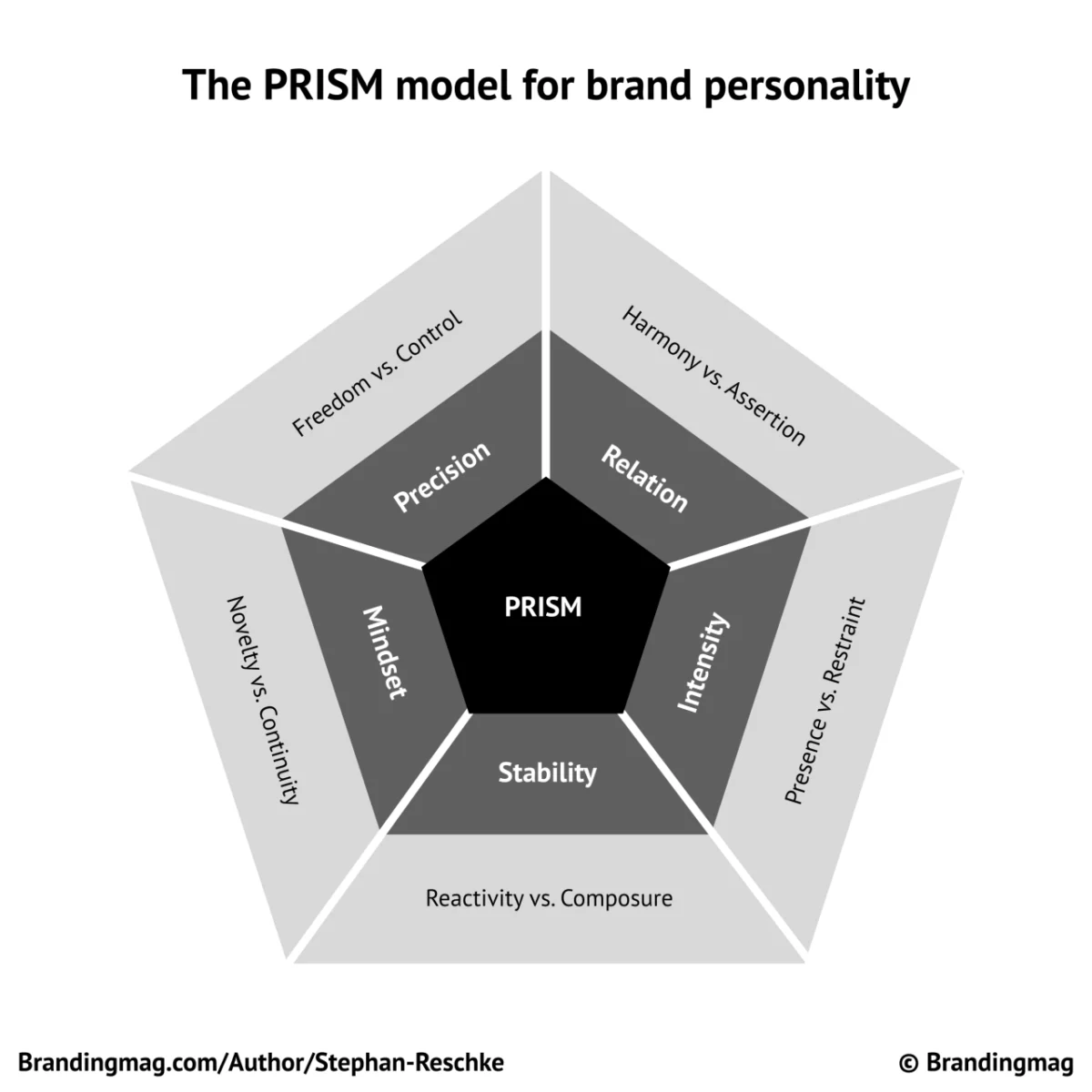
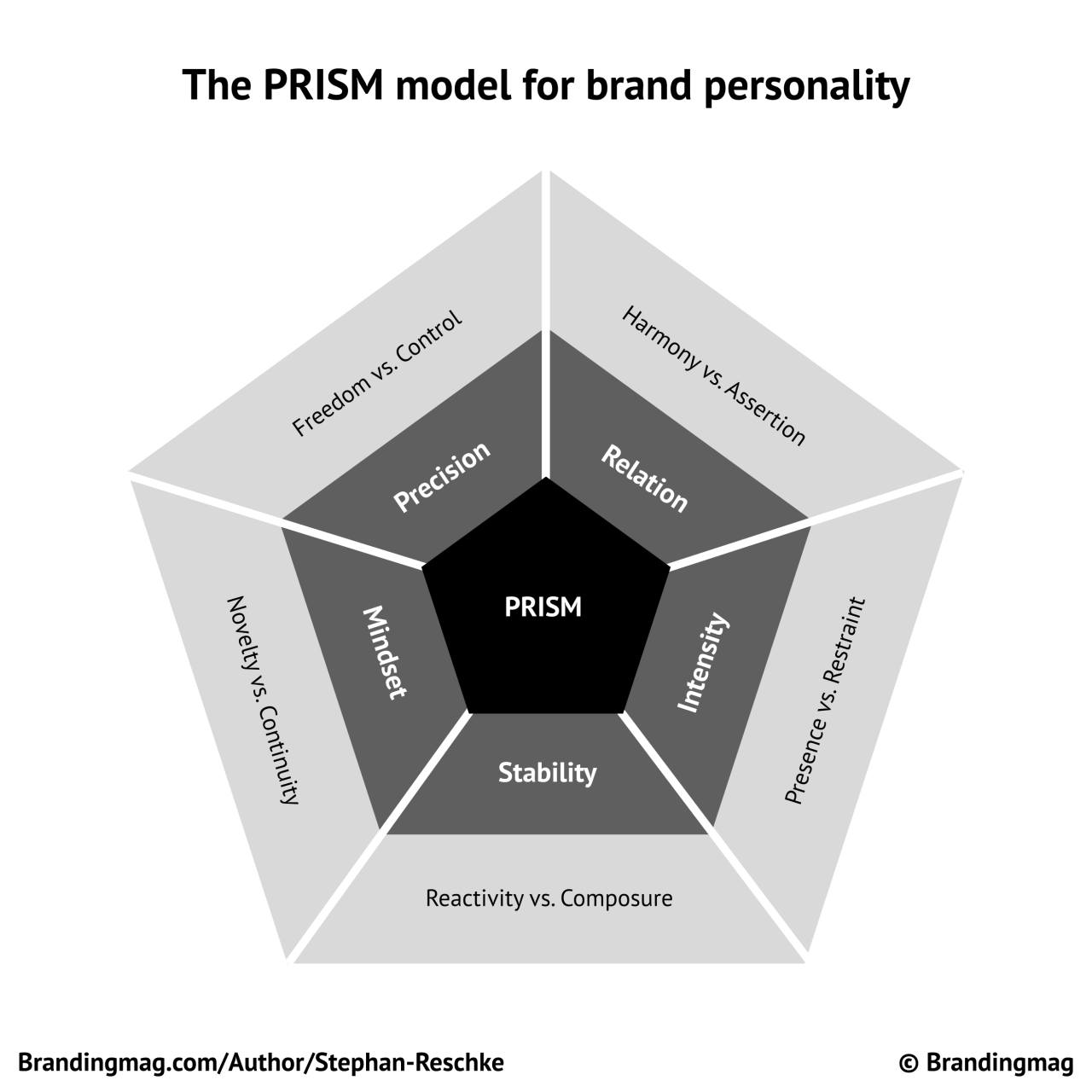
The PRISM model is an evolution of the "Big Five" (OCEAN) personality traits, adapted specifically for the brand-AI interface. Unlike the 12 archetypes, which categorize brands into boxes, PRISM maps a brand’s unique "digital DNA" across five core domains:
1. Openness to Experience
This domain defines how a brand handles novelty and complexity. Is the brand a disruptor that seeks to invent the future, or is it a guardian of tradition? For an AI agent, this setting dictates whether it should provide "cutting-edge" suggestions or "reliable, time-tested" advice.
2. Conscientiousness
This measures the level of detail, organization, and goal-orientation of the brand. A high-conscientiousness brand ensures that its AI agent is precise, punctual, and focused on task completion, whereas a lower score might allow for more whimsical, free-flowing conversation.
3. Extraversion
In the agentic economy, this defines the "social energy" of the brand. Does it lead the conversation? Is it charismatic and bold? This informs the AI’s verbal tone—whether it should be assertive and outgoing or quiet and reserved.
4. Agreeableness
This domain governs the brand’s empathy and altruism. It dictates how the AI handles conflict resolution, customer complaints, and community engagement. High agreeableness translates to a warm, supportive, and conciliatory AI voice.
5. Neuroticism (Emotional Stability)
Perhaps the most sensitive domain, this defines the brand’s reaction to stress. Does the brand remain calm and stoic in the face of a crisis, or does it show vulnerability and urgency? This is critical for maintaining a "human-like" consistency during high-stakes customer service interactions.
Implications for Future Branding: Language as the Primary Touchpoint
As the world moves toward voice-first interfaces, the "brand campaign" is being replaced by "brand language." We are entering an era where a brand’s voice is literally its most valuable asset.
Implementing the "Digital Soul"
The PRISM model functions as the system prompt for a brand’s AI architecture. By quantifying these five domains, brands can create a "Digital Constitution." When a user asks an AI, "What should I wear for this event?" or "Which software should I choose for my business?", the brand’s AI agent acts as a representative of the brand’s specific PRISM profile.
- Verbal Consistency: The AI uses specific vocabulary, sentence structures, and rhetorical devices derived from the brand’s PRISM mapping.
- Behavioral Predictability: The agent acts in a way that feels "on-brand," even when handling novel or unexpected inquiries.
- Operational Integration: Because PRISM is structured data, it can be embedded directly into the LLM’s framework, ensuring that the brand’s "personality" is not just a style guide in a PDF, but a live, operational function.
Official Perspective: The Path Forward
Industry experts, including the minds behind the PRISM initiative, suggest that the anxiety surrounding AI is largely rooted in the fear of losing control. However, the PRISM model proves that control is not lost—it is simply transferred from the manual to the systemic.
"We are not at the end of emotional connection," notes the conceptual framework behind PRISM. "We are at the beginning of technical reinforcement." By defining the brand through a data-driven lens, companies are not stripping away their humanity; they are providing the necessary instructions for AI to mimic and amplify that humanity at scale.
Conclusion: The Call to Action
The shift toward an agentic economy is not a distant possibility—it is our current reality. Brands that fail to adopt a structured, machine-readable personality framework risk becoming indistinguishable in the eyes of the AI agents that now curate our daily lives.
The PRISM model offers a path out of the chaos. It allows brands to stop guessing how they will be interpreted by algorithms and start designing the parameters of their digital existence. Whether you are a legacy enterprise or a digital-native startup, the message is clear: The conversation has already started. If your brand is not prepared to speak the language of the future, you are already being left behind. It is time to move beyond the archetype and into the PRISM.
About the Author