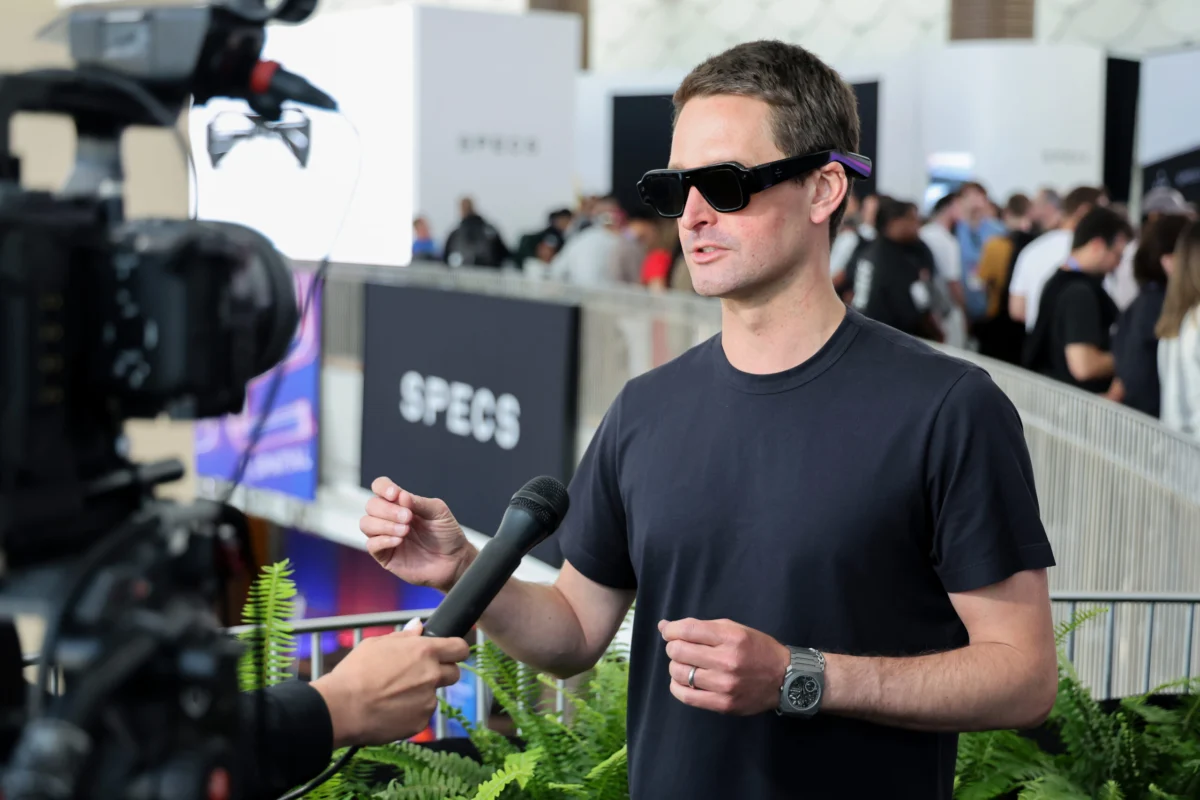
In the cutthroat world of consumer hardware, timing is everything. For Snap Inc., the parent company of the ubiquitous Snapchat, the path toward a hardware-first future has been paved with years of internal research, significant capital expenditure, and a series of experimental iterations. Now, with the highly anticipated launch of its new AR-integrated "Specs" looming in September, the company finds itself at a critical juncture. During Monday’s earnings call, CEO Evan Spiegel addressed the elephant in the room: the ambiguity surrounding consumer demand for a $2,195 piece of hardware in an economy still wary of luxury tech spending.
As the launch date approaches, the technology industry is watching closely. Snap is betting that it can carve out a unique space in the augmented reality (AR) ecosystem, positioning itself as a "first mover" in a sector dominated by Silicon Valley titans like Meta, Apple, and Alphabet. However, the path to mass adoption remains steep, and investors are demanding to know if Snap has the stamina—and the strategy—to survive the transition from social media app to hardware powerhouse.
The Main Facts: A Bold Entry into High-End Wearables
The core of the current discourse is the impending release of the latest iteration of Snap’s "Specs." Unveiled in June, the device represents the culmination of over a decade of R&D. Unlike previous, more experimental versions of Specs that functioned primarily as camera-equipped sunglasses, the new model is a sophisticated AR wearable designed to overlay digital interfaces onto the physical world.
The price tag, however, is a point of friction. At $2,195, the device occupies a precarious middle ground. It is significantly more expensive than the entry-level Meta Ray-Ban smart glasses, which have found success as a $350 fashion-forward accessory, yet it sits well below the $3,500 starting price of the Apple Vision Pro. This positioning suggests that Snap is not aiming for the casual consumer just yet, but rather targeting a niche of "prosumers," developers, and enthusiasts who are willing to pay a premium for the latest technical breakthroughs in optics and spatial computing.
A Chronology of Innovation: The Long Road to Specs
Snap’s journey into hardware did not happen overnight. To understand the significance of the upcoming September launch, one must look at the company’s decade-long trajectory.
- 2014–2016: The Genesis. Snap begins internal explorations into hardware, moving beyond its roots as a disappearing-message app.
- 2016: The Original Spectacles. Snap releases its first-generation glasses. These were limited in functionality, serving mostly as a way to capture photos and videos from a first-person perspective. It was a novelty, but it signaled a long-term interest in "camera-first" computing.
- 2018–2021: Iteration and Refinement. Snap releases subsequent versions of Spectacles, slowly integrating more advanced features like 3D spatial mapping and improved battery life, though these remained largely relegated to creators and internal testing.
- 2023: The Pivot to AR. The company begins aggressively teasing a "true" AR wearable, one capable of persistent digital overlays.
- June 2024: The Unveiling. Snap officially introduces the latest version of Specs, announcing a $2,195 price point and a September release date.
- July 2024: The Earnings Call. CEO Evan Spiegel defends the strategy against mounting pressure from investors concerned about the lack of pre-order transparency and the broader viability of the hardware division.
Supporting Data: The Cost of Competition
The current landscape of smart glasses is fragmented, with each major player employing a different strategy. Snap’s decision to go it alone—rather than partnering with an established hardware manufacturer—is a deliberate move to maintain control over the "Lens" ecosystem.
Comparing the market segments highlights why investors are nervous:
- The Meta Strategy ($350): Meta has leaned into AI-powered audio and image capture, focusing on mass-market adoption through partnerships with eyewear brands like Ray-Ban. They are prioritizing comfort and "cool factor."
- The Apple Strategy ($3,500+): Apple is betting on "Spatial Computing," providing a high-fidelity, high-power experience that essentially acts as a portable, immersive computer.
- The Snap Strategy ($2,195): Snap is targeting the middle ground—a lighter, more social-oriented AR experience that relies on the company’s already robust library of Lenses and developer tools.
The challenge for Snap is that while its software (Lens Studio) is widely considered the industry standard for AR, its hardware footprint is minimal. Without the massive installed base of the iPhone or the massive social graph of Facebook, Snap must rely entirely on the superiority of its hardware experience to entice consumers.
Official Responses: Spiegel’s Defense
During the earnings call, Evan Spiegel was forced to address the lack of hard data regarding pre-order volumes. His response was characteristically optimistic but grounded in the reality of the hardware lifecycle.
"What we’re hearing from folks is really that they want to try Specs," Spiegel noted. He emphasized that at the current price point, this is a "high consideration purchase." He argued that the barrier to entry isn’t just the cost, but the inherent "technical leap" that this generation of glasses represents. According to Spiegel, the upcoming launch event is not the end-game, but a "starting point for that consumer-oriented journey."
Perhaps the most significant takeaway from his remarks was his distinction between the current market and the one Snap intends to lead. "When we started innovating in the social space, we were a late entrant," Spiegel reminded investors. "What’s so unique about this opportunity for us is really that we’re a first mover."
He acknowledged that mass-market adoption is likely not on the horizon until the end of the decade, citing the need for advancements in battery efficiency, thermal management, and further reductions in weight and cost. However, he remains confident that by fostering a developer community today, Snap will be the primary platform for AR when the technology finally hits its stride.
Implications: The High Stakes of the "First Mover"
The implications for Snap’s future are profound. By positioning itself as a first mover in the AR hardware space, Snap is signaling that it is willing to sacrifice short-term profitability for long-term dominance.
1. The Developer Moat
Snap’s strongest asset is not the physical glasses themselves, but the years of work developers have put into Lens Studio. By keeping these developers engaged, Snap is effectively crowdsourcing the "killer app" for its hardware. If developers find that the Specs offer a superior canvas for their creativity compared to Apple’s Vision Pro or Meta’s Quest, the hardware could become a standard for AR developers.
2. The Financial Tightrope
Financially, Snap remains in a precarious position. Developing hardware is notoriously expensive, and the margins on high-end consumer electronics are notoriously thin. Investors are rightly questioning whether Snap can afford to burn through cash to subsidize this hardware division while its advertising business faces stiff competition from TikTok and Instagram. If the September launch fails to gain traction with early adopters, Snap may find itself needing to pivot its strategy—or risk alienating its core base of investors.
3. The Cultural Impact
Snap has always been a company defined by cultural trends. From the introduction of Stories to the popularity of AR filters, it has mastered the art of making technology feel personal and ephemeral. The success of Specs will depend on whether Snap can translate that "fun" factor into a functional, daily-use device. If the glasses are perceived as a bulky, expensive accessory for techies, they will likely fail. If, however, they become a social utility—an extension of the Snapchat experience—they could redefine how we interact with the world around us.
Conclusion: The Road Ahead
As September approaches, the narrative around Snap is shifting from that of a struggling social media company to a company attempting a monumental, multi-year transformation. Evan Spiegel’s vision is clear: he is not looking to compete in the market of today, but to build the market of tomorrow.
Whether the consumer is ready for a $2,195 pair of AR glasses remains to be seen. But in the race to define the next computing platform, Snap has clearly decided that it is better to be a "first mover" with a high-priced, high-tech gamble than a follower in a race it cannot win. For Snap, the next few months will not just be about sales figures; they will be about proving that the company’s decade-long investment in augmented reality was a visionary strategy rather than a costly detour.
The industry is waiting to see if the "technical leaps" Spiegel speaks of are enough to justify the price—and more importantly, if they are enough to convince the world that the next stage of human connection will happen through a pair of glasses.
About the Author