In a move that signals a profound shift in the role of industrial real estate providers, Prologis, the world’s largest owner and operator of logistics facilities, has significantly deepened its partnership with Fulfillment IQ, a boutique logistics technology and consulting firm. This strategic alliance is designed to move beyond the traditional landlord-tenant relationship, positioning Prologis as a comprehensive partner in the digital transformation of its customers’ supply chains.
By leveraging Fulfillment IQ’s technical prowess alongside its own massive global footprint, Prologis aims to provide the consulting services necessary for businesses to integrate Artificial Intelligence (AI) and advanced automation into their warehouse operations. This evolution reflects a broader trend in the logistics sector: industrial buildings are no longer just passive containers for inventory; they are becoming intelligent, data-generating nodes within a global, hyper-automated network.
The Evolution of the Industrial Landlord: Main Facts
The partnership between Prologis and Fulfillment IQ marks a departure from the conventional real estate business model. Historically, companies like Prologis focused on site selection, construction, and lease management. Today, as labor shortages persist and the demand for "on-demand" fulfillment grows, the physical facility must be inextricably linked to the software that runs it.
The primary objective of this expanded collaboration is to bridge the "execution gap" that many logistics firms face. While executives are under intense pressure from boards of directors to implement AI-driven strategies, many lack the specific domain expertise to translate those strategies into tangible warehouse efficiencies. Through this partnership, Prologis is effectively offering a "consulting-as-a-service" layer, helping its 6,500 global customers navigate the complexities of AI adoption, robotics integration, and workflow automation.
This initiative is not merely a pilot project; it is the culmination of an investment made through Prologis Ventures, the company’s venture capital arm. By investing in Fulfillment IQ—a firm known for its deep-seated experience in the operational trenches of fulfillment centers—Prologis has secured an internal pipeline for purpose-built technology solutions.
Chronology: A Path Toward Digital Integration
The road to this partnership began with Prologis’s recognition that their customers’ success was increasingly tied to their ability to innovate within the four walls of their leased space.
- Early Strategic Shifts: Recognizing that technology was becoming a critical differentiator in industrial real estate, Prologis launched Prologis Ventures to scout for startups that could optimize the warehouse experience.
- The Initial Investment: The foundation for the current collaboration was laid when Prologis Ventures invested an undisclosed amount in Fulfillment IQ. This move was intended to foster the development of custom software solutions for supply chain optimization.
- Proof of Concept: Following the initial investment, both firms worked to refine the intersection of physical space and digital advisory. During this period, they observed that logistics leaders were struggling not with a lack of software, but with the lack of specialized, warehouse-centric guidance on how to implement it.
- The July 2024 Expansion: Building on the success of their initial technical collaborations, the two companies formalized their partnership to offer enterprise-level AI and automation consulting. This announcement marks the transition from an "investment-based" relationship to an "operational-integration" partnership, signaling a long-term commitment to reshaping the logistics industry.
Supporting Data: The Scale of the Transformation
To understand the magnitude of this partnership, one must look at the sheer scale of the Prologis portfolio. Operating roughly 1.3 billion square feet of industrial space across 20 countries, Prologis is arguably the most influential stakeholder in global logistics infrastructure.
Market Realities Driving the Shift:
- Labor Constraints: The logistics industry continues to face significant headwinds in recruiting and retaining warehouse personnel. Automation is no longer a luxury; it is a necessity for maintaining operational throughput.
- Portfolio Density: With 6,500 customers, Prologis occupies a unique vantage point. The data generated across their facilities provides an unprecedented look at how supply chains are evolving in real-time, from e-commerce fulfillment to cold-chain distribution.
- The "Tech-Enabled" Premium: Buildings that are "automation-ready"—equipped with the necessary power infrastructure, data connectivity, and floor load-bearing capacities—are seeing higher demand and lower vacancy rates. This partnership allows Prologis to advise on how to build and retrofit these high-tech spaces to command those premiums.
Perspectives from the Frontline: Official Responses
The rhetoric surrounding this partnership highlights a fundamental philosophy: technology must be built by those who understand the physical reality of the warehouse.
Ninaad Acharya, CEO of Fulfillment IQ, emphasized this in the July 21 release: "The next generation of logistics technology won’t be built by software companies looking in from the outside; it will be built by teams who have spent years solving problems inside the warehouse. This partnership with Prologis gives us the scale and reach to turn that conviction into products that transform how the industry operates."
For Prologis, the move is equally strategic. By aligning with a firm that possesses deep technical domain expertise, they are protecting their long-term asset value. As logistics buildings become increasingly "software-defined," the ability to provide consulting services ensures that Prologis remains central to the customer experience, rather than being relegated to a mere provider of square footage.
Industry analysts view this as a shrewd move. By offering advisory services, Prologis is effectively creating a "moat" around its portfolio, making it harder for competitors to displace them, as their value proposition now includes the operational efficiency of the tenant’s business.
Implications: A New Era for Logistics and Real Estate
The implications of this partnership are likely to ripple through the entire logistics ecosystem, affecting everything from how leases are structured to how warehouses are designed and managed.
1. Changing Lease Dynamics
In the future, the traditional "triple net" lease might evolve into a more collaborative agreement. As landlords provide the infrastructure for AI and automation, lease terms may begin to include performance clauses or data-sharing agreements that benefit both the tenant and the landlord. If a landlord’s technology consulting helps a tenant increase throughput by 20%, the facility becomes more valuable, potentially allowing for higher rents or longer-term commitments.
2. The Architecture of the "Smart" Warehouse
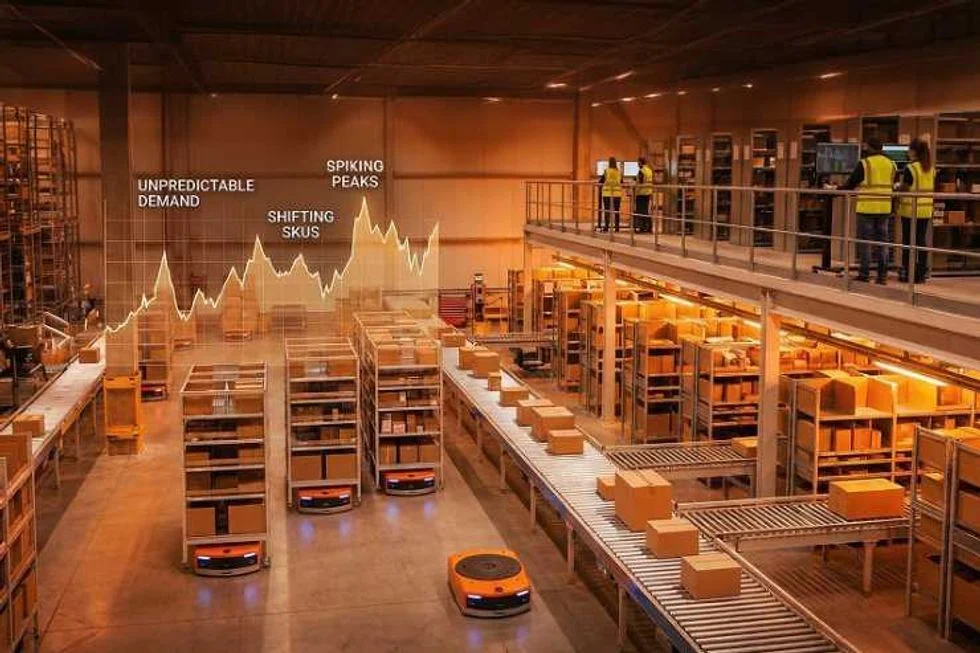
We are moving toward a period where the building itself is an extension of the automation software. This means future Prologis developments will likely prioritize energy management, high-speed data architecture, and modular layouts designed to accommodate evolving robotic fleets. The partnership with Fulfillment IQ provides the "brain" for these physical shells, ensuring that the buildings Prologis constructs are optimized for the AI-driven future.
3. Navigating Geopolitical and Economic Pressures
Logistics executives are currently navigating a turbulent landscape—rising costs, unpredictable geopolitical climates, and the need for resilient supply chains. AI is the toolset they are using to fight back. By centralizing AI advisory, Prologis is helping its tenants move faster. If a customer can implement an AI-driven inventory management system in three months rather than eighteen, they are better positioned to weather economic shocks.
4. A Template for the Industry
The success of this partnership will likely serve as a blueprint for the rest of the commercial real estate sector. We can expect to see other major logistics players forming similar alliances or acquiring boutique consulting firms to bolster their service offerings. The era of the "dumb" warehouse is effectively ending.
Conclusion
The partnership between Prologis and Fulfillment IQ is more than a service expansion; it is a fundamental redefinition of the industrial real estate value chain. By moving into the consulting space, Prologis is acknowledging that in a high-tech, AI-driven global economy, the most important asset isn’t just the concrete and steel—it’s the intelligence embedded within the facility.
As this partnership matures, the industry will watch closely to see if the combination of Prologis’s massive physical footprint and Fulfillment IQ’s technical depth can truly solve the "AI adoption" problem. If successful, the collaboration will not only transform how goods move through the global supply chain, but it will also set a new standard for what a real estate company can be. In this new era, the landlord is no longer just the host; they are the architect of the customer’s operational success.
About the Author