In the modern landscape of product development, the prevailing mandate has become almost dogmatic: eliminate the friction. From one-click purchasing to intuitive, frictionless user interfaces, the industry has spent the last decade obsessed with removing every obstacle between a user and their goal. However, as we look toward the next generation of domestic innovation, one of the design world’s most influential voices is suggesting that we might be smoothing out the wrong things.
Michelle Lee, Partner and Executive Managing Director at IDEO San Francisco, is challenging designers to reconsider the value of resistance. As a juror for Fusion Forward: Design for Home—a collaborative competition between Core77 and Autodesk Fusion—Lee is bringing a philosophy that prizes emotional resonance and human complexity over mere convenience.
The Architect of Play: Lee’s Professional Trajectory
To understand Michelle Lee’s unique perspective, one must look at her roots in the toy industry. While the world of high-end home product design may seem a world away from children’s playthings, Lee views them through the same lens.
"The toy industry taught me the logic of play," Lee explains. "It’s an environment defined by its openness to iteration and, crucially, its tolerance for mess."
This "tolerance for mess" is central to Lee’s design methodology. In a field often paralyzed by the need for perfect, immediate solutions, the ability to iterate through chaos is a competitive advantage. Lee’s career, which has spanned sectors as diverse as healthcare, workplace culture, and the circular economy, is marked by a consistent application of these "play-based" principles. Whether she is designing a digital ecosystem or a physical household object, she treats the project as a living, breathing system rather than a static problem to be solved.
A Philosophy of "Productive Friction"
The core of Lee’s critique lies in the contemporary obsession with seamlessness. In an era where "frictionless" is the gold standard of product design, Lee offers a contrarian view.
"I appreciate friction as the secret sauce that brings meaning, growth, connection, and joy to our lives," she notes. "Eliminating friction risks removing the elements that make us human."
Redefining the User Experience
This is not a call for poor usability or intentionally confusing design. Rather, it is a distinction between unnecessary friction—the frustration of a broken process—and meaningful friction—the deliberate choices that invite a user to slow down, engage, and reflect.
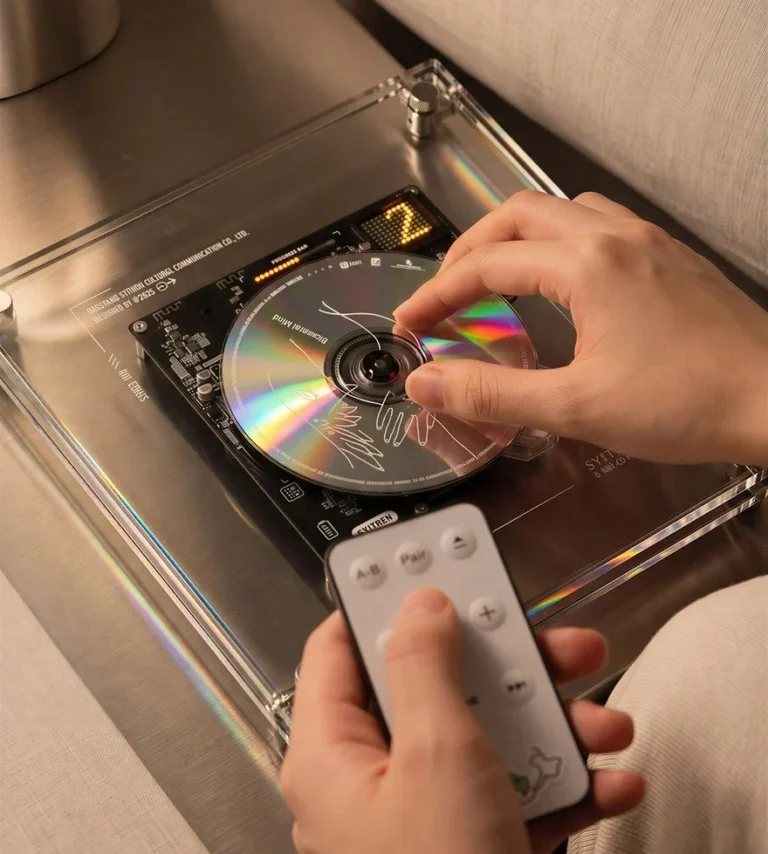
In the context of the home, this could mean a smart appliance that requires a conscious, manual gesture rather than an automated, invisible command, or a piece of furniture that develops a patina over time, forcing a relationship between the object and the owner. By removing every "extra click," Lee argues that we often strip products of the tactile, emotional markers that turn a house into a home.
The Fusion Forward Mandate: A Call to Intention
As a juror for the Fusion Forward: Design for Home competition, Lee is tasked with evaluating how designers reconcile form, material selection, and utility. She is not looking for the most efficient widget; she is looking for a story.
"Have a clear point of view that goes beyond just solving a problem," Lee advises prospective entrants. "Why is your approach the best path forward? How do your values manifest in your design? Does it resonate at an emotional level that goes beyond pure function?"
The Evolution of the Design Brief
The competition, which challenges designers to innovate for the domestic environment, serves as a microcosm for the industry’s current identity crisis. Lee notes that the design field is currently in a "moment of reckoning."
"This moment of rapid change is introducing new tools and practices that provide an opportunity for us, as designers, to deeply reflect on the role we play, the values we hold, and the outcomes we want to shape," she says. "It’s challenging us to approach our work with refreshed purpose and intention."
The Interdisciplinary Throughline
Lee’s expertise is not confined to the boardroom. As a co-instructor for IDEO U’s Creative Thinking for Complex Problem Solving and a member of the design team for the Aspen First Movers Fellowship, she has spent years observing how leaders approach systemic challenges.
Across these roles, a pattern emerges: Lee prioritizes the reaction over the function.
- Healthcare: Applying design thinking to patient journeys, where friction—in the form of patient-provider communication—is actually a necessary component of trust-building.
- Circular Economy: Viewing the lifecycle of a product not as a linear path, but as a circular system that requires the consumer to participate in the "maintenance" of the product.
- Digital Design: Advocating for "responsible" digital experiences that respect the user’s time and mental health, even if that means the interface is less "addictive."
In all three domains, Lee’s work demonstrates that function is merely the "price of admission." True innovation, she argues, comes from the beliefs embedded within the design.
Implications for the Future of Home Design
What does this mean for the future of the home? If the trend toward hyper-automation continues unabated, we risk living in environments that are perfectly optimized but emotionally sterile.
Lee’s stance suggests a future where "Domestic Design" pivots toward:
- Tactility: A return to materials that age and evolve.
- Intentionality: Products that require the user to be present and engaged.
- Values-Driven Development: A move away from "problem-solution" binaries toward products that align with the user’s ethical and emotional worldview.
For those preparing their submissions for Fusion Forward, this is a critical differentiator. The winning designs will likely be those that demonstrate a deep understanding of human behavior—designs that aren’t afraid to ask something of the people who interact with them.
Closing Thoughts for Entrants
As the deadline for Fusion Forward (September 28) approaches, the competition stands as a testament to the evolving nature of design. The total prize pool of $9,750 is secondary to the influence a winning design can have on the future of the domestic space.
For Michelle Lee, the jurying process will be an exercise in listening. She will be looking past the slick renderings and the polished CAD models to find the "humanity" in the work. In a world that is increasingly automated and optimized, the most radical act a designer can perform is to reintroduce a little bit of friction—a little bit of soul—back into the objects we live with every day.
Designers who wish to succeed in this competition—and in their broader careers—would do well to heed Lee’s advice: Stop trying to solve the problem for a second, and start thinking about the experience you are creating. Is it a shortcut, or is it a connection?
Competition Details:
- Event: Fusion Forward: Design for Home
- Organizer: Core77 & Autodesk Fusion
- Categories: Three distinct categories for domestic innovation
- Prizes: $9,750 in total awards
- Submission Deadline: September 28
- Call to Action: Entrants are encouraged to emphasize their unique point of view and the emotional resonance of their design proposals.
About the Author