In the high-stakes world of luxury fashion, where brand prestige has traditionally been measured by exclusivity and craftsmanship, a new metric is beginning to dominate the boardroom: the carbon footprint. Kering, the French multi-billion-dollar powerhouse overseeing iconic houses such as Gucci, Saint Laurent, and Bottega Veneta, has emerged as a vanguard in this transition. According to its latest impact report, the group has achieved a landmark one-third reduction in its absolute greenhouse gas (GHG) emissions since 2022, signaling a profound shift in how the luxury sector interacts with the environment.
This achievement is not merely a byproduct of market fluctuations but the result of a decade-long, data-driven strategy. By integrating environmental accounting into its core financial logic and overhaulings its supply chain from the soil up, Kering is attempting to decouple business growth from environmental degradation.
Main Facts: A Quantitative Leap in Sustainability
The core of Kering’s recent success lies in a multi-pronged approach to decarbonization that targets the most carbon-intensive stages of the luxury lifecycle. According to the impact report published in June, the $14.5 billion conglomerate saw a 4 percent decrease in emissions from its direct operations and electricity (Scope 1 and 2). However, the most significant progress occurred in Scope 3—specifically in land use and agriculture—where emissions were slashed by a staggering 28 percent.
This reduction is largely attributed to Kering’s aggressive pivot toward regenerative agriculture and recycled materials. The company has identified that raw material production and processing account for approximately 63 percent of its total environmental impact, with manufacturing contributing another 8 percent. By focusing on these high-leverage areas, Kering has managed to move the needle on its absolute emissions rather than just its intensity.
Key pillars of this transformation include:
- The Environmental Profit and Loss (EP&L) Account: A proprietary tool that places a monetary value on the company’s natural resource consumption.
- Regenerative Sourcing: A transition away from traditional intensive farming toward practices that restore soil health and sequester carbon.
- Circular Design: Investing in the resale market and designing products for longevity, repairability, and eventual disassembly.
- Centralized Purchasing: Leveraging the group’s collective scale to demand higher environmental standards for gold, leather, and textiles.
Chronology: The Decade of Transformation
Kering’s journey toward its current sustainability status did not happen overnight. It is the result of a deliberate, phased implementation of green policies that began over a decade ago.
2012–2014: Establishing the Foundation
The appointment of Marie-Claire Daveu as Chief Sustainability and Institutional Affairs Officer in 2012 marked a turning point. Coming from a background in the French government, Daveu brought a regulatory and systemic perspective to the role. In 2014, Kering launched its annual EP&L statement. This was a revolutionary step in corporate reporting, as it forced the company to acknowledge the "hidden costs" of its business model, such as water pollution and land-use changes, which are typically omitted from standard balance sheets.
2017–2019: Scaling and Innovation
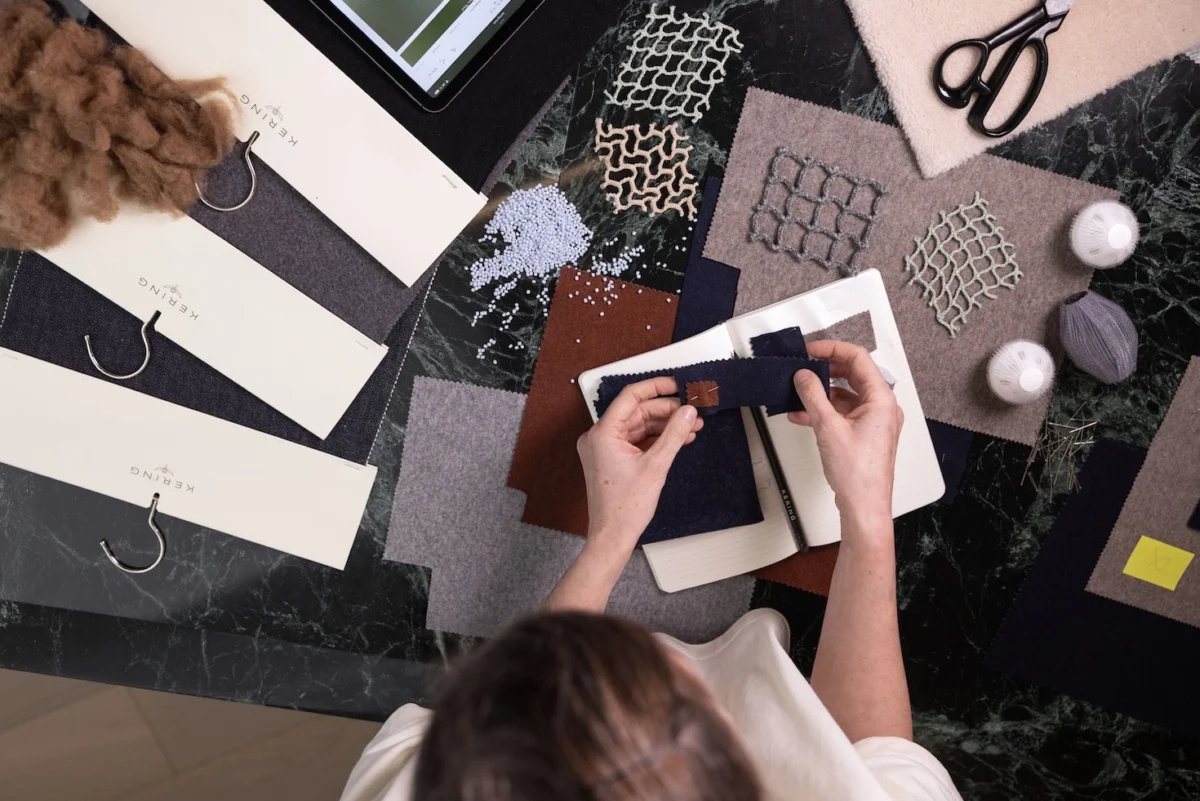
By 2017, the group began centralizing its purchasing power to influence the market. The "Kering Gold Framework" was established to ensure that gold was either certified recycled or sourced from artisanal mines with Fairtrade or Fairmined certifications. In 2019, the launch of Kering Ventures signaled the group’s intent to invest in the future of material science, providing capital to startups like VitroLabs (lab-grown leather) and Sqim (mycelium-based materials).
2022–2024: The Acceleration Phase
The most recent window has seen the most dramatic results. In 2024, the group launched the Kering Accelerator for Regenerative Materials. This initiative was designed to scale the procurement of cotton, wool, and cashmere from farms using regenerative techniques. By pre-reserving orders, Kering provides economic stability to farmers, allowing them to transition away from chemical-heavy industrial farming. Simultaneously, the group expanded its "Circular Hub" in Tuscany, focusing on the end-of-life management of luxury goods.
Supporting Data: The Mechanics of Impact
To understand how Kering achieved a 33% reduction in emissions, one must look at the granular data governing their supply chain. The EP&L system catalogs five key areas: emissions, water use, waste, land use, and pollution.
Raw Material Dominance
Kering’s data reveals that the vast majority of environmental damage occurs at the very beginning of the supply chain.
- Raw Materials & Processing: 63% of total impact.
- Manufacturing: 8% of total impact.
- Direct Operations: 4% of total impact.
By focusing on the 63% segment, Kering has prioritized the replacement of "virgin" materials with lower-impact alternatives. The Material Innovation Lab (MIL) in Milan has now identified over 600 suppliers capable of providing these alternatives. Furthermore, the company has achieved 98% traceability for its key fibers back to the country of origin, a level of transparency almost unheard of in the complex global fashion industry.
The Regenerative Shift
The 28 percent cut in land-related emissions is a direct result of the Kering Accelerator for Regenerative Materials. Regenerative farming goes beyond "organic" by actively restoring the ecosystem. It involves no-till farming, cover cropping, and diverse crop rotations that pull CO2 out of the atmosphere and store it in the soil. For a company that relies heavily on animal hides and natural fibers, this shift is essential for long-term viability in a warming world.
Official Responses: Governance as the Catalyst
The leadership at Kering maintains that these results are inseparable from the company’s internal governance structure. Marie-Claire Daveu emphasizes that sustainability cannot be a "siloed" department if it is to succeed.
“Governance is key because if sustainability is not at the right level… it’s only a word,” Daveu stated. “The real sustainability is really to change the business model and continue to develop our business for the long run.”
Daveu’s role is unique in its seniority; she reports directly to the executive leadership, ensuring that environmental targets are weighed alongside financial ones. This top-down mandate allows individual brands—like Gucci or Saint Laurent—to maintain their creative independence while adhering to a strict group-wide environmental framework.
Furthermore, Daveu views the potential "constraints" of sustainability as a boon for the creative process. “It’s very important to be sure that designers understand how much it’s key, and that they don’t see sustainability as a constraint but more as a way to stimulate creativity,” she noted. This philosophy is being institutionalized through collaborations with world-renowned universities, including HEC Paris, the London College of Fashion, and Parsons School of Design, where Kering helps shape the curriculum for the next generation of creative directors.
Implications: The Future of Circular Luxury
Kering’s progress has significant implications for the broader fashion industry, particularly regarding the concept of the "Circular Economy." For decades, fashion has operated on a linear "take-make-waste" model. Kering is attempting to close that loop.
The Resale Revolution
The company’s 5 percent stake in Vestiaire Collective is a strategic bet on the longevity of luxury goods. Unlike "fast fashion," which is designed for obsolescence, luxury items are inherently durable. Daveu argues that resale is not just an environmental strategy but a social one. It allows younger generations, who may be more climate-conscious and price-sensitive, to enter the luxury market without the environmental footprint associated with producing a new item.
Design for Disassembly
The Gucci "Circular Hub" in Tuscany represents the industrial side of this vision. By training designers to construct products that can be easily repaired or disassembled, Kering is preparing for a future where materials are recycled back into the luxury ecosystem. If a leather bag is designed so that its metal hardware can be popped off and its leather panels can be detached without damage, those materials retain their value for a "second life."
A Benchmark for the Industry
As the fashion industry faces increasing regulatory pressure—such as the EU’s Strategy for Sustainable and Circular Textiles—Kering’s data-heavy approach provides a blueprint for compliance. The 33% reduction in absolute emissions proves that it is possible for a massive, multi-national corporation to grow its brand value while shrinking its ecological footprint.
However, challenges remain. Scaling these innovations across thousands of global suppliers is an immense logistical task. Furthermore, as Kering continues to grow, maintaining absolute (rather than just relative) emission reductions will require even more radical innovations in material science and consumer behavior.
For now, Kering has sent a clear message to the market: the future of luxury is not just about who wears the brand, but what the brand leaves behind in the soil, the water, and the atmosphere. By treating the environment as a line item on the profit and loss statement, Kering is proving that in the 21st century, the most luxurious thing a company can offer is a viable future.
About the Author