The legal landscape for third-party logistics (3PL) providers and freight brokers is undergoing a seismic shift. In the wake of the Supreme Court’s landmark decision in Montgomery vs. Caribe Transport II, the long-standing shield provided by the Federal Aviation Administration Authorization Act (F4A) has been fundamentally compromised. As federal courts navigate a surge of negligence and liability claims, the industry is closely monitoring two pivotal cases—one involving industry titan J.B. Hunt and another centered on the risks of unauthorized double-brokering—that threaten to redefine the standard of care expected of brokers.
Main Facts: The End of the F4A Shield?
For decades, freight brokers relied heavily on the F4A to dismiss lawsuits stemming from highway accidents. The act prohibits states from enacting laws that impact the "price, route, or service" of motor carriers. Historically, brokers argued that negligence claims—such as those involving the hiring of an unsafe carrier—were preempted by this federal statute.
However, the Supreme Court’s unanimous decision in Montgomery effectively pierced this armor. By ruling that the "safety exception" of the F4A applies to brokers—classifying them essentially as participants in the movement of motor vehicles—the Court opened the door for plaintiffs to hold 3PLs accountable for the conduct of the carriers they select.
The current litigation climate is characterized by high-stakes "nuclear verdicts." Notably, C.H. Robinson is currently appealing a staggering $600 million verdict, while companies within the Penske network have found themselves ensnared in appellate reversals that highlight the newfound vulnerability of brokerage firms in fatal crash litigation.
Chronology of Current Legal Battles
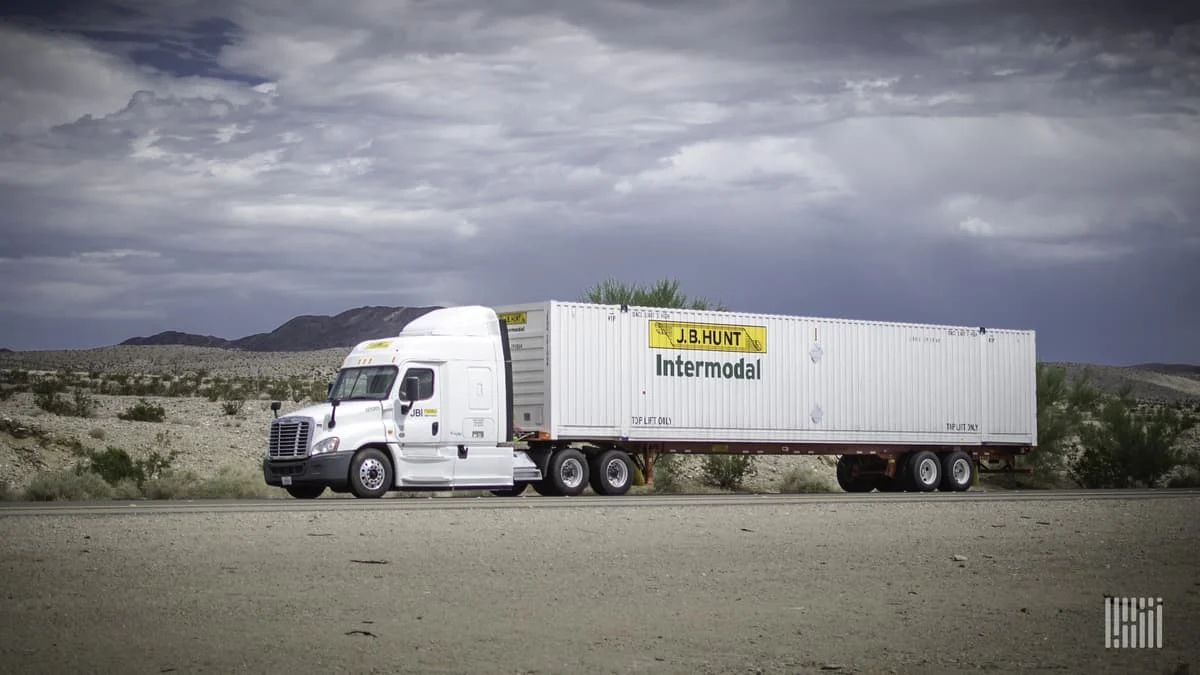
The J.B. Hunt Litigation (Arizona)
The case currently pending in the U.S. District Court for Arizona stems from a catastrophic October 2023 crash. The plaintiffs—family members of those killed or injured in the accident—have named J.B. Hunt, the carrier Borderlanders, and the individual driver, Shokhijakhon Bekmuradov, as defendants.
The timeline of this litigation has been compressed by the urgency of the plaintiffs’ claims. J.B. Hunt filed for summary judgment in June 2024, attempting to extricate its brokerage arm from the suit by asserting that its role was strictly limited to that of a broker, not a carrier. The plaintiffs submitted their opposition earlier this month, and the court is now deliberating on whether the case should proceed to trial or be dismissed as to J.B. Hunt.
The AONE Brokerage Case (Nevada)
Simultaneously, a distinct and complex legal battle is unfolding in Nevada, specifically addressing the murky world of double-brokering. In Hardy vs. Singh, the court is examining a July 2022 collision involving a driver for GRK Transport. The chain of custody for the load in question is a central point of contention: AONE Brokerage booked the load, tendered it to Lucky Transport, which then re-brokered it to GRK without authorization.
On August 11, 2024, Judge Anne Traum denied summary judgment motions from both the plaintiffs and the defendants. This ruling is significant because it suggests that the court is prepared to examine the "chain of causation" and the extent to which a broker’s knowledge of unauthorized subcontracting constitutes a breach of the duty of care.
Supporting Data: Safety Records and Negligent Hiring
The core of the plaintiffs’ argument in the J.B. Hunt case centers on the concept of "negligent hiring." The lawsuit alleges that J.B. Hunt knew, or reasonably should have known, that Borderlanders had a documented history of safety failures.
Unlike the C.H. Robinson case, where the carrier in question held a "Satisfactory" rating from the Federal Motor Carrier Safety Administration (FMCSA), Borderlanders reportedly operated without any formal FMCSA safety rating. Despite this, the plaintiffs allege the carrier possessed a disturbing history of "safety assessment alerts," frequent crashes, and consistent inspection violations. Specifically, the complaint highlights a pattern of improper lane changes, failure to obey traffic control devices, and, perhaps most critically, an inability of the driver to communicate in English—a factor that may have contributed to the accident.
In the Nevada case, the data centers on regulatory compliance. Judge Traum noted that federal regulations prohibit entities lacking a brokerage license from acting as brokers. By allegedly knowing that Lucky Transport was regularly subcontracting loads to unlicensed entities like GRK, AONE is accused of failing to uphold the standard of care required of a licensed 3PL.
Official Responses and Judicial Perspectives
J.B. Hunt’s Defense
In its motion for summary judgment, J.B. Hunt has maintained a rigid distinction between its brokerage operations and the actual transportation of the freight. The company argues that under its Outsource Carrier Agreement (OCA), Borderlanders assumed sole responsibility for hiring, training, and supervising its drivers. J.B. Hunt’s legal team contends that there is "no basis for finding J.B. Hunt vicariously liable for Bekmuradov’s actions," emphasizing that Borderlanders was the sole motor carrier for the load.
The Plaintiffs’ Rebuttal
The plaintiffs argue that J.B. Hunt’s contractual language cannot override its ethical and legal obligation to vet the safety of its partners. They further allege that J.B. Hunt misrepresented itself to the shipper, Lincare, by implying that the load would be transported on a company-owned truck, thereby creating an expectation of safety that the brokerage failed to fulfill.
The Nevada Judicial Stance
Judge Traum’s ruling against summary judgment in the AONE case provides a rare look into how courts are viewing the "duty of care" in a post-Montgomery world. She noted that:
- "There is evidence to show that AONE breached their duty of care when they continued to do business with Lucky even though they knew that Lucky was subcontracting their loads."
- "AONE contracting with Lucky could have been unreasonable because illegal double brokering can put more high-risk drivers on the road."
The judge’s skepticism regarding the "intervening bad acts" defense—where AONE claimed the driver’s negligence severed their liability—suggests that brokers can no longer simply wash their hands of the risks associated with the carriers they choose, especially when those carriers operate outside of legal or safety standards.
Implications for the 3PL Industry
The implications of these developments are profound. For the 3PL industry, the "Montgomery effect" represents a transition from a period of relative immunity to an era of heightened vigilance.
1. Enhanced Vetting Protocols
Brokers are likely to overhaul their carrier vetting processes. Relying solely on FMCSA ratings may no longer be a sufficient defense in court. Companies will likely begin requiring more granular data on driver experience, language proficiency, and internal safety training programs before tendering loads.
2. The Risks of Double-Brokering
The Nevada case sends a clear warning: brokers who turn a blind eye to unauthorized subcontracting do so at their own peril. The courts are increasingly viewing the knowledge of sub-tier carriers as an extension of the broker’s own operational responsibility.
3. Insurance and Risk Management
As the probability of "nuclear verdicts" increases, the cost of liability insurance for 3PLs is expected to rise. Brokers may seek to restructure their contracts to include more robust indemnification clauses, though as the J.B. Hunt case demonstrates, such contracts may provide little protection when the core accusation is one of direct negligence in hiring.
4. A Shift in Market Dynamics
Smaller, less-vetted carriers may find it increasingly difficult to secure loads from major brokers. This could lead to a consolidation in the market, where only carriers with impeccable safety records and transparent operating structures remain viable partners for major 3PLs.
In conclusion, the judiciary is signaling that the era of "broker as a mere intermediary" is over. Whether through direct negligence in hiring or the tacit endorsement of illegal subcontracting, brokers are being held to a standard of safety that aligns with their influential role in the transportation ecosystem. As the industry awaits the decisions in Arizona and Nevada, the message is clear: in the post-Montgomery landscape, safety is no longer just a carrier’s concern—it is a broker’s liability.
About the Author