By [Your Name/Editorial Desk]
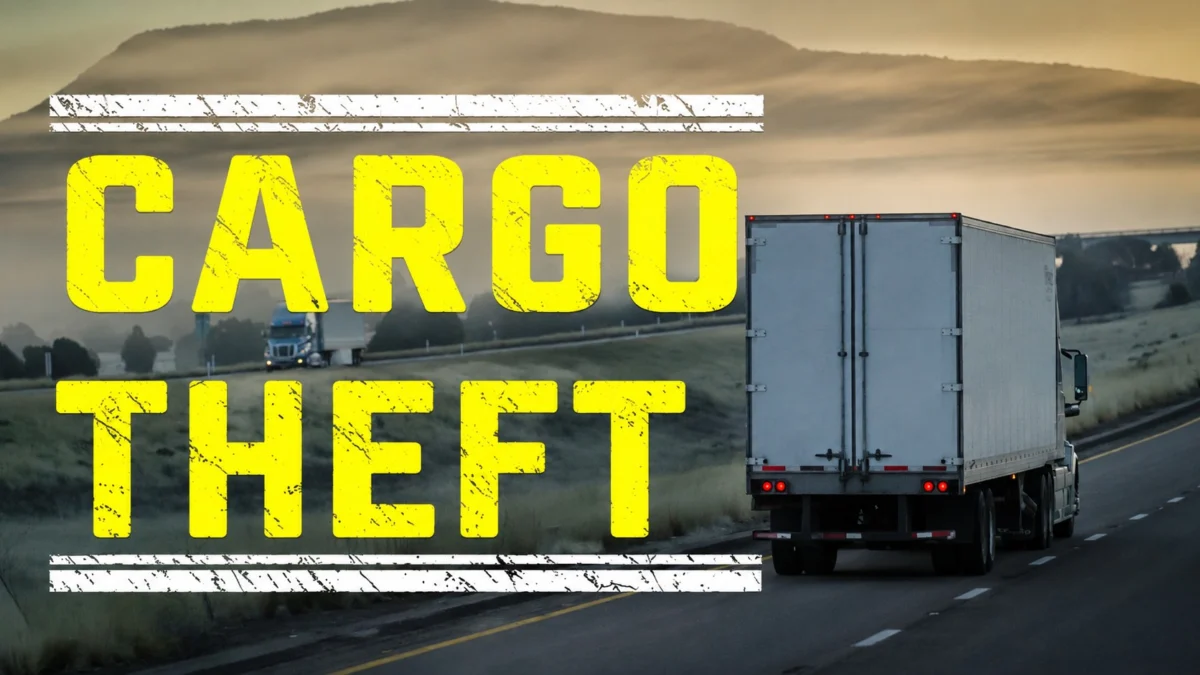
The logistics landscape across the United States-Mexico border is currently defined by a sharp dichotomy: while economic indicators show record-breaking manufacturing output and strategic infrastructure investment, the daily reality for freight operators remains a high-stakes struggle against organized crime. As Nuevo León cements its status as a global manufacturing powerhouse and Japanese logistics giants deepen their North American footprint, the persistent threat of cargo theft continues to cast a long shadow over the most vital supply chain corridors in Mexico.
Main Facts: The Economic Boom and the Security Paradox
The narrative of Mexico’s freight sector in mid-2026 is one of two competing trends. On one hand, the state of Nuevo León, anchored by the industrial hub of Monterrey, has posted a staggering $17 billion in IMMEX (Manufacturing, Maquiladora, and Export Services) exports through the first five months of the year—an 8.9% year-over-year increase. This surge highlights the region’s role as the primary beneficiary of nearshoring trends, attracting massive foreign direct investment in automotive, electronics, and industrial sectors.
Simultaneously, major global players are fortifying their North American logistics networks. Mitsubishi Logistics recently announced a $40 million investment in two massive U.S.-based distribution centers, signaling long-term confidence in the stability of cross-border trade flows.
However, this growth is tempered by an enduring security crisis. While government officials point to statistical declines in cargo theft, industry experts from risk management firms like Overhaul paint a more sobering picture. The reality on the ground remains marked by violent hijackings, evolving criminal syndicates, and a high concentration of theft in the country’s most economically active regions.
Chronology: A Multi-Year Battle for Highway Safety
The struggle to secure Mexico’s highways has been a long-term project for federal authorities. The current landscape is the result of years of fluctuating crime rates and shifting government strategies:
- 2018–2025: Mexico experienced a period of significant volatility in freight security. However, data indicates an overall downward trend in cargo theft, with reports falling by approximately 52.07% during this seven-year window.
- 2024–2025: The federal government launched the "Balam" highway security strategy, a targeted intervention operating across 12 states. This period saw a 37.19% reduction in incidents, a milestone officials frequently cite to demonstrate the effectiveness of increased National Guard presence.
- Q1 2026: Initial reports for the year continued to show a cooling in crime rates. Federal officials logged 2,519 cargo thefts in the first half of the year, maintaining a trajectory that authorities project will lead to a 37% annual reduction by the end of 2026 compared to the 6,263 incidents reported in 2025.
- August 2026: A surge in enforcement activity, highlighted by the arrest of three key suspects in Veracruz, underscored the government’s shift toward dismantling organized criminal cells rather than merely patrolling highways.
Supporting Data: The Geography of Risk
While the federal government’s statistics reflect a macro-level improvement, data from Overhaul’s Mexico Q2 2026 Cargo Theft Report reveals that these improvements are unevenly distributed.
The Epicenter of Crime
The Center and West regions of Mexico remain the most dangerous corridors for freight. In the second quarter of 2026, these two regions accounted for 77% of all reported cargo thefts, with the Center region alone representing 46% of the national total. The three most affected states—the State of Mexico, Puebla, and Guanajuato—account for nearly half of all nationwide activity.
Notably, while theft has decreased in the State of Mexico and Puebla, it is trending upward in other key corridors, including San Luis Potosí, Jalisco, Michoacán, and Tlaxcala. This suggests a "balloon effect," where increased security in one region forces organized crime groups to migrate their operations to adjacent, less-guarded territories.
The Targeted Cargo
The nature of the goods being stolen provides insight into the motives of the criminal groups. Food and beverage shipments continue to be the primary target, accounting for 30% of all incidents. This is followed by miscellaneous freight (11%), auto parts (9%), construction/industrial products (9%), and fuel (7%).
Perhaps most alarming is the rise in agricultural cargo theft—including fertilizers and pesticides—which saw a four-percentage-point increase year-over-year. This indicates that criminal groups are increasingly diversifying their portfolios to target the agricultural supply chain, which is essential to regional food security.
Temporal Patterns
The predictability of these crimes remains a concern for logistics providers. Criminal activity follows a rigid schedule: 85% of thefts occur during the business week (Monday–Friday). The highest-risk windows occur during evening hours, specifically between 6 p.m. and midnight, and early morning surges between 3 a.m. and 7 a.m. This data allows for more tactical route planning, yet it also exposes the inherent vulnerability of trucks moving during off-peak hours when police visibility is lower.
Official Responses: The "Balam" Strategy
Guillermo Briseño Lobera, commander of Mexico’s National Guard, has been the primary voice defending the federal government’s record. The Balam strategy, which relies on increased surveillance, intelligence-led patrolling, and coordination with state authorities, has been credited with major victories on specific routes.
Most notably, the government reported an 85.7% drop in thefts along the Mexico-Querétaro route and a 90% reduction along the Mexico-Puebla corridor. In a significant win for security forces, the Mazatlán-Culiacán highway reported zero incidents during the latest tracking period.
These successes, according to the Secretariat of Security and Citizen Protection (SSPC), are the direct result of "express kidnappings" and organized crime operations being dismantled at the root. The August 15 arrest of a criminal cell operating on Federal Highway 150-D—a critical artery connecting the port of Veracruz to the interior—is being touted as a blueprint for future operations, focusing on the corruption of local officials and the dismantling of the logistical infrastructure used by criminals.
Implications: A Dual Reality for Investors
The persistence of violence—76% of all cargo thefts in Q2 involved some form of physical force—remains a major deterrent for logistics providers. While the overall volume of theft may be down, the increased danger to individual drivers and the sophisticated nature of these attacks create a high-risk environment that necessitates constant adaptation.
The Resilience of Nuevo León
Despite these security challenges, the economic data from Nuevo León is undeniable. As the state accounts for 16% of all national IMMEX exports and hosts over 401,000 workers, it has effectively decoupled its growth from the security volatility found in the center and south. Companies choosing to invest in the north are betting on the long-term benefits of the U.S.-Mexico-Canada Agreement (USMCA) and the stability of the northern logistics corridor, which generally sees different security dynamics than the central highlands.
The Future of Infrastructure
The $40 million investment by Mitsubishi Logistics in Houston and Alabama reflects a strategic move to secure the "end-point" of the supply chain. By expanding capacity in the U.S., these companies are creating a buffer, ensuring that even if goods are delayed or face risks during the transit phase in Mexico, the downstream logistics capabilities remain robust enough to absorb and process the flow of materials.
The Path Forward
For the logistics industry, the path forward requires a hybrid approach. Shippers must continue to rely on real-time telematics, intelligence-based routing, and private security escorts in high-risk zones, even as the National Guard reports progress.
The divide between the "paper" success of declining national statistics and the "ground" reality of violent, organized criminal activity is the central tension of the current Mexican logistics environment. For multinational corporations, the lesson is clear: while Mexico remains the premier destination for nearshoring, the cost of doing business must continue to include robust, proactive security risk management.
As 2026 progresses, the ability of the federal government to scale the successes of the Balam strategy beyond isolated corridors will determine whether the current economic boom can be sustained. For now, the resilience of both the manufacturing sector and the criminal syndicates competing for the spoils of that manufacturing suggests that the "Borderlands" will remain a landscape defined by both immense opportunity and constant, calculated risk.
About the Author