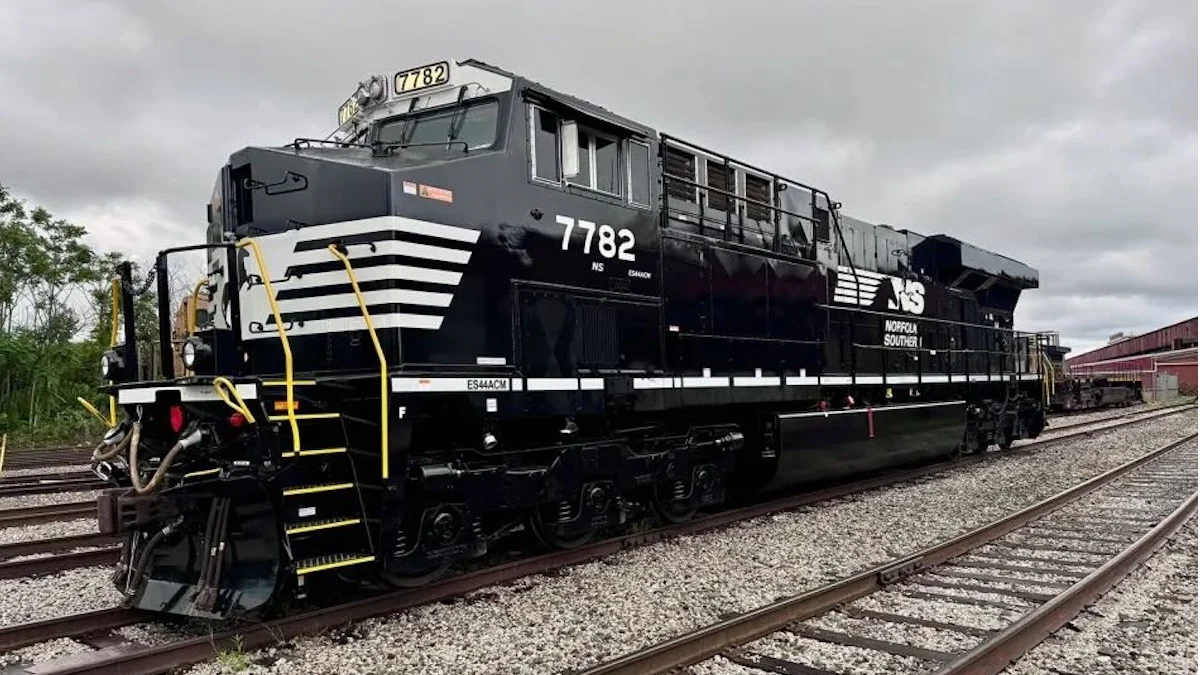
In a move designed to enhance operational efficiency and extend the service life of its critical heavy-haul assets, Norfolk Southern (NYSE: NSC) has announced a significant modernization program in collaboration with rail technology leader Wabtec Corp. (NYSE: WAB). The initiative involves the conversion of 33 existing ES44DC locomotives into high-performance ES44ACM units, a technical upgrade that promises to bolster reliability and reduce maintenance overhead across the railroad’s extensive network.
This project represents the latest milestone in a long-standing industrial partnership between the two companies, signaling a broader trend in the North American freight rail industry: the pivot toward sustainable, tech-integrated, and highly efficient motive power strategies without the capital-intensive requirement of purchasing brand-new locomotives.
The Scope of the Modernization Program
The modernization program focuses on the transformation of the ES44DC, a workhorse of the modern rail fleet. By converting these units to AC-traction—the "M" in the new ES44ACM designation—Norfolk Southern is transitioning from direct current (DC) propulsion to alternating current (AC) propulsion.
AC-traction technology is widely regarded in the rail industry as superior for heavy-haul applications. It offers substantially better low-speed pulling power and improved adhesion, which is essential for traversing the diverse topography of Norfolk Southern’s eastern U.S. network. Beyond the motor swap, the locomotives will receive comprehensive upgrades to their control systems and onboard digital architecture.
Key technological enhancements include:
- Enhanced Locomotive Diagnostics: Real-time monitoring systems that allow maintenance teams to predict and prevent component failures before they result in a service delay.
- Maintenance Planning Integration: Digital tools that feed data back into the railroad’s logistical software, ensuring that service intervals are synchronized with operational demands.
- Increased Productivity: By optimizing the interface between the engine and the rail, the units will deliver higher output with lower lifecycle maintenance requirements.
Chronology of a Longstanding Partnership
The relationship between Norfolk Southern and Wabtec is rooted in deep technical collaboration. Norfolk Southern holds the distinction of being the original launch customer for the ES44DC platform back in 2004. Over the two decades since that initial deployment, the railroad has systematically refined its fleet, utilizing Wabtec’s engineering expertise to adapt to changing freight demands.
Since 2015, the two entities have collaborated on an aggressive fleet renewal strategy, completing more than 1,000 DC-to-AC locomotive conversions. This track record demonstrates a successful blueprint for asset management. Rather than scrapping older, durable chassis, the railroad has opted to "repower and upgrade," essentially giving these locomotives a "second life" that often exceeds the performance parameters of their original factory-new specifications.
The current order for the 33 locomotives began its execution phase this month, with the first upgraded unit already delivered to Norfolk Southern. The program is scheduled to continue in a phased rollout through 2027, with the work being performed at Wabtec’s specialized facilities in Fort Worth, Texas, and Erie, Pennsylvania.
The Economics of Modernization: Why AC Traction?
From an operational perspective, the move from DC to AC traction is a calculated investment in "lifecycle economics." While DC locomotives have served the industry well for decades, their reliance on brush-based motors introduces mechanical friction points that require frequent attention.
AC-traction motors are essentially brushless, which dramatically reduces wear and tear. Furthermore, AC propulsion allows for more precise control of wheel slip. In the heavy-haul freight environment, this means that a train can pull heavier loads up steeper grades in adverse weather conditions—such as rain or snow—without losing traction.
For a Class I railroad like Norfolk Southern, the benefits are threefold:
- Reliability: Fewer mechanical breakdowns mean higher "on-time" performance for customers.
- Asset Value: By upgrading the "brains" and the "muscle" of the locomotive, the railroad avoids the massive capital expenditure (CapEx) required to purchase a brand-new Tier 4-compliant locomotive, while still gaining modern performance levels.
- Environmental Impact: While the primary goal is operational efficiency, the increased efficiency of AC systems often results in improved fuel consumption, contributing to the railroad’s broader ESG (Environmental, Social, and Governance) goals.
Official Perspectives
Leadership from both organizations emphasized that this program is as much about partnership as it is about hardware.
"This investment will improve reliability, increase efficiency, and extend locomotive life, helping us deliver safe, dependable service for customers," said Brian Barr, Chief Operating Officer of Norfolk Southern. "Together with Wabtec, we’re continuing to invest in technologies that improve fleet performance and maximize the value of existing assets."
Sameer Gaur, president of Wabtec’s Freight Services, echoed this sentiment, highlighting the synergy between the two companies. "This new modernization program underscores the strength of our longstanding partnership with Norfolk Southern and our shared focus on delivering operational value," Gaur stated. "By combining innovative technology, engineering excellence, and deep service expertise, we’re helping our customers maximize the value of their assets while positioning their fleet for the future."
Broader Implications for the Freight Rail Sector
The Norfolk Southern-Wabtec agreement serves as a microcosm of the current state of North American rail. As railroads navigate a complex economic landscape characterized by fluctuating fuel prices and intense competition from the trucking sector, the emphasis has shifted toward "Precision Scheduled Railroading" (PSR) and the optimization of existing resources.
Technological Convergence
The integration of "advanced digital technology" into these locomotives points to the "Smart Locomotive" era. By treating locomotives as mobile data centers, railroads can now move from a reactive maintenance model—where parts are fixed after they break—to a proactive, predictive model. This not only saves money but also enhances the overall safety of the network, as automated diagnostics can detect early signs of bearing failure or cooling system degradation long before they become a safety hazard.
Sustainability and Circular Economy
The conversion program is a prime example of the circular economy within industrial manufacturing. By retaining the locomotive frame and heavy structural components, the railroad significantly reduces the carbon footprint associated with manufacturing a brand-new unit. This "reuse" strategy is becoming a cornerstone of industrial sustainability, proving that environmental stewardship can be directly aligned with profitability.
Market Positioning
For Norfolk Southern, maintaining a modernized, reliable fleet is essential for competing in the intermodal, bulk, and automotive freight markets. As rail customers become increasingly focused on supply chain reliability, the ability to guarantee service levels—facilitated by a more robust and technologically advanced fleet—provides a distinct competitive advantage.
Conclusion: Looking Toward 2027
As the modernization program progresses through 2027, the rail industry will be watching the performance metrics of these converted ES44ACM units. If the historical performance of the previous 1,000 conversions is any indicator, Norfolk Southern can expect a significant reduction in road failures and a tangible boost in ton-miles per locomotive day.
In an era where technology is rapidly redefining the heavy-duty transportation sector, the collaboration between Norfolk Southern and Wabtec highlights that the future of rail is not just about building bigger, but about building smarter. Through the strategic application of AC-traction technology and digital oversight, the companies are ensuring that their legacy assets remain the backbone of the North American supply chain for years to come.
For those interested in the evolving landscape of the rail freight industry, stay tuned to ongoing updates regarding fleet modernization and regulatory developments. Industry professionals are encouraged to engage with ongoing dialogues at upcoming sector events, such as the Future of Freight Festival, to better understand how these technical shifts are reshaping the competitive dynamics of global logistics.
About the Author