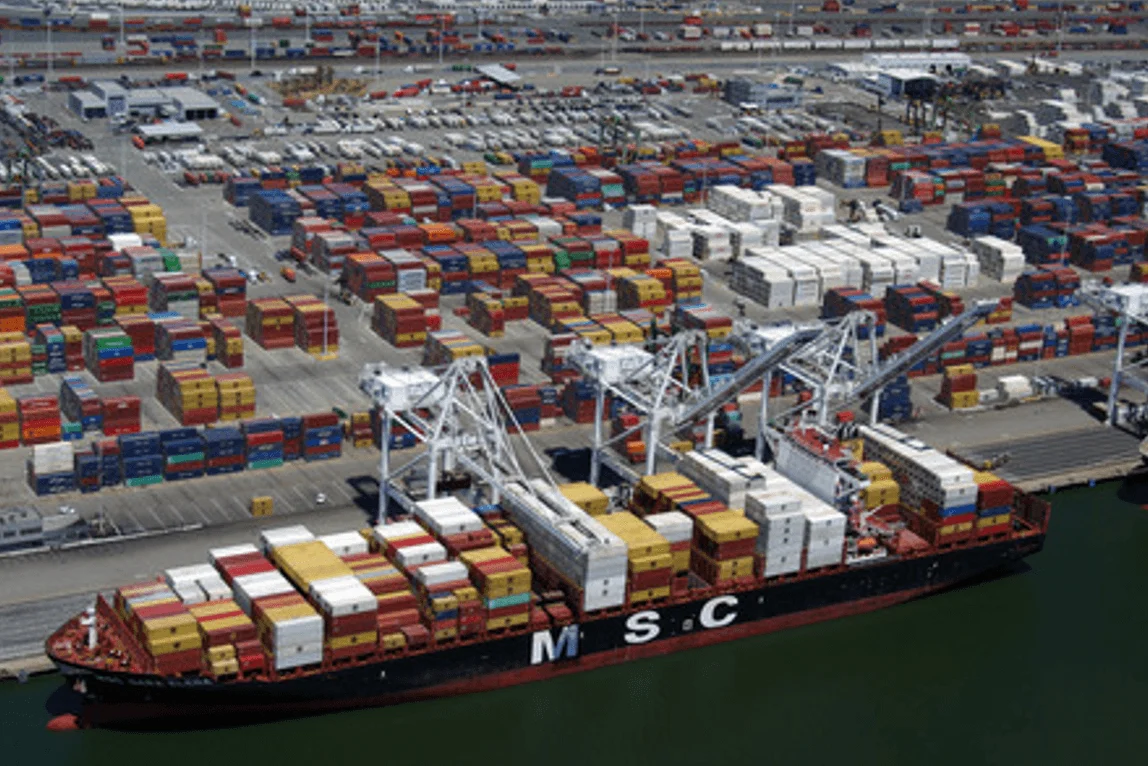
The Port of Oakland, a critical gateway for trans-Pacific commerce and a vital artery for California’s agricultural and manufacturing exports, recently reported its container volume data for July. The results paint a picture of a maritime sector grappling with volatility, as the port navigated what Acting Maritime Director Jason Garben candidly described as a "challenging month."
As the global supply chain continues to adjust to fluctuating consumer demand, geopolitical tensions, and shifting carrier strategies, the Port of Oakland’s performance serves as a bellwether for the broader West Coast logistics landscape. While the year-to-date figures suggest a degree of resilience in core exports, the sharp decline in July’s import numbers and a significant drop in empty container repositioning underscore the precarious nature of the current economic climate.
The Core Data: A Mid-Year Performance Audit
To understand the scope of the challenges currently facing the Port of Oakland, one must look at the granular breakdown of its throughput. Through July, the port has processed a total of 1,294,664 twenty-foot equivalent units (TEUs). This figure represents a 3.8% contraction compared to the same seven-month period in 2025.
The decline is not uniform across all categories of cargo. The port’s "laden volume"—which refers to containers filled with commercial goods—experienced a more modest contraction of 1.5% year-to-date. This stability in laden cargo is largely attributed to a nuanced performance in imports versus exports. Full import volumes have dipped by 3.1% year-to-date, reflecting a cooling in retail and industrial demand. Conversely, full exports have demonstrated surprising tenacity, posting a 0.4% increase, which highlights the port’s role as a primary exit point for U.S. agricultural products and manufactured goods.
The most dramatic shift, however, appears in the movement of empty containers. Year-to-date, the volume of empty boxes moving through the terminal has plummeted by 11.4%. Because empty container movements are often a leading indicator of carrier network adjustments and equipment repositioning strategies, this double-digit decline suggests that ocean carriers are becoming increasingly surgical about where they place their assets in a tightening global market.
Chronology: The July Dip and the Broader 2025 Context
The trajectory of the Port of Oakland throughout 2025 has been one of gradual adjustment. The first half of the year saw the port attempting to stabilize after the significant supply chain disruptions of the previous cycle. However, July marked a distinct inflection point.
The July Snapshot
When isolating the data for July alone, the year-over-year comparisons reveal the intensity of the "challenging" nature of the month. Total volume for the month fell by 11.4% compared to July 2025. This was driven by a sharp 14.0% decrease in full imports (totaling 79,426 TEUs) and an 8.5% decline in full exports (totaling 60,005 TEUs).
The First Half Performance
Prior to July, the port had shown relative stability. The cumulative decline of 3.8% in total TEUs for the year reflects the weight of the July results dragging down the more consistent, albeit flat, performance of the preceding six months. The industry is now watching closely to see if July represents an anomaly—a temporary lull caused by seasonal inventory shifts or carrier schedule adjustments—or if it is the beginning of a broader downward trend in Pacific trade volume.
Supporting Data: Why "Empty" Movements Matter
Industry analysts often focus on full containers because they represent direct revenue and economic activity. However, the 11.4% year-to-date drop in empty container movements at Oakland is highly significant for several structural reasons.
- Carrier Efficiency: Ocean carriers are currently under immense pressure to maximize revenue per TEU. By reducing the number of empty containers being moved, they are effectively tightening their global networks and focusing on routes that offer the highest margins.
- Trade Imbalances: The Port of Oakland has historically struggled with the "empty" problem—the need to export empty containers back to Asia to satisfy the high demand for Asian-made imports. A reduction in empty movements suggests that the balance between imports and exports is shifting, or that carriers are utilizing different hubs to manage their equipment flows.
- Port Throughput Costs: Managing empty containers is a labor-intensive and space-consuming process for terminal operators. While the decline in volume may reduce the immediate logistical burden at the port, it also signifies a change in the velocity of the supply chain.
Official Responses: A Guarded Optimism
Despite the sobering statistics, leadership at the Port of Oakland maintains a stance of cautious optimism. Jason Garben, the Acting Maritime Director, has emphasized that while July was difficult, the broader picture for the year remains grounded.
"July was a challenging month compared to last year, but our laden volumes remain essentially flat year to date and exports are slightly ahead of 2025," Garben stated in a press release following the data disclosure. His comments highlight the importance of looking past the monthly volatility to recognize that the core business of the port—moving goods to and from the region—is still functional and performing within expectations.
Furthermore, Garben pointed to external indicators that suggest the tide may turn before the end of the year. "Despite uncertainty in the market, we are hearing a positive outlook from our ocean carrier partners for the remainder of the year," he added. This sentiment suggests that the carriers, who hold the pulse of global trade, anticipate a recovery in volume as we head into the peak shipping seasons that typically define the late third and fourth quarters.
Implications for the Future: What Lies Ahead?
The data from July 2025 forces a deeper conversation about the future of West Coast logistics. The Port of Oakland is not merely a transit point; it is a vital economic engine for Northern California. A sustained downturn in cargo volume has cascading effects on labor, drayage trucking, rail connectivity, and local warehousing.
The Peak Season Question
As the industry approaches the traditional "peak season"—the period leading up to the holiday retail rush—the Port of Oakland will be a critical site to watch. If the "positive outlook" shared by carriers translates into increased vessel calls and cargo throughput, the July dip may be remembered as a short-term correction. If, however, the decline continues, it may signal that macroeconomic factors, such as inflation and reduced consumer spending, are exerting a stronger influence than initially anticipated.
Infrastructure and Competitive Positioning
Oakland faces stiff competition from other major North American gateways. To maintain its competitive edge, the port has been investing in infrastructure, gate efficiency, and intermodal connectivity. The ability to handle larger vessel classes and the efficiency of the on-dock rail system will be the primary determinants of how well the port captures volume as the market begins to rebound.
The Geopolitical and Regulatory Landscape
Global trade is never immune to the broader political climate. Trade policies between the United States and major Asian manufacturing hubs, environmental regulations affecting drayage trucks, and the ongoing push for supply chain decarbonization are all factors that will influence the port’s volume in the coming years. The Port of Oakland’s ability to remain flexible and responsive to these shifts will be essential.
Conclusion: Resilience in a Volatile Era
The July 2025 container volume report from the Port of Oakland is a stark reminder of the complexities inherent in global logistics. While a 11.4% drop in monthly volume and a 3.8% decline in year-to-date TEUs are undoubtedly concerning, they must be weighed against the persistent demand for the region’s exports and the strategic adjustments being made by ocean carriers.
The maritime industry is currently in a state of recalibration. The era of unchecked growth following the pandemic has given way to an era of efficiency and strategic alignment. The Port of Oakland is navigating this transition with a focus on long-term stability rather than short-term spikes. With laden volumes remaining flat and a hopeful outlook from industry partners, the port appears well-positioned to weather the current turbulence.
As we move further into the second half of 2025, the focus will shift from the challenges of July to the opportunities of the final quarter. Whether the "positive outlook" from carriers manifests into a sustained recovery will ultimately determine the port’s fiscal and operational health for the year. For now, the Port of Oakland remains a vital, resilient, and essential component of the global supply chain, ready to adapt to whatever the shifting winds of trade bring next.
About the Author