By [Your Name/Editorial Desk]
The landscape of North American trade is undergoing a profound metamorphosis. As supply chains realign to mitigate geopolitical risks and leverage the proximity of manufacturing hubs, the U.S.-Mexico border has emerged as the heartbeat of global logistics. This week’s Borderlands Mexico report examines the strategic pivots being made by regional leaders, from the industrial ambitions of Nuevo León to critical water security investments and the expansion of industrial capacity in Southern California.
The "Gold Triangle" Ambition: Nuevo León’s Strategic Pivot
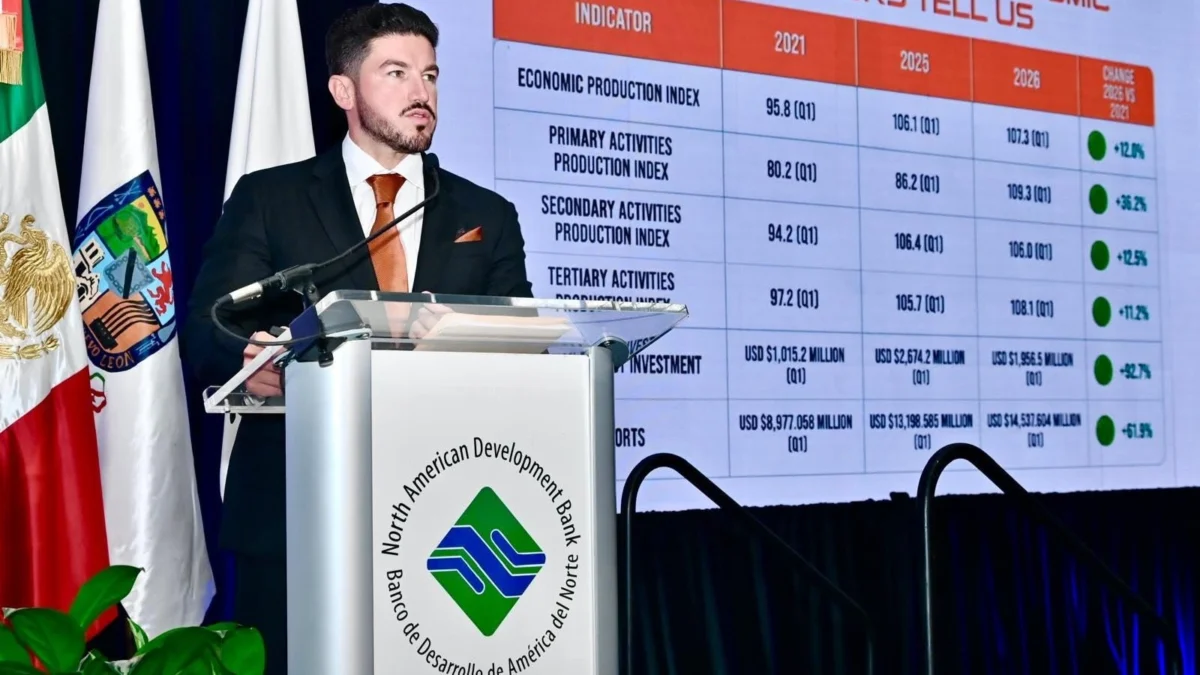
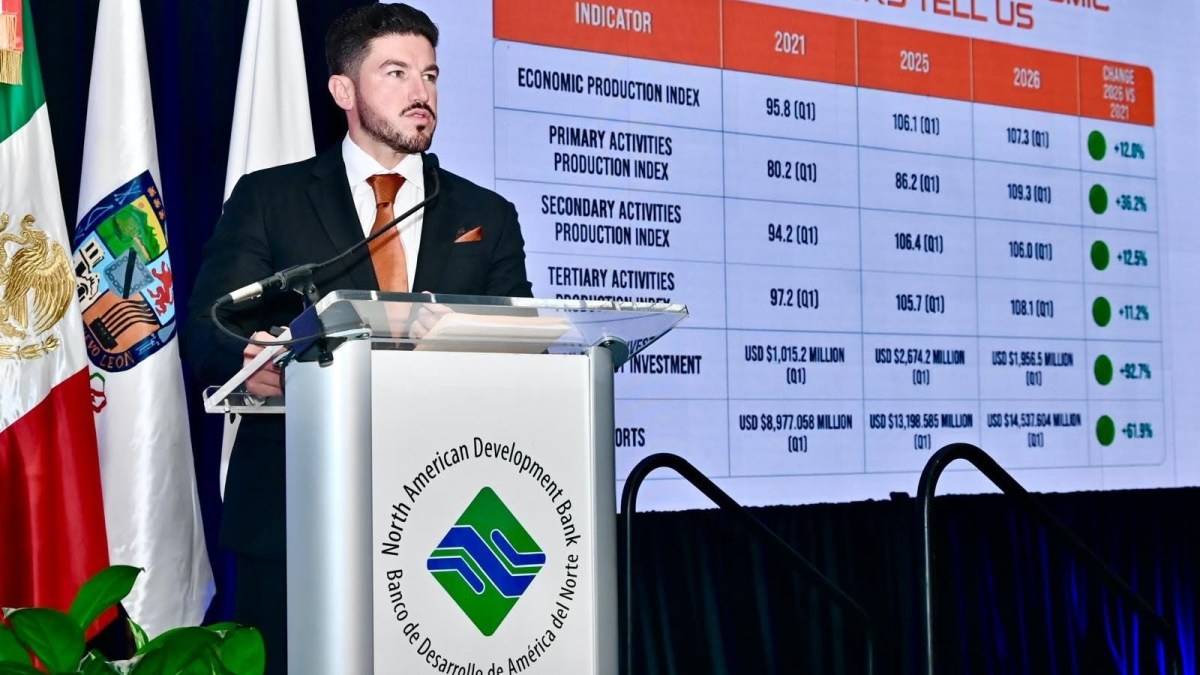
Nuevo León Governor Samuel García has set his sights on a bold vision: transforming his state into the primary gateway for North American freight. Speaking at the 2026 North American Development Bank (NADBank) Summit in San Antonio, Governor García unveiled an aggressive blueprint for regional integration, centered on a trade corridor connecting Monterrey with the economic powerhouses of Laredo, San Antonio, Houston, and Dallas.
The Rise of the "Gold Triangle"
García characterizes the Monterrey-Houston-Dallas axis as the "Gold Triangle." By tightening economic, logistical, and infrastructural ties within this corridor, Nuevo León aims to capture the lion’s share of nearshoring activity. The Governor’s strategy is built on the premise that as North American companies move production away from overseas markets, they require a seamless, high-speed conduit to the U.S. consumer market.
Infrastructure as the Engine of Growth
The core of García’s pitch is a massive $17 billion investment in infrastructure. This includes not only the expansion of highways and airport connectivity but also the development of new border crossings, including a dedicated freight crossing and the innovative "Green Corridors" project.
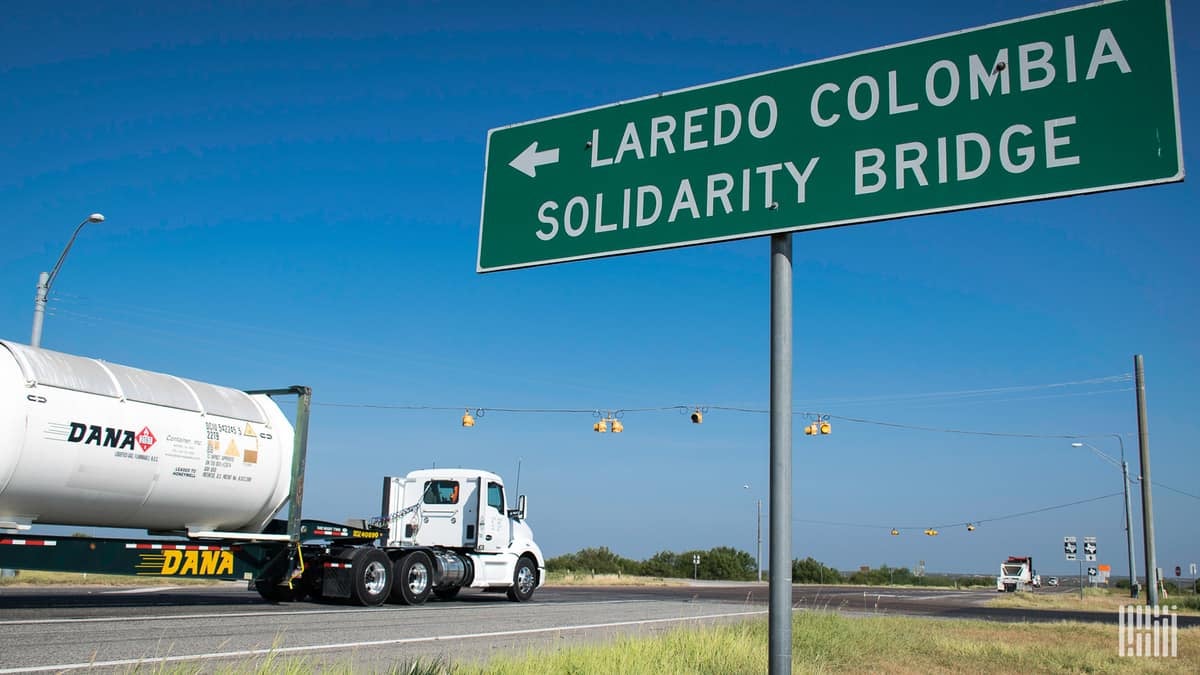
The data supporting this push is compelling. The Colombia-Solidarity International Bridge—a critical artery for the state—has seen a meteoric rise in traffic. In 2022, the crossing handled approximately 800 freight movements per day. By mid-2026, that figure has exploded to over 10,000 daily movements. This surge underscores the reality of the current trade boom, as Nuevo León accounts for roughly 14% of Mexico’s total imports and exports.
Security: The Invisible Pillar of Nearshoring
A recurring theme in Governor García’s rhetoric is the intersection of infrastructure and security. For international investors, the primary concern when evaluating a manufacturing site in northern Mexico is safety. To address these anxieties, the state government has implemented a robust security framework.
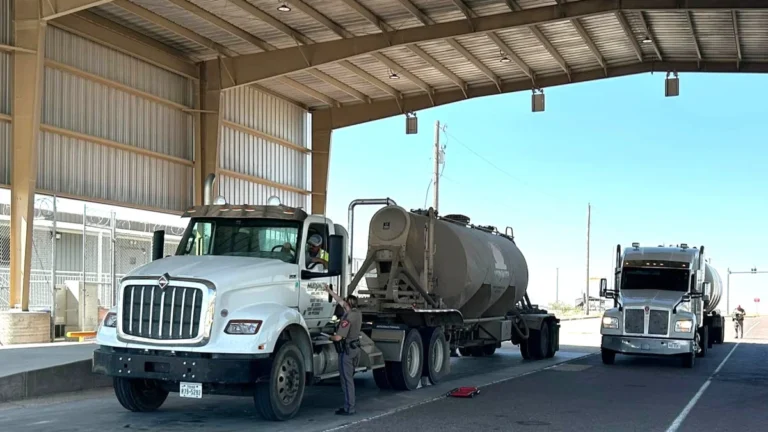
The state’s security apparatus has been upgraded to include an aviation division equipped with 10 helicopters and a dedicated heavy-duty division boasting 100 specialized trucks. Furthermore, the state now stations law enforcement personnel at critical border crossing points and maintains a constant patrol of 200 to 300 officers along major commercial highways. This "secure corridor" approach is intended to provide a predictable, safe environment for logistics companies and manufacturers, effectively removing the "safety risk" from the ledger when firms calculate the cost-benefit of moving operations to the Monterrey region.
Chronology of Economic Expansion
The transformation of Nuevo León’s economic profile has been rapid, moving from a traditional industrial base to a center for high-tech, automotive, and data-driven manufacturing.
- 2022: Nuevo León begins an aggressive campaign to modernize its highway and border crossing infrastructure.
- 2023–2024: A wave of foreign direct investment (FDI) sweeps the state, totaling $135 billion over a four-year period—a stark contrast to the $11 billion attracted during the previous six-year administration.
- 2025: Launch of the Water Resiliency Fund by NADBank to address long-term sustainability issues in the border region.
- August 2026: Governor García presents the "Gold Triangle" vision at the NADBank Summit, emphasizing the deep integration of Texas-Mexico supply chains.
- Late 2027 (Projected): Opening of the first phase of the Otay Mesa East border crossing, providing further relief to trans-border congestion.
Supporting Data: The Tesla Effect and Beyond
While headline-grabbing projects like the proposed Tesla factory have experienced pauses due to global market shifts, the underlying economic ecosystem has proven resilient. Governor García noted that even in the absence of a fully operational assembly plant, the region has seen the arrival of approximately 200 Tier 2 suppliers.
The integration is so deep that 65% of the components used in the Tesla Model Y produced in Austin, Texas, originate from Monterrey-area suppliers. This data point highlights a fundamental shift: the border is no longer a barrier but a manufacturing seam. The state is now targeting high-growth sectors, including electric vehicles, artificial intelligence, data centers, and cybersecurity, to move up the value chain.
Official Responses: NADBank’s Commitment to Water Security
Infrastructure goes beyond roads and bridges; it includes the vital resource of water. During the summit, NADBank announced a $164 million initiative for water conservation, specifically targeting the Lower Rio Grande Valley.
Managing Director John Beckham emphasized that this funding is a collaborative effort. By leveraging resources from the Texas Water Development Board and the U.S. Bureau of Reclamation, the bank aims to conserve nearly 44,000 acre-feet of water annually. The project involves the modernization of 12 irrigation districts, utilizing canal lining and pipeline conversion to minimize waste.
Mexican Ambassador to the U.S. Roberto Lazzeri Montaño praised the effort, noting that water security is perhaps the most critical "non-transportation" challenge for the future of the border. With 112 expressions of interest from northern Mexican communities for the Water Resiliency Fund, the bank is clearly positioning itself to be a long-term partner in environmental sustainability.
The California Front: Otay Business Park
While the focus has been on the Texas-Mexico corridor, developments in Southern California demonstrate that the demand for logistics space is a continental trend. Elevation Land Company and Crow Holdings Capital recently announced the completion of the first phase of the Otay Business Park.
Located in the Otay Mesa logistics hub, the 119-acre campus has added 612,240 square feet of Class A industrial space. This development is strategically positioned near the site of the upcoming Otay Mesa East port of entry. Designed specifically for e-commerce, third-party logistics (3PL), and manufacturing, the park features state-of-the-art facilities with 32-foot clear heights, essential for modern automated warehousing.
This development is a direct response to the "nearshoring" phenomenon, ensuring that companies operating on both sides of the California-Baja California border have the physical infrastructure necessary to scale their operations.
Implications: A More Integrated Future
The developments of the past week signal a maturing of the U.S.-Mexico trade relationship. Several key implications emerge from these initiatives:
- Capacity Expansion: The combined efforts in Nuevo León and San Diego suggest a concerted move toward de-bottlenecking the border. By expanding crossing capacity and building more industrial space near ports of entry, stakeholders are preparing for sustained growth in trade volume.
- Strategic Specialization: Nuevo León’s move to encourage assembly-focused manufacturing near the border—rather than forcing every company to settle in the interior of Monterrey—is a pragmatic, efficiency-driven strategy that will likely reduce transportation costs and carbon footprints for U.S.-bound goods.
- Sustainability as a Business Requirement: The $164 million water investment indicates that future industrial development in the border region will be strictly tethered to sustainability. Investors should anticipate that water rights and efficiency will be central to all future regulatory approvals.
- Security as a Competitive Advantage: By professionalizing police forces and securing trade routes, states like Nuevo León are competing for investment not just on labor costs, but on the reliability of the logistics chain.
As the 2026 NADBank Summit concludes, the overarching takeaway is clear: the U.S. and Mexico are not merely trading partners; they are an integrated manufacturing ecosystem. Whether it is through the $135 billion investment wave in Nuevo León or the massive water infrastructure projects in the Rio Grande Valley, the focus is squarely on building the "infrastructure of tomorrow." For carriers, manufacturers, and logistics providers, this represents a period of unprecedented opportunity, provided they can navigate the evolving landscape of regional security, environmental constraints, and high-tech supply chain demands.
About the Author