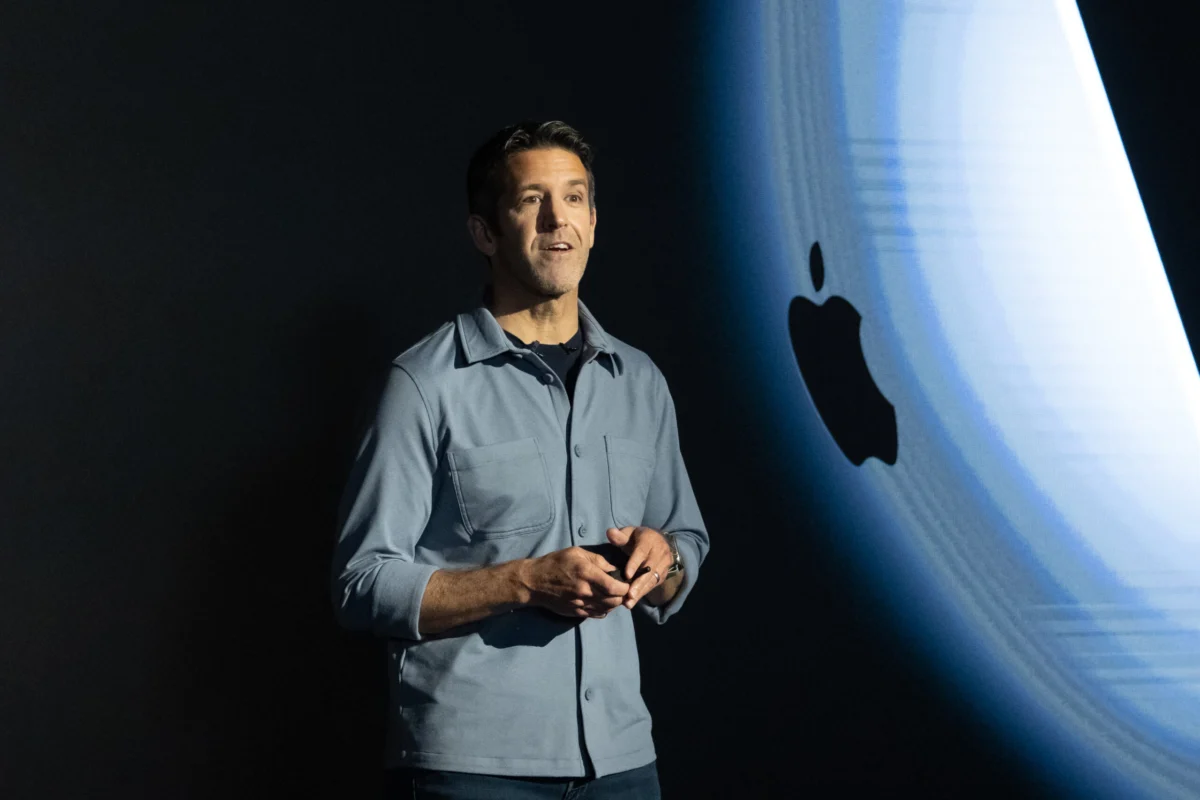
After 15 years of steady, transformative leadership under Tim Cook, Apple has officially entered a new chapter. As of this Tuesday, John Ternus, the company’s former senior vice president of hardware engineering, has assumed the role of Chief Executive Officer. This transition marks only the third change in top leadership for the tech giant in the new millennium, signaling a deep-seated commitment to continuity, culture, and the "product-first" philosophy that has defined Apple since the days of Steve Jobs.
While the tech industry watches closely, the name John Ternus may still be unfamiliar to the casual consumer. For the past two decades, Ternus has been a vital engine room operator within Apple, largely shunning the limelight to focus on the intricate craftsmanship that turns prototypes into global consumer phenomena. As he takes the helm, he does so at a pivotal inflection point for the company: navigating a fierce AI arms race and defining the next generation of spatial computing.
The Succession: A Changing of the Guard
Tim Cook’s tenure will be remembered for its operational mastery and the immense financial expansion of the Apple brand. In a poignant note to staff on his final day as CEO, Cook expressed complete confidence in his successor. "I take enormous comfort in handing the helm to someone as brilliant, wonderful, and capable as John," Cook wrote. "Few people understand what it takes to build products that change the world the way John does, and I could not be more excited for his leadership."
Cook, however, is not vanishing from the company. He will remain at Apple in the role of executive chairman, providing a bridge between the previous era and the new administration. This move ensures that while the operational reins have been handed over, the institutional knowledge—and the strategic relationships Cook cultivated—remain within the walls of One Apple Park Way.
A Quarter-Century of Craft: The Rise of John Ternus
To understand where Apple is going, one must look at where John Ternus has been. At 51 years old, Ternus has dedicated half of his life to the company. He arrived in 2001, joining the product design team shortly after his stint at Virtual Research Systems, a boutique maker of VR hardware.
His climb through the corporate hierarchy was steady, defined by a reputation for meticulousness. By 2013, he was a vice president of hardware engineering, and in 2021, he was elevated to senior vice president. Throughout his tenure, he has been a consistent, albeit quiet, force. His promotion to CEO is viewed by analysts as a strategic move to secure a leader who understands the "DNA" of the company—a leader who knows how to maintain quality at scale.
The "Screw" Philosophy
Ternus’s obsession with detail is legendary within the halls of Apple. In a 2024 commencement address at his alma mater, the University of Pennsylvania, he recalled his early days spent at a supplier facility, obsessively counting the grooves on a screw for the Apple Cinema Display. While he jokingly reflected on the absurdity of the moment, it underscored a core tenant of his professional identity: the belief that the "unseen" elements of a product must be as perfect as the visible ones.
This philosophy was heavily influenced by his time working under Steve Jobs. Ternus has frequently cited a memory of Jobs reflecting on the back of a piece of furniture, noting that a true craftsman finishes the back just as beautifully as the front, even if no one sees it. "I think about that all the time," Ternus noted, "because I think that perfectly exemplifies what we do here."
Strategic Projects and Technical Milestones
Ternus’s fingerprints are on nearly every major hardware success of the last decade. His leadership was instrumental in the development of the AirPods and the Apple Watch, products that expanded the company’s ecosystem far beyond the iPhone. He also played a critical role in the transition from Intel processors to Apple Silicon, a monumental engineering feat that fundamentally shifted the performance-per-watt paradigm of the Mac lineup.

Most recently, Ternus oversaw the production of the MacBook Neo, Apple’s strategic answer to the budget-conscious education and entry-level markets. By leveraging existing iPhone chip architectures, Ternus demonstrated his ability to balance high-end quality with the logistical realities of cost-conscious manufacturing. "We never want to ship junk," he stated in a recent interview. "We want to ship great products that have that Apple experience."
The Challenges Ahead: AI and Beyond
While Ternus inherits a company with record-breaking cash reserves and an incredibly loyal user base, he faces significant headwinds. The tech landscape is currently dominated by the "AI Race," and Apple’s implementation of Siri—now bolstered by Google’s Gemini—has received mixed reviews. The challenge for the new CEO will be to integrate advanced generative AI into the Apple ecosystem in a way that feels native, private, and distinctly "Apple."
Furthermore, there is the lingering question of the Vision Pro. While the hardware is widely considered an engineering marvel, the product category itself is still searching for a "killer app" or a mainstream justification for its price point. Ternus, with his deep background in hardware engineering, is uniquely positioned to iterate on this spatial computing vision, though he will need to prove that Apple can pivot as quickly as its software-focused competitors.
A Personal Profile: Humility in a High-Stakes Industry
In an industry often defined by larger-than-life, sometimes abrasive CEO personas, Ternus’s public persona is remarkably understated. A former member of the University of Pennsylvania swim team, his background is rooted in discipline and teamwork. His early engineering project—a feeding arm for patients with quadriplegia—speaks to a career interest in technology that serves human needs.
He remains a figure of relative mystery, having only recently joined X (formerly Twitter). His advice to the next generation of engineers—"Always assume you’re as smart as anyone else in the room, but never assume that you know as much as they do"—serves as a mission statement for his leadership style. It suggests a collaborative, inquiry-based approach that stands in contrast to the top-down mandates of other Silicon Valley titans.
Implications for the Future
The transition to John Ternus is a signal that Apple is choosing stability over disruption. In an era where many tech companies are pivoting wildly to follow the latest trends, Apple is doubling down on its commitment to the "product-builder."
Investors and enthusiasts alike are looking toward next week’s iPhone launch event as the first true test of the "Ternus Era." While he won’t be expected to reinvent the wheel overnight, the market will be watching for subtle shifts in tone and strategy. Can he maintain Apple’s premium margins while addressing the competitive pressure from AI? Can he shepherd the company through a period of hardware saturation?
One thing is certain: Ternus is not a newcomer. He is a product of the very system he now leads. As the industry enters a period of unprecedented AI-driven change, Apple is banking on the idea that the best person to lead them into the future is someone who has spent the last 25 years obsessing over the grooves on a screw, ensuring that even the parts nobody sees are designed with perfection.
Chronology of Key Milestones
- 2001: Joins Apple’s product design team after leaving Virtual Research Systems.
- 2013: Promoted to Vice President of Hardware Engineering.
- 2021: Promoted to Senior Vice President of Hardware Engineering; oversees the transition to Apple Silicon.
- 2026 (April): Announced as the successor to Tim Cook.
- 2026 (August): Formally assumes the role of CEO; Tim Cook transitions to Executive Chairman.
Disclaimer: This article was originally published on April 20, 2026, and has been updated to reflect the official leadership change. Some links in this article may generate a small affiliate commission for the publisher, which does not influence our editorial independence.
About the Author