In an era defined by the "Amazon effect," where consumer patience for shipping times has dwindled to mere hours, retail giant Walmart is doubling down on its infrastructure dominance. The company recently announced a massive capital expenditure: the construction of a 1.5 million-square-foot "next-generation" automated fulfillment center in Carnesville, Georgia. This project, representing a staggering $1.3 billion investment, is set to redefine the retail landscape in the Southeastern United States, promising to accelerate same-day and next-day shipping capabilities to millions of households.
The Carnesville facility is not merely a warehouse; it represents the vanguard of Walmart’s ongoing transition from a brick-and-mortar legacy retailer into a high-tech, logistics-first powerhouse. By leveraging advanced robotics, machine learning, and high-density storage solutions, Walmart aims to shrink the distance between its inventory and the customer’s doorstep.
The Core Strategic Pillars: Why Carnesville?
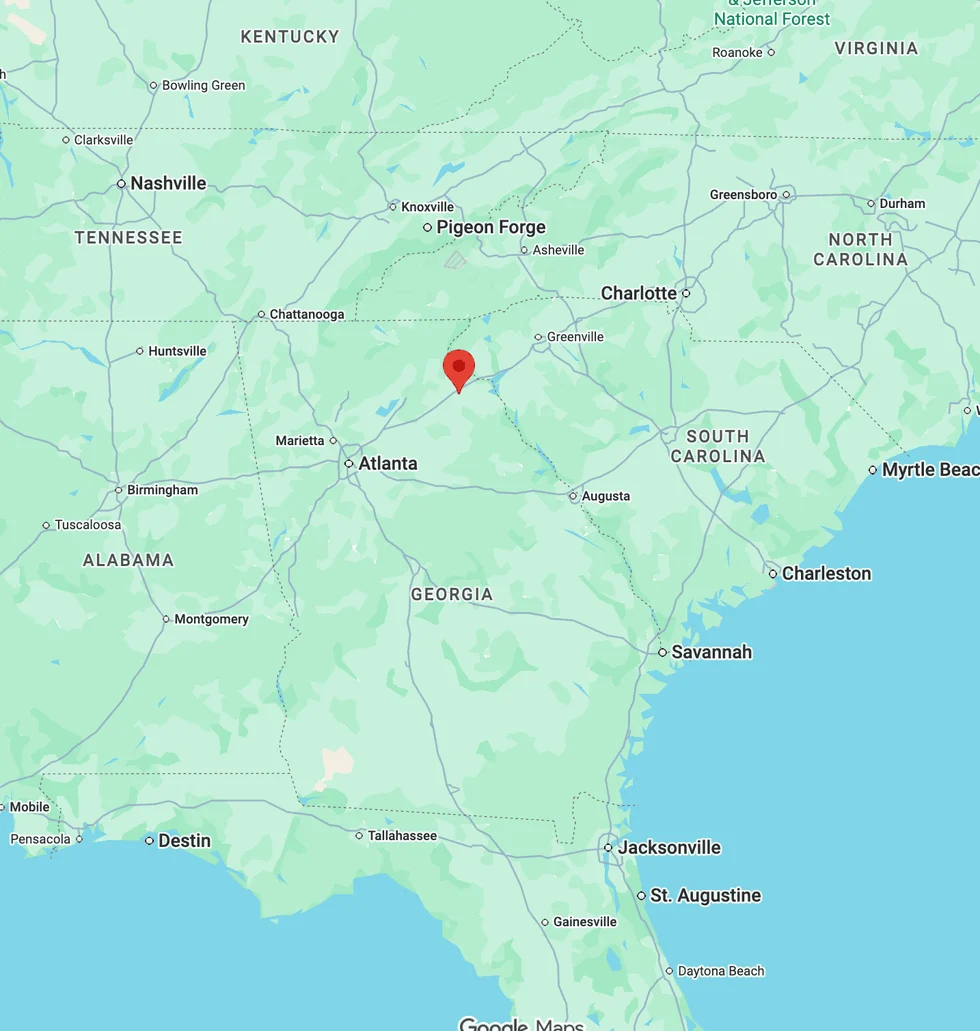
The selection of Carnesville—a small, rural town in Franklin County—is a masterstroke of logistics planning. Situated strategically between the major metropolitan hubs of Atlanta, Georgia, and Charlotte, North Carolina, the site offers unparalleled access to key interstate corridors. This positioning allows Walmart to tap into dense population centers while benefiting from the lower land costs and tax incentives associated with rural development.
The facility will serve as a critical node in Walmart’s supply chain network. As the company expands its e-commerce footprint, the need for centralized, high-throughput fulfillment centers becomes paramount. By consolidating operations into such a massive facility, Walmart can optimize its inventory management, reducing the number of split shipments and ensuring that products are staged as close to the end consumer as possible.
A Chronology of the Project
The journey toward the Carnesville fulfillment center has been a multi-year effort in site selection and infrastructure planning.
- Initial Feasibility Studies (2024-2025): Walmart’s internal logistics team identified a "fulfillment gap" in the Southeast. While the company maintained robust store networks, the ability to support high-volume e-commerce shipping from a central, automated point was identified as a strategic priority.
- Site Acquisition and Negotiations (Early 2026): Working closely with Georgia’s economic development officials, Walmart secured the land in Franklin County. These negotiations involved complex infrastructure agreements, including road upgrades and utility expansions necessary to support a facility of this magnitude.
- The Formal Announcement (Mid-2026): Walmart officially unveiled the plan, highlighting the $1.3 billion capital infusion and the creation of 1,000 full-time jobs.
- Upcoming Construction (Late 2026): The groundbreaking is scheduled for the latter half of 2026. The facility is expected to undergo a multi-phase construction process, prioritizing the installation of automated retrieval systems before the structural envelope is finalized.
- Operational Horizon (2027-2028): Once fully operational, the center is expected to reach peak processing capacity, significantly bolstering the company’s regional shipping throughput.
The Anatomy of an Automated Fulfillment Center
What makes this center "next-generation"? Unlike traditional warehouses that rely heavily on manual labor for "pick-and-pack" tasks, the Carnesville hub will utilize a sophisticated orchestration of automated storage and retrieval systems (AS/RS).
High-Density Robotics
The facility will deploy autonomous mobile robots (AMRs) that work in tandem with human associates. These robots navigate the warehouse floor to bring goods to the workstations, effectively eliminating the "travel time" that typically accounts for the majority of a picker’s shift. By reducing human walking time, the facility can increase output per square foot exponentially.
Predictive Inventory Management
At the heart of the operation is a proprietary AI layer. This system analyzes purchasing patterns across the Southeast, predicting which products are likely to be in high demand in specific zip codes. Consequently, the warehouse will be pre-stocked with high-velocity items, ensuring that when an order is placed, it is already staged for immediate departure.
The Human-Machine Collaboration
Despite the focus on automation, the facility remains a human-centric endeavor. The 1,000 jobs created are designed to be "future-proof" roles. These include robotics maintenance technicians, data analysts, logistics coordinators, and high-level inventory managers. Walmart has signaled that these roles will be accompanied by training programs to help local workers transition into the tech-driven workforce of the future.

Official Responses and Economic Impact
The announcement has been met with enthusiasm from state leaders, who view the project as a catalyst for regional economic growth. Georgia’s economic development officials have emphasized that the $1.3 billion investment will have a multiplier effect on the Franklin County economy, stimulating local businesses, housing, and infrastructure improvements.
Karisa Sprague, Senior Vice President of Supply Chain for Walmart U.S., summarized the company’s vision: "As customer expectations continue to evolve, investments like our new fulfillment center in Carnesville help us deliver the speed, convenience, and reliability customers count on. We’re excited to join the Carnesville community and create meaningful career opportunities where associates can grow and build their future with Walmart."
For local residents, the project represents more than just a job; it signifies a transformation of the town’s economic identity. The influx of 1,000 high-quality jobs is expected to curb the "brain drain" often seen in rural areas, as young professionals seek stable, long-term employment within their own community.
Broader Implications for the Logistics Industry
Walmart’s move sends a clear signal to the retail and logistics industry: the war for e-commerce dominance is being won in the warehouse.
Setting a New Industry Standard
The scale of this facility sets a new benchmark for fulfillment infrastructure. Competitors will likely be forced to reassess their own networks, potentially leading to a wave of similar "mega-fulfillment" projects across the United States. The era of distributed, small-scale warehousing is being complemented—and in some cases replaced—by these centralized, hyper-efficient hubs.
Sustainability and Efficiency
While the sheer size of the facility is noteworthy, Walmart’s strategy also touches on sustainability. By centralizing fulfillment, the company can optimize freight routes, reducing the "last mile" carbon footprint. Automation also allows for tighter packing, meaning more items can fit into each delivery truck, further reducing the total number of vehicles on the road.
The Resilience Factor
Recent global supply chain disruptions have underscored the importance of resilience. By building out domestic, high-capacity fulfillment infrastructure, Walmart is insulating itself against the volatility of international logistics. A self-reliant, automated supply chain is inherently more stable and responsive to internal demand shifts, making the company less susceptible to external shocks.
Conclusion: The Path Forward
The Carnesville fulfillment center is a microcosm of the modern supply chain. It is a fusion of geography, technology, and human capital, designed to meet the relentless demands of the 21st-century consumer. As construction begins in late 2026, the retail world will be watching closely.
If successful, this $1.3 billion investment will not only solidify Walmart’s position as the nation’s leading retailer but will also serve as a blueprint for the future of industrial logistics. For the residents of Carnesville and the broader Georgia economy, the project marks the beginning of a new chapter of growth and innovation. As the retail giant continues to push the boundaries of what is possible in logistics, one thing remains certain: the "next-generation" of retail is already here, and it is built on a foundation of unprecedented scale and speed.
About the Author