In the modern digital landscape, the smartphone has evolved from a tool of convenience into an omnipresent extension of the self. From the moment the morning alarm rings to the final scroll before sleep, these devices serve as our primary gateway to information, social connection, and professional life. However, a sweeping new study from the Pew Research Center, conducted between May 26 and June 1, 2026, reveals a growing sense of digital malaise: a significant portion of the American public feels that their relationship with their smartphone has become, at best, a struggle for control and, at worst, an unhealthy obsession.
According to the data, slightly more than half of U.S. adults (53%) admit that they spend too much time on their smartphones. While roughly 36% believe their usage is appropriate, a mere 3% feel they are not using their devices enough. This perception of "digital overload" is not distributed evenly; it is a sentiment heavily influenced by age, with younger generations bearing the brunt of the feeling that they are perpetually "plugged in."
The Generational Divide in Digital Consumption
The survey highlights a stark generational divide regarding perceived screen time. For adults aged 18 to 29, the sense of excessive use is acute: 70% of this cohort reports that they spend too much time on their phones. This figure remains high for those in their 30s and 40s, with 64% echoing the same sentiment.
As age increases, the reported urgency of this issue declines. Among those aged 50 to 64, the figure drops to 49%, and among seniors aged 65 and older, only 25% believe their phone usage is excessive. These statistics suggest that as we move through different stages of life—balancing careers, family demands, and social circles—the role of the smartphone changes, as does our anxiety surrounding its presence.
Chronology of a Digital Habit: From "Constant" Use to Failed Detoxes
The 2026 findings paint a picture of a society deeply embedded in a cycle of near-constant connectivity. Beyond the feeling of "spending too much time" on devices, researchers sought to quantify the frequency of use. Nearly one-in-four American adults (26%) describe their smartphone habits as "almost constant."
When broken down by age, the "constant" user base becomes even more pronounced. Among adults under 30, a striking 42% report being on their phones almost constantly. This usage pattern diminishes as the population ages, with 33% of those aged 30 to 49, 21% of those 50 to 64, and just 9% of those 65 and older reporting similar levels of engagement.
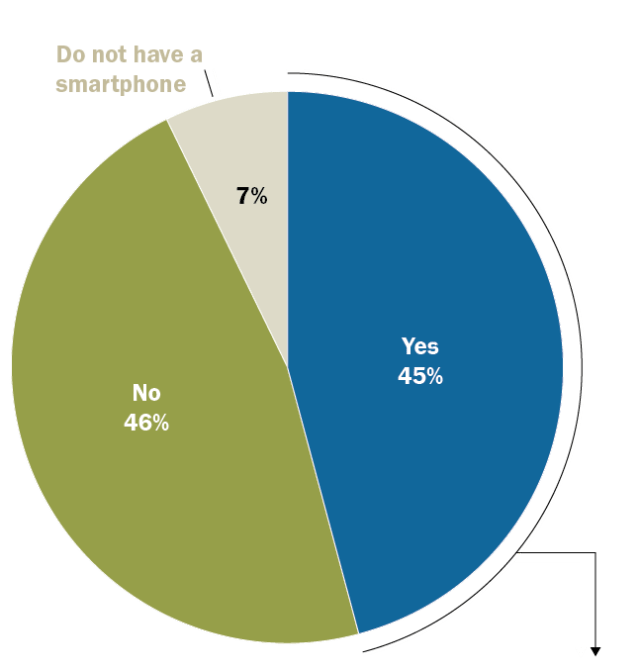
This "constant" tethering has led to a counter-movement: the attempt to cut back. The survey found that 45% of U.S. adults have actively tried to reduce their smartphone usage in the past 12 months. However, the intent to disconnect is frequently thwarted by the reality of modern life. Of those who attempted to scale back their usage, only 25% described themselves as "extremely or very successful." The majority (52%) reported being only "somewhat successful," while 23% conceded they were not successful at all.
This suggests that for the average American, smartphone habits are not merely choices but are deeply ingrained in the structure of daily existence, making individual attempts at "digital detoxing" remarkably difficult to sustain.
Supporting Data: The Impact on Daily Life
The Pew Research Center’s analysis further explored the perceived impact of smartphones on various facets of human well-being. The results indicate a complex, multi-layered relationship between the individual and the device.
The Benefits
When asked about the positive impacts, the utility of the smartphone remains its greatest defense. 73% of respondents stated that their phone helps them stay informed about the world, and 51% felt it helped them maintain connections with others. In these areas, the "smartphone as a tool" narrative holds strong, with very few participants (3% and 12%, respectively) suggesting that the devices hurt these aspects of their lives.
The Costs
Conversely, when the conversation shifts to physical and mental health, the narrative turns darker. The most profound area of concern is sleep. 41% of Americans report that their smartphone usage hurts their sleep quality, compared to only 5% who claim it helps. This correlation between screen time and sleep deprivation is particularly damaging among younger users; 62% of adults under 30 believe their smartphone use takes a toll on their rest, a figure that drops significantly as age increases.
Productivity presents a more ambiguous landscape. 34% of users feel their smartphone harms their productivity, while 30% feel it enhances it. This suggests a tug-of-war between the device as a professional tool and the device as a source of endless distraction.
Official Perspectives and Research Context
The data presented here is derived from the American Trends Panel, a rigorous, ongoing longitudinal survey of over 9,750 U.S. adults. By utilizing such a large sample size, the researchers at Pew have provided a snapshot that is representative of the entire U.S. adult population.
William Bishop, a research associate at Pew, notes that this study builds upon years of tracking mobile technology’s evolution. "We are observing a shift in how the public characterizes their relationship with tech," says the research team. "It is no longer just about the utility of the device; it is now about the autonomy of the user."
The study includes comprehensive topline reports and methodology documents, ensuring that the findings can be scrutinized by decision-makers and technologists alike. The researchers emphasize that the survey is not merely an indictment of technology but a reflection of how society is grappling with the rapid integration of digital interfaces into every minute of the day.

Societal Implications: The Future of Connectivity
The implications of this research are profound. If nearly half of the population feels that their primary tool for communication is also a detriment to their sleep, productivity, and overall sense of control, we are likely to see a shift in public demand for "digital wellness" features.
Already, tech giants have begun introducing "screen time" trackers, "do not disturb" modes, and "focus" settings, but the survey data suggests that these software solutions are only partially effective. The fact that 46% of Americans have not even attempted to cut back, combined with the low success rates of those who have, implies that the challenge is systemic.
The "always-on" culture is often a prerequisite for employment, social integration, and access to information. As long as these societal expectations remain, individual efforts to "put the phone down" will continue to face an uphill battle.
As we look toward the future, the conversation will likely pivot from "how much we use" our devices to "how we can fundamentally change our relationship" with them. Will we see a rise in low-tech hardware alternatives? Will workplaces adopt stricter "right to disconnect" policies? Or will we continue to exist in this state of perpetual, anxious connectivity?
The data provided by the Pew Research Center in 2026 suggests that while we are becoming increasingly aware of the costs of our digital habits, we remain firmly in the grip of the devices that, for better or worse, define the modern age. The path forward will require not just willpower, but a reevaluation of how we prioritize human connection and physical well-being in an era defined by the screen.

Methodology Note
This research was conducted by the Pew Research Center through the American Trends Panel. The survey of 9,750 U.S. adults was carried out from May 26 to June 1, 2026. Further details on the questionnaire design, topline results, and full methodology are available through the Pew Research Center’s official archives.
About the Author