In an era of increasing cross-border logistics and labor mobility, the regulatory landscape governing foreign commercial drivers has come under intense scrutiny. A recent inquiry from a Texas-based trucker has prompted the U.S. Department of Labor (DOL) to issue a definitive clarification: H-2A visa holders who operate commercial motor vehicles (CMVs) are fully subject to federal English-language proficiency (ELP) requirements.
This clarification resolves long-standing questions regarding whether seasonal agricultural workers—who may utilize Mexican commercial licenses—are exempt from the stringent communication standards that govern all other interstate commercial drivers. As the logistics industry relies increasingly on temporary labor to bridge seasonal capacity gaps, the enforcement of these standards has moved to the forefront of highway safety discussions.
The Catalyst for Clarification: A Trucker’s Query
The DOL’s response was spurred by a direct inquiry from a veteran truck driver who reached out to FreightWaves. The driver, who requested anonymity, sought clarity following a high-profile case involving a Canadian driver arrested in New Mexico for alleged cabotage violations.
The trucker’s concern centered on the intersection of the H-2A visa program—a pathway for temporary agricultural workers—and the Federal Motor Carrier Safety Administration (FMCSA) regulations. "Many Mexican CDL drivers are contracted via the federal H-2A program here in Texas and many other states," the driver noted, highlighting a growing trend in the industry where foreign nationals are recruited to haul agricultural products across state lines. The driver questioned whether these individuals were held to the same standard as their domestic counterparts, particularly regarding the ability to communicate with law enforcement, read highway signage, and maintain accurate records in English.
Chronology of Regulatory Enforcement
The path to this clarification has been a multi-year effort to harmonize labor certification with transportation safety.
- May 14, 2026: The Department of Labor officially announced new guidance regarding English-language proficiency for positions involving the operation of commercial motor vehicles. This was a proactive step to align labor certification with FMCSA safety standards.
- June 15, 2026: The implementation date for the new policy. Since this date, all new job orders and applications for temporary or permanent labor certification must explicitly state that the position requires an English-language proficiency level consistent with federal law.
- Post-Implementation (Current): The DOL has begun reviewing applications for "deficiencies." If an employer fails to include the ELP requirement in their job description for a role involving CMV operation, the DOL now has the authority to issue a notice of deficiency, effectively pausing the application until the employer corrects the filing.
The Scope of Federal Requirements
Under the established regulations of the FMCSA, any individual operating a commercial motor vehicle in interstate commerce must possess the ability to read and speak English at a level sufficient to perform essential job functions. Specifically, a driver must be able to:
- Communicate with the public: Successfully interact with law enforcement, scale operators, and emergency personnel.
- Understand signage: Comprehend highway signs, traffic signals, and regulatory warnings.
- Respond to inquiries: Provide accurate answers to official questions during inspections.
- Documentation: Make accurate entries on reports, logs, and other official records.
The DOL clarified that the H-2A designation does not serve as a "get out of jail free card" for these requirements. A spokesperson for the department stated unequivocally: "The guidance applies to any person operating a commercial motor vehicle who is hired and employed under a temporary or permanent labor certification granted by DOL, including H-2A."
Analyzing the Data: Thousands of Jobs at Stake
The scale of this issue is significant. While public records do not categorize workers by their specific citizenship or licensing history, an analysis of the Office of Foreign Labor Certification (OFLC) data reveals a substantial footprint for foreign labor in the transport sector.
Between October 1, 2025, and June 30, 2026, the DOL certified approximately 470 H-2A applications. These applications covered 3,320 jobs within the "Transportation and Material Moving Occupations" category. Of these, 310 applications—accounting for 2,609 individual jobs—were classified specifically as heavy and tractor-trailer or light truck driver positions. This represents nearly 79% of the total transportation-related H-2A labor pool.
Regional Breakdown of Certified Positions:
- Texas: Led the nation with 515 certified H-2A truck-driver positions across 40 applications.
- Louisiana: Followed with 448 certified positions.
- New Mexico: Accounted for 272 positions.
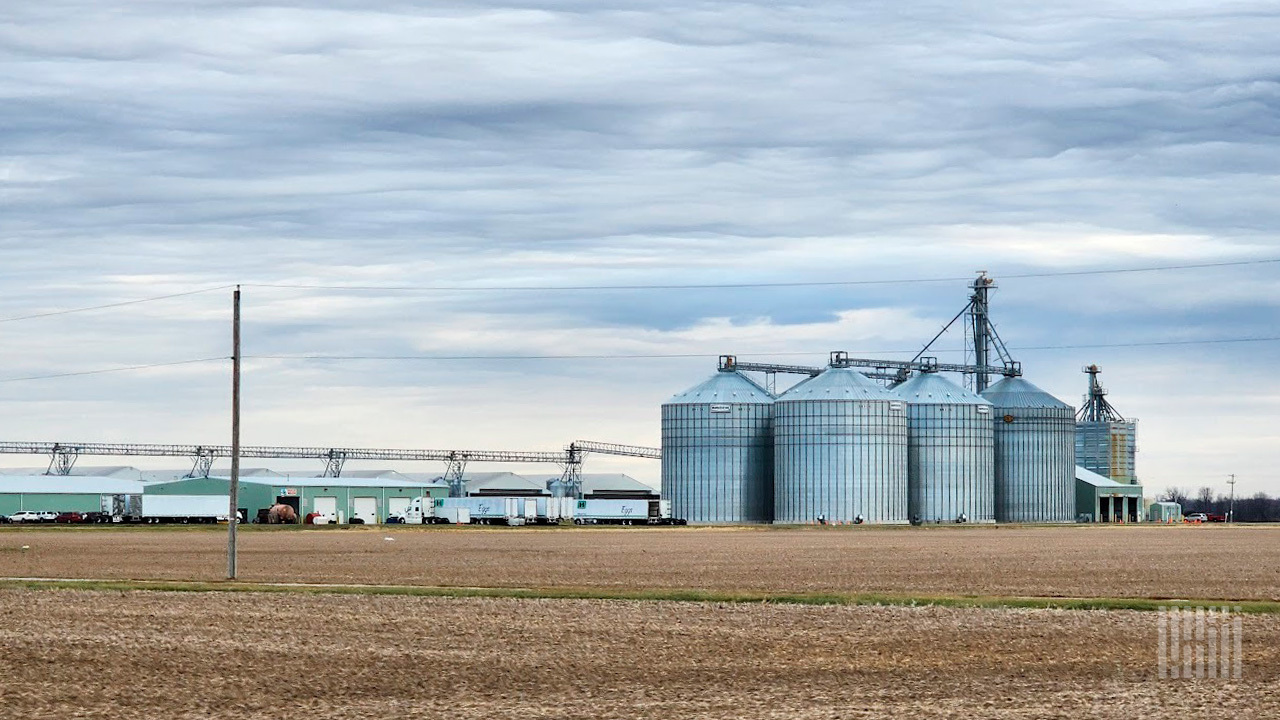
- Iowa, Arizona, and California: Combined for approximately 363 positions, illustrating that the practice is not confined to the immediate border region but is spreading across major agricultural corridors.
It is important to note that these figures represent certified positions—jobs for which employers sought authorization—rather than a headcount of individuals currently driving on U.S. highways. However, the data confirms a reliance on foreign labor to move goods from fields to processing plants and beyond.
The Licensing Conundrum
A critical component of this issue is the validity of foreign commercial licenses. The United States maintains a reciprocity agreement with Mexico, recognizing the Licencia Federal de Conductor. This allows qualified Mexican drivers to operate in the U.S. without obtaining a state-issued U.S. Commercial Driver’s License (CDL), provided they are operating for a company with appropriate interstate authority.
However, this recognition does not waive the English-language requirement. The confusion often stems from a misunderstanding that a valid foreign license confers total immunity from U.S. domestic operating standards. The reality, as clarified by the DOL, is that the license status is separate from the operational competency standards enforced by the FMCSA at the roadside.
The Enforcement Gap
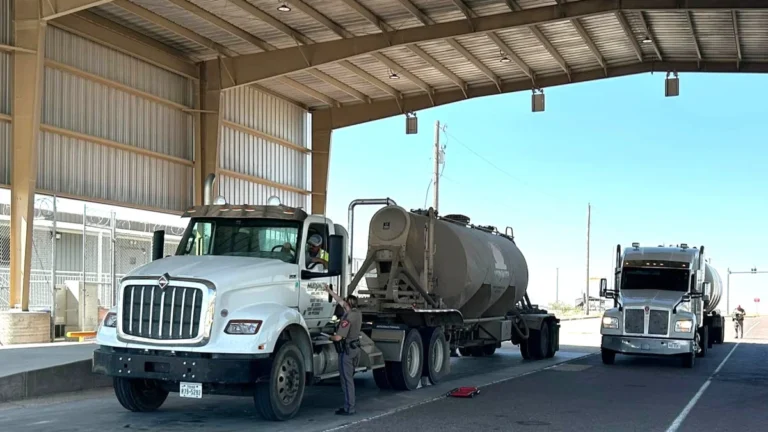
While the DOL has tightened the certification process, the enforcement on the road remains a decentralized affair. The FMCSA maintains the authority to conduct roadside inspections and can place drivers out of service if they fail an English-language assessment.
However, there is a lack of transparency regarding how often this occurs. When asked by FreightWaves for data regarding how many H-2A drivers have been placed out of service for ELP violations, neither the FMCSA nor the Texas Department of Public Safety (DPS) provided specific statistics. This "enforcement gap" leaves a vital question unanswered: Is the policy being applied effectively in the field, or does it exist primarily as a paper requirement during the hiring phase?
Implications for the Industry
The DOL’s clarification has immediate implications for agricultural employers. By making the ELP requirement a standard part of the labor certification process, the government has shifted the burden of proof onto the employer.
1. Compliance Burden
Employers must now be more diligent in their hiring process. If an H-2A driver is pulled over and fails a roadside English proficiency test, the employer could theoretically face scrutiny regarding their recruitment and certification process. The DOL’s move to issue notices of deficiency for incomplete job orders suggests a higher level of oversight.
2. Operational Efficiency
For the trucking industry, the concern is that an increase in out-of-service orders could disrupt supply chains. Agricultural products are often time-sensitive; a driver placed out of service at a roadside inspection site for an ELP violation can cause significant delays in the delivery of perishable goods.
3. Diplomatic and Trade Relations
The tension between the U.S. and Mexico regarding cross-border trucking has historical roots. While the Licencia Federal de Conductor is a recognized document, the strict enforcement of U.S.-specific regulations like the English-language rule can occasionally cause friction. However, the DOL maintains that the policy is applied in a "nondiscriminatory manner," meaning it applies to all foreign workers regardless of nationality.
Conclusion: A Balancing Act
The Department of Labor’s stance is clear: The H-2A program is a mechanism for labor supply, not a regulatory exception for transportation safety. By mandating that English-language proficiency be documented during the labor certification process, the federal government is attempting to ensure that those operating 80,000-pound vehicles on American highways are equipped to handle the demands of the road, including the ability to communicate effectively with safety officials.
While the number of "certified" jobs is in the thousands, the true test will be at the roadside. As long as enforcement data remains elusive, the industry will continue to operate in a gray area, balancing the necessity of seasonal labor against the absolute requirement of public safety. For now, employers are advised to treat the English-language requirement not as a formality, but as a critical component of their compliance strategy to avoid potential legal and operational pitfalls.
About the Author