By Sean O’Kane
September 4, 2026
The dawn of the fully autonomous era hit a significant regulatory roadblock Friday morning. Just hours after Tesla deployed its highly anticipated Cybercab onto the public streets of Austin, Texas, the National Highway Traffic Safety Administration (NHTSA) announced the opening of a formal investigation into the vehicle’s design—specifically its total lack of traditional manual controls.
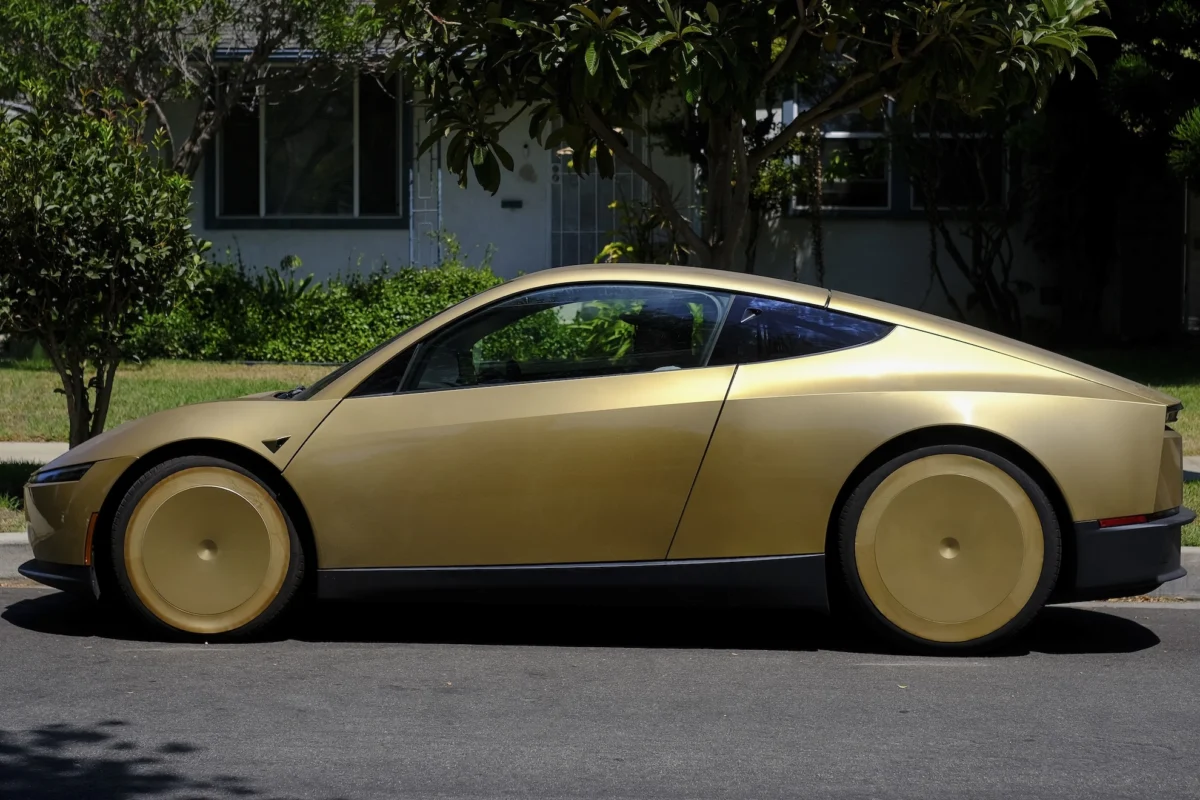
The Cybercab, a vehicle marketed by Tesla as the cornerstone of its "robotaxi" future, hit the pavement devoid of a steering wheel, brake pedal, or accelerator. While the vehicle represents a pinnacle of Tesla’s engineering ambitions, its arrival has triggered a high-stakes clash between the automaker’s aggressive rollout strategy and the federal government’s mandate to ensure vehicle safety on public roads.
The Core Conflict: Automation vs. Regulation
At the heart of the NHTSA investigation is a fundamental tension regarding how autonomous vehicles (AVs) should be governed. Historically, Federal Motor Vehicle Safety Standards (FMVSS) have been built around the assumption that a human driver is in control of the vehicle. These standards mandate the presence of physical interfaces—steering wheels, pedals, and mirrors—that allow for human intervention in an emergency.
Tesla, however, has taken a bold interpretive stance. In filings submitted to the NHTSA, the company asserted that it has self-certified the Cybercab as fully compliant with existing safety standards. Tesla’s argument posits that because the vehicle is designed solely for autonomous operation, the traditional requirements for manual controls are rendered moot.
The federal regulator is now moving to challenge that assumption. By opening an investigation, the NHTSA intends to scrutinize the "process and technical data" that led Tesla to conclude it could bypass these foundational safety requirements. The probe will examine whether Tesla’s self-certification relies on a broad interpretation of safety standards that might leave the public vulnerable if the vehicle’s AI systems encounter an edge case that requires manual override.
A Timeline of the Cybercab Rollout
The road to today’s investigation has been paved with years of hype, regulatory lobbying, and rapid technical development.
- June 2026: The Department of Transportation, under the current administration, proposed a landmark shift in policy, suggesting the removal of the brake pedal requirement for vehicles designed exclusively for autonomous driving. This proposal was widely viewed as a direct boost to Tesla’s long-term product roadmap.
- August 2026: Tesla officially announced the start of production for the Cybercab, maintaining that its "Full Self-Driving" (FSD) architecture had reached a level of reliability that rendered traditional driver inputs obsolete.
- September 4, 2026, 12:00 AM: The first fleet of Cybercabs became operational in Austin, Texas, marking the first time a mass-produced, wheel-less vehicle began navigating public, un-mapped urban environments.
- September 4, 2026, 5:00 AM: The NHTSA officially announced its investigation, citing concerns regarding the safety certification process and the absence of manual override capabilities.
Understanding the "Self-Certification" Loophole
To understand why this investigation is so significant, one must understand how the U.S. automotive industry operates. Unlike some industries where regulators must "approve" a product before it hits the market, the automotive sector relies on a system of self-certification.
Automakers are legally responsible for testing their own vehicles against federal standards and then certifying that the vehicle meets them. If a manufacturer determines that a specific standard—such as the requirement for a steering wheel—is not applicable to their specific vehicle architecture, they may proceed with production while maintaining that they are in full compliance with the "intent" of the law.
The NHTSA’s investigation is an attempt to pull back the curtain on this process. The agency stated that it would look specifically at "the extent to which the company’s certification depended on determinations that certain federal motor standards are inapplicable to the Cybercab." This is a shot across the bow, suggesting that the government may disagree with Tesla’s interpretation of what constitutes a "safe" vehicle in the absence of human input.
Technical and Ethical Implications
The removal of the steering wheel is more than just an aesthetic choice; it is a declaration of the end of human-centric driving. However, safety advocates have long argued that the transition from a human driver to a machine requires redundant safety measures that are currently absent in the Cybercab.
The "Edge Case" Dilemma
While Tesla’s FSD software has shown significant improvement, the unpredictability of human behavior in traffic remains the primary obstacle for autonomous systems. Without a steering wheel or pedals, the Cybercab relies entirely on its software to interpret chaotic environments. The NHTSA probe will likely examine whether Tesla has sufficient "fail-safe" protocols in place. If the vehicle loses its connection to the network or if its sensors are blinded by environmental factors, how does the vehicle ensure it does not become a hazard to other road users?
Liability and Insurance
The legal implications of this investigation are far-reaching. If the NHTSA determines that Tesla’s self-certification was flawed, the company could face a massive recall, a forced suspension of the Cybercab fleet, or a significant tightening of the rules for future AV rollouts. Furthermore, the insurance industry is watching closely. Without a human "operator," the liability for any potential accident falls squarely on the manufacturer, creating a financial risk profile that remains largely untested in court.
Official Responses and Industry Outlook
While Tesla has remained largely silent since the NHTSA announcement, the company has previously maintained that its vehicles are safer than human-operated cars, citing lower accident rates per mile in its existing fleet. By removing the "human factor," Tesla argues it is eliminating the primary cause of traffic accidents: distraction and impairment.
Independent industry experts are divided. Some argue that the NHTSA is simply doing its due diligence, ensuring that the transition to autonomous transport does not compromise public safety. Others view the investigation as a bureaucratic hurdle that could slow down the inevitable progress of automation.
"The NHTSA is in a difficult position," says Dr. Aris Thorne, a transportation policy analyst. "They are tasked with promoting safety, but they are also under pressure to keep the U.S. at the forefront of the autonomous vehicle revolution. By investigating the Cybercab, they are essentially defining the rulebook for the next century of transport."
What Happens Next?
The investigation is currently in its early stages. Over the coming weeks and months, the NHTSA will likely issue information requests to Tesla, demanding deep access to their proprietary data, safety test results, and the rationale behind their decision to eschew manual controls.
For Austin residents, the Cybercabs will continue to operate for the time being, but the shadow of the federal government now looms over the project. If the investigation concludes that the Cybercabs pose an "unreasonable risk" to safety, the NHTSA has the authority to mandate changes to the design or, in an extreme scenario, pull the vehicles from public service.
This development serves as a stark reminder that even the most ambitious technological leaps must eventually reconcile with the reality of government oversight. For Tesla, the path to a driverless future is no longer just about perfecting software—it is about winning a high-stakes legal and regulatory battle that will set the precedent for the entire automotive industry.
This story is developing. Please check back for further updates as more information regarding the NHTSA’s findings and Tesla’s legal response becomes available.
Disclaimer: When you purchase through links in our articles, we may earn a small commission. This doesn’t affect our editorial independence.
About the Author