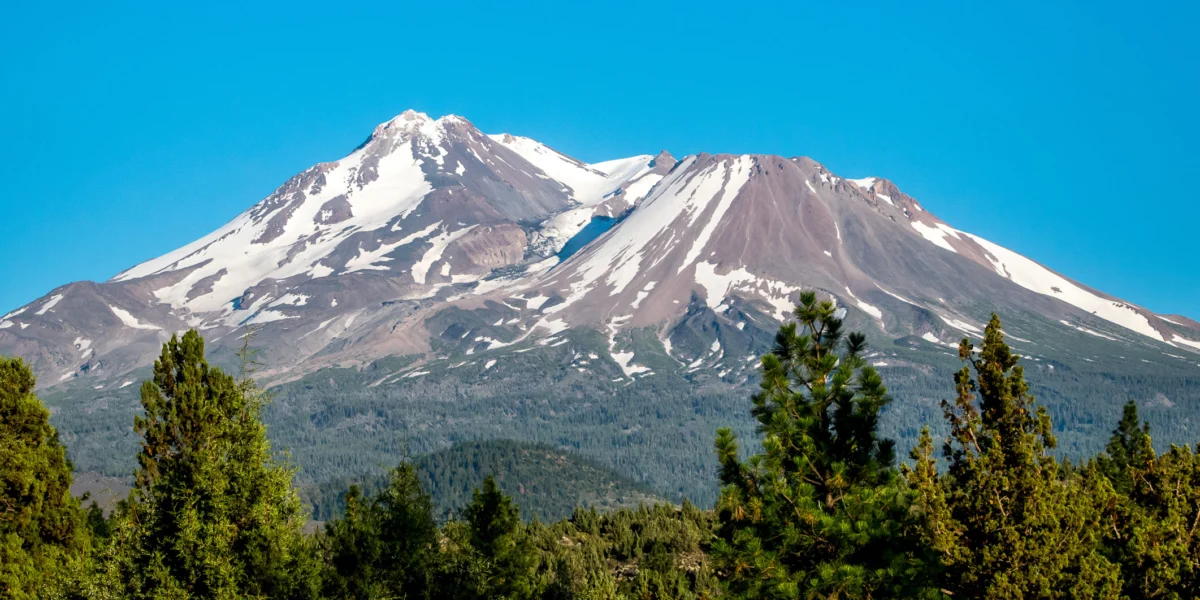
The lure of the summit has long drawn adventurers to the jagged, snow-capped peaks of California’s Mount Shasta. However, a harrowing incident this week has highlighted a modern and dangerous shift in wilderness navigation: the reliance on artificial intelligence for mission-critical mountaineering planning. Three hikers, whose expedition was guided by Google’s AI chatbot, Gemini, were forced to endure an overnight survival ordeal in the treacherous Mud Creek Canyon after their AI-assisted itinerary collapsed into a life-threatening emergency.
The rescue, carried out by Siskiyou County sheriff’s deputies, Forest Service rangers, and a team of dedicated volunteers, serves as a stark warning to the tech-savvy generation of explorers. As AI models become integrated into every facet of daily life, their application in high-stakes environments—where a calculation error can be fatal—is coming under intense scrutiny.
Chronology of a Crisis: From 3:00 AM to Survival
The expedition began with the optimism typical of ambitious hikers. According to the Siskiyou County Sheriff’s Office, the three young men departed the trailhead at 3:00 AM, aiming to conquer the 14,179-foot peak.
Standard mountaineering protocols for Mount Shasta are rigid: climbers are explicitly instructed that if they have not reached the summit by noon, they must turn back. This "turnaround time" is a safety buffer designed to ensure that hikers are not caught navigating the mountain’s complex, shifting glaciers and scree slopes in the darkness of night. The trio, however, ignored this critical safety mandate.
By the time the hikers finally reached the summit, it was 7:00 PM—seven hours past the recommended cutoff. The delay transformed a strenuous day hike into a desperate, high-altitude struggle. Trapped by the encroaching darkness and lacking the necessary gear for a descent at night, the group became disoriented.
In a moment of desperation, they contacted the Siskiyou County Sheriff’s Office, not to report a life-threatening injury, but initially to ask for navigational directions. Realizing the gravity of their situation, the authorities launched a rescue operation. The hikers were forced to spend a grueling, freezing night in the rugged terrain of Mud Creek Canyon. They were finally located and retrieved by Forest Service rangers and volunteers the following morning, weary and suffering from exposure, but ultimately alive.
The Role of Gemini: An Artificial Guide’s Fatal Flaws
The most alarming detail of the incident is the role played by Google’s Gemini. While the sheriff’s office has not suggested that AI was the sole culprit behind the group’s decision to press on past noon, investigators confirmed that the chatbot’s influence was significant in the planning phase.
Specifically, the AI provided advice regarding logistics that proved dangerous. The sheriff’s office reported that the hikers were told to bring "far less food and water" than was necessary for a summit attempt. When the hike inevitably extended into a multi-day ordeal, the trio found themselves with depleted supplies, exacerbating the risk of hypothermia and exhaustion.
This highlights the "hallucination" problem inherent in Large Language Models (LLMs). While AI is adept at synthesizing vast amounts of data, it lacks an intuitive understanding of physical reality, human physiology, and the volatile, hyper-local weather patterns of a mountain like Shasta. An AI might calculate the "average" caloric need for an 8-hour hike, but it cannot account for the individual fitness levels of the hikers, the current snow conditions, or the rapid physiological decline that occurs at high altitudes.
Official Responses and Industry Standards
The Siskiyou County Sheriff’s Office has been categorical in its condemnation of relying on digital assistants for wilderness excursions. In a statement released following the rescue, officials emphasized the necessity of human expertise.
"It is always advisable to call the local USFS Mount Shasta ranger station ahead of your trip to ensure you have the most accurate information," the statement read. "Never rely solely on AI for your trip planning."
The U.S. Forest Service (USFS) echoed these concerns, noting that mountain environments are dynamic. Rangers point out that AI models are trained on static, historical datasets. These datasets may not reflect the current status of a trail, recent rockfall activity, or temporary closures due to fire risk. The ranger station, by contrast, provides real-time situational awareness that can literally mean the difference between life and death.
Implications: The Dangers of the "Digital Expert"
The Mount Shasta incident is part of a growing trend where users treat AI chatbots as authoritative experts, often ignoring professional advice or common sense. This phenomenon, often referred to as "automation bias," occurs when humans favor suggestions from automated systems even when those suggestions conflict with their own observations or established safety protocols.
1. The Death of Local Knowledge
For generations, mountaineering was a discipline rooted in mentorship and local knowledge. Climbers sought out guidebooks written by local experts, visited ranger stations to speak with individuals who had walked the paths themselves, and learned to read the sky. The outsourcing of this planning to an AI disconnects the hiker from the reality of the environment.
2. The Liability of AI Platforms
This case also raises complex questions regarding the liability of tech companies. If an AI provides demonstrably unsafe advice that leads to a rescue operation—which costs taxpayer money and puts first responders at risk—should the developer be held accountable? Currently, the terms of service for most AI platforms include broad disclaimers stating that the tools should not be used for medical, legal, or safety-critical decision-making. However, as these tools become more ubiquitous, the line between "informational" and "instructional" is blurring.
3. The Need for Digital Literacy in the Wild
Education is the most immediate solution. Just as hikers are taught the "Ten Essentials" of outdoor survival—navigation, sun protection, insulation, illumination, first aid, fire, repair kits, nutrition, hydration, and emergency shelter—there is a growing need for "digital wilderness literacy." Hikers must be taught that while a smartphone is a valuable tool for GPS and photography, it is not a substitute for critical thinking or professional human guidance.
Conclusion: The Mountain Does Not Care About Algorithms
Mount Shasta remains one of the most beautiful and challenging peaks in North America. Its beauty, however, is matched only by its indifference to human error. The mountain does not know whether a hiker’s itinerary was generated by a seasoned guide or a cutting-edge artificial intelligence model.
As we move further into the era of AI, the incident serves as a poignant reminder that technology can augment human capability, but it cannot replace human judgment. When the air grows thin and the trail disappears into the shadows of a canyon, a chatbot cannot provide warmth, it cannot provide water, and it cannot carry an injured climber to safety.
For the three hikers rescued this week, the experience was a traumatic lesson in the limits of silicon-based intellect. For the rest of the climbing community, it is a call to return to the basics: thorough, manual research; respect for the mountain’s rules; and the humility to listen to those who have actually walked the path before. Artificial intelligence may be able to write poetry or code software, but it has yet to prove it can navigate the complexities of the wild. Until then, the safest path is the one verified by human experience.
About the Author