As the logistics industry gears up for major holiday windows, a chilling trend has emerged within the U.S. freight network. Criminal syndicates are no longer relying solely on brute-force hijacking or parking lot pilferage. Instead, they are weaponizing the digital infrastructure of modern supply chains, leveraging compromised carrier accounts, hijacked email systems, and manipulated compliance platforms to pull off sophisticated, identity-based cargo thefts.
Verisk CargoNet, the leading authority on supply chain risk, has identified this shift as an escalating threat—one that fundamentally alters the risk profile for shippers, brokers, and carriers alike. By infiltrating trusted channels, criminals are successfully changing delivery instructions after a legitimate trucking company has already taken possession of the cargo, effectively bypassing traditional safeguards that focus exclusively on initial carrier vetting.
A Five-Year Retrospective on Holiday Vulnerability
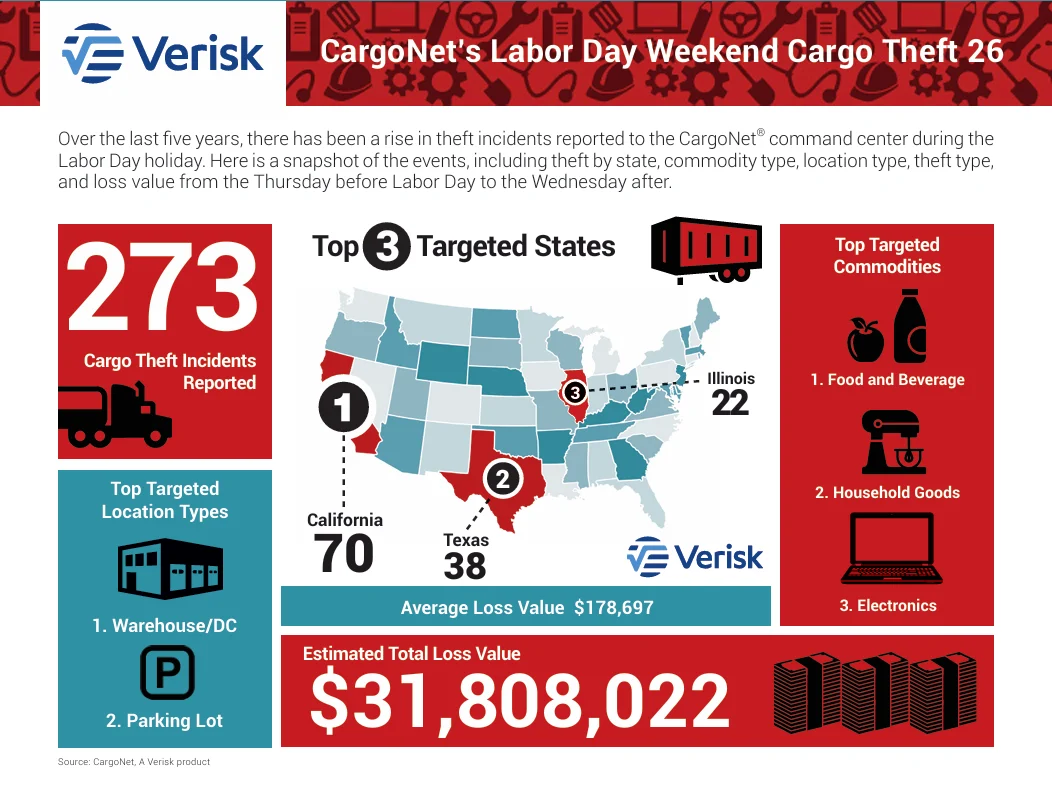
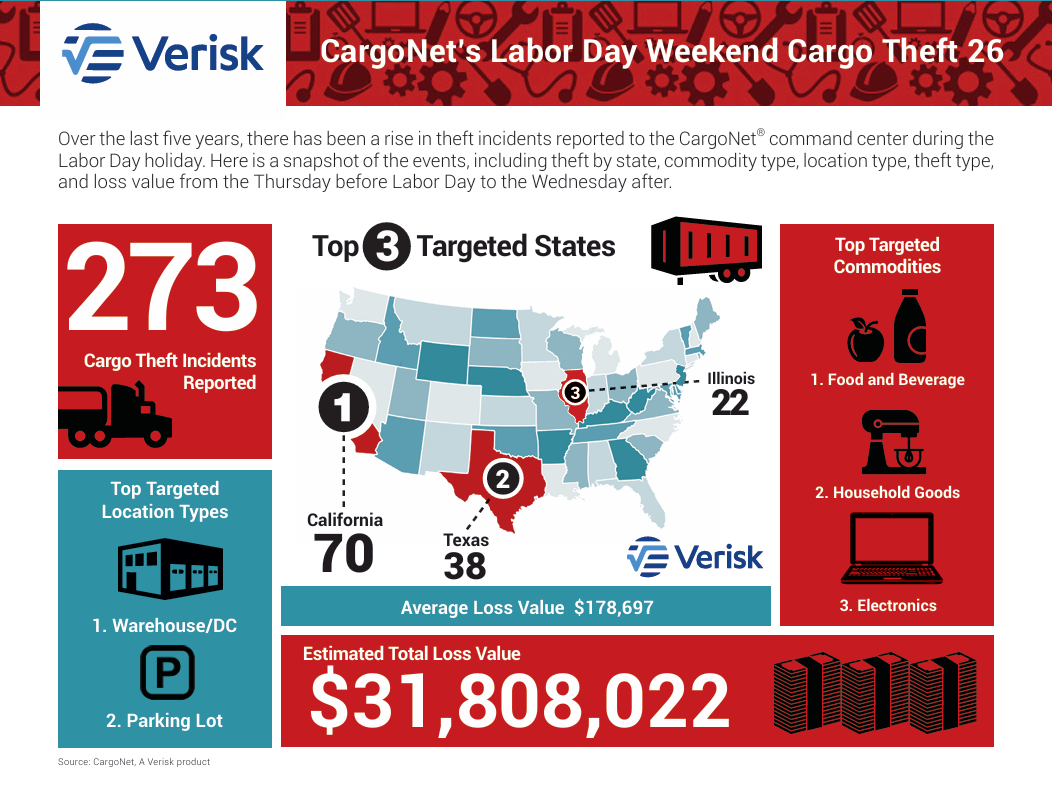
The warning from Verisk CargoNet arrives as the industry prepares for the 2026 holiday season, backed by a sobering five-year analysis of cargo theft patterns during Labor Day windows from 2021 through 2025. During these critical seven-day periods, CargoNet documented 273 distinct theft incidents across the United States. The total estimated value of the stolen commodities amounted to approximately $31.8 million, highlighting the immense financial impact of organized freight crime.
The data reveals a troubling upward trajectory. In 2021, the industry recorded 33 incidents. By 2025, that number had surged to 56—a 70% increase. The peak of this trend occurred in 2024, which saw a staggering 70 cases, marking a five-year high. While there was a slight cooling in 2025, the overall risk environment remains significantly more volatile than it was at the start of the decade.
The Anatomy of the Crime: Deception Over Force
Perhaps the most alarming aspect of these findings is how these crimes are executed. Unlike the dramatic scenarios often depicted in popular media, these thefts are quiet, methodical, and rely on the appearance of normalcy.
CargoNet’s analysis indicates that these criminal operations thrive on the very mechanisms that keep the supply chain moving. They require active phone lines, working employees, and the seamless movement of freight through established, legitimate channels. Consequently, the timing of these thefts often defies intuition. While one might expect theft to spike during total facility shutdowns, the highest volume of incidents actually occurs during active business days.
Friday leads the pack, accounting for 55 incidents, followed by Tuesday (49), Thursday (46), and Wednesday (44). Combined, these four days account for 71% of all recorded incidents in the study. The holiday weekends themselves often show lower reporting, as the criminal methodology requires the "normal" flow of commerce to manipulate. When the industry shuts down, the opportunities for deceptive pickups and non-delivery schemes effectively pause.
Two Overlapping Risks: Physical and Verification Exposure
Verisk CargoNet categorizes the holiday threat into two distinct, yet often overlapping, vulnerabilities:
- Physical Exposure: This occurs when loaded freight remains stationary due to holiday closures or logistical schedule disruptions. An idle trailer in an unsecured or semi-secure lot is an easy target, but it represents the more "traditional" side of cargo crime.
- Verification Exposure: This is the modern, more insidious threat. It emerges when limited staffing—common during holiday weeks—is combined with the extreme time pressures of "just-in-time" logistics. During these windows, internal teams are often stretched thin, making them more susceptible to social engineering, the impersonation of carriers, and the acceptance of fraudulent contact information.
Criminals exploit these gaps by inserting themselves into the communication loop between the shipper and the carrier. Once they have successfully spoofed a carrier’s identity or compromised their login credentials, they can intercept load tenders, provide "updated" delivery instructions, or divert shipments to secondary locations under the guise of an emergency or route change.
Geography and Commodity Trends
The distribution of these thefts is not uniform, pointing to clear regional and operational targets. Three states—California, Texas, and Illinois—accounted for nearly half (48%) of the five-year total, with 130 incidents recorded. California led the nation with 70 cases, followed by Texas with 38 and Illinois with 22.
CargoNet notes that this geographic concentration is directly linked to the density of regional freight networks, the proximity to major consumer markets, and the presence of massive intermodal infrastructure. These hubs offer the perfect "cover" for criminal activity; in a high-traffic environment, a fraudulent truck blending into the flow of thousands of other vehicles is far less likely to attract suspicion.
When it comes to the targets of these thefts, certain commodities consistently rank at the top. Food and beverage shipments led all categories with 49 incidents, followed by household goods (27), electronics (25), and vehicle components (20). Metals also saw significant activity, with 11 recorded cases. The common thread among these items is their high liquidity. Unlike specialized industrial machinery that may be difficult to offload, these categories offer criminals strong, rapid resale opportunities through various illicit online marketplaces and secondary wholesale channels.
The Broader Financial Landscape
The Labor Day findings are merely a microcosm of a much larger, nationwide crisis. In the first six months of 2026 alone, CargoNet estimated that cargo theft losses exceeded $359 million. With the average value of a single stolen shipment reaching approximately $341,518, the math is compelling for criminal groups: the risk-to-reward ratio for high-tech cargo theft is far more favorable than many other forms of non-violent crime.
Organized groups are increasingly shifting their focus toward high-value targets, including enterprise technology components, rare earth metals, and specialized electronics. These groups operate with a level of sophistication that rivals legitimate corporate entities, often utilizing dedicated "scout" teams, digital forensic tools to hack into load boards, and forged documentation that can fool even seasoned dispatchers.
The Urgent Need for Procedural Vigilance
The implications for the industry are profound. As the line between digital security and physical security continues to blur, companies can no longer rely on siloed protection strategies. A brokerage firm might have the most robust insurance policy in the world, but if their internal communication protocol for verifying a carrier’s contact information is compromised, that policy may not prevent the loss of the cargo—or the resulting damage to the company’s reputation.
"Brokers, carriers, and shippers face exposure before, during, and after the holiday weekend," says the CargoNet report. "The findings show that routine business activity can give criminals more opportunities than complete closures."
To combat this, experts suggest a multi-layered approach to security:
- Multi-Factor Authentication (MFA): Implementing mandatory MFA for all carrier portals and communication platforms to prevent account takeovers.
- Verification Redundancy: Establishing a "two-step" verification process for any changes to delivery instructions. If a driver calls to request a change, the request must be verified by a secondary person at the trucking company using a previously established, trusted phone number—not one provided in the incoming request.
- Staff Training: Educating dispatch and customer service teams on the common hallmarks of social engineering and the importance of verifying the identity of the person they are communicating with, regardless of how "urgent" the situation appears.
- Platform Vigilance: Using digital compliance tools that monitor for suspicious changes to carrier profiles, such as a sudden change in a carrier’s physical address, bank account information, or point-of-contact details.
Looking Toward the Future
As the industry moves toward the final quarter of 2026, the data from Verisk CargoNet serves as a necessary wake-up call. The rise of identity-based cargo theft is not a temporary anomaly; it is a structural evolution of the freight crime landscape. Criminals are adapting to the digital transformation of logistics faster than many companies are adapting their security postures.
The upcoming "Future of Freight Festival" (F3) in Chattanooga and the accompanying Brokerage Compliance Symposium reflect the industry’s growing recognition of this crisis. When 300 of the industry’s top leaders gather to discuss everything from FMCSA rules to cargo theft, the central theme will inevitably be the balance between technological efficiency and security.
For now, the industry must operate with the assumption that its digital gates are being tested. Every load, every email, and every phone call is a potential touchpoint for a sophisticated fraud attempt. As the 2026 holiday season approaches, the message is clear: trust is no longer a viable security strategy. Only through rigorous, redundant, and technologically-backed verification can the industry hope to stem the tide of these costly and increasingly common criminal deceptions.
About the Author