MIAMI – Operations at Miami International Airport (MIA) remained severely hampered on Monday morning as investigators from the National Transportation Safety Board (NTSB) descended upon the facility to determine why a Boeing 767-300 cargo freighter failed to stop on a 9,000-foot runway, crashing into traffic and igniting a massive blaze that claimed five lives.
The incident, which occurred Sunday afternoon, involved a flight operated by 21 Air, a Greensboro, North Carolina-based charter carrier that provides critical logistics support for e-commerce giant Amazon. As of Monday morning, two of the airport’s four runways remained shuttered, with the Federal Aviation Administration (FAA) continuing to manage the ripple effects of Sunday’s temporary total ground stop.
A Catastrophic Sequence of Events
The disaster began unfolding shortly after 2 p.m. on Sunday when the Boeing 767-300, arriving from San Juan, Puerto Rico, attempted a landing on one of the airport’s primary diagonal runways. According to preliminary flight data, the aircraft was traveling at approximately 130 mph when it reached the end of the usable pavement, failed to decelerate sufficiently, and plowed through the perimeter fence.
The momentum of the massive freighter carried it onto a nearby thoroughfare, where it collided with multiple vehicles. The impact resulted in an immediate, intense fire that engulfed the rear of the aircraft and the surrounding vehicles.
Emergency responders arrived on the scene with unprecedented speed. More than 200 personnel from the Miami-Dade County Fire & Rescue Department were deployed to the crash site. While firefighters were successful in dousing the flames with chemical foam and conducting a daring rescue of the flight crew from the cockpit, the situation remained grim. Tragically, five individuals were confirmed dead in the aftermath. An additional five people were transported to area hospitals with serious injuries. One survivor required a complex extrication process by technical rescue teams after becoming trapped beneath the wreckage of one of the struck vehicles.
By Monday morning, the Miami-Dade County Sheriff’s Office confirmed that NW 67th Avenue—a vital artery running between NW 25th Street and NW 36th Street—remained closed to allow for site cleanup and the ongoing federal investigation.
The Investigation Begins
The NTSB has officially launched a "Go Team" to the site, a move reserved for major aviation accidents. Investigators will be tasked with reconstructing the final moments of the flight. Key areas of focus will include the mechanical integrity of the 1994-built Boeing 767-300, the pilot’s decision-making process, and the potential impact of localized weather conditions.
At the time of the landing, the National Weather Service had reported thunderstorms in the immediate vicinity, with wind gusts reaching up to 30 mph. While meteorologists caution that it is premature to definitively link the crash to weather, aviation experts are already raising questions.
Several analysts interviewed by the Associated Press noted that the aircraft appeared to have difficulty stabilizing during its approach. The absence of a declared emergency call from the pilots prior to touchdown has puzzled industry observers. "A pilot who is struggling to settle a plane on the runway has the option to ‘go around’ and re-attempt the landing," said one aviation consultant. "The failure to initiate that maneuver when the aircraft was clearly not within the standard touchdown zone is a central question that the NTSB will need to answer."
Corporate Response and Accountability
The disaster has sent shockwaves through the logistics industry. 21 Air, the operator of the flight, issued a formal statement on Sunday evening expressing profound grief.
"We are devastated by the accident involving one of our aircraft in Miami today," said 21 Air CEO Keith Winters. "Our deepest condolences are with the families and loved ones of those who lost their lives. Our immediate priorities are supporting those affected, assisting the authorities, and ensuring that accurate information is communicated as it becomes available. We are cooperating fully with the National Transportation Safety Board, the Federal Aviation Administration, and local authorities."
Amazon, which has utilized 21 Air as a contract carrier since November 2024, also released a statement. "We’re heartbroken to learn that five people lost their lives in today’s incident at Miami International Airport," the company said. "Our deepest sympathies go out to the families, loved ones, and all those affected by this devastating loss."
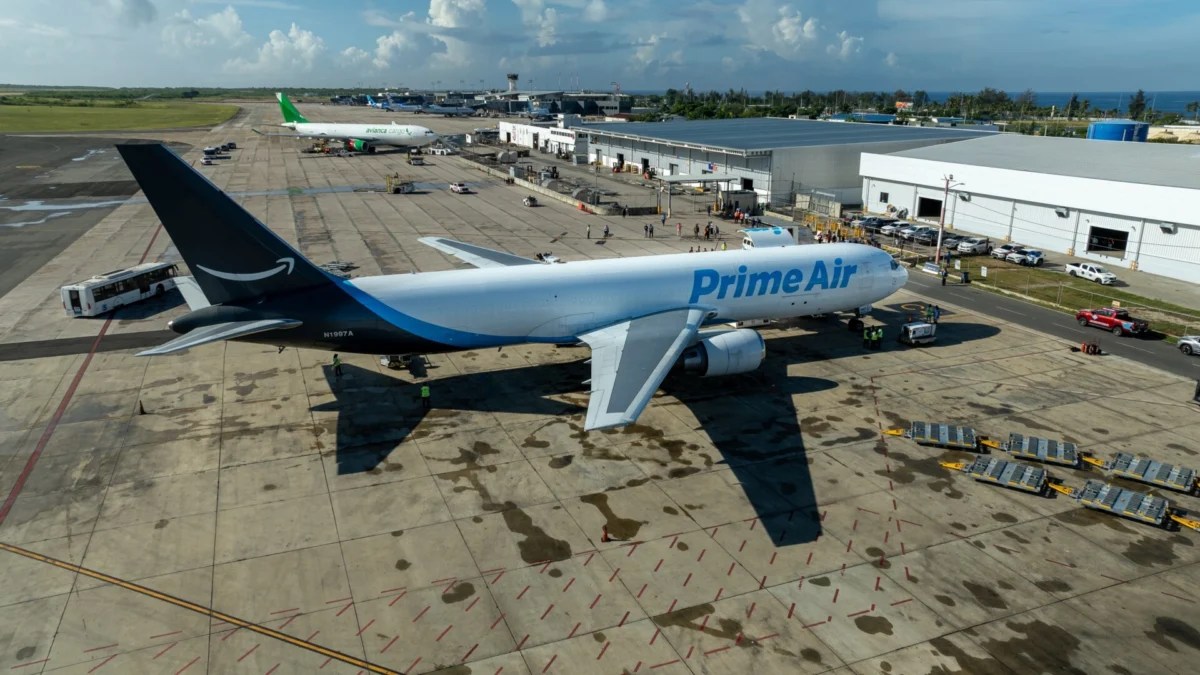
The aircraft involved, registration N1997A, has a significant history within the Amazon logistics network. Built in 1994, it served as a passenger jet before being converted for freighter use in 2015. It holds the distinction of being the first aircraft added to Amazon’s private cargo fleet in 2016. While Amazon manages a fleet of over 100 aircraft, it operates as a logistics coordinator rather than an airline, relying on specialized contractors like 21 Air to handle the flight operations and pilot staffing.
Broader Implications for Aviation Safety
This tragedy occurs against a backdrop of increasing concern regarding cargo aviation safety. In November, a UPS McDonnell-Douglas MD-11 freighter crashed during takeoff in Louisville, Kentucky, after an engine failure. That incident resulted in 15 deaths—three crew members and 12 people on the ground—and highlighted the unique risks associated with heavy cargo operations near residential and commercial infrastructure.
The aviation industry is expected to face renewed scrutiny regarding the oversight of "contracted" cargo operations. Because companies like Amazon do not hold their own air operating certificates, they outsource the technical and regulatory burden to third parties. While these companies are heavily regulated by the FAA, the coordination between the logistics provider and the air carrier will likely become a focal point of the NTSB’s probe.
Furthermore, the operational disruption at Miami International—a critical hub for trade between the U.S. and Latin America—highlights the vulnerability of major airports to single-point failures. With two runways still closed on Monday morning, the airport was forced to divert multiple incoming flights to Orlando International Airport, causing massive scheduling headaches for passengers and freight forwarders alike.
Moving Forward
As the sun rose over Miami on Monday, the wreckage of the 767-300 remained on the scene, a somber reminder of the high stakes of modern air freight. The NTSB is expected to release a preliminary report within the next 30 days, though a final determination of the cause of the accident could take a year or more.
For now, the focus remains on the grieving families and the arduous task of clearing the runway to restore normalcy to one of the busiest airports in the country. The disaster serves as a sobering reminder that behind every e-commerce delivery is a complex, high-risk operation that, when it fails, carries a heavy human toll.
As investigators sift through the flight data recorder—the "black box"—and examine the debris field, the aviation world waits for answers that could fundamentally change the way cargo operators approach runway excursions and emergency procedures in inclement weather. For the five victims and their families, however, the questions of "how" and "why" provide little solace for a loss that has shaken the city of Miami and the global logistics community to its core.
About the Author