Published: September 10, 2026
By Antone Gonsalves

*Noah Berger via Getty Images*
NEW CARLISLE, IN – In an era defined by rapid technological shifts and unpredictable global supply chains, Dell Technologies is demonstrating remarkable agility, successfully navigating a burgeoning demand for artificial intelligence (AI) systems despite widespread component shortages. The company’s strategic reallocation of resources, particularly from its personal computer (PC) manufacturing division to its AI infrastructure business, has not only addressed critical supply constraints but has also significantly bolstered its financial outlook for fiscal year 2027.
Jeffrey Clarke, Dell’s Chief Operating Officer, encapsulated the intense, dynamic environment with a revealing statement: “Welcome to the life of a supply chain person at Dell. This is what we do, chasing parts. We love it.” This sentiment, shared amidst a crucial period of corporate strategy, underscores the critical role of agile supply chain management in Dell’s sustained success and its ambitious pursuit of the rapidly expanding AI market.
Main Facts: Dell’s Strategic Masterclass in Supply Chain Agility
Dell Technologies is currently experiencing an unprecedented surge in demand for its AI systems, a phenomenon that has, paradoxically, coincided with broadening supply constraints for key components. This challenging landscape has compelled the company to adopt innovative strategies, primarily a proactive internal reallocation of manufacturing inputs, to meet customer needs and capitalize on market opportunities.
At the heart of Dell’s response is a decisive pivot: earlier in the year, the company began redirecting vital components and resources traditionally earmarked for PC production towards its AI infrastructure segments. This strategic maneuver was predicated on Dell’s early recognition of an impending softening in the PC market for the latter half of the year, alongside a clear foresight into the escalating requirements for AI hardware.
The immediate impact of this supply chain agility has been profoundly positive for Dell’s financial health. The company has announced a substantial increase in its fiscal 2027 revenue guidance, raising it by an impressive $25 billion. This upward revision brings the full-year forecast to an estimated $192 billion, a testament to the efficacy of its operational adjustments and its ability to optimize resource allocation in a volatile market.
Adding another layer to this dynamic situation, Dell has observed a significant shift in customer behavior. Customers, particularly large and sophisticated enterprises, are increasingly placing orders further in advance. This proactive approach is often facilitated by collaborative planning tools, allowing these key clients to secure their place "at the front of the line" for in-demand AI systems. COO Jeffrey Clarke highlighted this as a "new phenomenon" reflective of the current demand environment and constrained supply.
In essence, Dell’s story is one of strategic foresight, operational excellence, and a deep understanding of market dynamics, enabling it to transform potential headwinds into substantial financial gains and reinforce its position at the forefront of the AI revolution.
A Proactive Shift Amidst Surging Demand: A Chronological Account
The narrative of Dell’s successful navigation of the AI boom is deeply rooted in a series of strategic decisions and observations made well in advance of the market’s full maturation. It’s a testament to the power of predictive analytics and responsive leadership in complex supply chain environments.
Early Signals and Strategic Reallocation
The genesis of Dell’s current success can be traced back to the early months of the current fiscal year. Long before the broader market fully registered the shifts, Dell’s internal analytics and market intelligence teams began detecting subtle yet significant signals. The most critical among these was the indication of an impending slowdown in the personal computer market. After a period of elevated demand spurred by remote work and learning during the pandemic, the PC market was showing signs of saturation and normalization.
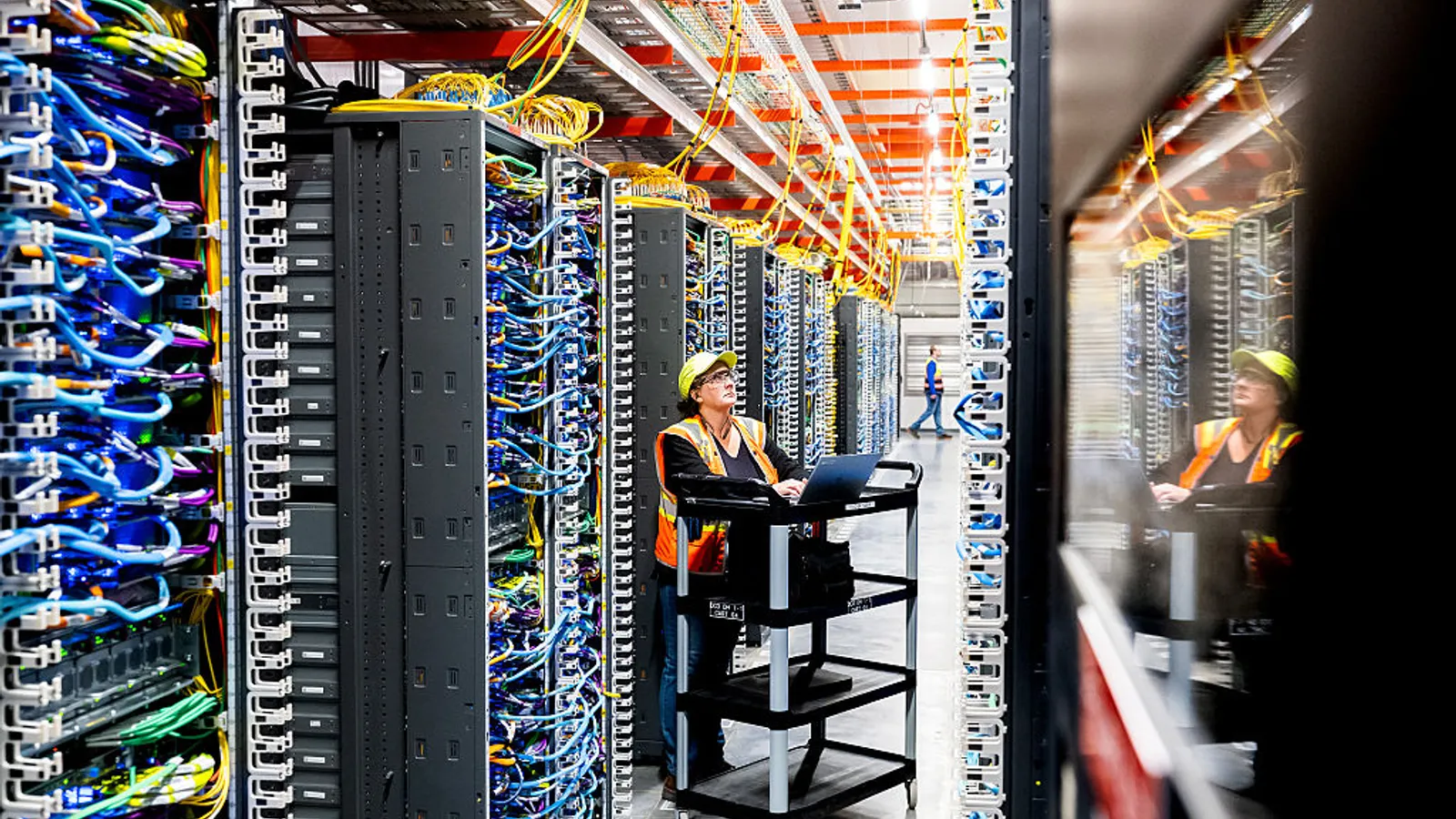
Simultaneously, the demand for AI infrastructure, fueled by advancements in generative AI, large language models, and enterprise AI adoption, was beginning to accelerate dramatically. Recognizing this dual trend – a softening in one core business and an explosive growth in another – Dell’s leadership, spearheaded by COO Jeffrey Clarke, made a pivotal decision. The company initiated a strategic reallocation of manufacturing inputs. Components, manufacturing capacity, and engineering focus that might otherwise have been directed towards building more PCs were instead diverted to bolster the production of AI systems. This wasn’t merely a reactive measure; it was a calculated, proactive pivot designed to align Dell’s production capabilities with the most promising growth vector. This early move provided Dell with a crucial head start, allowing it to begin scaling AI production while many competitors were still grappling with general market uncertainties.
The Evolving Customer Landscape
The supply constraints for AI systems, driven by intense demand for specialized processors, high-bandwidth memory, and advanced cooling solutions, have fundamentally altered customer-supplier dynamics. Dell has been at the forefront of observing what Clarke terms a "new phenomenon": customers, particularly large, sophisticated enterprises, are placing orders significantly further in advance. This isn’t merely good planning on the customer’s part; it’s a strategic imperative.
These advanced orders are often facilitated by sophisticated collaborative planning tools, shared directly between Dell and its major clients. Such tools allow for transparent sharing of demand forecasts, production schedules, and inventory visibility. For customers, this means gaining a prioritized position in the queue for critical AI hardware, mitigating the risk of project delays due due to component scarcity. For Dell, it provides invaluable visibility into future demand, enabling more accurate procurement, better production scheduling, and optimized resource allocation. This collaborative approach fosters deeper partnerships, moving beyond transactional relationships to strategic alliances where both parties actively work to ensure continuity of supply. This trend highlights a maturing market where securing supply is as critical as negotiating price, and long-term planning triumphs over short-term procurement.
From Constraint to Opportunity
The strategic reallocation of resources, combined with the insight gained from collaborative customer planning, transformed what could have been a significant supply chain bottleneck into a remarkable financial opportunity for Dell. By anticipating the PC market’s dip and simultaneously positioning itself for the AI surge, Dell was able to efficiently shift its internal capabilities to where they were most needed and most profitable.
This agility directly translated into a substantial increase in Dell’s fiscal 2027 revenue guidance. The company’s ability to "optimize what’s coming in, shaping demand, planning it accordingly and getting it out the door," as Clarke put it, was the direct catalyst for raising the full-year forecast by an impressive $25 billion, bringing it to a projected $192 billion. This isn’t just a testament to Dell’s operational efficiency; it underscores the immense market value currently placed on AI infrastructure. By successfully navigating these constraints, Dell not only met an urgent market need but also significantly enhanced its competitive position and investor confidence, proving that strategic supply chain management can be a powerful driver of corporate growth.
Supporting Data and Market Context: The Undercurrents of AI Demand
Dell’s experience is not an isolated incident but rather a microcosm of broader trends reshaping the global technology landscape. The confluence of explosive AI demand, persistent supply chain fragilities, and evolving market dynamics provides a rich context for understanding the significance of Dell’s strategic maneuvers.
The Global AI Hardware Boom
The demand for AI systems is experiencing an unprecedented boom, driven by several interconnected factors. The proliferation of generative AI models, exemplified by tools like large language models and advanced image generators, has moved AI from academic research to mainstream enterprise and consumer applications. This requires immense computational power, primarily delivered by specialized hardware accelerators like Graphics Processing Units (GPUs), Tensor Processing Units (TPUs), and custom AI chips.
Enterprises across all sectors are investing heavily in AI infrastructure to gain competitive advantages, automate processes, enhance customer experiences, and unlock new revenue streams. This has led to a massive expansion of data centers, both cloud-based and on-premises, specifically designed to handle AI workloads. The global AI hardware market, encompassing servers, storage, networking, and specialized accelerators, is projected to grow at a compound annual growth rate (CAGR) exceeding 20% for the foreseeable future, reaching hundreds of billions of dollars annually. Dell, as a leading provider of enterprise IT solutions, is directly positioned to capitalize on this exponential growth.
Supply Chain Pressures in High-Tech
Despite the immense financial opportunities, the high-tech industry, particularly in advanced semiconductors and specialized components, remains prone to supply chain pressures. The fabrication of cutting-edge AI chips is incredibly complex, requiring highly specialized manufacturing equipment, rare earth materials, and pristine production environments. A limited number of foundries globally possess the capability to produce these advanced chips, creating bottlenecks.
Factors contributing to supply constraints include:
- Geopolitical Tensions: Disruptions in trade relations, regional conflicts, and export controls can severely impact the flow of critical components and raw materials.
- Concentrated Manufacturing: A significant portion of advanced semiconductor manufacturing is concentrated in a few geographic regions, making the supply chain vulnerable to localized disruptions (e.g., natural disasters, power outages).
- Long Lead Times: The design, testing, and production cycle for advanced chips can span several years, meaning that increased demand often takes a considerable time to translate into increased supply.
- Specialized Components: AI systems require not just powerful processors, but also high-bandwidth memory (HBM), advanced cooling solutions, high-speed interconnects, and robust power delivery units, all of which can be subject to their own unique supply constraints.
- Infrastructure Demands: The sheer power and cooling requirements of AI data centers also place pressure on the supply of specialized power distribution units, liquid cooling systems, and high-density server racks.
Dell’s "chasing parts" reality is a direct consequence of these systemic pressures, making their ability to secure and reallocate resources even more impressive.

PC Market Dynamics
Dell’s decision to redirect resources was shrewdly timed with the softening of the PC market. Following an unprecedented surge in demand during the initial phases of the global pandemic (2020-2022), driven by remote work and education needs, the PC market began to cool off. Several factors contributed to this anticipated decline:
- Market Saturation: Many households and businesses had already upgraded their devices.
- Economic Headwinds: Rising inflation, interest rate hikes, and concerns about a global economic slowdown led consumers and businesses to tighten spending on discretionary items like new PCs.
- Extended Refresh Cycles: Users began to extend the lifespan of their existing devices.
This projected softening, which Dell identified "earlier in the year," provided a critical window of opportunity. By anticipating this downturn, Dell could re-purpose resources that would have otherwise gone into a less buoyant market, preventing potential oversupply in PCs and strategically fortifying its position in the high-growth AI segment. This foresight minimized waste and maximized impact.
Financial Performance and Investor Confidence
The announced $25 billion increase in fiscal 2027 revenue guidance, pushing the total forecast to $192 billion, is a powerful signal to investors and the broader market. For a company of Dell’s scale, such an upward revision underscores robust operational health and strong market positioning.
- Investor Confidence: It demonstrates management’s confidence in its strategic decisions and its ability to execute effectively in a challenging environment. This often translates to positive stock performance and increased investor trust.
- Competitive Advantage: The ability to meet demand in a constrained market gives Dell a significant competitive edge over rivals who may be struggling to secure necessary components.
- Profitability: While the article focuses on revenue, the efficient allocation of resources and fulfillment of high-value AI system orders likely contributes to healthier profit margins.
This financial uplift validates Dell’s strategic pivot, highlighting how adept supply chain management can directly translate into substantial shareholder value and market leadership.
Official Responses and Strategic Vision: The Human Element of Success
The strategic decisions at Dell are not abstract corporate directives; they are the result of visionary leadership and the tireless efforts of teams dedicated to navigating complexity. The official responses from key executives illuminate the philosophy underpinning Dell’s success.
COO Jeffrey Clarke’s Perspective
Jeffrey Clarke’s candid remarks offer a rare glimpse into the operational realities at the highest levels of Dell. His statement, "Welcome to the life of a supply chain person at Dell. This is what we do, chasing parts. We love it. Trying to optimize the outcomes for the company," is more than just an acknowledgement of challenges; it’s an affirmation of a corporate culture that embraces problem-solving and thrives on complexity.
The phrase "we love it" speaks volumes. It suggests that Dell’s supply chain team views these challenges not as obstacles, but as intellectual puzzles and opportunities to demonstrate their expertise. This mindset is crucial in an environment where components are scarce and lead times are unpredictable. It reflects a culture of resilience, innovation, and a deep-seated commitment to optimizing every facet of the supply chain to benefit the entire company. Clarke’s emphasis on "optimizing the outcomes for the company" highlights the strategic importance of the supply chain function, positioning it as a core driver of corporate performance rather than just a cost center. It reinforces that securing a critical part is not merely a logistical task, but a direct contribution to Dell’s revenue and market standing.
CFO David Kenney’s Financial Outlook
The financial implications of Dell’s strategic pivot were further clarified by CFO David Kenney. His confirmation of the increased full-year forecast to $192 billion provides the concrete financial backing to Clarke’s operational narrative. This collaboration between the operational and financial arms of the company is vital. Clarke’s team identifies the opportunities and executes the strategy, while Kenney’s team quantifies the financial impact and communicates it to stakeholders.
The substantial increase in guidance underscores the direct link between agile supply chain management and top-line growth. It illustrates how Dell’s ability to "optimize what’s coming in, shaping demand, planning it accordingly and getting it out the door" is not just an operational feat, but a powerful engine for revenue generation. This strong financial outlook, anchored by strategic operational decisions, projects stability and growth confidence to investors and the market at large.
Dell’s Broader AI Strategy
While the immediate focus is on hardware supply, Dell’s strategic vision for AI extends far beyond just "chasing parts." The company is positioning itself as an end-to-end provider of AI solutions, from the foundational hardware infrastructure (servers, storage, networking) to the software, services, and expertise required to deploy and manage AI at scale. Their ability to deliver critical hardware in a constrained market strengthens their overall value proposition, making them a more attractive partner for enterprises embarking on their AI journeys. This includes offerings like AI-optimized servers with integrated GPUs, high-performance storage solutions tailored for large datasets, and consulting services to help customers design and implement robust AI strategies. The current hardware supply success paves the way for deeper engagements and broader adoption of Dell’s comprehensive AI portfolio.
The Human Element of Supply Chain
Clarke’s remarks also shine a light on the often-underappreciated human element of supply chain management. In a world increasingly reliant on automation, the human expertise in forging relationships, negotiating complex deals, anticipating disruptions, and making real-time adjustments remains irreplaceable. The "life of a supply chain person" involves constant communication with suppliers, logistics partners, internal sales teams, and customers. It requires a blend of analytical rigor, negotiation skills, crisis management, and an almost intuitive understanding of global economic and political currents. Dell’s recognition and celebration of this vital function suggest a mature understanding that technology alone cannot solve all supply chain challenges; skilled professionals are the backbone of resilience and adaptability.

Implications for the Industry and Future Outlook
Dell’s experience serves as a powerful case study, offering valuable insights into the evolving landscape of high-tech manufacturing, supply chain management, and competitive strategy in the age of AI. The implications ripple across industries, influencing how companies approach planning, partnerships, and market positioning.
The Future of Supply Chain Management
Dell’s success underscores a paradigm shift in supply chain management. The era of purely cost-optimized, lean supply chains is giving way to a new model emphasizing resilience, agility, and responsiveness. Key takeaways for the future include:
- Data-Driven Decision Making: Real-time visibility and predictive analytics are no longer optional but essential for anticipating disruptions and market shifts. Dell’s early identification of the PC market slowdown is a prime example.
- Dynamic Resource Allocation: The ability to flexibly reallocate resources, capacity, and inventory across different product lines or business units is crucial for adapting to volatile demand.
- Deep Supplier Relationships: Moving beyond transactional interactions to strategic partnerships with key suppliers, fostering transparency and collaboration.
- Risk Management: Proactive identification and mitigation of geopolitical, economic, and logistical risks will be paramount.
Dell’s "chasing parts" mentality, coupled with its strategic re-prioritization, exemplifies the kind of agile, problem-solving approach that will define leading supply chains in the years to come.
Customer-Supplier Dynamics Redefined
The phenomenon of customers ordering further in advance and engaging in collaborative planning tools signals a fundamental shift in customer-supplier dynamics. In a constrained environment, the relationship becomes less about pure price competition and more about securing supply and ensuring continuity.
- Strategic Partnerships: Customers are incentivized to become strategic partners, sharing long-term forecasts and collaborating on solutions to ensure their needs are met.
- Premium on Reliability: Suppliers who can reliably deliver in challenging conditions gain a significant competitive advantage and command greater loyalty.
- Increased Transparency: Collaborative planning tools foster greater transparency across the value chain, benefiting both parties by optimizing production and reducing uncertainty.
This redefinition means that suppliers like Dell, capable of delivering consistency and strategic partnership, will become even more indispensable to their key clients.
Lessons for Competitors
Dell’s proactive reallocation strategy offers critical lessons for its competitors in the hardware and IT infrastructure space. Those who are slower to adapt to changing market signals risk being left behind, either with excess inventory in declining segments or insufficient capacity in high-growth areas.
- Market Intelligence: Investing in robust market intelligence to anticipate shifts in demand and supply.
- Internal Flexibility: Building operational flexibility into manufacturing processes to allow for quick pivots between product lines.
- Portfolio Diversification: Maintaining a balanced product portfolio that allows for strategic resource shifts when one segment faces headwinds or another experiences explosive growth.
The success of Dell’s $25 billion guidance increase will undoubtedly prompt other technology giants to scrutinize their own supply chain strategies and market responsiveness.
Long-Term Market Impact
The current AI component supply constraints are not expected to ease significantly in the immediate future. The demand for AI hardware is projected to continue its upward trajectory, driven by ongoing innovations in AI models, broader enterprise adoption, and the foundational need for robust data center infrastructure. This implies that:
- Sustained Pressure: Supply chains for AI-critical components will remain under pressure for several years.
- Investment in Manufacturing: Expect increased investment in new fabrication plants and expanded production capacities, though these take years to come online.
- Innovation in Efficiency: A focus on optimizing AI hardware for power efficiency and performance per watt will also be crucial to manage resource consumption.
Dell’s early positioning helps it weather these long-term market dynamics, ensuring it remains a significant player as the AI revolution unfolds.
Dell’s Position in the AI Race
By effectively navigating current supply constraints and strategically pivoting its resources, Dell has significantly strengthened its position in the global AI race. Its ability to deliver AI systems when others might struggle solidifies its reputation as a reliable and agile partner. This not only secures immediate revenue but also builds long-term customer loyalty and market share in one of the most transformative technological shifts of our time. Dell is not just reacting to the AI boom; it is actively shaping its destiny within it, setting a benchmark for supply chain excellence in the process.
About the Author